What are Customer Service Representative metrics? Crafting the perfect Customer Service Representative metrics can feel overwhelming, particularly when you're juggling daily responsibilities. That's why we've put together a collection of examples to spark your inspiration.
Transfer these examples to your app of choice, or opt for Tability to help keep you on track.
Find Customer Service Representative metrics with AI While we have some examples available, it's likely that you'll have specific scenarios that aren't covered here. You can use our free AI metrics generator below to generate your own strategies.
Examples of Customer Service Representative metrics and KPIs 1. Customer Satisfaction Score (CSAT) Measures the level of satisfaction customers feel after interacting with customer service, typically collected through surveys
What good looks like for this metric: 80-85%
Ideas to improve this metric Implement regular customer feedback surveys Provide training sessions for employees Use sentiments analysis tools Improve response times Offer personalised customer service 2. First Response Time Calculates the average time it takes for a customer service representative to respond to a customer inquiry
What good looks like for this metric: Less than 24 hours
Ideas to improve this metric Use automated responses Allocate resources efficiently Provide employees with comprehensive knowledge bases Implement better scheduling Use CRM tools to streamline processes 3. Average Handling Time (AHT) Measures the average time spent on a customer service interaction from start to finish
What good looks like for this metric: 6-8 minutes
Ideas to improve this metric Provide effective training for handling queries Use scripts for common issues Streamline processes Encourage team collaboration Regularly review and optimise procedures 4. Employee Satisfaction Assesses the level of satisfaction of customer service employees about their work environment and job roles
What good looks like for this metric: 70-80%
Ideas to improve this metric Conduct regular employee satisfaction surveys Offer recognition and rewards programmes Provide opportunities for career advancement Implement team-building activities Ensure a balanced workload 5. Issue Resolution Rate Measures the percentage of customer service requests that are resolved successfully on first contact
What good looks like for this metric: 70-75%
Ideas to improve this metric Improve training for problem-solving Provide comprehensive resources for employees Encourage proactive communication Analyse common issues for better solutions Adopt technology to aid in resolution
← →
1. Number of New Distribution Points The total number of new retail distribution points established in a specific period due to outbound selling by customer service representatives
What good looks like for this metric: 10 new distribution points per quarter
Ideas to improve this metric Develop a targeted list of potential stores Train customer service reps on sales techniques Offer incentives for successful partnerships Leverage existing customer relationships Utilise data to identify high-potential areas 2. Conversion Rate The percentage of contacted stores that become active retailers
What good looks like for this metric: 20% conversion rate for outbound efforts
Ideas to improve this metric Refine sales pitch and presentation Identify and address common rejection reasons Use testimonials or case studies Follow up consistently with potential clients Provide flexible terms or agreements 3. Customer Service Rep Productivity Average number of new distribution points secured per customer service representative per month
What good looks like for this metric: 2 new points per rep per month
Ideas to improve this metric Streamline contact and follow-up processes Set clear targets and expectations Use technology to enhance outreach efforts Provide regular training and feedback Encourage collaboration among team members 4. Sales Cycle Length The average time it takes from the initial contact to the establishment of a new distribution point
What good looks like for this metric: 3-4 weeks from contact to establishment
Ideas to improve this metric Identify and remove bottlenecks in the process Automate parts of the follow-up process Improve product or brand education materials Monitor and adjust outreach timing strategies Tailor communication to the potential client's needs 5. Revenue from New Distribution Points The total revenue generated from the newly established distribution points
What good looks like for this metric: Increase initial revenue by 15% within 3 months
Ideas to improve this metric Offer introductory deals to incentivise sales Monitor stock levels at new locations Provide ongoing support and promotions Gather feedback and adjust offerings Encourage repeat orders with loyalty programmes
← →
1. Customer Retention Rate Measures the percentage of customers who continue to use a product over a given period.
What good looks like for this metric: 85%
Ideas to improve this metric Enhance customer support Create loyalty programs Implement regular feedback sessions Offer personalised experiences Improve product features regularly 2. Net Promoter Score (NPS) Evaluates customer satisfaction and likelihood to recommend your service to others.
What good looks like for this metric: 70
Ideas to improve this metric Collect customer feedback regularly Identify and address detractor concerns Reward promoter behaviour Analyse feedback for continuous improvement Train staff in customer service excellence 3. Churn Rate Represents the percentage of customers that stop using your service over a specific time period.
What good looks like for this metric: 3-5%
Ideas to improve this metric Analyse reasons for customer exit Improve onboarding experience Provide usage tutorials Monitor and address complaints swiftly Adjust pricing for flexibility 4. Monthly Recurring Revenue (MRR) Calculates the total predictable revenue from all active subscriptions on a monthly basis.
What good looks like for this metric: $10,000
Ideas to improve this metric Upsell existing customers Offer tiered pricing Develop partnerships for bundle offers Enhance product features Target new customer segments 5. Customer Satisfaction Score (CSAT) Measures how satisfied customers are with a particular aspect of your business or service.
What good looks like for this metric: 80%
Ideas to improve this metric Simplify user interfaces Increase response time on queries Ensure product reliability Empower staff to resolve issues Utilise customer feedback for improvements
← →
1. Net Promoter Score (NPS) Measures customer loyalty and satisfaction by asking how likely customers are to recommend your product or service to others
What good looks like for this metric: Typical benchmarks range from -100 to +100 with 50 being excellent
Ideas to improve this metric Conduct customer feedback surveys regularly Implement changes based on feedback Improve customer service responsiveness Enhance customer onboarding experience Encourage loyal customers to share testimonials 2. Customer Satisfaction Score (CSAT) Measures how satisfied customers are with a company's product, service, or experience through short surveys
What good looks like for this metric: Scores of 75% or above are considered good
Ideas to improve this metric Simplify the survey process Focus on enhancing product features Train staff in customer service Respond promptly to customer inquiries Monitor and address negative feedback 3. Customer Retention Rate The percentage of customers who continue to use a company's products or services over a given period
What good looks like for this metric: Typically above 80% is considered good
Ideas to improve this metric Build long-term relationships with customers Implement loyalty programs Regularly update customers on new offerings Analyse and address reasons for customer churn Increase the value of the offering 4. Social Media Sentiment Analysis Tracks and analyses brand mentions on social media to gauge public opinion
What good looks like for this metric: N/A, but positive sentiment should be maximized
Ideas to improve this metric Engage positively with social media followers Monitor and address negative comments quickly Create engaging and relevant content Collaborate with influencers Utilise sentiment analysis tools 5. Customer Lifetime Value (CLV) Estimates the total revenue that a business can expect from a single customer account throughout the business relationship
What good looks like for this metric: Varies by industry, should exceed customer acquisition cost
Ideas to improve this metric Increase customer purchase frequency Enhance customer experience Personalise marketing efforts Upsell and cross-sell products Reduce customer churn
← →
1. Client Response Rate Measures the percentage of client inquiries responded to within a specified time frame
What good looks like for this metric: 90% response rate within 24 hours
Ideas to improve this metric Implement an auto-response system Monitor and prioritise queries Train staff for effective communication Utilise customer relationship management software Set clear response time targets 2. Customer Satisfaction Score (CSAT) Rates clients' satisfaction with a particular interaction or experience
What good looks like for this metric: 80% satisfaction score
Ideas to improve this metric Conduct regular satisfaction surveys Personalise client interactions Resolve issues promptly Provide regular training for customer service staff Listen to and act on customer feedback 3. Net Promoter Score (NPS) Measures customer loyalty by asking clients if they would recommend the company
What good looks like for this metric: Score of 50 or above
Ideas to improve this metric Enhance customer experience Reward loyal customers Follow up on negative feedback Engage customers through personalised communication Improve product or service offerings 4. Client Retention Rate Percentage of clients retained over a specific period
What good looks like for this metric: 80% retention rate
Ideas to improve this metric Develop a client onboarding process Regularly update clients with new developments Create loyalty programmes Maintain consistent and personalised communication Analyze reasons for churn and address them 5. Average Resolution Time Average time taken to resolve client issues or inquiries
What good looks like for this metric: 24 hours or less
Ideas to improve this metric Integrate efficient customer support tools Prioritise and categorise client issues Streamline internal processes Set up a dedicated support team Regularly review and optimise procedures
← →
1. Response Rate Percentage of community concerns addressed within a set timeframe
What good looks like for this metric: 80% of concerns responded to within 2 days
Ideas to improve this metric Automate initial responses to ensure timely acknowledgment Allocate dedicated staff to monitor concerns Implement a prioritization system for urgent concerns Provide training for staff on effective communication Set clear internal response targets for accountability 2. Resolution Time Average time taken to resolve community concerns
What good looks like for this metric: Resolve issues within 5 days
Ideas to improve this metric Streamline processes for common issues Increase collaboration between departments Regularly review and refine resolution steps Maintain a database of past solutions for reference Utilize project management tools for task tracking 3. Community Satisfaction Score Measure the satisfaction of community members with the resolutions provided
What good looks like for this metric: Achieve a satisfaction score of 4 out of 5
Ideas to improve this metric Collect feedback through surveys post-resolution Regularly review and address negative feedback Ensure transparency about actions taken Offer additional support or resources when needed Host community forums to discuss common concerns 4. Engagement Rate Percentage of the community actively participating in engagement initiatives
What good looks like for this metric: 60% participation in community events
Ideas to improve this metric Promote engagement initiatives through multiple channels Provide incentives for participation Tailor events to address varied community interests Schedule events at convenient times for the majority Collaborate with local influencers for broader reach 5. Knowledge Improvement Assessment of community’s increased awareness on key nature reserve topics
What good looks like for this metric: Improve awareness by 25% annually
Ideas to improve this metric Conduct pre-and post-event knowledge surveys Develop educational content on crucial topics Host regular workshops and seminars Partner with schools for educational outreach Utilize social media for regular information dissemination
← →
1. System Uptime The percentage of time the infrastructure is operational and accessible to users.
What good looks like for this metric: 99.9%
Ideas to improve this metric Implement redundancy systems Perform regular maintenance checks Upgrade hardware components Monitor using advanced tools Develop a disaster recovery plan 2. Service Response Time The average time taken to respond to service requests or queries from users.
What good looks like for this metric: Less than 3 seconds
Ideas to improve this metric Optimise server configurations Use load balancing techniques Increase bandwidth availability Implement caching strategies Enhance database management 3. User Satisfaction Score A measure of user satisfaction collected through surveys and feedback forms.
What good looks like for this metric: Above 85%
Ideas to improve this metric Conduct regular user feedback sessions Implement a user-friendly interface Deliver consistent customer support Analyse feedback for improvements Introduce regular updates based on suggestions 4. Innovation Adoption Rate The percentage of new features or innovations adopted by users over time.
What good looks like for this metric: Above 60%
Ideas to improve this metric Promote new features actively Provide training sessions for users Offer incentives for early adoption Simplify the onboarding process Use user testimonials to encourage uptake 5. Incident Resolution Time The average time taken to resolve incidents or issues reported within the infrastructure.
What good looks like for this metric: Under 4 hours
Ideas to improve this metric Maintain a knowledgeable support team Use automated incident detection Streamline the issue escalation process Maintain a robust incident management tool Review and refine resolution procedures
← →
1. Customer Acquisition Rate Measures the number of new customers acquired within a specific period after the product launch, typically calculated as the percentage of new customers relative to total target audience
What good looks like for this metric: 20-30%
Ideas to improve this metric Increase marketing efforts Offer promotions or discounts Enhance online presence Use influencer partnerships Optimise your sales funnel 2. Customer Retention Rate Indicates the percentage of customers who continue to purchase your product after initial acquisition, calculated by dividing the number of repeat customers by the total number of customers
What good looks like for this metric: 40-60%
Ideas to improve this metric Improve customer service Introduce a loyalty programme Regularly update the product Solicit customer feedback Follow up with customers 3. Revenue Growth Rate Tracks the increase in revenue generated by the new product over a set period, usually expressed as a percentage
What good looks like for this metric: 10-25%
Ideas to improve this metric Upsell and cross-sell Expand into new markets Increase marketing investment Optimise pricing strategies Refine product features based on feedback 4. Market Penetration Measures the extent to which the new product is being adopted in the target market, calculated by the percentage of target market users purchasing the product
What good looks like for this metric: 5-15%
Ideas to improve this metric Conduct market research Adjust marketing messaging Offer introductory offers Establish strategic partnerships Create compelling product demo and trials 5. Customer Satisfaction Score Gauges customers' satisfaction with the new product, commonly measured using surveys and net promoter scores
What good looks like for this metric: 70-85%
Ideas to improve this metric Enhance product quality Improve customer support Offer easy-to-find help resources Regularly collect customer feedback Implement suggested improvements
← →
1. Customer Satisfaction Score Measures the level of satisfaction of customers with products or services. Calculated through surveys and feedback.
What good looks like for this metric: 85% or higher
Ideas to improve this metric Solicit regular customer feedback Train staff on customer service skills Improve product quality and variety Reduce waiting times at checkout Implement a customer loyalty programme 2. Sales Revenue Total income generated from sales activities during a given period.
What good looks like for this metric: Consistent increase month-over-month
Ideas to improve this metric Expand product range Enhance marketing efforts Offer discounts or promotions Improve store layout to encourage sales Train staff on upselling techniques 3. Inventory Turnover Rate The rate at which inventory is sold and replaced over a period, indicating inventory management efficiency.
What good looks like for this metric: 5 to 10 times per year
Ideas to improve this metric Optimise stock levels based on demand Use data analysis for restocking Clear slow-moving items with promotions Enhance supplier relations for quicker restocks Implement inventory management software 4. Employee Productivity Measures the effectiveness and efficiency of a shop's staff in generating sales and maintaining operations.
What good looks like for this metric: Revenue per employee above $150,000 annually
Ideas to improve this metric Provide continuous staff training Set clear performance targets Offer incentives for high performance Ensure proper staffing levels Streamline task processes 5. Net Profit Margin The percentage of revenue that exceeds the total expenses of a shop, showcasing profitability.
What good looks like for this metric: 10% to 20%
Ideas to improve this metric Reduce operating costs Increase the average transaction size Negotiate better terms with suppliers Implement cost-effective marketing strategies Regularly review financial statements for insights
← →
1. Customer Feedback Ratings Average ratings collected from customers about the existing product line on a scale of 1-5
What good looks like for this metric: 4.0 out of 5
Ideas to improve this metric Increase direct customer interactions Organise focus groups Enhance customer feedback channels Implement follow-up surveys Incorporate customer feedback into product adjustments 2. Net Promoter Score (NPS) Measures customer willingness to recommend the product line to others, calculated by subtracting the percentage of detractors from promoters
What good looks like for this metric: 50
Ideas to improve this metric Enhance product quality Improve customer service Identify and address customer pain points Implement loyalty programmes Regularly survey customers to monitor NPS 3. Product Line Interest Rate Percentage of attendees expressing interest in the existing product line
What good looks like for this metric: 30%
Ideas to improve this metric Create engaging product displays Offer product samples or demonstrations Utilise targeted marketing strategies Provide exclusive show discounts Collect contact details for follow-up communication 4. Ideas for New Products Number of unique ideas for new product introductions received from customer feedback
What good looks like for this metric: 10 ideas per event
Ideas to improve this metric Encourage customer creativity Host brainstorming sessions Provide incentives for idea submission Analyse market trends for potential opportunities Engage in competitor analysis 5. Sales Conversion Rate The percentage of gift show attendees who make a purchase from the product line
What good looks like for this metric: 25%
Ideas to improve this metric Enhance sales team training Optimise the point of sale experience Provide attractive pricing strategies Utilise persuasive sales techniques Improve the overall customer journey
← →
1. User Adoption Rate The percentage of users who register and actively use the platform regularly after signing up
What good looks like for this metric: 60-70% within the first year
Ideas to improve this metric Enhance user onboarding experience Offer introductory tutorials and resources Provide incentives for active usage Monitor and respond to user feedback Keep the interface user-friendly and intuitive 2. Time Saved on Administrative Tasks The reduction in time spent on manual property management tasks by using the platform
What good looks like for this metric: 20-30% reduction in the first year
Ideas to improve this metric Automate frequent tasks like rent collection Implement efficient scheduling tools Streamline communication channels Ensure seamless integration with existing tools Provide analytics for process optimization 3. Customer Satisfaction Score A score derived from customer feedback surveys reflecting their satisfaction with the platform
What good looks like for this metric: Above 80% satisfaction
Ideas to improve this metric Regularly collect user feedback Act on common complaints and suggestions Offer 24/7 customer support Conduct regular usability testing Continuously update features based on user needs 4. Platform Downtime The amount of time the platform is unavailable due to crashes or maintenance
What good looks like for this metric: Less than 1% downtime
Ideas to improve this metric Implement robust server monitoring Ensure quick response to incidents Schedule regular maintenance checks Provide redundancy systems Keep the software updated and patched 5. Revenue Generation The total income generated from subscription fees and other platform services
What good looks like for this metric: Increase by 15% annually
Ideas to improve this metric Expand service offerings Implement tiered subscription plans Develop strategic partnerships Offer promotional discounts Enhance value propositions
← →
1. Project Completion Rate The percentage of design projects completed on time versus those planned at the beginning of a period.
What good looks like for this metric: 80%-90%
Ideas to improve this metric Implement a robust project management system Set clear deadlines and milestones Regularly review progress and adjust resources Enhance team communication and collaboration Provide additional training to enhance skills 2. Innovation Rate The rate at which new and innovative ideas are generated and implemented by the team.
What good looks like for this metric: 10%-15%
Ideas to improve this metric Encourage brainstorming sessions regularly Create a supportive environment for idea sharing Provide resources for research and development Incorporate customer feedback for improvements Set up an incentive system for successful innovations 3. Customer Satisfaction Score A measurement of how products or services delivered by a team meet or surpass customer expectations.
What good looks like for this metric: 80+ (out of 100)
Ideas to improve this metric Conduct regular customer feedback surveys Implement a system for tracking customer complaints Provide exceptional customer service training Refine products based on customer feedback Develop a loyalty programme for repeat customers 4. Time to Market The amount of time it takes for the team to develop a product from concept to market launch.
What good looks like for this metric: 6-12 months
Ideas to improve this metric Streamline development processes Invest in rapid prototyping tools Reduce project bottlenecks through better planning Enhance cross-functional team collaboration Regularly review and reduce unnecessary steps 5. Return on Innovation Investment (ROII) Calculated by taking the returns from new projects minus the investment costs for these projects, divided by the investment costs.
What good looks like for this metric: 20%-30%
Ideas to improve this metric Focus on high-impact projects with clear ROI Allocate budget effectively across projects Measure the success of past innovations Continuously improve project selection processes Encourage frugal innovation to manage costs
← →
1. Defect Rate in Outbound Products Percentage of products with defects after outbound quality checks
What good looks like for this metric: Less than 1%
Ideas to improve this metric Implement additional quality checks Conduct regular training sessions for quality inspectors Establish clear quality standards and criteria Enhance defect tracking systems Perform root cause analysis for identified defects 2. Recall Rate Frequency of products being recalled due to defects discovered post outbound checks
What good looks like for this metric: Below 0.5%
Ideas to improve this metric Improve supplier quality management Optimize quality assurance processes Increase frequency of internal audits Enhance product testing methodology Strengthen communication channels for issue reporting 3. Customer Complaint Rate Number of customer complaints received about product quality issues related to outbound checks
What good looks like for this metric: Below 10 complaints per 1,000 units
Ideas to improve this metric Use customer feedback for continuous improvement Establish a robust complaint resolution process Monitor complaint trends for proactive measures Train customer service teams on quality issues Regularly review and update quality control protocols 4. Cost of Poor Quality (COPQ) Financial measure of the costs associated with defects, rework, and warranty claims
What good looks like for this metric: Less than 2% of total production costs
Ideas to improve this metric Increase investment in quality training Adopt lean manufacturing techniques Enhance process standardisation Implement automated quality control systems Regularly review cost data for insights 5. First Pass Yield (FPY) Percentage of products that pass outbound quality checks without rework
What good looks like for this metric: Above 95%
Ideas to improve this metric Analyse process flows for inefficiencies Focus on equipment maintenance and calibration Develop comprehensive training programs Implement statistical process control (SPC) Conduct regular process audits
← →
1. Payment Processing Time The average amount of time taken to process a payment from initiation to completion
What good looks like for this metric: Typically 24-48 hours
Ideas to improve this metric Automate payment processing workflows Ensure system uptime and reliability Provide training for faster processing techniques Streamline verification processes Optimize database performance 2. Payment Accuracy Rate The percentage of payments processed accurately without errors
What good looks like for this metric: Above 99%
Ideas to improve this metric Implement real-time validation checks Enhance data entry accuracy Conduct regular audits and reconciliation Train staff on error detection Use advanced fraud detection tools 3. Cost Per Transaction The average cost incurred for processing each payment
What good looks like for this metric: Typically between $0.10 to $0.30
Ideas to improve this metric Negotiate better rates with service providers Reduce manual intervention in transactions Utilize cost-effective payment platforms Scale operations to achieve economies of scale Regularly review and cut unnecessary costs 4. Claim Processing Time The average time taken to file and complete proof of claims
What good looks like for this metric: 7 to 10 business days
Ideas to improve this metric Automate claim filing processes Enhance communication with stakeholders Set clear timelines and follow-ups Train staff on efficient claim processing Utilize software for document management 5. Customer Satisfaction Score The score representing customer satisfaction with the payment and claim processes
What good looks like for this metric: 80% or higher
Ideas to improve this metric Conduct regular customer feedback surveys Resolve complaints promptly Enhance user interface of payment platforms Provide comprehensive customer support Educate customers on payment processes
← →
1. Communication Error Rate Percentage of instances where communication breakdowns occur during coordination
What good looks like for this metric: 20% or lower
Ideas to improve this metric Implement standard communication protocols Use clear and concise language Conduct regular training sessions Utilise digital communication tools Collect feedback to identify common errors 2. Time Saved on Coordination Average time saved per day by tour leaders through efficient coordination tasks
What good looks like for this metric: At least 2 hours saved per day
Ideas to improve this metric Automate repetitive tasks Use scheduling and planning apps Delegate tasks among team members Create templates for common tasks Regularly review and streamline processes 3. Traveller Satisfaction Score Average satisfaction score reported by travellers regarding their experience
What good looks like for this metric: Score of 8 out of 10 or higher
Ideas to improve this metric Collect and act on traveller feedback Ensure clear and timely communication Enhance the itinerary with engaging activities Provide excellent customer service Offer personalised experiences 4. Task Completion Rate Rate at which coordination tasks are completed on time
What good looks like for this metric: 90% or higher
Ideas to improve this metric Set realistic deadlines Prioritise tasks based on urgency Monitor task progress regularly Utilise task management software Identify and address bottlenecks 5. Communication Technology Adoption Percentage of team members effectively using approved communication tools
What good looks like for this metric: 85% or higher
Ideas to improve this metric Provide training on communication tools Offer support and resources Encourage feedback on tool effectiveness Ensure tool accessibility on all devices Regularly update communication tools
← →
Tracking your Customer Service Representative metrics Having a plan is one thing, sticking to it is another.
Don't fall into the set-and-forget trap. It is important to adopt a weekly check-in process to keep your strategy agile – otherwise this is nothing more than a reporting exercise.
A tool like Tability can also help you by combining AI and goal-setting to keep you on track.
More metrics recently published We have more examples to help you below.
Planning resources OKRs are a great way to translate strategies into measurable goals. Here are a list of resources to help you adopt the OKR framework:
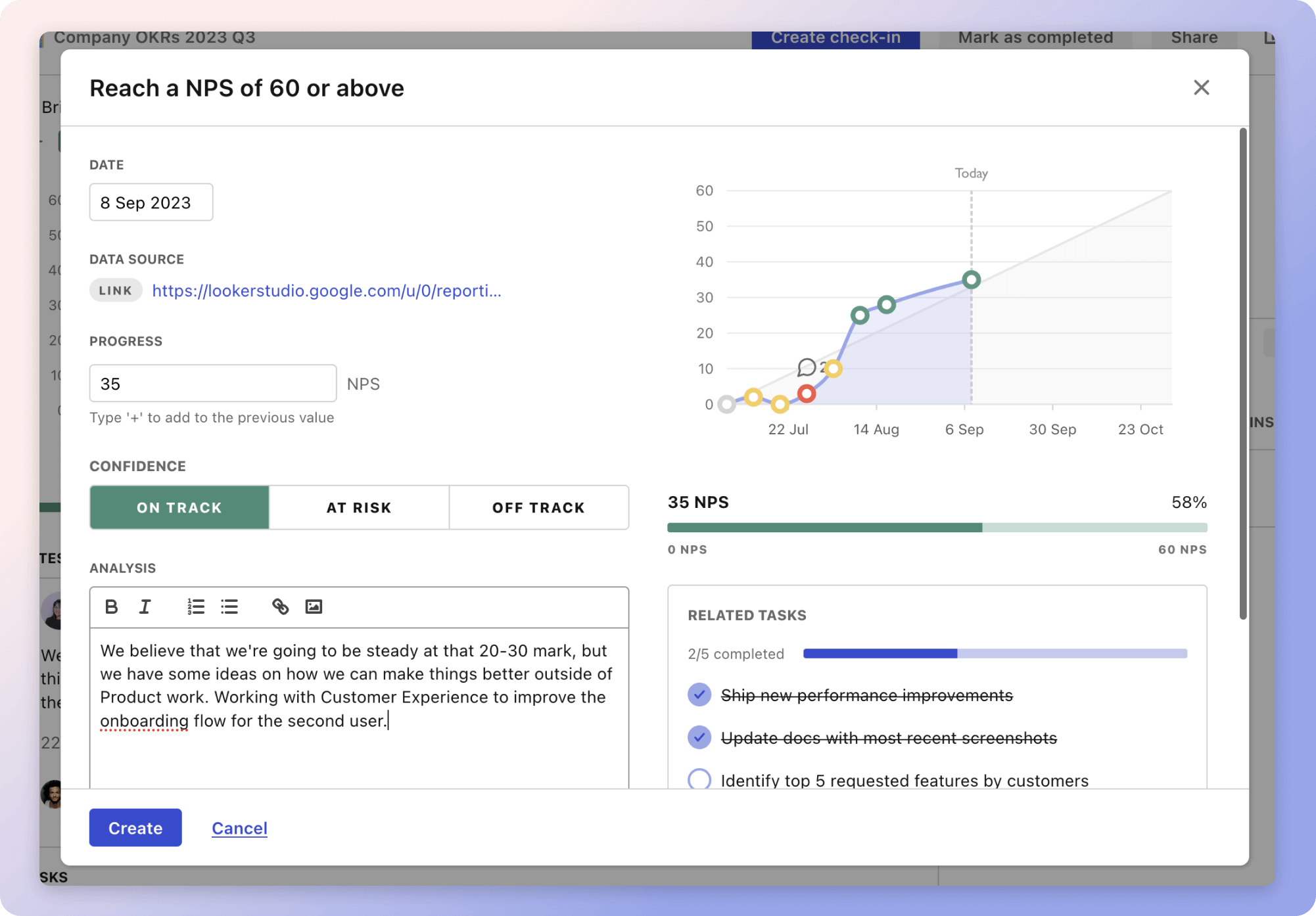 Tability's check-ins will save you hours and increase transparency
 The best metrics for Increase Calls Through Google My Business