What are Cost Control metrics? Finding the right Cost Control metrics can be daunting, especially when you're busy working on your day-to-day tasks. This is why we've curated a list of examples for your inspiration.
Copy these examples into your preferred tool, or adopt Tability to ensure you remain accountable.
Find Cost Control metrics with AI While we have some examples available, it's likely that you'll have specific scenarios that aren't covered here. You can use our free AI metrics generator below to generate your own strategies.
Examples of Cost Control metrics and KPIs 1. Food Quality Rating Assesses the quality of food served based on customer feedback and reviews
What good looks like for this metric: 4.5 out of 5 stars
Ideas to improve this metric Conduct regular taste tests Solicit customer feedback Ensure fresh ingredients Train staff on culinary skills Regularly review and update recipes 2. Recipe Consistency Score Measures the consistency of recipes across different chefs and shifts
What good looks like for this metric: 90% consistency rate
Ideas to improve this metric Provide detailed recipe guides Use standardised measurements Conduct chef training sessions Regularly audit kitchen practices Set up a feedback loop with chefs 3. Employee Training Hours Tracks the number of training hours completed by employees to ensure high food quality and service standards
What good looks like for this metric: 20 hours per employee per year
Ideas to improve this metric Schedule regular training sessions Incorporate online learning modules Offer cross-training opportunities Practice skill assessments Incentivise training completion 4. Food Cost Percentage Indicates the percentage of revenue spent on food costs
What good looks like for this metric: 28% to 35%
Ideas to improve this metric Negotiate better supplier deals Conduct inventory audits regularly Implement portion control measures Analyse menu profitability Minimise food waste 5. Food Safety Compliance Rate Measures compliance with food safety regulations and standards
What good looks like for this metric: 100% compliance
Ideas to improve this metric Conduct regular safety training Implement a HACCP plan Use food safety checklists Conduct routine kitchen inspections Maintain equipment cleanliness
← →
1. Annual Sales Volume The total quantity of plastic products sold within a year
What good looks like for this metric: 10,000 MT in 2025, increasing to 50,000 MT by 2035
Ideas to improve this metric Expand market reach through marketing Increase product quality to boost sales Enhance sales team training and incentives Identify and target key industries needing plastic Collaborate with international partners 2. Production Yield The percentage of produced items that meet quality standards
What good looks like for this metric: 95% in 2025, aiming for 99% by 2035
Ideas to improve this metric Implement quality checks at each production phase Invest in modern machinery and technology Train employees on quality control processes Conduct regular maintenance on equipment Incorporate lean manufacturing practices 3. Customer Retention Rate The percentage of customers who continue to buy over time
What good looks like for this metric: 80% in 2025, increasing to 95% by 2035
Ideas to improve this metric Enhance customer service and support Implement a loyalty program Regularly seek customer feedback for improvements Offer personalized deals and discounts Ensure high product quality and consistency 4. Cost per Metric Tonne (MT) The cost incurred to produce one metric tonne of plastic
What good looks like for this metric: 10% reduction by 2026, aiming for 20% reduction by 2035
Ideas to improve this metric Streamline procurement processes Negotiate better deals with suppliers Optimize production scheduling for efficiency Minimize waste during production Utilize energy-efficient machinery 5. Training Hours per Employee The average number of hours each employee spends in training annually
What good looks like for this metric: 20 hours in 2025, increasing to 60 hours by 2035
Ideas to improve this metric Develop a comprehensive training calendar Encourage online and external training sessions Introduce mentorship programs Link training to career development plans Utilize technology for training modules
← →
1. Food Cost Percentage The food cost as a percentage of total sales, calculated by dividing the cost of ingredients by the total revenue and multiplying by 100
What good looks like for this metric: Typically 28% - 35%
Ideas to improve this metric Negotiate better prices with suppliers Use seasonal ingredients Reduce food waste Portion control each serving Menu engineering to encourage profitable dishes 2. Kitchen Labour Cost Percentage The percentage of revenue spent on kitchen staff salaries, calculated by dividing total kitchen payroll by total sales and multiplying by 100
What good looks like for this metric: Generally 20% - 25%
Ideas to improve this metric Optimise shift scheduling Cross-train staff for efficiency Use technology to streamline operations Implement a productivity bonus system Reduce overtime hours 3. Customer Satisfaction Score The average satisfaction rating collected from customer feedback surveys, often based on a 1 to 5 scale
What good looks like for this metric: Aim for 4.5/5 or higher
Ideas to improve this metric Regularly update the menu Train staff on customer service Respond to feedback promptly Conduct quality checks before service Enhance dining experience 4. Inventory Turnover Rate The rate at which inventory is used up and replaced, calculated by dividing the cost of goods sold by average inventory value
What good looks like for this metric: 4 to 8 times per month
Ideas to improve this metric Optimise inventory levels Adjust ordering frequency Implement just-in-time ordering Track inventory usage trends Use an inventory management system 5. Health Inspection Score The score received from health inspections, indicating compliance with food safety regulations
What good looks like for this metric: Strive for a score of 90 or above
Ideas to improve this metric Conduct regular internal audits Provide ongoing training on food safety Maintain a cleaning schedule Ensure equipment maintenance Regularly review health guidelines
← →
1. Overall Experienced F&B Measurement of guest satisfaction with food and beverage experience on a scale of 1 to 10
What good looks like for this metric: Above 8
Ideas to improve this metric Collect regular guest feedback Enhance menu diversity Improve food presentation Train staff on customer service Conduct quality control checks 2. Brand Audit Comprehensive review of brand standards and operational adherence resulting in a pass/fail
What good looks like for this metric: PASS
Ideas to improve this metric Review brand standards regularly Conduct internal audits Invest in staff training Enhance guest interactions Implement corrective actions swiftly 3. Breakfast Food Quality Assessment of guest satisfaction with breakfast food quality on a scale of 1 to 10
What good looks like for this metric: Above 7
Ideas to improve this metric Source high-quality ingredients Update breakfast menu frequently Solicit guest feedback Train kitchen staff Implement regular taste testing 4. Cost per Cover Average cost incurred per guest dining experience
What good looks like for this metric: Varies; targeted for reduction
Ideas to improve this metric Analyse pricing models Reduce food waste Optimise purchasing strategies Streamline kitchen processes Monitor portion sizes 5. Revenue Growth Percentage increase in revenue over a specified period
What good looks like for this metric: Industry average is around 5-10%
Ideas to improve this metric Enhance upselling techniques Introduce new services or products Improve marketing strategies Strengthen customer loyalty programs Evaluate pricing strategies
← →
Tracking your Cost Control metrics Having a plan is one thing, sticking to it is another.
Don't fall into the set-and-forget trap. It is important to adopt a weekly check-in process to keep your strategy agile – otherwise this is nothing more than a reporting exercise.
A tool like Tability can also help you by combining AI and goal-setting to keep you on track.
More metrics recently published We have more examples to help you below.
Planning resources OKRs are a great way to translate strategies into measurable goals. Here are a list of resources to help you adopt the OKR framework:
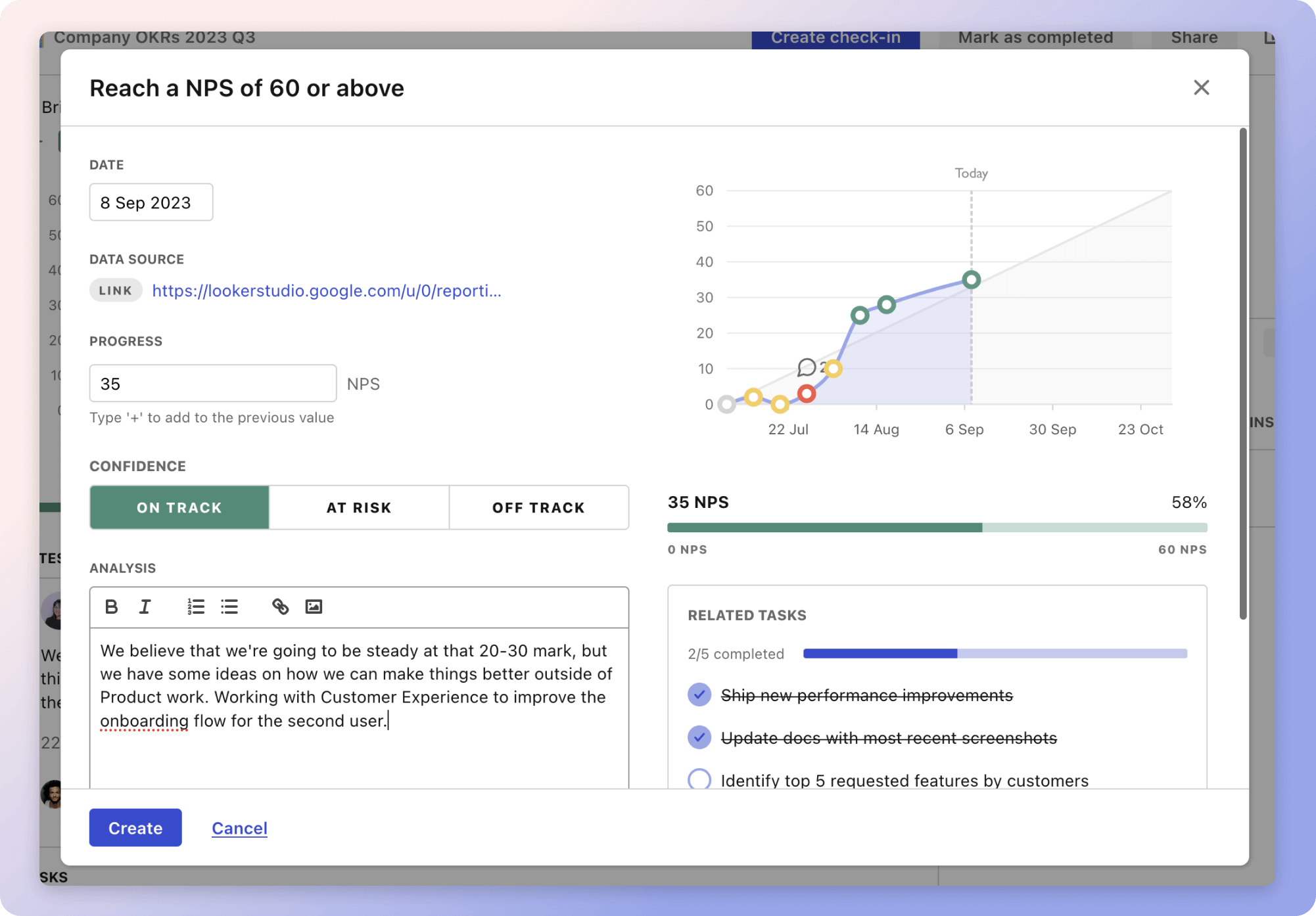 Tability's check-ins will save you hours and increase transparency
 The best metrics for Increase Calls Through Google My Business