What are Customer Service Manager metrics? Crafting the perfect Customer Service Manager metrics can feel overwhelming, particularly when you're juggling daily responsibilities. That's why we've put together a collection of examples to spark your inspiration.
Transfer these examples to your app of choice, or opt for Tability to help keep you on track.
Find Customer Service Manager metrics with AI While we have some examples available, it's likely that you'll have specific scenarios that aren't covered here. You can use our free AI metrics generator below to generate your own strategies.
Examples of Customer Service Manager metrics and KPIs 1. Customer Satisfaction Score (CSAT) Measures the level of satisfaction customers feel after interacting with customer service, typically collected through surveys
What good looks like for this metric: 80-85%
Ideas to improve this metric Implement regular customer feedback surveys Provide training sessions for employees Use sentiments analysis tools Improve response times Offer personalised customer service 2. First Response Time Calculates the average time it takes for a customer service representative to respond to a customer inquiry
What good looks like for this metric: Less than 24 hours
Ideas to improve this metric Use automated responses Allocate resources efficiently Provide employees with comprehensive knowledge bases Implement better scheduling Use CRM tools to streamline processes 3. Average Handling Time (AHT) Measures the average time spent on a customer service interaction from start to finish
What good looks like for this metric: 6-8 minutes
Ideas to improve this metric Provide effective training for handling queries Use scripts for common issues Streamline processes Encourage team collaboration Regularly review and optimise procedures 4. Employee Satisfaction Assesses the level of satisfaction of customer service employees about their work environment and job roles
What good looks like for this metric: 70-80%
Ideas to improve this metric Conduct regular employee satisfaction surveys Offer recognition and rewards programmes Provide opportunities for career advancement Implement team-building activities Ensure a balanced workload 5. Issue Resolution Rate Measures the percentage of customer service requests that are resolved successfully on first contact
What good looks like for this metric: 70-75%
Ideas to improve this metric Improve training for problem-solving Provide comprehensive resources for employees Encourage proactive communication Analyse common issues for better solutions Adopt technology to aid in resolution
← →
1. Number of New Distribution Points The total number of new retail distribution points established in a specific period due to outbound selling by customer service representatives
What good looks like for this metric: 10 new distribution points per quarter
Ideas to improve this metric Develop a targeted list of potential stores Train customer service reps on sales techniques Offer incentives for successful partnerships Leverage existing customer relationships Utilise data to identify high-potential areas 2. Conversion Rate The percentage of contacted stores that become active retailers
What good looks like for this metric: 20% conversion rate for outbound efforts
Ideas to improve this metric Refine sales pitch and presentation Identify and address common rejection reasons Use testimonials or case studies Follow up consistently with potential clients Provide flexible terms or agreements 3. Customer Service Rep Productivity Average number of new distribution points secured per customer service representative per month
What good looks like for this metric: 2 new points per rep per month
Ideas to improve this metric Streamline contact and follow-up processes Set clear targets and expectations Use technology to enhance outreach efforts Provide regular training and feedback Encourage collaboration among team members 4. Sales Cycle Length The average time it takes from the initial contact to the establishment of a new distribution point
What good looks like for this metric: 3-4 weeks from contact to establishment
Ideas to improve this metric Identify and remove bottlenecks in the process Automate parts of the follow-up process Improve product or brand education materials Monitor and adjust outreach timing strategies Tailor communication to the potential client's needs 5. Revenue from New Distribution Points The total revenue generated from the newly established distribution points
What good looks like for this metric: Increase initial revenue by 15% within 3 months
Ideas to improve this metric Offer introductory deals to incentivise sales Monitor stock levels at new locations Provide ongoing support and promotions Gather feedback and adjust offerings Encourage repeat orders with loyalty programmes
← →
1. First Call Resolution Rate Percentage of issues resolved on the first call without escalation
What good looks like for this metric: 70-80%
Ideas to improve this metric Provide comprehensive training for team members Implement a robust knowledge base Utilise remote access tools for rapid solutions Ensure clear communication during ticket handling Optimise ticket categorisation for swift allocations 2. Average Ticket Resolution Time Average time taken to resolve support tickets
What good looks like for this metric: Less than 24 hours
Ideas to improve this metric Enhance prioritisation of critical tickets Streamline internal workflows Employ ticketing software with automation features Offer frequent skill-improving sessions Regularly review ticket handoff processes 3. Customer Satisfaction Score Rating provided by customers after resolution
What good looks like for this metric: Above 90%
Ideas to improve this metric Solicit feedback through post-service surveys Provide personalised support where applicable Encourage proactive follow-ups with customers Analyse feedback data to identify improvement areas Reward team members demonstrating high satisfaction scores 4. Ticket Backlog Number of unresolved tickets over a specified time period
What good looks like for this metric: Less than 10% of total tickets
Ideas to improve this metric Regularly audit ticket queue for overdue items Implement weekly backlog reviews Balance team workload to prevent overloads Develop standard operating procedures for common issues Encourage team accountability for assigned tickets 5. Service Uptime Percentage of time the server environment is operational and available
What good looks like for this metric: 99.9%
Ideas to improve this metric Conduct regular system health checks Implement proactive monitoring systems Establish a thorough disaster recovery plan Schedule routine maintenance during off-peak hours Ensure redundancy for critical systems
← →
1. Average Ticket Resolution Time The average time taken to resolve a ticket from the moment it's opened until it's closed. This measures efficiency in handling support requests.
What good looks like for this metric: 24 hours or less
Ideas to improve this metric Automate repetitive tasks Improve staff training Streamline ticket prioritisation Use performance-boosting software Implement a robust knowledge base 2. First Contact Resolution Rate The percentage of tickets resolved during the initial contact with the help desk. A high rate indicates effective support processes.
What good looks like for this metric: 70-75%
Ideas to improve this metric Equip staff with decision-making power Enhance customer service scripts Provide ongoing training Utilise integrated support tools Conduct regular process reviews 3. Customer Satisfaction Score (CSAT) A measure of customer satisfaction with the resolution of their support tickets, often gathered via surveys after ticket closure.
What good looks like for this metric: 85% or higher
Ideas to improve this metric Conduct feedback analysis Enhance communication channels Personalise support interactions Reduce wait times Regular staff empathy training 4. Ticket Volume Per Channel Tracking the number of tickets received via each support channel (e.g., email, phone, chat) helps understand customer preferences.
What good looks like for this metric: Balanced distribution across channels
Ideas to improve this metric Promote diverse contact options Evaluate efficiencies of each channel Optimise routing based on traffic Balance workforce allocation Improve multi-channel integration 5. Backlog Ratio The ratio of unresolved tickets at any time, measuring how well the help desk manages its workload.
What good looks like for this metric: 10% or lower
Ideas to improve this metric Implement extra shifts during peak times Regularly review and close stale tickets Prioritise high-impact cases Automate low-priority ticket handling Improve resource planning
← →
1. Revenue Growth Rate Measures the percentage increase in revenue over a specific period, indicating business expansion and success
What good looks like for this metric: 10-25% annually for small businesses
Ideas to improve this metric Enhance marketing strategies Diversify income streams Optimize pricing models Improve customer retention Expand product or service offerings 2. Customer Acquisition Cost (CAC) Represents the total expense incurred in acquiring a new customer, essential for evaluating marketing efficiency
What good looks like for this metric: $50-150 for small businesses
Ideas to improve this metric Leverage referral programs Utilize social media marketing Optimize sales funnel Focus on targeted advertising Improve lead conversion rates 3. Customer Retention Rate Indicates the percentage of customers who stay with a business over a given period, reflecting customer satisfaction and loyalty
What good looks like for this metric: 50-80% for service-based businesses
Ideas to improve this metric Enhance customer support Implement loyalty programs Request regular feedback Personalize customer communication Increase service quality 4. Net Profit Margin Calculates the percentage of revenue that remains as profit after all expenses are deducted, showing the efficiency of the management
What good looks like for this metric: 10-20% for small to medium enterprises
Ideas to improve this metric Reduce operational costs Increase sales volume Evaluate supplier contracts Optimize inventory management Automate standard processes 5. Employee Satisfaction Assesses how content staff members are, which can influence productivity and company culture
What good looks like for this metric: 70-80% satisfaction rate
Ideas to improve this metric Conduct regular surveys Improve work-life balance Provide professional development Offer competitive benefits Encourage a collaborative environment
← →
1. Customer Satisfaction Score Measures the overall satisfaction of customers with the services provided by TAX2WIN, typically through surveys
What good looks like for this metric: Above 75%
Ideas to improve this metric Conduct regular feedback surveys Improve response time to queries Enhance user interface and user experience Offer personalised tax solutions Provide clear and detailed tax reports 2. Net Promoter Score (NPS) Gauges the likelihood of customers recommending TAX2WIN services to others on a scale of 0-10
What good looks like for this metric: Typically above 50
Ideas to improve this metric Increase customer engagement Enhance service reliability Offer referral discounts Resolve customer complaints swiftly Conduct customer success stories 3. Time to File Tax Returns Measures the average time taken for successful tax return filing from the initial client engagement
What good looks like for this metric: Less than 24 hours
Ideas to improve this metric Streamline the filing process Implement automation tools Reduce documentation requirements Provide detailed filing guides Train team on efficient workflows 4. Conversion Rate Percentage of leads or visitors who convert into actual users or pay for TAX2WIN services
What good looks like for this metric: 20-30%
Ideas to improve this metric Enhance website SEO Refine the sales funnel Create engaging content Offer promotions or discounts Improve landing page design 5. Revenue Growth Rate Measures the percentage growth in revenue over a specific period, indicating the financial health of TAX2WIN
What good looks like for this metric: 15-25% annually
Ideas to improve this metric Expand service offerings Increase marketing efforts Focus on customer retention Develop strategic partnerships Implement pricing strategies
← →
1. Client Response Rate Measures the percentage of client inquiries responded to within a specified time frame
What good looks like for this metric: 90% response rate within 24 hours
Ideas to improve this metric Implement an auto-response system Monitor and prioritise queries Train staff for effective communication Utilise customer relationship management software Set clear response time targets 2. Customer Satisfaction Score (CSAT) Rates clients' satisfaction with a particular interaction or experience
What good looks like for this metric: 80% satisfaction score
Ideas to improve this metric Conduct regular satisfaction surveys Personalise client interactions Resolve issues promptly Provide regular training for customer service staff Listen to and act on customer feedback 3. Net Promoter Score (NPS) Measures customer loyalty by asking clients if they would recommend the company
What good looks like for this metric: Score of 50 or above
Ideas to improve this metric Enhance customer experience Reward loyal customers Follow up on negative feedback Engage customers through personalised communication Improve product or service offerings 4. Client Retention Rate Percentage of clients retained over a specific period
What good looks like for this metric: 80% retention rate
Ideas to improve this metric Develop a client onboarding process Regularly update clients with new developments Create loyalty programmes Maintain consistent and personalised communication Analyze reasons for churn and address them 5. Average Resolution Time Average time taken to resolve client issues or inquiries
What good looks like for this metric: 24 hours or less
Ideas to improve this metric Integrate efficient customer support tools Prioritise and categorise client issues Streamline internal processes Set up a dedicated support team Regularly review and optimise procedures
← →
1. Referral Rate The percentage of your customers who refer others to your business. This is calculated by dividing the number of referred customers by the total number of customers
What good looks like for this metric: 10-30%
Ideas to improve this metric Enhance referral incentives Simplify the referral process Promote the referral program frequently Provide excellent customer service Recognise and reward top referrers 2. Customer Acquisition Cost (CAC) The cost associated with convincing a consumer to buy your product or service, including all marketing and sales expenses. This is calculated by dividing the total costs of acquisition by the number of new customers
What good looks like for this metric: $7-$15 per customer
Ideas to improve this metric Optimise marketing spend Increase organic reach Leverage social proof Enhance referral incentives Use cost-effective advertising channels 3. Lifetime Value (LTV) The predicted net profit attributed to the entire future relationship with a customer. This is calculated by multiplying the average purchase value, purchase frequency, and customer lifespan
What good looks like for this metric: $400-$500
Ideas to improve this metric Improve customer retention strategies Enhance product/service quality Upsell and cross-sell effectively Provide excellent customer service Offer loyalty programs 4. Referral Conversion Rate The percentage of referred leads who become paying customers. This is calculated by dividing the number of referred customers who make a purchase by the total number of referred customers
What good looks like for this metric: 10-20%
Ideas to improve this metric Streamline referral onboarding Offer time-limited incentives Provide clear value proposition Enhance user experience on landing pages Engage referrals with follow-up communications 5. Net Promoter Score (NPS) A measure of customer loyalty and satisfaction, calculated by asking customers how likely they are to recommend your business to others on a scale of 0-10 and subtracting the percentage of detractors from promoters
What good looks like for this metric: 30-50
Ideas to improve this metric Regularly solicit and act on customer feedback Improve product quality Provide exceptional customer service Engage with customers on social media Implement loyalty and reward programmes
← →
1. Response Rate Percentage of community concerns addressed within a set timeframe
What good looks like for this metric: 80% of concerns responded to within 2 days
Ideas to improve this metric Automate initial responses to ensure timely acknowledgment Allocate dedicated staff to monitor concerns Implement a prioritization system for urgent concerns Provide training for staff on effective communication Set clear internal response targets for accountability 2. Resolution Time Average time taken to resolve community concerns
What good looks like for this metric: Resolve issues within 5 days
Ideas to improve this metric Streamline processes for common issues Increase collaboration between departments Regularly review and refine resolution steps Maintain a database of past solutions for reference Utilize project management tools for task tracking 3. Community Satisfaction Score Measure the satisfaction of community members with the resolutions provided
What good looks like for this metric: Achieve a satisfaction score of 4 out of 5
Ideas to improve this metric Collect feedback through surveys post-resolution Regularly review and address negative feedback Ensure transparency about actions taken Offer additional support or resources when needed Host community forums to discuss common concerns 4. Engagement Rate Percentage of the community actively participating in engagement initiatives
What good looks like for this metric: 60% participation in community events
Ideas to improve this metric Promote engagement initiatives through multiple channels Provide incentives for participation Tailor events to address varied community interests Schedule events at convenient times for the majority Collaborate with local influencers for broader reach 5. Knowledge Improvement Assessment of community’s increased awareness on key nature reserve topics
What good looks like for this metric: Improve awareness by 25% annually
Ideas to improve this metric Conduct pre-and post-event knowledge surveys Develop educational content on crucial topics Host regular workshops and seminars Partner with schools for educational outreach Utilize social media for regular information dissemination
← →
1. Sales Volume Represents the total quantity of products sold through the wholesale channel
What good looks like for this metric: Varies by industry; aim for consistent growth
Ideas to improve this metric Expand product lines to meet diverse customer needs Enhance promotional activities to boost sales Strengthen relationships with existing partners Provide more flexible purchasing options Offer competitive pricing and discounts 2. Average Order Value Measures the average dollar amount spent by customers per order
What good looks like for this metric: Varies by industry; typically between $500-$5,000
Ideas to improve this metric Bundle products to increase order size Implement minimum order quantities Offer free shipping over a certain amount Develop loyalty programmes for frequent buyers Regularly review and adjust pricing strategies 3. Customer Lifetime Value Estimates the total value a customer will contribute over their lifetime
What good looks like for this metric: Typically 3-5 times the acquisition cost
Ideas to improve this metric Focus on high customer satisfaction Improve customer retention strategies Provide excellent after-sales support Cross-sell and upsell additional products Use personalised marketing campaigns 4. Customer Acquisition Cost Calculates the cost to acquire a new customer
What good looks like for this metric: Should be a fraction of Customer Lifetime Value
Ideas to improve this metric Optimise marketing spend Increase conversion rates on landing pages Enhance inbound marketing approaches Collaborate with relevant industry partners Leverage social media advertising 5. Channel Partner Satisfaction Evaluates the satisfaction level of wholesale partners
What good looks like for this metric: Aim for 80% or higher satisfaction
Ideas to improve this metric Solicit feedback regularly from partners Conduct training sessions to support partners Ensure efficient logistical support Foster open communication channels Address concerns promptly and effectively
← →
1. Revenue Growth Rate The increase in a company’s sales over a specific period, typically compared annually or quarterly
What good looks like for this metric: 10-25% annually is healthy
Ideas to improve this metric Increase marketing efforts Expand product line Enhance customer retention strategies Optimize pricing strategy Target new markets 2. Market Share The portion of a market controlled by a particular company or product
What good looks like for this metric: Varies by industry, generally 15% is strong
Ideas to improve this metric Benchmark against competitors Enhance brand presence Improve customer satisfaction Innovate product offerings Invest in advertising 3. Customer Acquisition Cost (CAC) The cost of acquiring a new customer, calculated by dividing total acquisition expenses by the number of new customers
What good looks like for this metric: Less than 1/3 of Lifetime Value (LTV)
Ideas to improve this metric Refine marketing strategies Enhance sales team performance Improve conversion rates Utilize cost-effective channels Focus on content marketing 4. Lifetime Value of a Customer (LTV) The total revenue expected from a customer account throughout its lifetime relationship with a company
What good looks like for this metric: Should be 3 times CAC
Ideas to improve this metric Enhance customer support Offer personalised services Increase customer engagement Implement loyalty programs Provide value-added services 5. Net Promoter Score (NPS) A measure of customer satisfaction and loyalty based on how likely customers are to recommend a company’s products or services to others
What good looks like for this metric: NPS of 30 or above is good
Ideas to improve this metric Solicit customer feedback Improve product quality Enhance customer service Address customer complaints Engage with detractors and promoters
← →
1. Sales Revenue Total income generated from sales of courses, measured in USD
What good looks like for this metric: $50,000 per month
Ideas to improve this metric Enhance course offerings Run targeted advertising campaigns Offer early-bird discounts Upsell related courses Optimise pricing strategy 2. Customer Satisfaction Score (CSAT) Measures the level of satisfaction of customers, usually rated on a scale of 1-5
What good looks like for this metric: 4.0 out of 5
Ideas to improve this metric Provide excellent customer support Gather and act on customer feedback Offer personalised learning paths Improve user interface and experience Ensure course content is high quality 3. Learner Engagement Rate Percentage of learners actively participating in the course, calculated by dividing active participants by total enrolled
What good looks like for this metric: 60%
Ideas to improve this metric Introduce interactive elements Provide regular updates and new content Encourage group discussions Use gamification techniques Send regular reminders and follow-ups 4. Course Completion Rate Percentage of learners who complete the course, calculated by dividing the number of completions by the total number enrolled
What good looks like for this metric: 70%
Ideas to improve this metric Design shorter, more manageable modules Set clear expectations and goals Offer incentives for completion Provide support resources Implement progress tracking 5. Knowledge Retention Rate Measures how much information learners retain over time, assessed through follow-up tests
What good looks like for this metric: 75%
Ideas to improve this metric Use varied teaching methods Incorporate spaced repetition Provide summary notes Offer periodic refreshers Encourage practical application of knowledge
← →
1. Customer Acquisition Rate Measures the number of new customers acquired within a specific period after the product launch, typically calculated as the percentage of new customers relative to total target audience
What good looks like for this metric: 20-30%
Ideas to improve this metric Increase marketing efforts Offer promotions or discounts Enhance online presence Use influencer partnerships Optimise your sales funnel 2. Customer Retention Rate Indicates the percentage of customers who continue to purchase your product after initial acquisition, calculated by dividing the number of repeat customers by the total number of customers
What good looks like for this metric: 40-60%
Ideas to improve this metric Improve customer service Introduce a loyalty programme Regularly update the product Solicit customer feedback Follow up with customers 3. Revenue Growth Rate Tracks the increase in revenue generated by the new product over a set period, usually expressed as a percentage
What good looks like for this metric: 10-25%
Ideas to improve this metric Upsell and cross-sell Expand into new markets Increase marketing investment Optimise pricing strategies Refine product features based on feedback 4. Market Penetration Measures the extent to which the new product is being adopted in the target market, calculated by the percentage of target market users purchasing the product
What good looks like for this metric: 5-15%
Ideas to improve this metric Conduct market research Adjust marketing messaging Offer introductory offers Establish strategic partnerships Create compelling product demo and trials 5. Customer Satisfaction Score Gauges customers' satisfaction with the new product, commonly measured using surveys and net promoter scores
What good looks like for this metric: 70-85%
Ideas to improve this metric Enhance product quality Improve customer support Offer easy-to-find help resources Regularly collect customer feedback Implement suggested improvements
← →
1. Customer Satisfaction Score Measures the level of satisfaction of customers with products or services. Calculated through surveys and feedback.
What good looks like for this metric: 85% or higher
Ideas to improve this metric Solicit regular customer feedback Train staff on customer service skills Improve product quality and variety Reduce waiting times at checkout Implement a customer loyalty programme 2. Sales Revenue Total income generated from sales activities during a given period.
What good looks like for this metric: Consistent increase month-over-month
Ideas to improve this metric Expand product range Enhance marketing efforts Offer discounts or promotions Improve store layout to encourage sales Train staff on upselling techniques 3. Inventory Turnover Rate The rate at which inventory is sold and replaced over a period, indicating inventory management efficiency.
What good looks like for this metric: 5 to 10 times per year
Ideas to improve this metric Optimise stock levels based on demand Use data analysis for restocking Clear slow-moving items with promotions Enhance supplier relations for quicker restocks Implement inventory management software 4. Employee Productivity Measures the effectiveness and efficiency of a shop's staff in generating sales and maintaining operations.
What good looks like for this metric: Revenue per employee above $150,000 annually
Ideas to improve this metric Provide continuous staff training Set clear performance targets Offer incentives for high performance Ensure proper staffing levels Streamline task processes 5. Net Profit Margin The percentage of revenue that exceeds the total expenses of a shop, showcasing profitability.
What good looks like for this metric: 10% to 20%
Ideas to improve this metric Reduce operating costs Increase the average transaction size Negotiate better terms with suppliers Implement cost-effective marketing strategies Regularly review financial statements for insights
← →
1. First Response Time The average time taken to respond to a customer's initial request for support
What good looks like for this metric: Less than 60 minutes
Ideas to improve this metric Implement automated response systems Prioritise tickets based on urgency Train staff on efficient support processes Increase staffing during peak times Regularly review and adjust response protocols 2. Customer Satisfaction Score (CSAT) A metric that measures how satisfied customers are with support service provided
What good looks like for this metric: Above 80%
Ideas to improve this metric Conduct regular feedback surveys Provide comprehensive training for support staff Implement a robust Quality Assurance process Ensure clear communication with customers Continuously optimize support processes 3. Resolution Rate The percentage of customer issues that are resolved upon first contact
What good looks like for this metric: Above 70%
Ideas to improve this metric Implement a comprehensive knowledge base Allow agents access to customer history Offer advanced training sessions Utilise AI tools for troubleshooting Encourage proactive problem resolution 4. Average Resolution Time The average amount of time taken to resolve a customer's issue
What good looks like for this metric: 2-4 hours
Ideas to improve this metric Ensure efficient ticket triaging Provide agents with advanced tools Identify and eliminate bottlenecks Streamline communication channels Regularly review unresolved cases 5. Net Promoter Score (NPS) A measure of customer loyalty and how likely they are to recommend the service
What good looks like for this metric: Above 50
Ideas to improve this metric Focus on enhancing customer experience Identify and support brand advocates Deliver consistent and reliable service Engage in active listening and feedback Implement loyalty programmes
← →
Tracking your Customer Service Manager metrics Having a plan is one thing, sticking to it is another.
Don't fall into the set-and-forget trap. It is important to adopt a weekly check-in process to keep your strategy agile – otherwise this is nothing more than a reporting exercise.
A tool like Tability can also help you by combining AI and goal-setting to keep you on track.
More metrics recently published We have more examples to help you below.
Planning resources OKRs are a great way to translate strategies into measurable goals. Here are a list of resources to help you adopt the OKR framework:
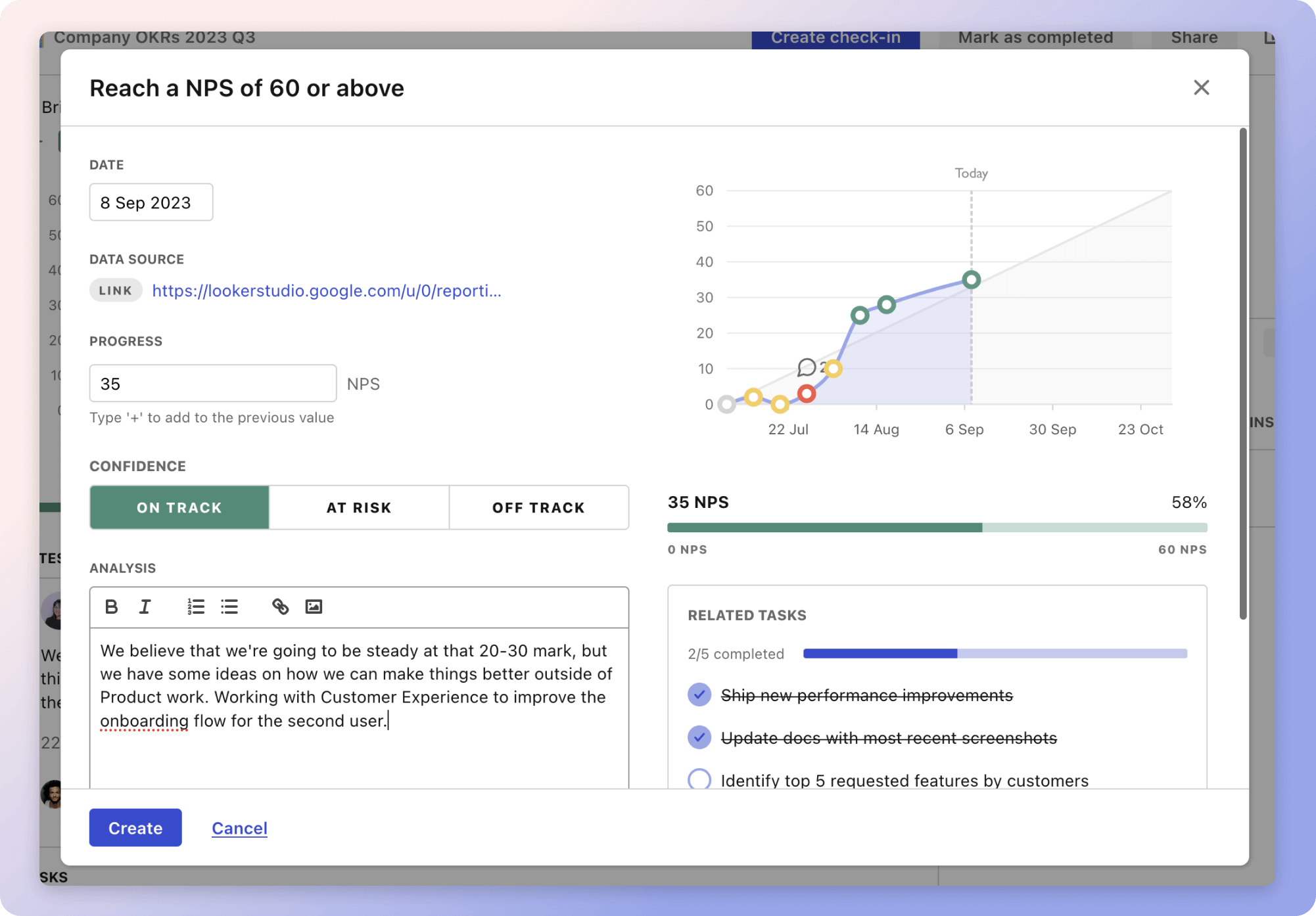 Tability's check-ins will save you hours and increase transparency
 The best metrics for Increase Calls Through Google My Business