This plan is focused on enhancing Quality and Compliance Management by utilizing specific, measurable metrics. Each metric offers a clear benchmark and improvement suggestions, ensuring that compliance is not just a goal but a continuous process. For instance, maintaining a compliance rate of 95% or higher ensures adherence to legal standards, while a low incident rate indicates effective preventative measures.
Audit Finding Resolution Time and Training Completion Rate are crucial for operational efficiency. Quick resolution of audit findings within 30 days helps in maintaining trust and credibility, whereas ensuring 100% training completion fosters a knowledgeable workforce adept in compliance matters. Sustainability Compliance underscores the importance of integrating sustainable practices, aiming for 80% adherence to sustainability regulations, thereby aligning with global environmental goals.
These metrics are vital because they ensure an organization not only adheres to legal requirements but also promotes a proactive culture of accountability and continuous improvement, which can significantly enhance operational efficiency and corporate reputation.
Top 5 metrics for Quality and Compliance Management
1. Compliance Rate
The percentage of processes that comply with legal and company standards.
What good looks like for this metric: 95% or higher
How to improve this metric:- Conduct regular compliance audits
- Provide comprehensive training for employees
- Implement a robust compliance monitoring system
- Facilitate open communication channels for compliance issues
- Regularly update compliance policies and procedures
2. Incident Rate
The number of incidents or violations of compliance standards over a period of time.
What good looks like for this metric: Less than 5 incidents per year
How to improve this metric:- Identify root causes of compliance incidents
- Improve risk assessment protocols
- Increase employee awareness on reporting procedures
- Enhance incident response strategies
- Foster a culture of accountability among staff
3. Audit Finding Resolution Time
The average time taken to resolve audit findings.
What good looks like for this metric: 30 days or less
How to improve this metric:- Prioritise and track resolution of audit findings
- Set clear deadlines for corrective actions
- Assign responsibility to specific individuals or teams
- Automate follow-up reminders for open issues
- Regularly review and analyse resolution processes
4. Training Completion Rate
Percentage of employees who have completed mandatory compliance training.
What good looks like for this metric: 100% completion
How to improve this metric:- Make training accessible via multiple platforms
- Incorporate engaging training materials
- Set mandatory training completion deadlines
- Track and report training progress regularly
- Encourage management to lead by example
5. Sustainability Compliance
The extent to which company operations adhere to sustainability regulations and goals.
What good looks like for this metric: 80% or higher
How to improve this metric:- Regularly review sustainability policies
- Implement sustainable practices across operations
- Engage partners and suppliers in sustainability goals
- Measure impact of sustainability initiatives
- Raise employee awareness on sustainability issues
How to track Quality and Compliance Management metrics
It's one thing to have a plan, it's another to stick to it. We hope that the examples above will help you get started with your own strategy, but we also know that it's easy to get lost in the day-to-day effort.
That's why we built Tability: to help you track your progress, keep your team aligned, and make sure you're always moving in the right direction.
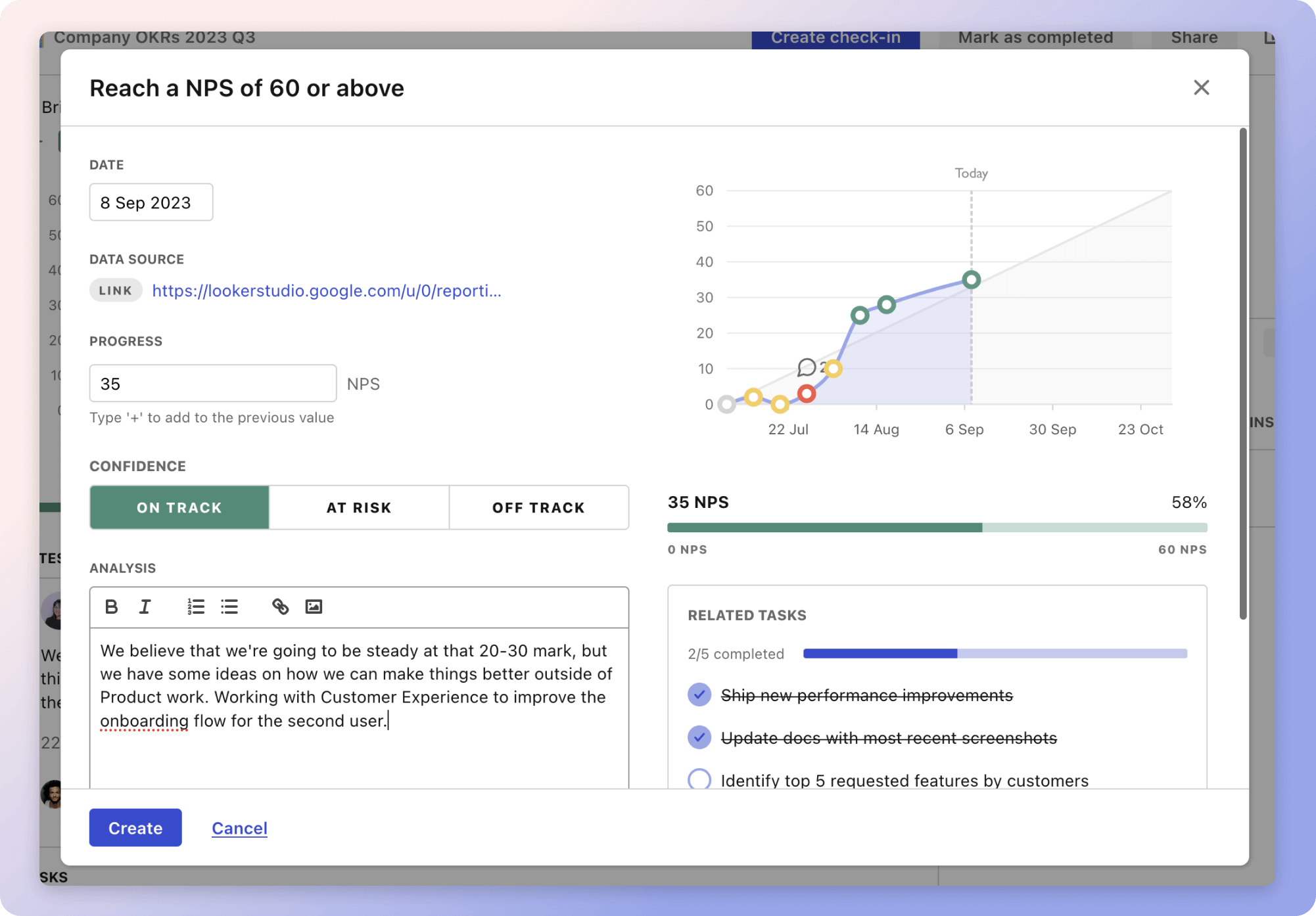
Give it a try and see how it can help you bring accountability to your metrics.
