Get Tability: OKRs that don't suck | Learn more →

Defect Rate metrics and KPIs

What are Defect Rate metrics?

Crafting the perfect Defect Rate metrics can feel overwhelming, particularly when you're juggling daily responsibilities. That's why we've put together a collection of examples to spark your inspiration.

Copy these examples into your preferred app, or you can also use Tability to keep yourself accountable.

Find Defect Rate metrics with AI

While we have some examples available, it's likely that you'll have specific scenarios that aren't covered here. You can use our free AI metrics generator below to generate your own strategies.

Examples of Defect Rate metrics and KPIs

Metrics for Quality Leakage Control

  • 1. Defect Rate in Outbound Products

    Percentage of products with defects after outbound quality checks

    What good looks like for this metric: Less than 1%

    Ideas to improve this metric
    • Implement additional quality checks
    • Conduct regular training sessions for quality inspectors
    • Establish clear quality standards and criteria
    • Enhance defect tracking systems
    • Perform root cause analysis for identified defects
  • 2. Recall Rate

    Frequency of products being recalled due to defects discovered post outbound checks

    What good looks like for this metric: Below 0.5%

    Ideas to improve this metric
    • Improve supplier quality management
    • Optimize quality assurance processes
    • Increase frequency of internal audits
    • Enhance product testing methodology
    • Strengthen communication channels for issue reporting
  • 3. Customer Complaint Rate

    Number of customer complaints received about product quality issues related to outbound checks

    What good looks like for this metric: Below 10 complaints per 1,000 units

    Ideas to improve this metric
    • Use customer feedback for continuous improvement
    • Establish a robust complaint resolution process
    • Monitor complaint trends for proactive measures
    • Train customer service teams on quality issues
    • Regularly review and update quality control protocols
  • 4. Cost of Poor Quality (COPQ)

    Financial measure of the costs associated with defects, rework, and warranty claims

    What good looks like for this metric: Less than 2% of total production costs

    Ideas to improve this metric
    • Increase investment in quality training
    • Adopt lean manufacturing techniques
    • Enhance process standardisation
    • Implement automated quality control systems
    • Regularly review cost data for insights
  • 5. First Pass Yield (FPY)

    Percentage of products that pass outbound quality checks without rework

    What good looks like for this metric: Above 95%

    Ideas to improve this metric
    • Analyse process flows for inefficiencies
    • Focus on equipment maintenance and calibration
    • Develop comprehensive training programs
    • Implement statistical process control (SPC)
    • Conduct regular process audits

Tracking your Defect Rate metrics

Having a plan is one thing, sticking to it is another.

Don't fall into the set-and-forget trap. It is important to adopt a weekly check-in process to keep your strategy agile – otherwise this is nothing more than a reporting exercise.

A tool like Tability can also help you by combining AI and goal-setting to keep you on track.
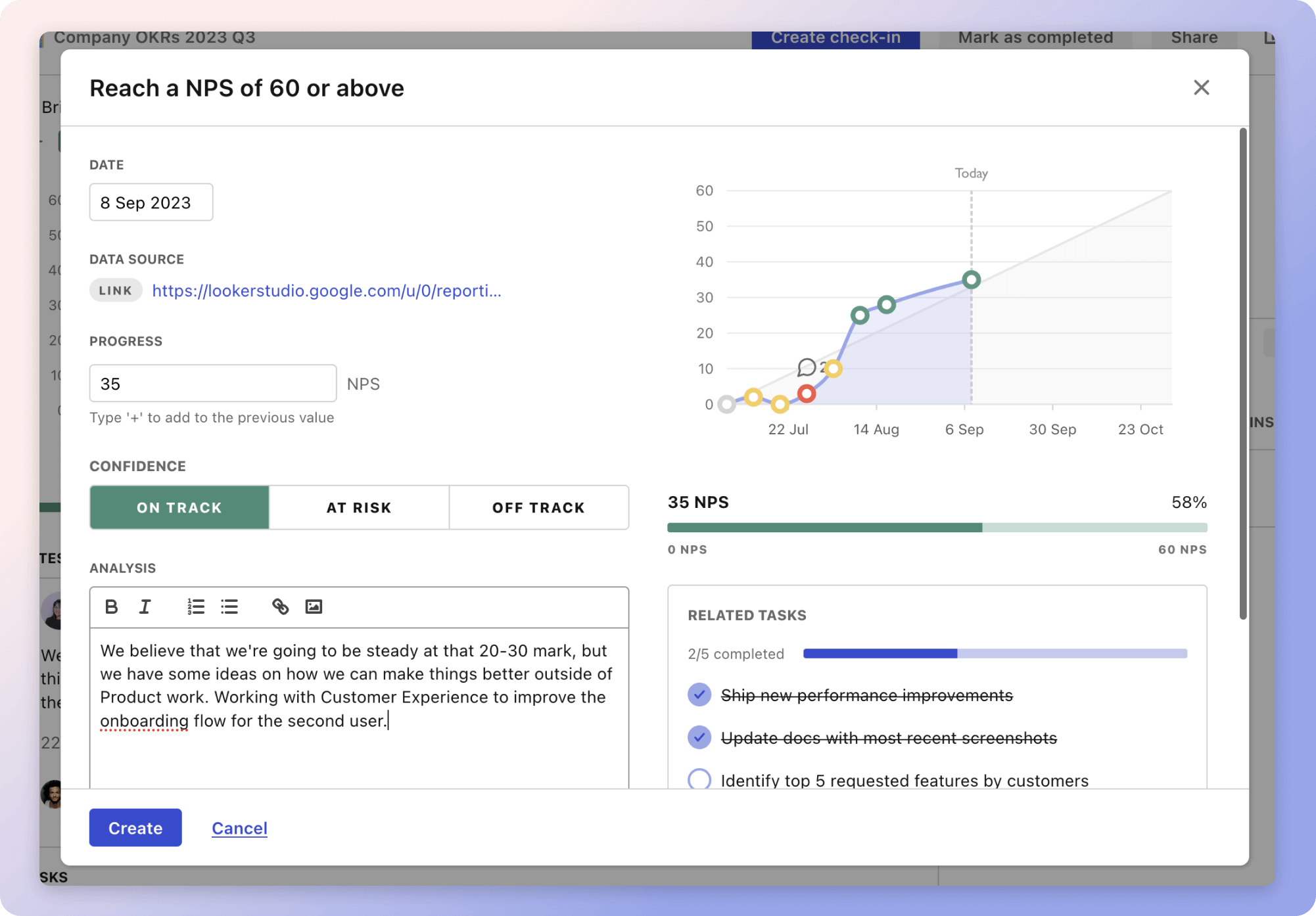
Tability Insights DashboardTability's check-ins will save you hours and increase transparency

More metrics recently published

We have more examples to help you below.

Planning resources

OKRs are a great way to translate strategies into measurable goals. Here are a list of resources to help you adopt the OKR framework:

Table of contents