What are Sales And Marketing Team metrics?
Identifying the optimal Sales And Marketing Team metrics can be challenging, especially when everyday tasks consume your time. To help you, we've assembled a list of examples to ignite your creativity.
Copy these examples into your preferred app, or you can also use Tability to keep yourself accountable.
Find Sales And Marketing Team metrics with AI
While we have some examples available, it's likely that you'll have specific scenarios that aren't covered here. You can use our free AI metrics generator below to generate your own strategies.
Examples of Sales And Marketing Team metrics and KPIs
Metrics for Reprocessed Plastic Recycling
1. Annual Sales Volume
The total quantity of plastic products sold within a year
What good looks like for this metric: 10,000 MT in 2025, increasing to 50,000 MT by 2035
Ideas to improve this metric- Expand market reach through marketing
- Increase product quality to boost sales
- Enhance sales team training and incentives
- Identify and target key industries needing plastic
- Collaborate with international partners
2. Production Yield
The percentage of produced items that meet quality standards
What good looks like for this metric: 95% in 2025, aiming for 99% by 2035
Ideas to improve this metric- Implement quality checks at each production phase
- Invest in modern machinery and technology
- Train employees on quality control processes
- Conduct regular maintenance on equipment
- Incorporate lean manufacturing practices
3. Customer Retention Rate
The percentage of customers who continue to buy over time
What good looks like for this metric: 80% in 2025, increasing to 95% by 2035
Ideas to improve this metric- Enhance customer service and support
- Implement a loyalty program
- Regularly seek customer feedback for improvements
- Offer personalized deals and discounts
- Ensure high product quality and consistency
4. Cost per Metric Tonne (MT)
The cost incurred to produce one metric tonne of plastic
What good looks like for this metric: 10% reduction by 2026, aiming for 20% reduction by 2035
Ideas to improve this metric- Streamline procurement processes
- Negotiate better deals with suppliers
- Optimize production scheduling for efficiency
- Minimize waste during production
- Utilize energy-efficient machinery
5. Training Hours per Employee
The average number of hours each employee spends in training annually
What good looks like for this metric: 20 hours in 2025, increasing to 60 hours by 2035
Ideas to improve this metric- Develop a comprehensive training calendar
- Encourage online and external training sessions
- Introduce mentorship programs
- Link training to career development plans
- Utilize technology for training modules
Metrics for Achieve $1M Monthly Revenue
1. Sales Conversion Rate
The percentage of visitors who purchase a course. Calculated as (Number of Purchases / Total Number of Visitors) * 100
What good looks like for this metric: 2-3%
Ideas to improve this metric- Optimise landing pages
- Enhance your sales funnel
- Offer limited-time discounts
- Improve customer trust signals
- A/B test pricing strategies
2. Monthly Traffic
The total number of visitors to your site each month. Calculated using web analytics tools like Google Analytics
What good looks like for this metric: 50,000-100,000 visits
Ideas to improve this metric- Invest in SEO
- Run targeted ad campaigns
- Collaborate with influencers
- Use content marketing
- Leverage social media platforms
3. Average Order Value (AOV)
The average amount spent each time a customer places an order. Calculated as Total Revenue / Number of Orders
What good looks like for this metric: $150-$300 USD
Ideas to improve this metric- Upsell and cross-sell products
- Bundle related products
- Implement tiered pricing
- Provide incentives for larger purchases
- Offer add-on services
4. Customer Acquisition Cost (CAC)
The cost to acquire a new customer. Calculated as Total Marketing Spend / Number of New Customers Acquired
What good looks like for this metric: $50-$150 USD
Ideas to improve this metric- Optimise marketing channels
- Increase organic traffic
- Refine target audience
- Improve ad targeting
- Enhance referral programs
5. Customer Lifetime Value (CLV)
The total revenue a business can reasonably expect from a single customer account. Calculated using metrics like average purchase value, purchase frequency, and customer lifespan
What good looks like for this metric: $500-$1000 USD
Ideas to improve this metric- Enhance customer loyalty programs
- Improve customer satisfaction
- Offer subscription models
- Foster strong customer relationships
- Personalise customer experience
Metrics for Relaunch Strategy
1. Conversion Rate
The percentage of visitors who make a purchase from your website. It's calculated by dividing the number of sales by the total number of visitors and multiplying by 100
What good looks like for this metric: 2-3%
Ideas to improve this metric- Optimise product descriptions and images
- Simplify the checkout process
- Offer limited-time promotions
- Use customer reviews and testimonials
- Ensure website is mobile-friendly
2. Average Order Value (AOV)
The average amount spent each time a customer places an order. It's calculated by dividing total revenue by the number of orders
What good looks like for this metric: $50-$100
Ideas to improve this metric- Offer bundled products or upsells
- Provide discounts for larger purchases
- Add recommendations for complementary products
- Ensure pricing is competitive yet profitable
- Create a loyalty program
3. Best Seller Performance
The sales performance of your top-selling products. It includes tracking sales volume, revenue, and profitability of best sellers
What good looks like for this metric: 20% of revenue from top 10 products
Ideas to improve this metric- Highlight best sellers on landing pages
- Feature best sellers in marketing campaigns
- Regularly review and update best seller list
- Provide easy ordering options for best sellers
- Analyse and replicate successful product traits
4. Customer Retention Rate
The percentage of repeat customers over a period of time. It is calculated by dividing the number of returning customers by total customers over the same period and multiplying by 100
What good looks like for this metric: 20-30%
Ideas to improve this metric- Enhance post-purchase follow-ups
- Offer loyalty or rewards programs
- Engage customers through personalised communications
- Seek feedback and implement improvements
- Ensure a high-quality customer service experience
5. Website Traffic
The total number of visits to your website, which can be segmented by source, such as direct, social, referral, and search
What good looks like for this metric: Varies by industry and company size
Ideas to improve this metric- Invest in SEO strategies
- Utilise social media marketing
- Run targeted advertising campaigns
- Leverage email marketing to attract returning visitors
- Collaborate with influencers or affiliates
Metrics for Sales and CSAT Targets
1. Sales Revenue
Total income generated from sales of courses, measured in USD
What good looks like for this metric: $50,000 per month
Ideas to improve this metric- Enhance course offerings
- Run targeted advertising campaigns
- Offer early-bird discounts
- Upsell related courses
- Optimise pricing strategy
2. Customer Satisfaction Score (CSAT)
Measures the level of satisfaction of customers, usually rated on a scale of 1-5
What good looks like for this metric: 4.0 out of 5
Ideas to improve this metric- Provide excellent customer support
- Gather and act on customer feedback
- Offer personalised learning paths
- Improve user interface and experience
- Ensure course content is high quality
3. Learner Engagement Rate
Percentage of learners actively participating in the course, calculated by dividing active participants by total enrolled
What good looks like for this metric: 60%
Ideas to improve this metric- Introduce interactive elements
- Provide regular updates and new content
- Encourage group discussions
- Use gamification techniques
- Send regular reminders and follow-ups
4. Course Completion Rate
Percentage of learners who complete the course, calculated by dividing the number of completions by the total number enrolled
What good looks like for this metric: 70%
Ideas to improve this metric- Design shorter, more manageable modules
- Set clear expectations and goals
- Offer incentives for completion
- Provide support resources
- Implement progress tracking
5. Knowledge Retention Rate
Measures how much information learners retain over time, assessed through follow-up tests
What good looks like for this metric: 75%
Ideas to improve this metric- Use varied teaching methods
- Incorporate spaced repetition
- Provide summary notes
- Offer periodic refreshers
- Encourage practical application of knowledge
Metrics for Improve Channel Partner Visibility
1. Quote-to-Order Ratio
The ratio of quotes provided by channel partners that convert into actual orders
What good looks like for this metric: 20-30% is typical in the industry
Ideas to improve this metric- Enhance the training of channel partners to improve their quoting accuracy
- Provide better sales tools and materials to channel partners
- Implement CRM systems to track and analyse quoting patterns
- Offer incentives for high quote-to-order conversion
- Regularly review partner performance and provide feedback
2. Lead Time Variance
Measures the difference between promised and actual delivery times by channel partners
What good looks like for this metric: 0-10% variance is desirable
Ideas to improve this metric- Set clear expectations with channel partners regarding lead times
- Implement joint planning sessions with partners to align on lead time goals
- Use demand forecasting tools to better predict lead times
- Regularly assess and enhance supply chain logistics
- Promote transparent communication between all parties
3. Order Frequency Per Partner
Tracks the number of orders placed by each channel partner over a specific period
What good looks like for this metric: Varies depending on partner size and capacity
Ideas to improve this metric- Analyse order patterns to identify potential bottlenecks
- Foster relationships with high-frequency partners to understand their success
- Allocate resources to low-frequency partners for support and growth
- Evaluate and adjust inventory strategies based on order frequency
- Provide targeted promotions to stimulate ordering
4. Sales Cycle Time
The average time it takes for a quote to turn into a closed sale via channel partners
What good looks like for this metric: 21 days is average for the objective scenario
Ideas to improve this metric- Identify stages in the sales cycle where delays occur and address them
- Automate parts of the sales process to reduce cycle time
- Train channel partners on effective sales techniques
- Use data analytics to pinpoint areas for process improvement
- Establish collaborative goals to align efforts with partners
5. Channel Partner Satisfaction Score
Measures the level of satisfaction among channel partners regarding their business transactions
What good looks like for this metric: Scores above 80% are preferable
Ideas to improve this metric- Conduct surveys to gather feedback from partners
- Address concerns and implement changes based on feedback
- Ensure consistent and clear communication channels with partners
- Create recognition and reward programs for partners
- Invest in an easy-to-use partner portal for interactions
Metrics for Improve response rate and satisfaction
1. Client Response Rate
Measures the percentage of client inquiries responded to within a specified time frame
What good looks like for this metric: 90% response rate within 24 hours
Ideas to improve this metric- Implement an auto-response system
- Monitor and prioritise queries
- Train staff for effective communication
- Utilise customer relationship management software
- Set clear response time targets
2. Customer Satisfaction Score (CSAT)
Rates clients' satisfaction with a particular interaction or experience
What good looks like for this metric: 80% satisfaction score
Ideas to improve this metric- Conduct regular satisfaction surveys
- Personalise client interactions
- Resolve issues promptly
- Provide regular training for customer service staff
- Listen to and act on customer feedback
3. Net Promoter Score (NPS)
Measures customer loyalty by asking clients if they would recommend the company
What good looks like for this metric: Score of 50 or above
Ideas to improve this metric- Enhance customer experience
- Reward loyal customers
- Follow up on negative feedback
- Engage customers through personalised communication
- Improve product or service offerings
4. Client Retention Rate
Percentage of clients retained over a specific period
What good looks like for this metric: 80% retention rate
Ideas to improve this metric- Develop a client onboarding process
- Regularly update clients with new developments
- Create loyalty programmes
- Maintain consistent and personalised communication
- Analyze reasons for churn and address them
5. Average Resolution Time
Average time taken to resolve client issues or inquiries
What good looks like for this metric: 24 hours or less
Ideas to improve this metric- Integrate efficient customer support tools
- Prioritise and categorise client issues
- Streamline internal processes
- Set up a dedicated support team
- Regularly review and optimise procedures
Metrics for Expanding Revenue Streams
1. Event Attendance Rate
The percentage of registered attendees who actually attend the event
What good looks like for this metric: Typically around 50-60%
Ideas to improve this metric- Increase marketing efforts
- Offer early bird discounts
- Enhance event content and speakers
- Engage in community outreach
- Implement reminder campaigns
2. Customer Acquisition Cost (CAC)
The cost associated with acquiring a new customer during events
What good looks like for this metric: $50 - $200 per customer
Ideas to improve this metric- Optimise ad campaigns for targeted audiences
- Seek partnerships to share costs
- Leverage social media for organic reach
- Offer referral discounts
- Evaluate and reduce unnecessary spending
3. Revenue per Event
Total revenue generated from a single event
What good looks like for this metric: Varies widely depending on industry and event size
Ideas to improve this metric- Introduce premium ticket options
- Increase sponsorship deals
- Implement upselling strategies
- Enhance post-event sales opportunities
- Diversify revenue streams within the event
4. Sponsorship Revenue
The total amount of money received from event sponsors
What good looks like for this metric: $5,000 - $100,000 depending on event scale and brand strength
Ideas to improve this metric- Develop appealing sponsorship packages
- Identify and target potential sponsors
- Highlight sponsorship benefits clearly
- Tailor offerings to sponsor's objectives
- Build long-term relationships with sponsors
5. Net Promoter Score (NPS)
A measure of attendees' likelihood to recommend the event to others
What good looks like for this metric: Typically between 30-50 for events
Ideas to improve this metric- Deliver memorable experiences
- Provide excellent customer service
- Ask for feedback and implement changes
- Create engaging and relevant content
- Maintain consistent communication with attendees
Metrics for Measure Company Growth
1. Revenue Growth Rate
The increase in a company’s sales over a specific period, typically compared annually or quarterly
What good looks like for this metric: 10-25% annually is healthy
Ideas to improve this metric- Increase marketing efforts
- Expand product line
- Enhance customer retention strategies
- Optimize pricing strategy
- Target new markets
2. Market Share
The portion of a market controlled by a particular company or product
What good looks like for this metric: Varies by industry, generally 15% is strong
Ideas to improve this metric- Benchmark against competitors
- Enhance brand presence
- Improve customer satisfaction
- Innovate product offerings
- Invest in advertising
3. Customer Acquisition Cost (CAC)
The cost of acquiring a new customer, calculated by dividing total acquisition expenses by the number of new customers
What good looks like for this metric: Less than 1/3 of Lifetime Value (LTV)
Ideas to improve this metric- Refine marketing strategies
- Enhance sales team performance
- Improve conversion rates
- Utilize cost-effective channels
- Focus on content marketing
4. Lifetime Value of a Customer (LTV)
The total revenue expected from a customer account throughout its lifetime relationship with a company
What good looks like for this metric: Should be 3 times CAC
Ideas to improve this metric- Enhance customer support
- Offer personalised services
- Increase customer engagement
- Implement loyalty programs
- Provide value-added services
5. Net Promoter Score (NPS)
A measure of customer satisfaction and loyalty based on how likely customers are to recommend a company’s products or services to others
What good looks like for this metric: NPS of 30 or above is good
Ideas to improve this metric- Solicit customer feedback
- Improve product quality
- Enhance customer service
- Address customer complaints
- Engage with detractors and promoters
Metrics for Increasing Revenue and Users
1. Customer Lifetime Value (CLV)
The total expected revenue from a customer over the duration of their business relationship. It helps in understanding how much a company should spend on acquiring new customers.
What good looks like for this metric: Benchmarks vary by industry, but generally a CLV to customer acquisition cost (CAC) ratio of 3:1 is considered good
Ideas to improve this metric- Enhance customer retention strategies to increase repeat purchases
- Personalise customer experience based on data analysis
- Optimise pricing strategies to maximise revenue
- Increase customer engagement through targeted marketing campaigns
- Develop loyalty programs to encourage customer retention
Metrics for Business Development Performance
1. Revenue Growth Rate
Percentage increase in revenue over a specified period, calculated as (Current Period Revenue - Previous Period Revenue) / Previous Period Revenue * 100
What good looks like for this metric: 5-10% annually for stable growth
Ideas to improve this metric- Enhance sales team training
- Expand product/service offerings
- Improve market analysis for new opportunities
- Increase customer referrals and testimonials
- Implement targeted marketing strategies
2. Customer Acquisition Cost (CAC)
Total cost of acquiring a new customer, calculated as total sales and marketing expense / number of new customers acquired
What good looks like for this metric: Typically $1 to $300 per customer
Ideas to improve this metric- Optimize marketing channels for efficiency
- Improve targeting of ideal customer profiles
- Enhance website conversion rates
- Leverage partnerships and collaborations
- Increase use of digital marketing tools
3. Customer Retention Rate
Percentage of customers retained over a given period, calculated as ((End of Period Customers - New Customers) / Start of Period Customers) * 100
What good looks like for this metric: 70-90% depending on the industry
Ideas to improve this metric- Improve product/service quality
- Enhance customer support experience
- Develop customer loyalty programmes
- Regularly gather and act on customer feedback
- Create engaging communication and content
4. Net Revenue Retention (NRR)
Percentage of recurring revenue retained from existing customers, including upgrades/downgrades, calculated as (Starting Revenue + Expansion Revenue - Churn) / Starting Revenue * 100
What good looks like for this metric: Over 100% indicates good growth
Ideas to improve this metric- Upsell existing customers to higher-tier plans
- Introduce new features to drive value
- Regularly communicate new offerings to customers
- Reduce churn by addressing common concerns
- Conduct regular account reviews with key clients
5. Profit Margin
Percentage of revenue that exceeds total costs, calculated as (Net Income / Revenue) * 100
What good looks like for this metric: 10-20% is common in the industry
Ideas to improve this metric- Reduce operational and production costs
- Negotiate better supplier contracts
- Optimize pricing strategies
- Increase operational efficiency
- Enhance financial management and reporting
Metrics for Business Performance Improvement
1. Revenue Growth Rate
The percentage increase in revenue over a specific period, indicating business expansion.
What good looks like for this metric: Typically 5% to 15% annually for stable industries
Ideas to improve this metric- Increase marketing efforts in high-potential areas
- Launch new products or services
- Improve pricing strategies
- Expand into new markets
- Enhance sales team's efficiency
2. Customer Acquisition Cost (CAC)
The total cost of acquiring a new customer, including marketing and sales expenses divided by the number of new customers.
What good looks like for this metric: $20 to $500 depending on the industry
Ideas to improve this metric- Optimise marketing spend
- Improve targeting in advertising
- Enhance conversion rate on sales funnel
- Leverage referrals and word-of-mouth
- Utilise partnerships and collaborations
3. Customer Retention Rate
The percentage of customers who continue to do business with a company over a given period.
What good looks like for this metric: 75% to 90% depending on the industry
Ideas to improve this metric- Enhance customer service and support
- Implement loyalty programs
- Regularly engage with customers via newsletters or updates
- Gather and act on customer feedback
- Strengthen community or brand connection
4. Net Revenue Retention (NRR)
The percentage of recurring revenue retained from existing customers over a set period, including upsells, cross-sells, and downgrades.
What good looks like for this metric: Above 100% is ideal
Ideas to improve this metric- Upsell and cross-sell to existing customers
- Implement personalised customer experiences
- Provide seamless customer onboarding and training
- Regularly review and address customer needs
- Maintain a competitive offering in the market
5. Profit Margin
The percentage of revenue that exceeds the costs of producing goods or services, indicating profitability.
What good looks like for this metric: 10% to 20% for most industries
Ideas to improve this metric- Reduce production or operational costs
- Streamline supply chain management
- Negotiate better supplier terms
- Focus on higher-margin products or services
- Improve financial management and budgeting
Metrics for Gift Show Feedback and Planning
1. Customer Feedback Ratings
Average ratings collected from customers about the existing product line on a scale of 1-5
What good looks like for this metric: 4.0 out of 5
Ideas to improve this metric- Increase direct customer interactions
- Organise focus groups
- Enhance customer feedback channels
- Implement follow-up surveys
- Incorporate customer feedback into product adjustments
2. Net Promoter Score (NPS)
Measures customer willingness to recommend the product line to others, calculated by subtracting the percentage of detractors from promoters
What good looks like for this metric: 50
Ideas to improve this metric- Enhance product quality
- Improve customer service
- Identify and address customer pain points
- Implement loyalty programmes
- Regularly survey customers to monitor NPS
3. Product Line Interest Rate
Percentage of attendees expressing interest in the existing product line
What good looks like for this metric: 30%
Ideas to improve this metric- Create engaging product displays
- Offer product samples or demonstrations
- Utilise targeted marketing strategies
- Provide exclusive show discounts
- Collect contact details for follow-up communication
4. Ideas for New Products
Number of unique ideas for new product introductions received from customer feedback
What good looks like for this metric: 10 ideas per event
Ideas to improve this metric- Encourage customer creativity
- Host brainstorming sessions
- Provide incentives for idea submission
- Analyse market trends for potential opportunities
- Engage in competitor analysis
5. Sales Conversion Rate
The percentage of gift show attendees who make a purchase from the product line
What good looks like for this metric: 25%
Ideas to improve this metric- Enhance sales team training
- Optimise the point of sale experience
- Provide attractive pricing strategies
- Utilise persuasive sales techniques
- Improve the overall customer journey
Metrics for Evaluating Unit Revenue Performance
1. Revenue Per Square Foot
Total revenue generated divided by the total square footage occupied. This indicates the revenue productivity of each unit space.
What good looks like for this metric: Typically ranges from $300 to $800 annually for retail spaces
Ideas to improve this metric- Increase marketing efforts to drive traffic
- Optimise pricing strategy to boost sales
- Enhance customer experience to increase spend
- Expand product offerings to attract diverse customers
- Utilise space efficiently by strategic merchandising
2. Occupancy Rate
The percentage of unit space that is occupied by tenants or products. It measures the utilisation of the space.
What good looks like for this metric: Aim for 85% to 95% occupancy
Ideas to improve this metric- Improve tenant retention with better lease terms
- Use data-driven marketing to target potential occupants
- Offer flexible lease arrangements to attract diverse tenants
- Enhance amenities or services to increase appeal
- Conduct market analysis to adjust pricing
3. Revenue Growth Rate
Percentage increase or decrease in revenue over a specific period, showing the speed of growth or decline.
What good looks like for this metric: 5% to 10% growth annually is often aimed for
Ideas to improve this metric- Launch targeted marketing campaigns
- Introduce loyalty programs to drive repeat purchases
- Expand to online sales channels to reach a wider audience
- Identify and target untapped market segments
- Streamline operations to reduce costs and increase profit margins
4. Net Profit Margin
Net profit divided by total revenue, indicating profitability after costs have been deducted.
What good looks like for this metric: Typically ranges from 5% to 15% depending on industry
Ideas to improve this metric- Reduce operational costs through efficiency improvements
- Negotiate better terms with suppliers
- Adjust pricing models to improve profitability
- Increase sales volume to benefit from economies of scale
- Implement cost-control measures across operations
5. Average Transaction Value
Average monetary value of each customer transaction, which helps assess customer spend per visit.
What good looks like for this metric: This varies by industry, typically $30–$100 in retail
Ideas to improve this metric- Upsell or cross-sell complementary products
- Offer bundle deals to encourage larger purchases
- Train staff to increase customer spend
- Evaluate pricing strategy for adjustments
- Enhance product mix to encourage higher spending
Metrics for Enhancing Product Display Options
1. Conversion Rate
The percentage of visitors who make a purchase, calculated as the number of purchases divided by the total number of visitors.
What good looks like for this metric: 2% to 3%
Ideas to improve this metric- Optimise product descriptions and images
- Simplify the checkout process
- Highlight customer reviews and testimonials
- Offer personalised recommendations
- Implement A/B testing for page elements
2. Average Order Value
The average amount spent each time a customer places an order, calculated by dividing total revenue by the number of orders.
What good looks like for this metric: $50 to $100
Ideas to improve this metric- Upsell with related products and bundles
- Offer discounts for bulk purchases
- Implement a loyalty programme
- Provide limited-time offers or promotions
- Enhance product pages with quality content
3. Bounce Rate
The percentage of visitors who leave the site after viewing only one page, calculated by dividing single-page visits by total visits.
What good looks like for this metric: 26% to 40%
Ideas to improve this metric- Improve site loading speed
- Create strong calls-to-action
- Ensure mobile responsiveness
- Enhance overall website design
- Offer engaging and relevant content
4. Time on Page
The average amount of time users spend on a product page, indicating engagement levels.
What good looks like for this metric: 2 to 3 minutes
Ideas to improve this metric- Enhance product descriptions and features
- Use high-quality images and videos
- Utilise interactive elements
- Provide detailed FAQs and tutorials
- Optimise layout for readability
5. Customer Retention Rate
The percentage of repeat customers over a specific time period, indicating loyalty and satisfaction.
What good looks like for this metric: 20% to 30%
Ideas to improve this metric- Deliver exceptional customer service
- Introduce membership or rewards programmes
- Implement feedback mechanisms and surveys
- Communicate through targeted email marketing
- Continuously update and improve product offerings
Metrics for Product Management Vision
1. Revenue Growth Rate
Measures the rate at which revenue is increasing over a given period, often expressed as a percentage
What good looks like for this metric: 10-20% annual growth
Ideas to improve this metric- Introduce new innovative products
- Expand into new markets
- Enhance marketing strategies
- Optimise pricing strategies
- Improve sales techniques
2. Customer Satisfaction Score
Assesses the level of satisfaction customers feel about a product or service, often measured through surveys
What good looks like for this metric: 75-85 out of 100
Ideas to improve this metric- Improve customer service
- Seek regular feedback
- Enhance product quality
- Address customer issues promptly
- Develop loyalty programmes
3. Employee Engagement Level
Evaluates how committed and motivated employees are towards their work and organisation
What good looks like for this metric: 70-80% engagement
Ideas to improve this metric- Foster a positive work environment
- Offer professional development
- Recognise and reward achievements
- Encourage open communication
- Provide work-life balance initiatives
4. Time to Market
Time taken from product conception to its availability in the market
What good looks like for this metric: 6-12 months
Ideas to improve this metric- Streamline development processes
- Adopt Agile methodologies
- Enhance cross-functional collaboration
- Implement project management tools
- Regularly review and adjust timelines
5. Net Promoter Score (NPS)
Gauge the likelihood of customers to recommend the company's products or services, indicating customer loyalty
What good looks like for this metric: 30-50
Ideas to improve this metric- Deliver exceptional customer experiences
- Address negative feedback quickly
- Continuously improve the product
- Engage with customers through multiple channels
- Build strong customer relationships
Tracking your Sales And Marketing Team metrics
Having a plan is one thing, sticking to it is another.
Don't fall into the set-and-forget trap. It is important to adopt a weekly check-in process to keep your strategy agile – otherwise this is nothing more than a reporting exercise.
A tool like Tability can also help you by combining AI and goal-setting to keep you on track.
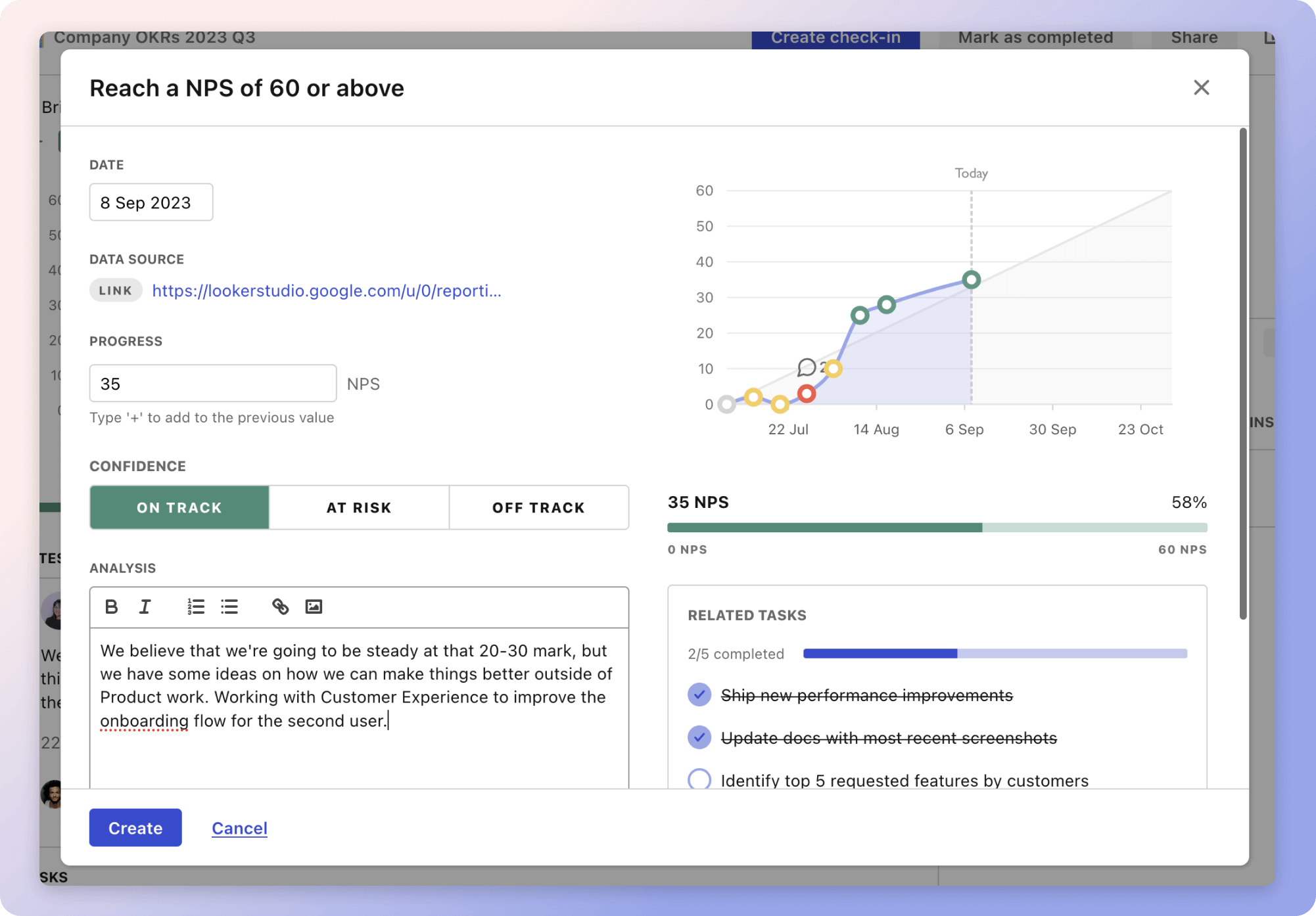 Tability's check-ins will save you hours and increase transparency
More metrics recently published
We have more examples to help you below.
 The best metrics for Increase Calls Through Google My Business
- The best metrics for GRC MSSP Compliance
- The best metrics for Reduce Courier Costs
- The best metrics for Reducing Courier Costs
- The best metrics for Operations Management Success
- The best metrics for Ensuring sticker quality
Planning resources
OKRs are a great way to translate strategies into measurable goals. Here are a list of resources to help you adopt the OKR framework:
- To learn: What are OKRs? The complete 2024 guide
- Blog posts: ODT Blog
- Success metrics: KPIs examples