What are Quality Control metrics? Finding the right Quality Control metrics can be daunting, especially when you're busy working on your day-to-day tasks. This is why we've curated a list of examples for your inspiration.
You can copy these examples into your preferred app, or alternatively, use Tability to stay accountable.
Find Quality Control metrics with AI While we have some examples available, it's likely that you'll have specific scenarios that aren't covered here. You can use our free AI metrics generator below to generate your own strategies.
Examples of Quality Control metrics and KPIs 1. Defect Rate in Outbound Products Percentage of products with defects after outbound quality checks
What good looks like for this metric: Less than 1%
Ideas to improve this metric Implement additional quality checks Conduct regular training sessions for quality inspectors Establish clear quality standards and criteria Enhance defect tracking systems Perform root cause analysis for identified defects 2. Recall Rate Frequency of products being recalled due to defects discovered post outbound checks
What good looks like for this metric: Below 0.5%
Ideas to improve this metric Improve supplier quality management Optimize quality assurance processes Increase frequency of internal audits Enhance product testing methodology Strengthen communication channels for issue reporting 3. Customer Complaint Rate Number of customer complaints received about product quality issues related to outbound checks
What good looks like for this metric: Below 10 complaints per 1,000 units
Ideas to improve this metric Use customer feedback for continuous improvement Establish a robust complaint resolution process Monitor complaint trends for proactive measures Train customer service teams on quality issues Regularly review and update quality control protocols 4. Cost of Poor Quality (COPQ) Financial measure of the costs associated with defects, rework, and warranty claims
What good looks like for this metric: Less than 2% of total production costs
Ideas to improve this metric Increase investment in quality training Adopt lean manufacturing techniques Enhance process standardisation Implement automated quality control systems Regularly review cost data for insights 5. First Pass Yield (FPY) Percentage of products that pass outbound quality checks without rework
What good looks like for this metric: Above 95%
Ideas to improve this metric Analyse process flows for inefficiencies Focus on equipment maintenance and calibration Develop comprehensive training programs Implement statistical process control (SPC) Conduct regular process audits
← →
1. Defect Rate Measures the percentage of defective goods identified during quality checks
What good looks like for this metric: Less than 3%
Ideas to improve this metric Enhance employee training on quality standards Implement stricter inspection protocols Utilise advanced detection technology Review and refine supplier quality Increase frequency of random sampling 2. First Pass Yield Percentage of products that pass quality checks on the first attempt without rework
What good looks like for this metric: Over 95%
Ideas to improve this metric Conduct thorough root cause analysis on failures Implement process improvements based on collected data Regularly maintain and calibrate equipment Collaborate with production for consistent quality Provide feedback loop for continuous improvement 3. Cost of Quality Total cost associated with ensuring products meet quality standards
What good looks like for this metric: Less than 10% of total sales
Ideas to improve this metric Streamline quality control processes to reduce costs Invest in automated systems to lower labour costs Focus on preventing defects over correcting them Improve efficiency in quality testing procedures Negotiate with suppliers for better component quality 4. Customer Complaints Number of complaints received related to product leaks and defects
What good looks like for this metric: Less than 1% of total deliveries
Ideas to improve this metric Implement real-time feedback systems Increase responsiveness to complaints Analyse complaint data for common issues Involve customers in quality assurance processes Develop clear communication channels for feedback 5. Return Rate Percentage of goods returned due to defects or leakage issues
What good looks like for this metric: Below 2%
Ideas to improve this metric Enhance packaging techniques to prevent damage Conduct thorough pre-shipment inspections Offer incentives for defect-free production Analyse excessive return patterns Incorporate strict documentation control
← →
1. Fermentation Duration This measures the time period for which cacao beans are fermented, typically calculated by the number of days the beans are kept at a controlled temperature and humidity.
What good looks like for this metric: 6 to 7 days
Ideas to improve this metric Ensure an even distribution of heat during fermentation Monitor and control humidity levels diligently Turn the beans regularly to aerate Use a thermometer to achieve optimal temperature Adjust fermenting period based on observed results 2. Temperature Control This measures the consistency of temperature maintained during cacao bean fermentation, which affects the flavour and quality of the final product.
What good looks like for this metric: 45°C to 50°C
Ideas to improve this metric Install thermal insulators around the fermentation setup Use thermostatic controllers to maintain steady temperature Regularly check for hot spots inside the fermenting boxes Utilise temperature logs to detect anomalies Consider environmental impact on temperatures and adjust accordingly 3. pH Levels Monitoring the acidity levels of fermenting beans helps in assessing proper fermentation, calculated by taking pH readings at intervals.
What good looks like for this metric: 4.5 to 5.5
Ideas to improve this metric Use a reliable pH meter for accurate readings Sample beans from different sections of the fermentation mass Evaluate pH at regular intervals Adjust fermenting circumstances to reach desired pH Apply organic acids if necessary to modulate pH 4. Moisture Content The proportion of water present in the fermenting beans, affecting final texture and processing requirements.
What good looks like for this metric: 53% to 60% during fermentation
Ideas to improve this metric Weigh batch before and after fermentation to determine moisture loss Use moisture meters for precise measurements Adjust ventilation to control evaporation rate Add water incrementally if moisture drops too low Monitor climate conditions to understand moisture variation 5. Aeration Frequency Frequency with which cacao beans are stirred or turned during fermentation to increase exposure to oxygen for consistent fermentation.
What good looks like for this metric: Every 48 hours
Ideas to improve this metric Use mechanical turners for uniform aeration Implement a consistent aeration schedule Observe changes in aroma to gauge when turning is needed Document each aeration session for review Collaborate with fermented food experts
← →
1. Infection Rate Reduction The measure of reduction in infection cases reported in the facility after renovations
What good looks like for this metric: A typical benchmark is a 20% reduction in infection rates
Ideas to improve this metric Conduct regular infection audits Ensure proper sanitisation of equipment Implement staff training on infection control Enhance air filtration systems Utilise antimicrobial surfaces 2. Patient Safety Incident Count Number of safety-related incidents reported per 1,000 patient days
What good looks like for this metric: Aim for fewer than 10 incidents per 1,000 patient days
Ideas to improve this metric Standardise safety protocols Improve staff communication channels Introduce safety drills and training Enhance surveillance systems Regularly update safety guidelines 3. Workflow Efficiency Percentage Percentage of processes completed within the expected time frame
What good looks like for this metric: Achieving at least 85% on-time process completion
Ideas to improve this metric Optimise staffing schedules Implement workflow management software Regularly review and adjust processes Conduct time management training Utilise feedback to streamline operations 4. Patient Satisfaction Scores Patients' average satisfaction rating post-renovation
What good looks like for this metric: A target of at least 90% satisfaction
Ideas to improve this metric Enhance waiting area conditions Provide clear communication about changes Solicit frequent patient feedback Ensure staff are attentive and responsive Provide patient education on safety improvements 5. Staff Compliance Rate with Protocols Percentage of staff compliance with updated infection control protocols
What good looks like for this metric: Aim for at least 95% compliance
Ideas to improve this metric Incentivise adherence to protocols Conduct regular staff assessments Provide ongoing training sessions Utilise visual reminders and aids Implement a peer review system
← →
1. Defect Rate The percentage of products or services that have defects relative to the total produced, often calculated by dividing the number of defective units by the total number of units produced.
What good looks like for this metric: Typically less than 1%
Ideas to improve this metric Implement stricter quality control processes Enhance staff training initiatives Conduct regular audits and inspections Utilise root cause analysis tools Increase customer feedback collection 2. First Pass Yield (FPY) The percentage of products manufactured correctly and to specification the first time through the process without using rework.
What good looks like for this metric: 85%-95%
Ideas to improve this metric Improve process documentation Increase equipment maintenance frequency Optimise employee onboarding and training Reduce process variability Incorporate automated quality checks 3. Customer Complaint Rate The number of customer complaints received over a specific period divided by the number of transactions within that period.
What good looks like for this metric: Less than 5 per 1,000 transactions
Ideas to improve this metric Improve after-sales support Analyse customer feedback for trends Maintain open communication channels Enhance product/service quality Regularly revise protocols based on feedback 4. Audit Compliance Rate The percentage of audits that pass compliance checks relative to the total number of audits conducted.
What good looks like for this metric: Above 95%
Ideas to improve this metric Regularly update compliance training for staff Automate compliance tracking Engage third-party compliance experts Conduct more frequent internal audits Develop corrective action plans for identified issues 5. Corrective Action Effectiveness Measures the success of implemented corrective actions, determined by the reduction in defects and issues post implementation.
What good looks like for this metric: Reduction in issues by at least 75%
Ideas to improve this metric Utilise a robust change management process Track and measure results of actions Ensure clear communication of changes to all stakeholders Perform regular follow-up checks Encourage continuous improvement culture
← →
1. Production Output Rate The production output rate measures the number of units produced per hour in the production area
What good looks like for this metric: Typical benchmark values range from 80-95 units per hour
Ideas to improve this metric Increase machine efficiency Minimise downtime through regular maintenance Optimise worker shifts for maximum coverage Implement process automation Ensure raw material availability 2. First Pass Yield First pass yield is the percentage of products that are manufactured correctly without needing rework
What good looks like for this metric: Typical benchmark values are around 90-95%
Ideas to improve this metric Enhance quality control checks Train workers in quality standards Reduce variance in input material Standardise production processes Use automated quality inspection tools 3. Kitting Accuracy Kitting accuracy measures the percentage of kits that are assembled correctly without errors
What good looks like for this metric: Typical benchmark values are 98-99%
Ideas to improve this metric Provide detailed kitting instructions Use barcode scanning technology Regularly audit kitting processes Conduct staff training sessions Implement an error-proofing system 4. Order Turnaround Time Order turnaround time is the time taken from order receipt to shipment completion
What good looks like for this metric: A typical benchmark is 24-48 hours
Ideas to improve this metric Optimise workflow processes Enhance line balancing Streamline communication with suppliers Automate inventory updates Prioritise orders based on delivery schedules 5. Waste Reduction Percentage This metric measures the percentage of waste reduced in the production and kitting processes
What good looks like for this metric: A typical benchmark is 5-10% waste reduction
Ideas to improve this metric Implement waste reduction programmes Reuse and recycle materials Train staff on waste management strategies Conduct regular waste audits Adopt lean manufacturing principles
← →
1. Defect Rate The percentage of stickers that are found to have defects during inspection
What good looks like for this metric: Less than 5%
Ideas to improve this metric Implement detailed inspection checklists Conduct regular staff training sessions Enhance quality control processes Increase random sampling frequencies Utilise automated inspection technology 2. Inspection Time per Unit The average time taken to inspect each sticker
What good looks like for this metric: 1-2 minutes per sticker
Ideas to improve this metric Streamline the inspection process Provide adequate training for inspectors Utilise technology to assist with inspections Optimise workflow layout Reduce distractions in the inspection area 3. Inspector Error Rate The rate at which inspectors overlook defects
What good looks like for this metric: Less than 1%
Ideas to improve this metric Conduct periodic retraining sessions Use peer review methods Establish a clear feedback loop Utilise double-check systems Implement incentive programs for accuracy 4. Cost of Inspection The cost associated with the inspection process per batch of stickers
What good looks like for this metric: 10-15% of production cost
Ideas to improve this metric Invest in more efficient equipment Reduce overtime by optimising schedules Train staff to enhance productivity Adopt digital record-keeping systems Utilise economies of scale in inspection 5. Customer Complaints related to Defects The number of customer complaints received about sticker defects post-inspection
What good looks like for this metric: Fewer than 2 per 1000 units
Ideas to improve this metric Enhance communication with customers Revise inspection criteria to align with customer expectations Implement immediate feedback systems Conduct regular customer satisfaction surveys Utilise complaints as training points for inspectors
← →
1. Percentage of Basic Data Quality Checks Implemented Measures the proportion of datasets with basic data quality checks applied
What good looks like for this metric: 80% or higher
Ideas to improve this metric Prioritise the implementation of basic checks on all datasets Provide training for team members on basics of data quality Allocate resources for implementing basic checks Automate basic data quality checks to ensure consistency Regularly review and update checklists for basic checks 2. Percentage of Advanced Data Quality Checks Implemented Measures the proportion of datasets with advanced data quality checks applied
What good looks like for this metric: 60% or higher
Ideas to improve this metric Identify datasets requiring advanced checks Develop a strategic plan for advanced data quality implementations Seek external expertise for complex checks Increase budget for advanced data quality tools Regularly review advanced check requirements 3. Month-Over-Month Improvement in Data Quality Maturity Tracks the percentage change or improvement in the implementation of data quality checks month-over-month
What good looks like for this metric: 5% increase
Ideas to improve this metric Set monthly targets to improve data quality metrics Analyse bottlenecks from previous months and address them Ensure consistent reporting and monitoring of progress Incorporate regular feedback loops from data teams Recognise and reward teams exceeding targets 4. Data Quality Issue Resolution Time Measures the average time taken to resolve data quality issues
What good looks like for this metric: Less than 48 hours
Ideas to improve this metric Streamline issue reporting processes Establish clear guidelines for issue prioritisation Provide tools and training for faster issue resolution Monitor and analyse common issue types Implement a rapid response team for data quality issues 5. User Feedback on Data Quality Collects user feedback regarding the perceived quality and reliability of data
What good looks like for this metric: 80% user satisfaction
Ideas to improve this metric Conduct regular surveys to gather user feedback Engage with users for detailed feedback sessions Communicate improvements to users regularly Set up feedback loop in data systems Address user concerns and demonstrate improvements
← →
1. Non-Conformance Rate The frequency of non-conformances in Halal standards detected during audits or inspections
What good looks like for this metric: Less than 10 incidents annually
Ideas to improve this metric Implement regular internal audits Provide comprehensive staff training Use checklists for routine checks Engage external experts for consultation Establish a corrective action plan 2. Audit Pass Rate The percentage of successfully passed Halal compliance audits out of total audits conducted
What good looks like for this metric: Above 90%
Ideas to improve this metric Conduct mock audits Ensure up-to-date documentation Set clear compliance instructions Regular management reviews Invest in audit management software 3. Supplier Halal Compliance Rate The percentage of suppliers that are compliant with Halal standards out of the total suppliers
What good looks like for this metric: Above 95%
Ideas to improve this metric Establish strict supplier guidelines Require supplier certification Conduct supplier audits/reviews Communicate regularly with suppliers Establish supplier improvement programs 4. Corrective Action Implementation Time The average time taken to implement corrective actions after a non-conformance is identified
What good looks like for this metric: Within 30 days
Ideas to improve this metric Prioritise action steps Assign dedicated resources Monitor progress weekly Automate reminders and follow-ups Create specific action deadlines 5. Training Completion Rate The percentage of employees that have completed Halal compliance training out of total employees
What good looks like for this metric: 100%
Ideas to improve this metric Schedule mandatory training sessions Offer e-learning modules Incentivise training completion Track training progress Regularly update training content
← →
1. Food Quality Rating Assesses the quality of food served based on customer feedback and reviews
What good looks like for this metric: 4.5 out of 5 stars
Ideas to improve this metric Conduct regular taste tests Solicit customer feedback Ensure fresh ingredients Train staff on culinary skills Regularly review and update recipes 2. Recipe Consistency Score Measures the consistency of recipes across different chefs and shifts
What good looks like for this metric: 90% consistency rate
Ideas to improve this metric Provide detailed recipe guides Use standardised measurements Conduct chef training sessions Regularly audit kitchen practices Set up a feedback loop with chefs 3. Employee Training Hours Tracks the number of training hours completed by employees to ensure high food quality and service standards
What good looks like for this metric: 20 hours per employee per year
Ideas to improve this metric Schedule regular training sessions Incorporate online learning modules Offer cross-training opportunities Practice skill assessments Incentivise training completion 4. Food Cost Percentage Indicates the percentage of revenue spent on food costs
What good looks like for this metric: 28% to 35%
Ideas to improve this metric Negotiate better supplier deals Conduct inventory audits regularly Implement portion control measures Analyse menu profitability Minimise food waste 5. Food Safety Compliance Rate Measures compliance with food safety regulations and standards
What good looks like for this metric: 100% compliance
Ideas to improve this metric Conduct regular safety training Implement a HACCP plan Use food safety checklists Conduct routine kitchen inspections Maintain equipment cleanliness
← →
1. Overall Experienced F&B Measurement of guest satisfaction with food and beverage experience on a scale of 1 to 10
What good looks like for this metric: Above 8
Ideas to improve this metric Collect regular guest feedback Enhance menu diversity Improve food presentation Train staff on customer service Conduct quality control checks 2. Brand Audit Comprehensive review of brand standards and operational adherence resulting in a pass/fail
What good looks like for this metric: PASS
Ideas to improve this metric Review brand standards regularly Conduct internal audits Invest in staff training Enhance guest interactions Implement corrective actions swiftly 3. Breakfast Food Quality Assessment of guest satisfaction with breakfast food quality on a scale of 1 to 10
What good looks like for this metric: Above 7
Ideas to improve this metric Source high-quality ingredients Update breakfast menu frequently Solicit guest feedback Train kitchen staff Implement regular taste testing 4. Cost per Cover Average cost incurred per guest dining experience
What good looks like for this metric: Varies; targeted for reduction
Ideas to improve this metric Analyse pricing models Reduce food waste Optimise purchasing strategies Streamline kitchen processes Monitor portion sizes 5. Revenue Growth Percentage increase in revenue over a specified period
What good looks like for this metric: Industry average is around 5-10%
Ideas to improve this metric Enhance upselling techniques Introduce new services or products Improve marketing strategies Strengthen customer loyalty programs Evaluate pricing strategies
← →
1. Annual Sales Volume The total quantity of plastic products sold within a year
What good looks like for this metric: 10,000 MT in 2025, increasing to 50,000 MT by 2035
Ideas to improve this metric Expand market reach through marketing Increase product quality to boost sales Enhance sales team training and incentives Identify and target key industries needing plastic Collaborate with international partners 2. Production Yield The percentage of produced items that meet quality standards
What good looks like for this metric: 95% in 2025, aiming for 99% by 2035
Ideas to improve this metric Implement quality checks at each production phase Invest in modern machinery and technology Train employees on quality control processes Conduct regular maintenance on equipment Incorporate lean manufacturing practices 3. Customer Retention Rate The percentage of customers who continue to buy over time
What good looks like for this metric: 80% in 2025, increasing to 95% by 2035
Ideas to improve this metric Enhance customer service and support Implement a loyalty program Regularly seek customer feedback for improvements Offer personalized deals and discounts Ensure high product quality and consistency 4. Cost per Metric Tonne (MT) The cost incurred to produce one metric tonne of plastic
What good looks like for this metric: 10% reduction by 2026, aiming for 20% reduction by 2035
Ideas to improve this metric Streamline procurement processes Negotiate better deals with suppliers Optimize production scheduling for efficiency Minimize waste during production Utilize energy-efficient machinery 5. Training Hours per Employee The average number of hours each employee spends in training annually
What good looks like for this metric: 20 hours in 2025, increasing to 60 hours by 2035
Ideas to improve this metric Develop a comprehensive training calendar Encourage online and external training sessions Introduce mentorship programs Link training to career development plans Utilize technology for training modules
← →
1. Central Line-Associated Bloodstream Infections (CLABSI) Rate This metric calculates the number of CLABSIs per 1,000 central line days in a healthcare setting
What good looks like for this metric: 0.8 infections per 1,000 central line days
Ideas to improve this metric Enhance hand hygiene protocols Utilise aseptic techniques during insertion Conduct regular staff training on line care Implement daily reviews of line necessity Use antimicrobial or antiseptic impregnated catheters 2. Compliance with Central Line Bundle The percentage of adherence to a proven protocol bundle that reduces infection risk during central line placements
What good looks like for this metric: 95% compliance
Ideas to improve this metric Standardise use of full barrier precautions Ensure appropriate skin antiseptic application Optimise the line insertion site based on risk Introduce audits and feedback systems Train staff regularly on bundle compliance 3. Central Line Duration The average number of days a central line remains in place
What good looks like for this metric: 5-7 days
Ideas to improve this metric Regularly assess the necessity of each line Establish protocols for early removal Increase awareness through patient education Develop an interdisciplinary line management team Use checklists to monitor line use 4. Infection Rate Post-Line Removal Measures the incidence of infection detected within 48 hours post-central line removal
What good looks like for this metric: Below 5%
Ideas to improve this metric Monitor signs of infection post-removal Improve patient follow-up procedures Offer training on signs of potential complications Educate patients on post-removal care Investigate and address removal technique issues 5. Patient Improvement Post-Implementation Tracks the improvement in patient health outcomes following the implementation of infection control measures
What good looks like for this metric: Improvement rate above 90%
Ideas to improve this metric Collect and analyse patient feedback Regularly update infection control protocols Introduce new control measures based on data Facilitate a collaborative care approach Invest in continuous staff development
← →
Tracking your Quality Control metrics Having a plan is one thing, sticking to it is another.
Don't fall into the set-and-forget trap. It is important to adopt a weekly check-in process to keep your strategy agile – otherwise this is nothing more than a reporting exercise.
A tool like Tability can also help you by combining AI and goal-setting to keep you on track.
More metrics recently published We have more examples to help you below.
Planning resources OKRs are a great way to translate strategies into measurable goals. Here are a list of resources to help you adopt the OKR framework:
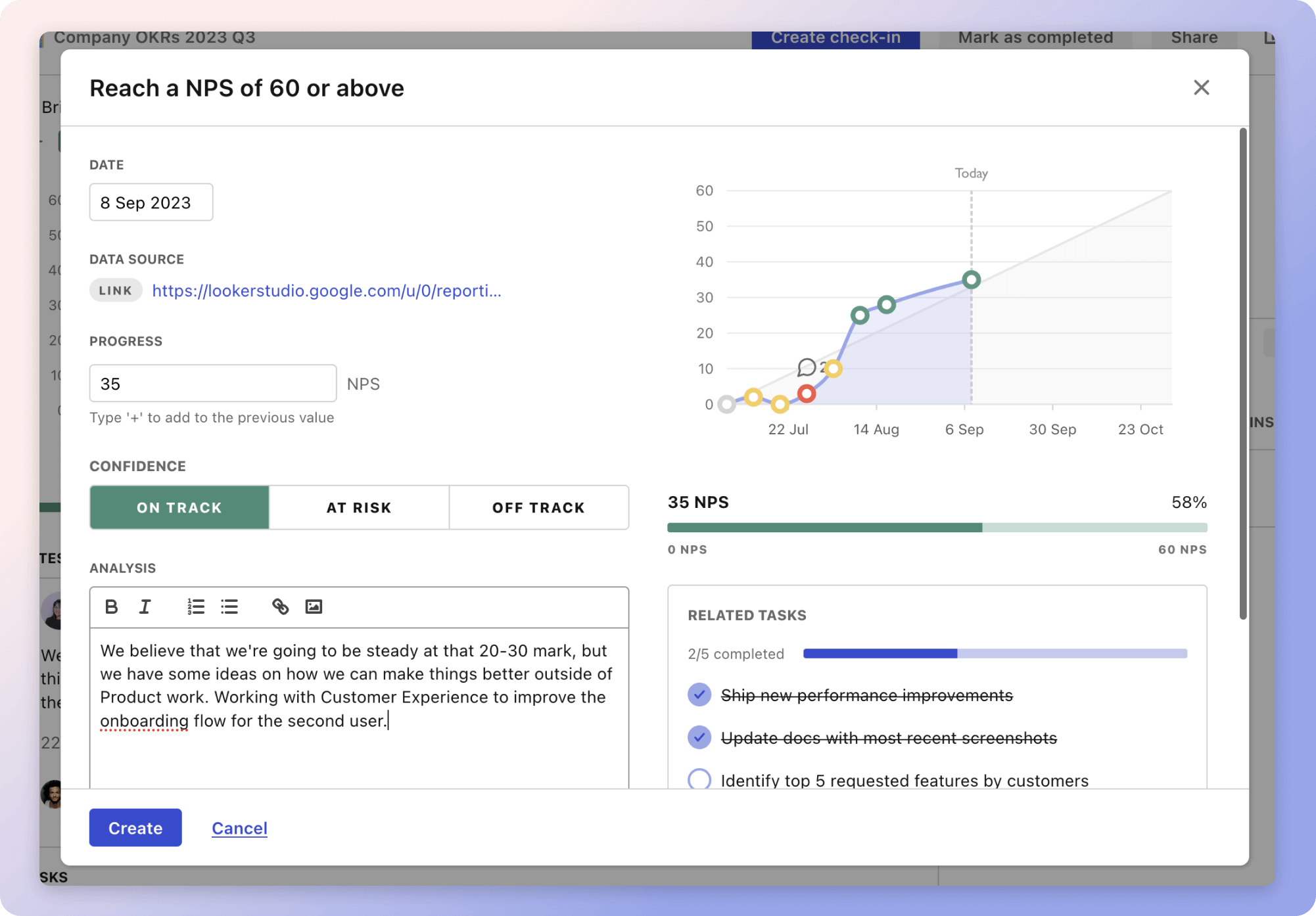 Tability's check-ins will save you hours and increase transparency
 The best metrics for Increase Calls Through Google My Business