The plan focuses on "Payment Processing Efficiency" by evaluating key metrics like Payment Processing Time, Payment Accuracy Rate, Cost Per Transaction, Claim Processing Time, and Customer Satisfaction Score. Each metric offers insights into various aspects of payment systems, which are crucial for improving overall performance. For example, minimizing Payment Processing Time through automation can expedite transactions, while enhancing Payment Accuracy Rate ensures reliability and reduces errors, boosting customer trust.
Improvement suggestions like automating workflows and conducting audits emphasize optimizing each metric. Monitoring Cost Per Transaction can help in maintaining financial efficiency, allowing the organization to cut unnecessary expenses and invest in critical areas. Prioritizing customer satisfaction through regular feedback can result in better user experience and loyalty.
Top 5 metrics for Payment Processing Efficiency
1. Payment Processing Time
The average amount of time taken to process a payment from initiation to completion
What good looks like for this metric: Typically 24-48 hours
How to improve this metric:- Automate payment processing workflows
- Ensure system uptime and reliability
- Provide training for faster processing techniques
- Streamline verification processes
- Optimize database performance
2. Payment Accuracy Rate
The percentage of payments processed accurately without errors
What good looks like for this metric: Above 99%
How to improve this metric:- Implement real-time validation checks
- Enhance data entry accuracy
- Conduct regular audits and reconciliation
- Train staff on error detection
- Use advanced fraud detection tools
3. Cost Per Transaction
The average cost incurred for processing each payment
What good looks like for this metric: Typically between $0.10 to $0.30
How to improve this metric:- Negotiate better rates with service providers
- Reduce manual intervention in transactions
- Utilize cost-effective payment platforms
- Scale operations to achieve economies of scale
- Regularly review and cut unnecessary costs
4. Claim Processing Time
The average time taken to file and complete proof of claims
What good looks like for this metric: 7 to 10 business days
How to improve this metric:- Automate claim filing processes
- Enhance communication with stakeholders
- Set clear timelines and follow-ups
- Train staff on efficient claim processing
- Utilize software for document management
5. Customer Satisfaction Score
The score representing customer satisfaction with the payment and claim processes
What good looks like for this metric: 80% or higher
How to improve this metric:- Conduct regular customer feedback surveys
- Resolve complaints promptly
- Enhance user interface of payment platforms
- Provide comprehensive customer support
- Educate customers on payment processes
How to track Payment Processing Efficiency metrics
It's one thing to have a plan, it's another to stick to it. We hope that the examples above will help you get started with your own strategy, but we also know that it's easy to get lost in the day-to-day effort.
That's why we built Tability: to help you track your progress, keep your team aligned, and make sure you're always moving in the right direction.
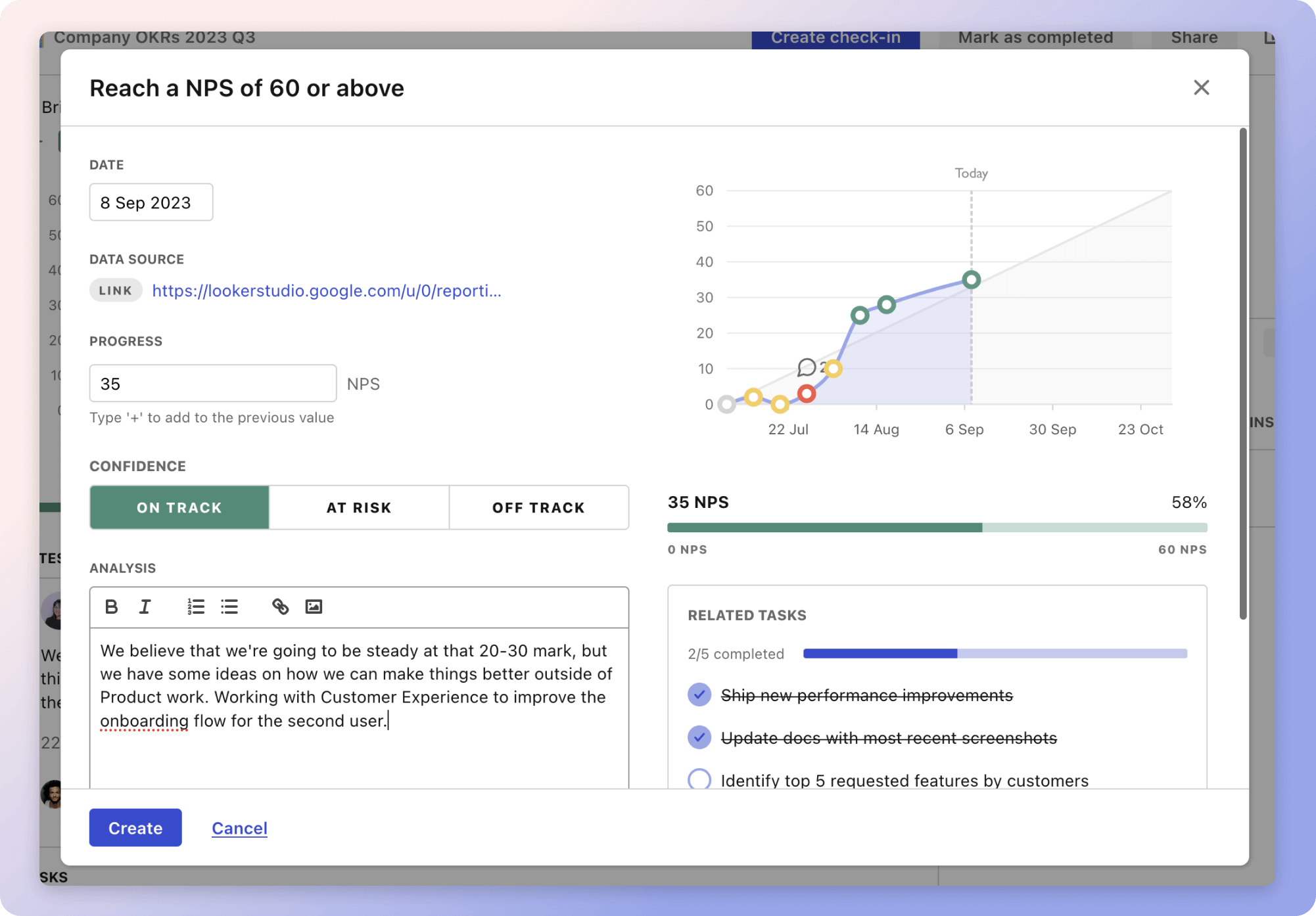
Give it a try and see how it can help you bring accountability to your metrics.
