What are It Development metrics? Crafting the perfect It Development metrics can feel overwhelming, particularly when you're juggling daily responsibilities. That's why we've put together a collection of examples to spark your inspiration.
Copy these examples into your preferred app, or you can also use Tability to keep yourself accountable.
Find It Development metrics with AI While we have some examples available, it's likely that you'll have specific scenarios that aren't covered here. You can use our free AI metrics generator below to generate your own strategies.
Examples of It Development metrics and KPIs 1. Annual Sales Volume The total quantity of plastic products sold within a year
What good looks like for this metric: 10,000 MT in 2025, increasing to 50,000 MT by 2035
Ideas to improve this metric Expand market reach through marketing Increase product quality to boost sales Enhance sales team training and incentives Identify and target key industries needing plastic Collaborate with international partners 2. Production Yield The percentage of produced items that meet quality standards
What good looks like for this metric: 95% in 2025, aiming for 99% by 2035
Ideas to improve this metric Implement quality checks at each production phase Invest in modern machinery and technology Train employees on quality control processes Conduct regular maintenance on equipment Incorporate lean manufacturing practices 3. Customer Retention Rate The percentage of customers who continue to buy over time
What good looks like for this metric: 80% in 2025, increasing to 95% by 2035
Ideas to improve this metric Enhance customer service and support Implement a loyalty program Regularly seek customer feedback for improvements Offer personalized deals and discounts Ensure high product quality and consistency 4. Cost per Metric Tonne (MT) The cost incurred to produce one metric tonne of plastic
What good looks like for this metric: 10% reduction by 2026, aiming for 20% reduction by 2035
Ideas to improve this metric Streamline procurement processes Negotiate better deals with suppliers Optimize production scheduling for efficiency Minimize waste during production Utilize energy-efficient machinery 5. Training Hours per Employee The average number of hours each employee spends in training annually
What good looks like for this metric: 20 hours in 2025, increasing to 60 hours by 2035
Ideas to improve this metric Develop a comprehensive training calendar Encourage online and external training sessions Introduce mentorship programs Link training to career development plans Utilize technology for training modules
← →
1. Payment Processing Time The average amount of time taken to process a payment from initiation to completion
What good looks like for this metric: Typically 24-48 hours
Ideas to improve this metric Automate payment processing workflows Ensure system uptime and reliability Provide training for faster processing techniques Streamline verification processes Optimize database performance 2. Payment Accuracy Rate The percentage of payments processed accurately without errors
What good looks like for this metric: Above 99%
Ideas to improve this metric Implement real-time validation checks Enhance data entry accuracy Conduct regular audits and reconciliation Train staff on error detection Use advanced fraud detection tools 3. Cost Per Transaction The average cost incurred for processing each payment
What good looks like for this metric: Typically between $0.10 to $0.30
Ideas to improve this metric Negotiate better rates with service providers Reduce manual intervention in transactions Utilize cost-effective payment platforms Scale operations to achieve economies of scale Regularly review and cut unnecessary costs 4. Claim Processing Time The average time taken to file and complete proof of claims
What good looks like for this metric: 7 to 10 business days
Ideas to improve this metric Automate claim filing processes Enhance communication with stakeholders Set clear timelines and follow-ups Train staff on efficient claim processing Utilize software for document management 5. Customer Satisfaction Score The score representing customer satisfaction with the payment and claim processes
What good looks like for this metric: 80% or higher
Ideas to improve this metric Conduct regular customer feedback surveys Resolve complaints promptly Enhance user interface of payment platforms Provide comprehensive customer support Educate customers on payment processes
← →
1. Investor Meeting Attendance Rate The percentage of investors who attend scheduled meetings out of the total invited
What good looks like for this metric: 70-80%
Ideas to improve this metric Increase meeting reminders and follow-ups Offer multiple time slots to accommodate different time zones Incorporate engaging presentation materials Provide clear and concise meeting agendas Utilise feedback to improve future meetings 2. Post-Meeting Investor Follow-Up Rate The percentage of investors who engage in follow-up communication after a meeting
What good looks like for this metric: 50-60%
Ideas to improve this metric Personalise follow-up emails Highlight key takeaways from meetings Offer additional data or insights discussed in meetings Address any investor queries promptly Schedule subsequent touchpoints in advance 3. Investor Email Open Rate The percentage of investor-targeted emails that are opened by recipients
What good looks like for this metric: 15-25%
Ideas to improve this metric Craft compelling subject lines Send emails at optimal times Segment audience to target messaging Reduce email frequency to avoid saturation Ensure emails are mobile-friendly 4. Investor Engagement Index A composite score determining the overall engagement level based on various interactions
What good looks like for this metric: 60-75
Ideas to improve this metric Foster personal relationships Enhance content relevancy Regularly update investors on progress Invite feedback and suggestions Utilise investor-exclusive updates 5. Investor Response Time The average time taken by investors to respond to a communication
What good looks like for this metric: 24-48 hours
Ideas to improve this metric Implement a clearer call-to-action Utilise CRM tools to track and enhance interactions Ensure prompt internal communication for quick responses Provide immediate value in communications Follow up on non-respondents
← →
1. System Uptime The percentage of time the infrastructure is operational and accessible to users.
What good looks like for this metric: 99.9%
Ideas to improve this metric Implement redundancy systems Perform regular maintenance checks Upgrade hardware components Monitor using advanced tools Develop a disaster recovery plan 2. Service Response Time The average time taken to respond to service requests or queries from users.
What good looks like for this metric: Less than 3 seconds
Ideas to improve this metric Optimise server configurations Use load balancing techniques Increase bandwidth availability Implement caching strategies Enhance database management 3. User Satisfaction Score A measure of user satisfaction collected through surveys and feedback forms.
What good looks like for this metric: Above 85%
Ideas to improve this metric Conduct regular user feedback sessions Implement a user-friendly interface Deliver consistent customer support Analyse feedback for improvements Introduce regular updates based on suggestions 4. Innovation Adoption Rate The percentage of new features or innovations adopted by users over time.
What good looks like for this metric: Above 60%
Ideas to improve this metric Promote new features actively Provide training sessions for users Offer incentives for early adoption Simplify the onboarding process Use user testimonials to encourage uptake 5. Incident Resolution Time The average time taken to resolve incidents or issues reported within the infrastructure.
What good looks like for this metric: Under 4 hours
Ideas to improve this metric Maintain a knowledgeable support team Use automated incident detection Streamline the issue escalation process Maintain a robust incident management tool Review and refine resolution procedures
← →
1. Latency Time taken for a transaction or processing a fall event from the input to the final output
What good looks like for this metric: 200-500 milliseconds
Ideas to improve this metric Optimize network bandwidth Utilise more efficient consensus algorithms Reduce data complexity in transactions Incorporate edge computing techniques Enhance processing speeds of nodes 2. Throughput Number of transactions processed within a given period
What good looks like for this metric: 10-100 transactions per second
Ideas to improve this metric Increase the number of nodes Upgrade node hardware Implement parallel processing techniques Optimize transaction validation methods Utilise sharding techniques 3. Security Breach Rate Number of successful breaches attempts per month
What good looks like for this metric: 0-1 breach per year
Ideas to improve this metric Regularly update encryption protocols Conduct routine security audits Implement multi-factor authentication Train staff on security awareness Utilise a robust incident response strategy 4. Scalability Ability to maintain performance as network size or data volume increases
What good looks like for this metric: Linear performance degradation with scale
Ideas to improve this metric Adopt more scalable consensus algorithms Reduce data redundancy Utilise cloud resources for storage Implement load balancing techniques Employ distributed ledger technology 5. Data Integrity Accuracy and consistency of data over its lifecycle
What good looks like for this metric: 99.9% integrity rate
Ideas to improve this metric Regularly verify data with hash functions Set permissions and roles for data access Utilise smart contracts for automatic validation Implement data replication strategies Conduct integrity checks at regular intervals
← →
1. Data Processing Throughput Measures the amount of data processed successfully within a given time frame, typically in gigabytes per second (GB/s)
What good looks like for this metric: Varies by system but often >1 GB/s for high-performing systems
Ideas to improve this metric Increase hardware capabilities Optimise software algorithms Implement data compression techniques Use parallel processing Upgrade network infrastructure 2. Latency Time taken from input to desired data processing action, measured in milliseconds (ms)
What good looks like for this metric: <100 ms for high-performing systems
Ideas to improve this metric Enhance server response time Minimise data travel distance Optimise application code Utilise content delivery networks Implement load balancers 3. Error Rate Percentage of errors during data processing compared to total operations, measured as a %
What good looks like for this metric: <5% for acceptable performance
Ideas to improve this metric Implement error-handling codes Train systems with more robust datasets Regularly update software Conduct thorough system testing Improve data input validity checks 4. Disk I/O Rate Measures read and write operations per second on storage devices, expressed in IOPS (input/output operations per second)
What good looks like for this metric: >10,000 IOPS for SSDs, lower for HDDs
Ideas to improve this metric Upgrade to faster storage solutions Redistribute data loads Increase cache sizes Use faster file systems Optimise database queries 5. Resource Utilisation Percentage of CPU, memory, and network bandwidth being used, expressed as a %
What good looks like for this metric: 75-85% for efficient resource use
Ideas to improve this metric Perform regular system monitoring Distribute workloads more evenly Implement scalable cloud solutions Prioritise critical processes Utilise virtualisation
← →
1. Latency The time taken for the image to load from the server to the user's end
What good looks like for this metric: Typical benchmark value is under 100ms
Ideas to improve this metric Optimize image sizes Use a Content Delivery Network (CDN) Implement lazy loading Enable browser caching Minimize HTTP requests 2. Cost Per Image Delivered The total cost incurred for delivering each image to the user
What good looks like for this metric: A typical benchmark is under $0.01 per image
Ideas to improve this metric Choose cost-effective hosting solutions Compress images to reduce size Utilise efficient caching strategies Optimise server infrastructure Leverage cost-effective CDNs 3. Image Load Time The amount of time it takes for an image to be fully accessible on a user's screen
What good looks like for this metric: An ideal benchmark is under 2 seconds
Ideas to improve this metric Reduce image dimensions Utilise responsive images Implement file format that loads faster Use asynchronous loading Optimise server response times 4. Scalability The ability to handle increasing load of image delivery without performance degradation
What good looks like for this metric: Should smoothly handle a 100% increase in traffic
Ideas to improve this metric Implement auto-scaling infrastructure Utilise robust load balancing solutions Optimise image storage options Conduct regular stress testing Use scalable databases 5. User Satisfaction Measures how satisfied users are with image load times and quality
What good looks like for this metric: Typical satisfaction rate above 80%
Ideas to improve this metric Conduct user feedback surveys Analyse user interaction data Regularly update images for relevance Ensure high-resolution options as needed Implement faster image formats
← →
1. Data Accuracy Measures the percentage of data entries that are correct and error-free across the system
What good looks like for this metric: Above 95%
Ideas to improve this metric Implement regular data audits Use automated data validation tools Provide staff training on data entry accuracy Establish clear data entry guidelines Enable error-detection algorithms 2. Data Completeness Assesses the percentage of data records that are fully filled and not missing any critical fields
What good looks like for this metric: Above 90%
Ideas to improve this metric Conduct routine completeness checks Utilise automated form filling Standardise data requirements Regularly review data input processes Incentivise complete data entry 3. Data Timeliness Measures the speed at which data is updated or made available for processing
What good looks like for this metric: Within 24 hours
Ideas to improve this metric Automate data update processes Set clear timelines for data entry Monitor data latency regularly Establish a data steward for timely updates Prioritise data updates during peak times 4. Data Consistency Evaluates whether data is consistent across different databases and sources
What good looks like for this metric: Close to 100% consistency
Ideas to improve this metric Implement cross-system data comparisons Use master data management tools Regularly review data transformation processes Ensure consistent data entry formats Provide training for consistent data handling 5. Data Relevance Determines the degree to which data is relevant and useful for current business needs
What good looks like for this metric: Above 85% of data in use
Ideas to improve this metric Regularly review and update data policies Conduct user feedback sessions Align data selection with business objectives Utilise data analytics to assess relevance Remove outdated or redundant data regularly
← →
Tracking your It Development metrics Having a plan is one thing, sticking to it is another.
Setting good strategies is only the first challenge. The hard part is to avoid distractions and make sure that you commit to the plan. A simple weekly ritual will greatly increase the chances of success.
A tool like Tability can also help you by combining AI and goal-setting to keep you on track.
More metrics recently published We have more examples to help you below.
Planning resources OKRs are a great way to translate strategies into measurable goals. Here are a list of resources to help you adopt the OKR framework:
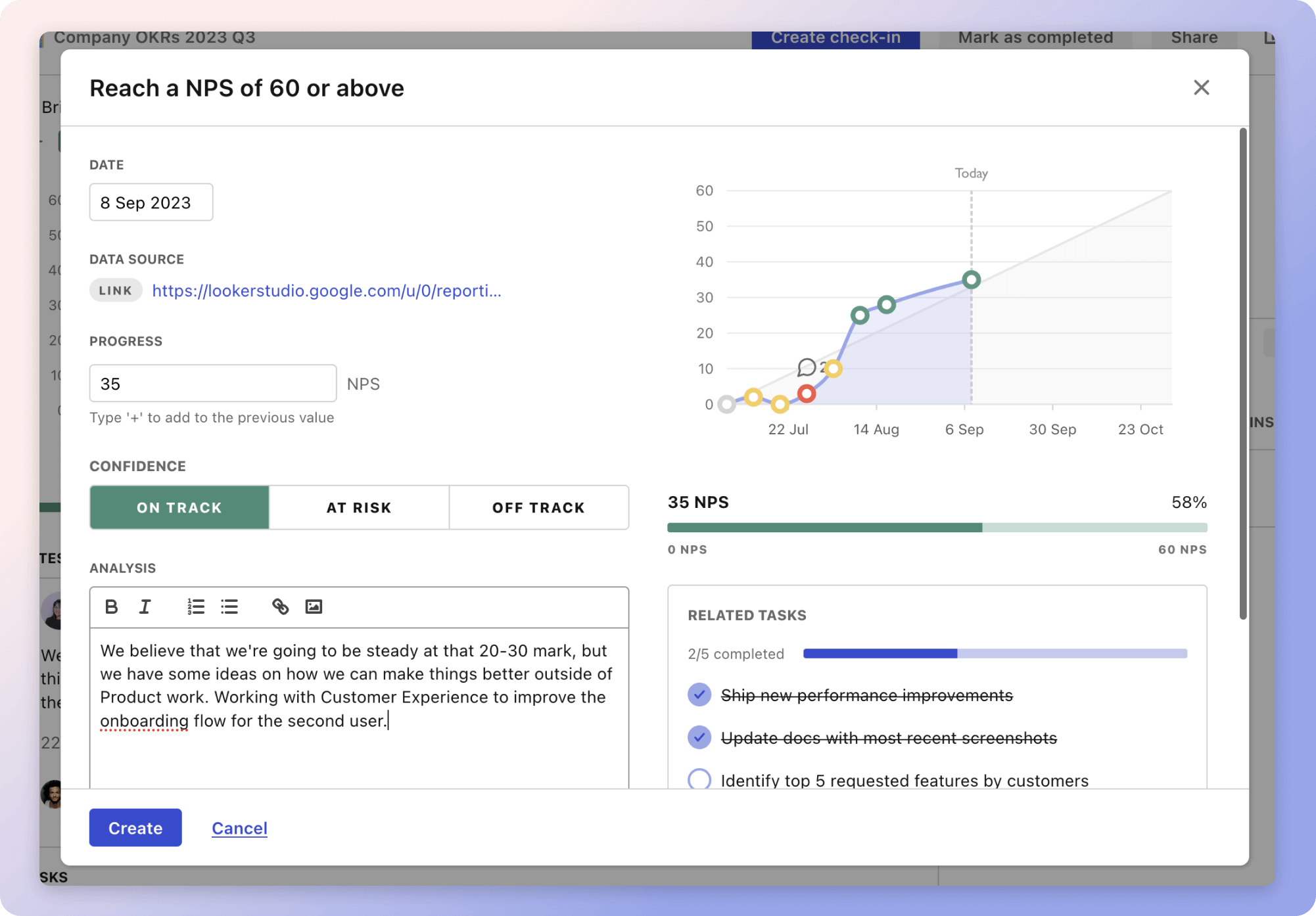 Tability's check-ins will save you hours and increase transparency
 The best metrics for Increase Calls Through Google My Business