In the objective to control quality leakage from outbound quality checks, key metrics such as Defect Rate, Recall Rate, and Customer Complaint Rate play a vital role. For instance, the Defect Rate measures the percentage of products with defects, aiming for less than 1%. By implementing additional quality checks and enhancing defect tracking systems, defect rates can be significantly reduced. This results in fewer recalls and improved customer satisfaction. Additionally, focusing on the Cost of Poor Quality (COPQ) and First Pass Yield (FPY) highlights the financial implications and efficiency of production processes. Together, these metrics provide a comprehensive approach to ensuring high product quality and operational efficiency.
Top 5 metrics for Quality Leakage Control
1. Defect Rate in Outbound Products
Percentage of products with defects after outbound quality checks
What good looks like for this metric: Less than 1%
How to improve this metric:- Implement additional quality checks
- Conduct regular training sessions for quality inspectors
- Establish clear quality standards and criteria
- Enhance defect tracking systems
- Perform root cause analysis for identified defects
2. Recall Rate
Frequency of products being recalled due to defects discovered post outbound checks
What good looks like for this metric: Below 0.5%
How to improve this metric:- Improve supplier quality management
- Optimize quality assurance processes
- Increase frequency of internal audits
- Enhance product testing methodology
- Strengthen communication channels for issue reporting
3. Customer Complaint Rate
Number of customer complaints received about product quality issues related to outbound checks
What good looks like for this metric: Below 10 complaints per 1,000 units
How to improve this metric:- Use customer feedback for continuous improvement
- Establish a robust complaint resolution process
- Monitor complaint trends for proactive measures
- Train customer service teams on quality issues
- Regularly review and update quality control protocols
4. Cost of Poor Quality (COPQ)
Financial measure of the costs associated with defects, rework, and warranty claims
What good looks like for this metric: Less than 2% of total production costs
How to improve this metric:- Increase investment in quality training
- Adopt lean manufacturing techniques
- Enhance process standardisation
- Implement automated quality control systems
- Regularly review cost data for insights
5. First Pass Yield (FPY)
Percentage of products that pass outbound quality checks without rework
What good looks like for this metric: Above 95%
How to improve this metric:- Analyse process flows for inefficiencies
- Focus on equipment maintenance and calibration
- Develop comprehensive training programs
- Implement statistical process control (SPC)
- Conduct regular process audits
How to track Quality Leakage Control metrics
It's one thing to have a plan, it's another to stick to it. We hope that the examples above will help you get started with your own strategy, but we also know that it's easy to get lost in the day-to-day effort.
That's why we built Tability: to help you track your progress, keep your team aligned, and make sure you're always moving in the right direction.
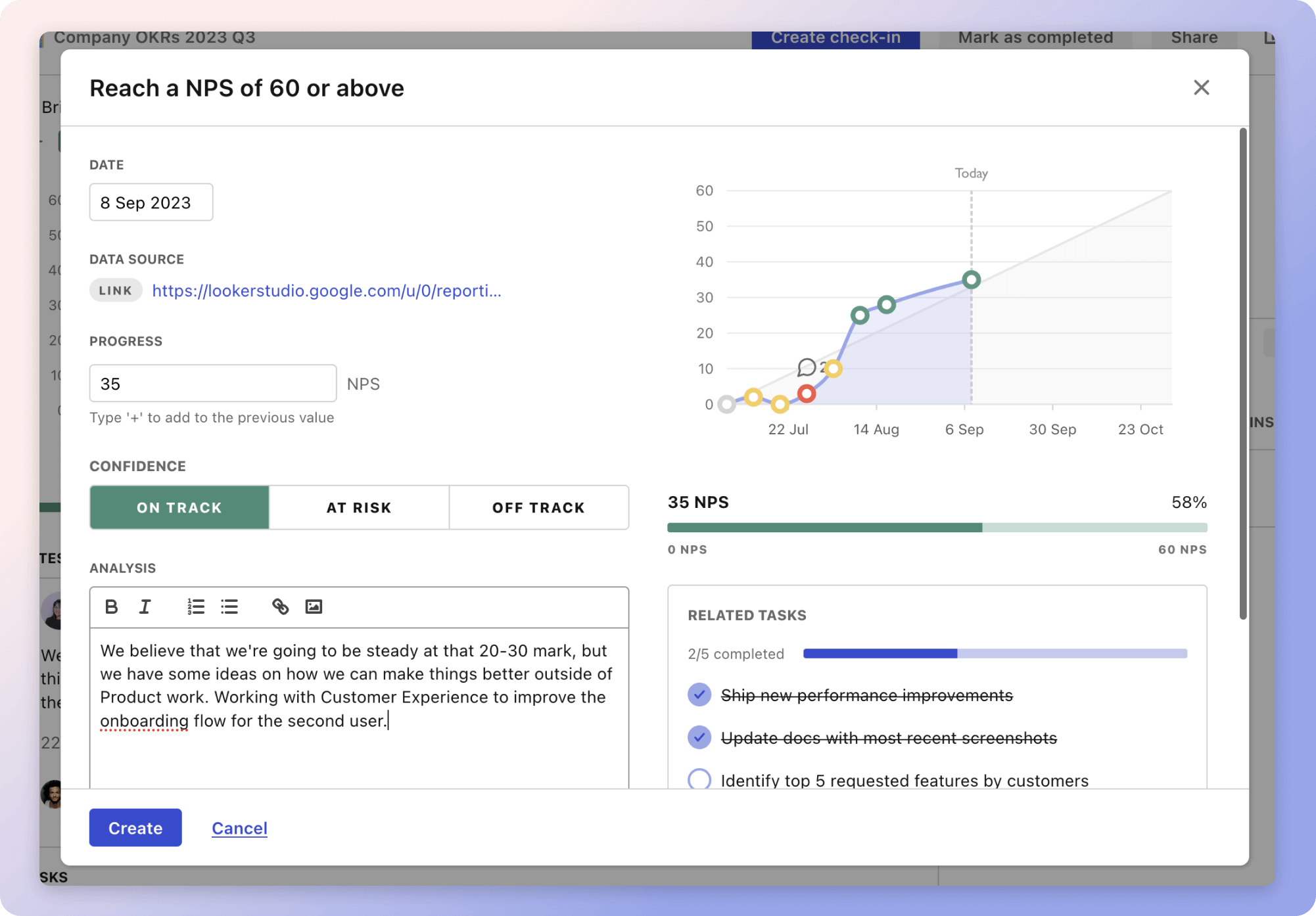
Give it a try and see how it can help you bring accountability to your metrics.
