What are Client Satisfaction metrics? Identifying the optimal Client Satisfaction metrics can be challenging, especially when everyday tasks consume your time. To help you, we've assembled a list of examples to ignite your creativity.
Feel free to copy these examples into your favorite application, or leverage Tability to maintain accountability.
Find Client Satisfaction metrics with AI While we have some examples available, it's likely that you'll have specific scenarios that aren't covered here. You can use our free AI metrics generator below to generate your own strategies.
Examples of Client Satisfaction metrics and KPIs 1. Client Response Rate Measures the percentage of client inquiries responded to within a specified time frame
What good looks like for this metric: 90% response rate within 24 hours
Ideas to improve this metric Implement an auto-response system Monitor and prioritise queries Train staff for effective communication Utilise customer relationship management software Set clear response time targets 2. Customer Satisfaction Score (CSAT) Rates clients' satisfaction with a particular interaction or experience
What good looks like for this metric: 80% satisfaction score
Ideas to improve this metric Conduct regular satisfaction surveys Personalise client interactions Resolve issues promptly Provide regular training for customer service staff Listen to and act on customer feedback 3. Net Promoter Score (NPS) Measures customer loyalty by asking clients if they would recommend the company
What good looks like for this metric: Score of 50 or above
Ideas to improve this metric Enhance customer experience Reward loyal customers Follow up on negative feedback Engage customers through personalised communication Improve product or service offerings 4. Client Retention Rate Percentage of clients retained over a specific period
What good looks like for this metric: 80% retention rate
Ideas to improve this metric Develop a client onboarding process Regularly update clients with new developments Create loyalty programmes Maintain consistent and personalised communication Analyze reasons for churn and address them 5. Average Resolution Time Average time taken to resolve client issues or inquiries
What good looks like for this metric: 24 hours or less
Ideas to improve this metric Integrate efficient customer support tools Prioritise and categorise client issues Streamline internal processes Set up a dedicated support team Regularly review and optimise procedures
← →
1. Match Success Rate The percentage of successful matches between clients and counsellors based on gender, strengths, and client challenges.
What good looks like for this metric: 70% - 80%
Ideas to improve this metric Conduct regular surveys to collect feedback on match success Analyse client profiles to better understand their needs Evaluate counsellor performance to identify strong areas Use data analytics to build predictive match models Implement continuous training for counsellors 2. Client Satisfaction Score Measures the average satisfaction of clients post-session using a standardised satisfaction survey.
What good looks like for this metric: 80% satisfaction score
Ideas to improve this metric Regularly update the satisfaction survey based on feedback Ensure timely follow-ups with clients post-session Adapt counselling sessions based on client feedback Develop a robust grievance redressal mechanism Provide incentives for high client satisfaction 3. Counsellor Specialisation Match The percentage of matches where counsellor's specialisation aligns with the client's primary challenges.
What good looks like for this metric: 60% - 75%
Ideas to improve this metric Regular updates of counsellor specialisation areas Conduct in-depth client assessments pre-assignment Invest in counsellor continuing education programs Offer counsellor-specific challenge training Use AI to match based on specific skill sets 4. Gender Match Compatibility Evaluates how often client's gender preferences match the counsellor's gender.
What good looks like for this metric: 75% match success
Ideas to improve this metric Collect more detailed data on gender preferences Ensure diversity in counsellor hiring practices Implement flexible scheduling for increased availability Match using gender preference as a priority factor Regularly review and fine-tune matching algorithms 5. Prevalent Challenge Resolution Rate Defines the resolution rate of the most frequent challenges clients face during counselling sessions.
What good looks like for this metric: 65% - 80%
Ideas to improve this metric Implement targeted training for counsellors on prevalent challenges Regularly review practice strategies for most common challenges Offer workshops focusing on prevalent client issues Monitor and improve knowledge database specific to frequent challenges Seek client input on challenge resolution strategies
← →
1. Client Retention Rate The percentage of clients who continue using the platform over a given period
What good looks like for this metric: Typical benchmark is 60-70%
Ideas to improve this metric Enhance user experience Offer personalised treatment plans Regularly gather and implement feedback Provide flexible scheduling options Ensure therapists are a good match 2. Session Completion Rate The ratio of completed therapy sessions to scheduled sessions
What good looks like for this metric: Typical benchmark is 80-90%
Ideas to improve this metric Send session reminders Integrate seamless payment systems Offer flexible re-scheduling Improve platform reliability Address clients’ issues promptly 3. Client Satisfaction Score Average rating given by clients regarding their overall satisfaction with the service
What good looks like for this metric: Typical benchmark is 4+ out of 5
Ideas to improve this metric Train therapists in customer service Implement regular check-ins with clients Ensure platform ease of use Offer a variety of therapy styles Regularly update platform features 4. Therapist Response Time The average time taken for therapists to respond to client inquiries
What good looks like for this metric: Typical benchmark is 1-2 hours
Ideas to improve this metric Set clear expectations with therapists Use automation for initial queries Provide incentives for quick responses Implement a notification system Monitor and report response time trends 5. Platform Usage Rate The frequency with which clients and therapists use the platform
What good looks like for this metric: Typical benchmark is 70-85% active users monthly
Ideas to improve this metric Introduce engaging content regularly Create community forums for interaction Send regular updates or newsletters Reward consistent platform usage Offer interactive features
← →
1. Number of Jobs Received Total count of jobs received within a specific period
What good looks like for this metric: Varies by industry and seasonality
Ideas to improve this metric Increase marketing efforts Network with potential clients Enhance online presence Optimize job posting visibility Utilize referrals for job leads 2. Conversion Rate Percentage of job inquiries that convert into actual jobs
What good looks like for this metric: 30% to 50% conversion rate
Ideas to improve this metric Improve follow-up communication Offer competitive pricing Showcase successful case studies Build relationships with clients Enhance service offerings 3. Average Job Value Average monetary value of each job received
What good looks like for this metric: Varies by industry and company
Ideas to improve this metric Target higher-value clients Upsell additional services Improve negotiation skills Enhance brand perception Review pricing strategies 4. Job Completion Time Average time taken to complete a job from start to finish
What good looks like for this metric: Dependent on job type and industry
Ideas to improve this metric Streamline project management Enhance team coordination Utilize efficient tools and software Optimize scheduling processes Provide adequate training to staff 5. Client Satisfaction Score Measure of client satisfaction post-job completion usually through surveys
What good looks like for this metric: Scores above 80% are ideal
Ideas to improve this metric Solicit regular feedback Address client concerns promptly Implement quality assurance processes Train staff on customer service Enhance communication with clients
← →
1. Average Request Completion Time The average time taken to complete a request from the time it is received to the time it is completed
What good looks like for this metric: 1-2 hours
Ideas to improve this metric Streamline the request processing workflow Improve staff training to increase efficiency Utilise automation tools where possible Set clear priorities for request handling Regularly review and optimise processes 2. On-Time Completion Rate The percentage of requests completed by the expected completion time
What good looks like for this metric: 90% or higher
Ideas to improve this metric Set realistic and clear deadlines Enhance communication between teams Implement time tracking tools Prioritise high-impact requests Conduct regular performance reviews 3. Average Delay Time The average time by which a request exceeds its expected completion time
What good looks like for this metric: 10-15 minutes
Ideas to improve this metric Identify and resolve bottlenecks Improve early risk detection Allocate resources more effectively Use predictive analytics for planning Schedule regular workload assessments 4. Request Handling Efficiency Ratio of total completed requests to the total operating time
What good looks like for this metric: Greater than 0.8
Ideas to improve this metric Monitor resource utilisation Reduce redundant steps in processes Enhance teamwork and collaboration Invest in training for skill development Evaluate technology stack for improvements 5. Client Satisfaction Score Customer's perception of the timeliness and quality of request handling
What good looks like for this metric: Above 4.5 on a 5-point scale
Ideas to improve this metric Gather and act on client feedback Improve the speed of service delivery Ensure clear communication at all stages Offer proactive solutions to delays Regularly update clients about request status
← →
1. Infection Rate The percentage of patients who develop infections at the surgical site after caesarean delivery.
What good looks like for this metric: Less than 2% infection rate
Ideas to improve this metric Implement strict sterilisation protocols Apply appropriate wound dressing techniques Ensure proper hand hygiene among staff Use prophylactic antibiotics when appropriate Conduct regular infection surveillance 2. Average Length of Stay The average number of days patients remain hospitalised post-caesarean, which can indicate complications such as infections.
What good looks like for this metric: 3-4 days
Ideas to improve this metric Streamline discharge planning processes Enhance post-operative care and monitoring Provide patient education on self-care post-discharge Utilise early patient mobilisation techniques Increase follow-up care frequency 3. Readmission Rate The percentage of patients readmitted due to surgical site infections following initial discharge after caesarean.
What good looks like for this metric: Less than 5% readmission rate
Ideas to improve this metric Conduct thorough post-discharge evaluations Educate patients on infection warning signs Implement a robust follow-up appointment system Enhance patient communication channels Ensure high-quality home care instructions 4. Wound Healing Time The average time it takes for surgical wounds from caesarean sections to heal completely.
What good looks like for this metric: 4-6 weeks
Ideas to improve this metric Enhance patient nutrition and hydration Provide effective pain management options Regularly assess the wound for signs of infection Implement advanced wound care therapies Promote patient compliance with care instructions 5. Patient Satisfaction Score The level of patient satisfaction regarding their post-operative care and outcomes.
What good looks like for this metric: Above 85%
Ideas to improve this metric Improve patient communication and engagement Provide thorough pre-operative education Ensure empathetic and supportive nursing care Empower patients with self-care knowledge Incorporate patient feedback into care plans
← →
Tracking your Client Satisfaction metrics Having a plan is one thing, sticking to it is another.
Don't fall into the set-and-forget trap. It is important to adopt a weekly check-in process to keep your strategy agile – otherwise this is nothing more than a reporting exercise.
A tool like Tability can also help you by combining AI and goal-setting to keep you on track.
More metrics recently published We have more examples to help you below.
Planning resources OKRs are a great way to translate strategies into measurable goals. Here are a list of resources to help you adopt the OKR framework:
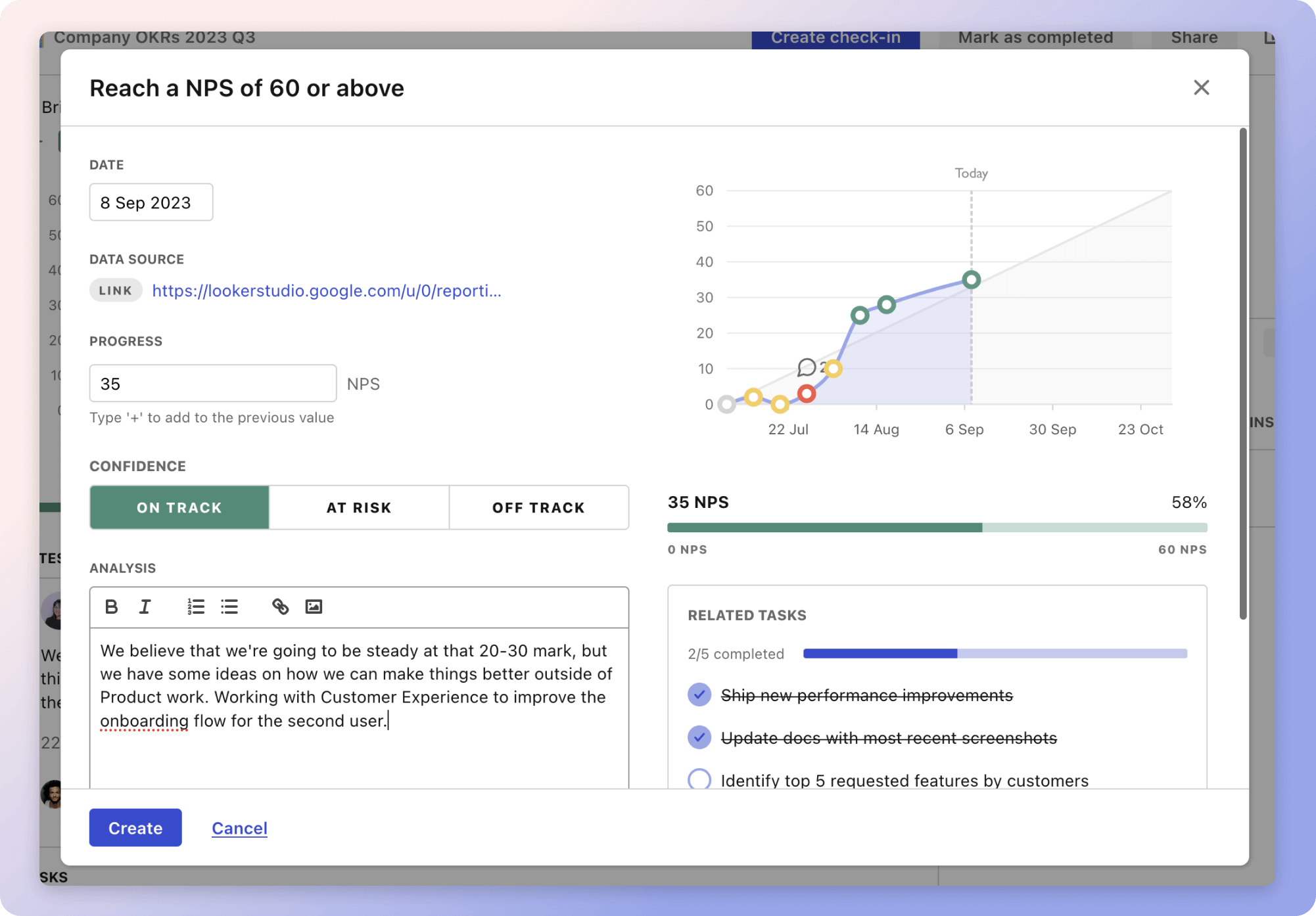 Tability's check-ins will save you hours and increase transparency
 The best metrics for Increase Calls Through Google My Business