This plan focuses on evaluating head chef performance through key metrics that ensure the effective management of kitchen operations. Food Cost Percentage, for instance, helps identify cost control opportunities, such as negotiating with suppliers or reducing food waste. These efforts not only enhance profitability but also contribute to sustainable resource use.
Similarly, Kitchen Labour Cost Percentage is crucial as it enables staffing optimization, thus ensuring efficient service without unnecessary expense. Through optimizing shift schedules or using technology to streamline operations, restaurants can manage budgets effectively while maintaining service quality.
Customer Satisfaction Score and Inventory Turnover Rate are indicators of customer experience and inventory management efficiency, respectively. A high satisfaction score signals excellent service, influenced by regular menu updates and staff training. Meanwhile, an optimized turnover rate reflects efficient inventory practices, reducing waste and ensuring freshness.
Lastly, Health Inspection Scores safeguard compliance with food safety regulations, protecting the establishment’s reputation. Regular audits and staff training ensure hygiene standards are met, fostering a safe dining environment. Together, these metrics form a comprehensive framework for performance evaluation.
Top 5 metrics for Head Chef Performance Evaluation
1. Food Cost Percentage
The food cost as a percentage of total sales, calculated by dividing the cost of ingredients by the total revenue and multiplying by 100
What good looks like for this metric: Typically 28% - 35%
How to improve this metric:- Negotiate better prices with suppliers
- Use seasonal ingredients
- Reduce food waste
- Portion control each serving
- Menu engineering to encourage profitable dishes
2. Kitchen Labour Cost Percentage
The percentage of revenue spent on kitchen staff salaries, calculated by dividing total kitchen payroll by total sales and multiplying by 100
What good looks like for this metric: Generally 20% - 25%
How to improve this metric:- Optimise shift scheduling
- Cross-train staff for efficiency
- Use technology to streamline operations
- Implement a productivity bonus system
- Reduce overtime hours
3. Customer Satisfaction Score
The average satisfaction rating collected from customer feedback surveys, often based on a 1 to 5 scale
What good looks like for this metric: Aim for 4.5/5 or higher
How to improve this metric:- Regularly update the menu
- Train staff on customer service
- Respond to feedback promptly
- Conduct quality checks before service
- Enhance dining experience
4. Inventory Turnover Rate
The rate at which inventory is used up and replaced, calculated by dividing the cost of goods sold by average inventory value
What good looks like for this metric: 4 to 8 times per month
How to improve this metric:- Optimise inventory levels
- Adjust ordering frequency
- Implement just-in-time ordering
- Track inventory usage trends
- Use an inventory management system
5. Health Inspection Score
The score received from health inspections, indicating compliance with food safety regulations
What good looks like for this metric: Strive for a score of 90 or above
How to improve this metric:- Conduct regular internal audits
- Provide ongoing training on food safety
- Maintain a cleaning schedule
- Ensure equipment maintenance
- Regularly review health guidelines
How to track Head Chef Performance Evaluation metrics
It's one thing to have a plan, it's another to stick to it. We hope that the examples above will help you get started with your own strategy, but we also know that it's easy to get lost in the day-to-day effort.
That's why we built Tability: to help you track your progress, keep your team aligned, and make sure you're always moving in the right direction.
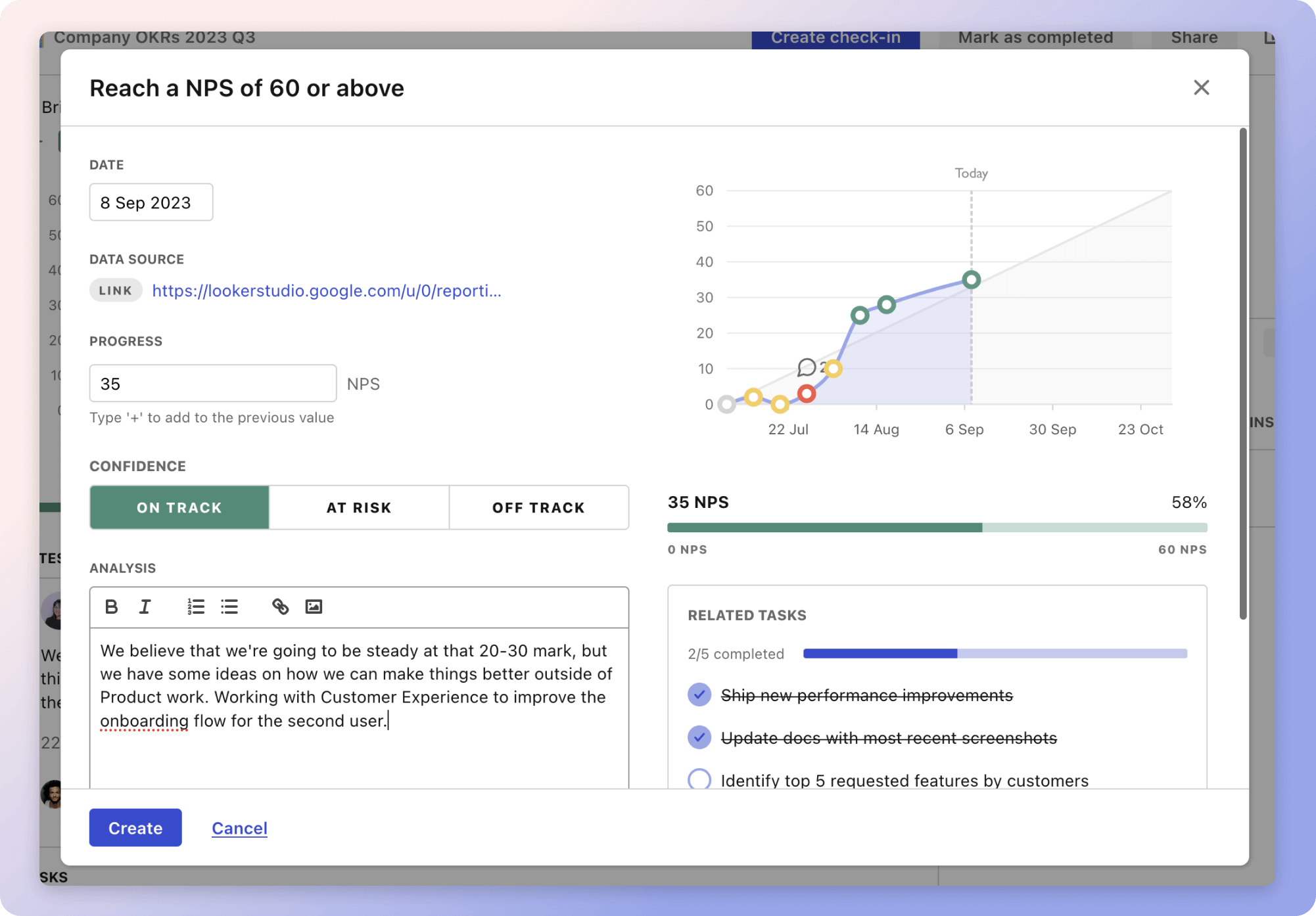
Give it a try and see how it can help you bring accountability to your metrics.
