What are Training Team metrics?
Finding the right Training Team metrics can be daunting, especially when you're busy working on your day-to-day tasks. This is why we've curated a list of examples for your inspiration.
Copy these examples into your preferred tool, or adopt Tability to ensure you remain accountable.
Find Training Team metrics with AI
While we have some examples available, it's likely that you'll have specific scenarios that aren't covered here. You can use our free AI metrics generator below to generate your own strategies.
Examples of Training Team metrics and KPIs
Metrics for Compliance and Improvement
1. Compliance Rate
The ratio of compliant processes or actions to the total processes or actions conducted over a specific period, reflecting the organisation's adherence to regulations.
What good looks like for this metric: 95% compliance is often aimed for
Ideas to improve this metric- Conduct regular compliance audits
- Provide staff training on regulations
- Implement automated compliance tools
- Establish clear compliance protocols
- Engage with regulatory consultants
2. Number of Non-Compliance Incidents
The total count of incidents where regulatory standards were not met over a defined period, indicating potential compliance issues.
What good looks like for this metric: Aim for less than 5 events per quarter
Ideas to improve this metric- Enhance incident monitoring systems
- Review and update compliance policies
- Conduct root cause analysis for incidents
- Encourage a culture of transparency
- Increase accountability measures
3. Audit Findings
Results from internal and external audits that measure adherence to compliance standards and identify areas of improvement.
What good looks like for this metric: Aim for minimal critical findings
Ideas to improve this metric- Perform regular internal audits
- Address audit findings promptly
- Improve communication with auditors
- Create an action plan for each finding
- Incorporate continuous feedback loops
4. Time to Compliance Issue Resolution
The average time taken to resolve compliance issues once they are identified, indicating efficiency and responsiveness.
What good looks like for this metric: Resolve issues within 30 days
Ideas to improve this metric- Develop a priority-based resolution system
- Streamline communication among stakeholders
- Automate follow-up procedures
- Create clear workflows for resolution
- Utilise project management tools
5. Training Completion Rate
The percentage of employees who complete mandatory compliance training, reflecting organisational commitment to compliance education.
What good looks like for this metric: Target 100% completion rate
Ideas to improve this metric- Incentivise training participation
- Offer flexible training schedules
- Utilise engaging training platforms
- Track training progress regularly
- Re-deliver training for non-completers
Metrics for L2 Support Team Development
1. Average Resolution Time
The average time taken to resolve a customer's issue once it has been escalated to the L2 support team
What good looks like for this metric: 24-48 hours depending on complexity
Ideas to improve this metric- Implement clear escalation protocols
- Provide advanced training for common issues
- Utilise automated tools to assist in diagnostics
- Conduct regular team meetings to discuss complex cases
- Evaluate individual performance regularly
2. First Contact Resolution Rate
The percentage of escalated tickets that are resolved without needing further escalation
What good looks like for this metric: 70-85%
Ideas to improve this metric- Ensure comprehensive knowledge base is available
- Regularly update FAQs and common issue solutions
- Implement effective troubleshooting frameworks
- Provide ongoing training focused on first contact resolution
- Encourage collaboration and knowledge sharing among team members
3. Customer Satisfaction Score (CSAT)
A measure of customer satisfaction with their support experience, often gathered through post-resolution surveys
What good looks like for this metric: 80-90%
Ideas to improve this metric- Enhance communication skills training
- Follow-up with customers post-resolution for feedback
- Design clear and concise feedback surveys
- Offer customer service workshops
- Address any negative feedback promptly with corrective action
4. Case Backlog
The number of unresolved cases that get carried over from previous time periods
What good looks like for this metric: Less than 10% of active cases
Ideas to improve this metric- Optimise workflow management tools
- Set realistic daily targets for case resolutions
- Identify peak times and allocate resources accordingly
- Review complicated cases in team discussions
- Utilise prioritisation strategies to address high-impact cases first
5. Employee Satisfaction Score
A measure of the L2 support team's job satisfaction and engagement, often gathered through internal surveys
What good looks like for this metric: 70-85%
Ideas to improve this metric- Implement recognition and reward programmes
- Create career development opportunities
- Hold regular feedback sessions
- Encourage work-life balance initiatives
- Foster a supportive and inclusive work environment
Metrics for Monitoring Safety Training and Audits
1. Number of Employees Trained
Total number of employees who have completed safety training within a specified period
What good looks like for this metric: 100% of employees intended to be trained
Ideas to improve this metric- Ensure training sessions are scheduled at convenient times
- Increase awareness of the importance of safety training
- Incorporate online training for flexibility
- Track attendance and follow-up for no-shows
- Offer incentives for completion
2. Training Completion Rate
Percentage of employees who have completed the required safety training out of those assigned
What good looks like for this metric: Above 90% completion rate
Ideas to improve this metric- Set clear deadlines for completion
- Send reminders to employees who have not started or completed
- Provide progress tracking dashboards for employees
- Offer manager support to encourage training
- Evaluate and adapt the training content for engagement
3. Number of Safety Audits Completed
Count of safety audits performed against the planned audits in a specific timeframe
What good looks like for this metric: 100% completion of planned audits
Ideas to improve this metric- Create a detailed audit plan at the start of the year
- Assign dedicated teams or personnel to conduct audits
- Utilise audit software for tracking progress
- Conduct mid-year reviews to adjust plans if necessary
- Schedule regular audit frequency to prevent backlog
4. Completion vs Plan of Audits
The ratio of completed audits to the number planned within a set duration
What good looks like for this metric: Above 90% completion of planned audits
Ideas to improve this metric- Prioritise high-risk areas for audits
- Use a checklist to ensure comprehensive coverage
- Identify and remove bottlenecks in the audit process
- Allocate resources specifically for audit completion
- Review past audit completion gaps and make adjustments
5. Corrective Actions Raised and Closed
Number of corrective actions identified during audits and successfully closed
What good looks like for this metric: High percentage (>80%) of corrective actions closed promptly
Ideas to improve this metric- Set deadlines for corrective action implementation
- Assign accountability for closing actions
- Use tracking systems to follow up on actions
- Provide support and resources for implementing corrective measures
- Regularly review and update the corrective action process
Metrics for Safety and Compliance Management
1. Incident Rate
Measures the number of safety incidents per number of hours worked, indicating overall workplace safety.
What good looks like for this metric: 3.0 incidents per 100 employees annually
Ideas to improve this metric- Conduct regular safety audits
- Enhance employee safety training programs
- Implement stricter safety protocols
- Improve incident reporting systems
- Involve employees in safety planning
2. Training Completion Rate
Percentage of employees who have completed required safety training within a set time period.
What good looks like for this metric: 95% completion rate
Ideas to improve this metric- Automate training reminders
- Provide flexible training schedules
- Incorporate online training modules
- Track progress with a learning management system
- Reward timely completion with incentives
3. Audit Finding Closure Rate
Percentage of identified compliances or safety issues that have been addressed within a designated time frame.
What good looks like for this metric: 100% closure within 30 days
Ideas to improve this metric- Assign responsibilities for issue resolution
- Set clear deadlines for issue closure
- Monitor progress with regular check-ins
- Establish a robust feedback mechanism
- Use software tools to track progress
4. Employee Safety Observation Frequency
Frequency of safety observations made by employees, indicating proactive safety engagement.
What good looks like for this metric: 2 observations per employee per month
Ideas to improve this metric- Encourage a culture of safety communication
- Provide easy tools for reporting observations
- Recognise employees for contributing observations
- Conduct regular safety awareness campaigns
- Offer training on identifying potential hazards
5. Cost of Compliance Management
Total cost incurred in ensuring compliance with safety standards, as a percentage of overall operational cost.
What good looks like for this metric: 3-5% of total operational cost
Ideas to improve this metric- Identify cost-effective compliance tools
- Negotiate better terms with compliance vendors
- Streamline compliance processes
- Automate repetitive compliance tasks
- Analyze cost-effectiveness of current strategies
Metrics for Routine Staff Training
1. Training Completion Rate
The percentage of staff who successfully complete the required training sessions within a given period.
What good looks like for this metric: 90% completion rate
Ideas to improve this metric- Offer flexible training schedules
- Use engaging training materials
- Provide incentives for completion
- Ensure management support
- Track progress regularly
2. Training Knowledge Retention Rate
The percentage of information retained by staff over a period after completing training, typically measured through follow-up assessments.
What good looks like for this metric: 70% retention after 3 months
Ideas to improve this metric- Incorporate interactive techniques
- Provide summary materials
- Use regular follow-up assessments
- Apply knowledge in real-world tasks
- Encourage peer discussions
3. Procedure Compliance Rate
The percentage of staff correctly following standard operating procedures post-training.
What good looks like for this metric: 85% compliance rate
Ideas to improve this metric- Reinforce training regularly
- Conduct audits and provide feedback
- Simplify procedures
- Establish accountability measures
- Offer additional coaching for underperformers
4. Employee Feedback Score
The average satisfaction score obtained from employees regarding the training program.
What good looks like for this metric: 4 out of 5 rating
Ideas to improve this metric- Collect regular feedback
- Act on suggestions for improvement
- Ensure content relevance
- Maintain interactive sessions
- Provide opportunity for questions
5. Training Cost Per Employee
The total costs involved in training divided by the number of employees trained.
What good looks like for this metric: $200 per employee
Ideas to improve this metric- Utilise cost-effective online platforms
- Schedule group training sessions
- Leverage internal trainers
- Streamline resource usage
- Negotiate with vendors for better pricing
Metrics for Vendor Compliance Standards
1. Adherence To Compliance Manual
Percentage of vendors following the guidelines set in the compliance manual
What good looks like for this metric: 90% compliance rate
Ideas to improve this metric- Provide clear and accessible manual
- Conduct regular training sessions
- Implement a feedback system for vendors
- Carry out frequent compliance audits
- Offer incentives for compliance
2. Cleanliness Score
Assessment score based on cleanliness standards maintained by vendors
What good looks like for this metric: Minimum cleanliness score of 85 out of 100
Ideas to improve this metric- Create a standard cleaning checklist
- Set up regular cleaning schedules
- Train staff on effective cleaning techniques
- Use feedback from assessments to improve
- Implement penalties for non-compliance
3. Average Response Time
Mean time taken to address and resolve compliance issues
What good looks like for this metric: Response time under 30 minutes
Ideas to improve this metric- Assign dedicated compliance officers
- Utilise digital tools for real-time reporting
- Set clear priorities for issue resolution
- Conduct regular training on quick resolution strategies
- Review and refine response processes regularly
4. Training Completion Rate
Percentage of vendors completing pre-event compliance training
What good looks like for this metric: 95% completion rate
Ideas to improve this metric- Schedule convenient training times
- Provide online training options
- Emphasise the importance of compliance
- Create engaging training content
- Monitor participation and follow up on absences
5. Vendor Satisfaction Score
Measure of vendor satisfaction with compliance process
What good looks like for this metric: Satisfaction score above 80 out of 100
Ideas to improve this metric- Conduct regular surveys for feedback
- Facilitate open communication channels
- Act on common concerns raised by vendors
- Provide clear benefits of compliance
- Regularly review and update the compliance manual
Metrics for Department Compliance
1. Audit Pass Rate
The percentage of department audits that are passed without any compliance issues
What good looks like for this metric: 90%-95%
Ideas to improve this metric- Implement regular training sessions on compliance standards
- Conduct internal audits prior to official audits
- Upgrade systems to automate compliance checks
- Establish a compliance-focused reward system
- Regularly update compliance materials
2. Incident Resolution Time
The average time taken to resolve compliance-related incidents
What good looks like for this metric: 24-48 hours
Ideas to improve this metric- Implement a robust incident management system
- Train staff on incident resolution procedures
- Assign dedicated compliance officers
- Streamline communication between departments
- Use technology to track incident status
3. Training Completion Rate
The percentage of employees who complete compliance training
What good looks like for this metric: 95%-100%
Ideas to improve this metric- Use engaging and accessible training materials
- Integrate compliance training into onboarding
- Set reminders for training deadlines
- Provide incentives for quick completion
- Offer flexible training schedules
4. Number of Compliance Breaches
The total number of compliance breaches occurring within a given timeframe
What good looks like for this metric: 0-2 per year
Ideas to improve this metric- Strengthen compliance policies
- Conduct regular risk assessments
- Increase oversight and supervision
- Encourage a culture of compliance
- Implement stricter penalties for breaches
5. Corrective Action Adoption Rate
The rate at which corrective actions are adopted and implemented following compliance reviews
What good looks like for this metric: 90%-95%
Ideas to improve this metric- Create a clear plan for corrective actions
- Provide support and resources for implementation
- Monitor progress of corrective actions
- Involve all stakeholders in the process
- Evaluate the effectiveness of implemented actions
Metrics for Cycle Count Completion
1. Cycle Counts Completed Per Day
The number of cycle counts an employee completes each day
What good looks like for this metric: 10 cycle counts per day
Ideas to improve this metric- Set daily cycle count targets
- Provide training to improve efficiency
- Use technology to speed up counting
- Monitor progress throughout the day
- Provide incentives for meeting targets
2. Average Time Per Cycle Count
The average amount of time taken to complete a single cycle count
What good looks like for this metric: 45-60 minutes per cycle count
Ideas to improve this metric- Standardise cycle counting procedures
- Identify and eliminate bottlenecks
- Utilise efficient tools and equipment
- Conduct regular employee training
- Review and optimise workflow processes
3. Accuracy of Cycle Counts
The percentage of cycle counts that are completed without error
What good looks like for this metric: Above 95% accuracy
Ideas to improve this metric- Double-check counts before submission
- Implement a verification process
- Conduct regular accuracy audits
- Provide detailed guidelines
- Offer corrective training where needed
4. Employee Attendance Rate
The percentage of days employees are present for conducting cycle counts
What good looks like for this metric: 95%-100% attendance
Ideas to improve this metric- Implement a clear attendance policy
- Provide flexible working schedules
- Recognise and reward consistent attendance
- Address attendance issues promptly
- Provide support for personal issues affecting attendance
5. Employee Productivity Rate
The number of productive hours spent on cycle counts compared to the total hours available
What good looks like for this metric: 75%-85% productive hours
Ideas to improve this metric- Track time spent on different tasks
- Use productivity management software
- Set clear daily goals
- Encourage regular breaks to maintain focus
- Identify and eliminate distractions
Metrics for Halal Accreditation Compliance
1. Non-Conformance Rate
The frequency of non-conformances in Halal standards detected during audits or inspections
What good looks like for this metric: Less than 10 incidents annually
Ideas to improve this metric- Implement regular internal audits
- Provide comprehensive staff training
- Use checklists for routine checks
- Engage external experts for consultation
- Establish a corrective action plan
2. Audit Pass Rate
The percentage of successfully passed Halal compliance audits out of total audits conducted
What good looks like for this metric: Above 90%
Ideas to improve this metric- Conduct mock audits
- Ensure up-to-date documentation
- Set clear compliance instructions
- Regular management reviews
- Invest in audit management software
3. Supplier Halal Compliance Rate
The percentage of suppliers that are compliant with Halal standards out of the total suppliers
What good looks like for this metric: Above 95%
Ideas to improve this metric- Establish strict supplier guidelines
- Require supplier certification
- Conduct supplier audits/reviews
- Communicate regularly with suppliers
- Establish supplier improvement programs
4. Corrective Action Implementation Time
The average time taken to implement corrective actions after a non-conformance is identified
What good looks like for this metric: Within 30 days
Ideas to improve this metric- Prioritise action steps
- Assign dedicated resources
- Monitor progress weekly
- Automate reminders and follow-ups
- Create specific action deadlines
5. Training Completion Rate
The percentage of employees that have completed Halal compliance training out of total employees
What good looks like for this metric: 100%
Ideas to improve this metric- Schedule mandatory training sessions
- Offer e-learning modules
- Incentivise training completion
- Track training progress
- Regularly update training content
Metrics for Youth Entrepreneurship Training
1. Number of Businesses Registered
Tracks the total number of businesses registered by participants post-training
What good looks like for this metric: 50% of participants registering businesses
Ideas to improve this metric- Increase networking opportunities with successful entrepreneurs
- Offer mentorship programs beyond the training period
- Provide step-by-step guidance on the registration process
- Facilitate access to legal support for business registration
- Encourage business idea validation workshops
2. Participant Engagement Rate
Measures the level of active participation by youths during and after the training sessions
What good looks like for this metric: 80% active participant engagement
Ideas to improve this metric- Incorporate interactive and hands-on activities
- Offer incentives for active participation
- Use feedback forms to tailor content to participants' needs
- Include real-world case studies and success stories
- Assign project-based tasks that encourage teamwork
3. Business Sustainability Rate
Assesses the percentage of businesses still operational 12 months post-registration
What good looks like for this metric: 60% business sustainability rate after one year
Ideas to improve this metric- Provide ongoing business support services
- Help secure initial funding and investment
- Conduct regular follow-ups and check-ins
- Encourage the development of a solid business plan
- Organise financial literacy and management workshops
4. Increase in Household Income
Monitors the change in average household income for participants after starting their businesses
What good looks like for this metric: 20% increase in household income
Ideas to improve this metric- Offer additional training on income-generating strategies
- Facilitate access to high-demand market sectors
- Encourage diversification of income streams
- Promote collaboration and partnerships for larger contracts
- Guide in effective cost management and budgeting
5. Job Creation Rate
Measures the average number of jobs created by participant businesses within six months of operation
What good looks like for this metric: 2 jobs created per business
Ideas to improve this metric- Support business expansion opportunities
- Encourage hiring from local communities
- Provide training on effective employee management
- Facilitate networking with potential partners and clients
- Organise workshops on scaling operations
Metrics for Quality and Compliance Management
1. Compliance Rate
The percentage of processes that comply with legal and company standards.
What good looks like for this metric: 95% or higher
Ideas to improve this metric- Conduct regular compliance audits
- Provide comprehensive training for employees
- Implement a robust compliance monitoring system
- Facilitate open communication channels for compliance issues
- Regularly update compliance policies and procedures
2. Incident Rate
The number of incidents or violations of compliance standards over a period of time.
What good looks like for this metric: Less than 5 incidents per year
Ideas to improve this metric- Identify root causes of compliance incidents
- Improve risk assessment protocols
- Increase employee awareness on reporting procedures
- Enhance incident response strategies
- Foster a culture of accountability among staff
3. Audit Finding Resolution Time
The average time taken to resolve audit findings.
What good looks like for this metric: 30 days or less
Ideas to improve this metric- Prioritise and track resolution of audit findings
- Set clear deadlines for corrective actions
- Assign responsibility to specific individuals or teams
- Automate follow-up reminders for open issues
- Regularly review and analyse resolution processes
4. Training Completion Rate
Percentage of employees who have completed mandatory compliance training.
What good looks like for this metric: 100% completion
Ideas to improve this metric- Make training accessible via multiple platforms
- Incorporate engaging training materials
- Set mandatory training completion deadlines
- Track and report training progress regularly
- Encourage management to lead by example
5. Sustainability Compliance
The extent to which company operations adhere to sustainability regulations and goals.
What good looks like for this metric: 80% or higher
Ideas to improve this metric- Regularly review sustainability policies
- Implement sustainable practices across operations
- Engage partners and suppliers in sustainability goals
- Measure impact of sustainability initiatives
- Raise employee awareness on sustainability issues
Metrics for GRC MSSP Compliance
1. Compliance Rate
Percentage of compliance achieved against the regulatory requirements
What good looks like for this metric: 95% compliance rate
Ideas to improve this metric- Conduct regular compliance audits
- Ensure up-to-date compliance training
- Implement automated compliance monitoring
- Utilise compliance management tools
- Regularly update compliance policies
2. Policy Violation Frequency
Number of times compliance policies are violated
What good looks like for this metric: Less than 2 per month
Ideas to improve this metric- Increase employee policy awareness
- Conduct frequent policy reviews
- Promote a culture of compliance
- Improve policy accessibility
- Establish clear consequences for violations
3. Audit Finding Closure Rate
Percentage of audit findings that are closed within the specified time frame
What good looks like for this metric: 90% of findings closed on time
Ideas to improve this metric- Increase accountability for closing findings
- Streamline the closure process
- Provide resources for corrective actions
- Set realistic timelines for closure
- Regular progress check-ins
4. Employee Awareness Level
Percentage of employees who are aware of compliance requirements
What good looks like for this metric: 85% of employees aware
Ideas to improve this metric- Implement regular training sessions
- Use quizzes to test awareness
- Provide onboarding compliance training
- Display compliance information visibly
- Encourage open discussions on compliance
5. Customer Satisfaction with Compliance
Customer feedback rating regarding the organisation's compliance standards
What good looks like for this metric: 4 out of 5 satisfaction score
Ideas to improve this metric- Conduct customer feedback surveys
- Address compliance-related complaints promptly
- Publicise compliance achievements
- Provide transparency on compliance processes
- Engage customers in compliance improvement initiatives
Metrics for Compliance in Commercial Real Estate
1. Regulatory Audit Pass Rate
Percentage of audits passed without any non-compliance findings
What good looks like for this metric: 85-95%
Ideas to improve this metric- Conduct regular internal audits
- Provide ongoing compliance training
- Implement a regulatory compliance management system
- Review and update compliance policies regularly
- Engage external consultants for unbiased evaluations
2. Compliance Training Completion Rate
Percentage of employees who complete compliance training on time
What good looks like for this metric: 90% or higher
Ideas to improve this metric- Utilise engaging training materials
- Set clear deadlines for training completion
- Offer flexible training schedules
- Provide incentives for timely completion
- Assess and improve training efficacy
3. Incident Response Time
Average time taken to respond to compliance-related incidents
What good looks like for this metric: Within 24 hours
Ideas to improve this metric- Establish clear incident response protocols
- Conduct incident response drills
- Use automated incident management tools
- Provide quick-access reporting channels
- Evaluate past incidents to improve speed
4. Number of Compliance Violations
Total number of compliance violations identified within a specific period
What good looks like for this metric: Minimise below industry average
Ideas to improve this metric- Enhance monitoring and reporting tools
- Increase frequency of compliance reviews
- Strengthen enforcement of compliance measures
- Educate employees on recognising violations
- Implement preventative measures
5. Policy Update Implementation Rate
Percentage of policy updates implemented within the target timeframe
What good looks like for this metric: 95% or higher
Ideas to improve this metric- Establish a structured policy review process
- Coordinate with internal departments for smooth implementation
- Communicate updates clearly to all stakeholders
- Allocate resources for rapid policy rollouts
- Monitor and track policy adoption
Metrics for Support Youth Entrepreneurship
1. Number of Youths Trained
The total number of youth participants who have completed the training programme
What good looks like for this metric: 500 youths annually
Ideas to improve this metric- Increase outreach efforts in low-income areas
- Partner with local community centres
- Utilise social media for recruitment
- Provide online training options
- Collaborate with schools and universities
2. Business Registration Rate
Percentage of trained youths who successfully register a business
What good looks like for this metric: 50% of trained youths
Ideas to improve this metric- Simplify the registration process
- Guide participants through registration steps
- Provide incentives for registration
- Host workshops on business planning
- Establish partnerships with registration bodies
3. Employment Opportunities Created
Number of new jobs generated as a result of the startups
What good looks like for this metric: 2 new jobs per startup
Ideas to improve this metric- Encourage scalable business models
- Provide mentorship for business growth
- Facilitate networking events
- Support access to funding opportunities
- Promote collaboration among startups
4. Business Sustainability Rate
Percentage of businesses still operational after their first year
What good looks like for this metric: 70% sustainability rate
Ideas to improve this metric- Offer follow-up coaching sessions
- Provide financial management workshops
- Connect with local business networks
- Regularly assess and adapt business strategies
- Encourage continuous learning and innovation
5. Funding Secured by Startups
Amount of financial support secured by startups through grants, loans, or investments
What good looks like for this metric: $10,000 per startup
Ideas to improve this metric- Assist in grant application processes
- Create pitch training sessions
- Connect startups with potential investors
- Host startup demo days
- Guide on developing detailed business plans
Metrics for Compliance Across the Value Chain
1. Compliance Training Completion Rate
The percentage of employees within the supply chain who have completed mandatory compliance training.
What good looks like for this metric: 85% - 95%
Ideas to improve this metric- Automate training reminders
- Offer flexible training schedules
- Incorporate engaging training methods
- Provide training in multiple languages
- Set training completion as a performance goal
2. Supplier Audit Pass Rate
The percentage of suppliers who pass compliance audits within the value chain.
What good looks like for this metric: 80% - 90%
Ideas to improve this metric- Develop clear audit criteria
- Conduct pre-audit supplier workshops
- Provide suppliers with feedback reports
- Create incentives for high compliance rates
- Simplify the audit process
3. Incident Response Time
The average time taken to respond to and address compliance-related incidents within the value chain.
What good looks like for this metric: 48 - 72 hours
Ideas to improve this metric- Implement incident monitoring systems
- Establish clear incident response protocols
- Train a dedicated incident response team
- Regularly review and update response plans
- Utilise data analytics for quicker incident detection
4. Policy Violation Rate
The frequency of policy violations detected across the value chain.
What good looks like for this metric: 5% - 10%
Ideas to improve this metric- Communicate policies clearly and regularly
- Ensure policies are easily accessible
- Implement immediate consequences for violations
- Involve employees in policy-making
- Conduct regular policy reviews and updates
5. Stakeholder Feedback Score
The average score reflecting the satisfaction of stakeholders with the organisation's compliance efforts across the value chain.
What good looks like for this metric: 8 out of 10
Ideas to improve this metric- Conduct regular stakeholder surveys
- Act on feedback promptly
- Maintain open communication channels
- Involve stakeholders in compliance discussions
- Celebrate compliance achievements with stakeholders
Tracking your Training Team metrics
Having a plan is one thing, sticking to it is another.
Having a good strategy is only half the effort. You'll increase significantly your chances of success if you commit to a weekly check-in process.
A tool like Tability can also help you by combining AI and goal-setting to keep you on track.
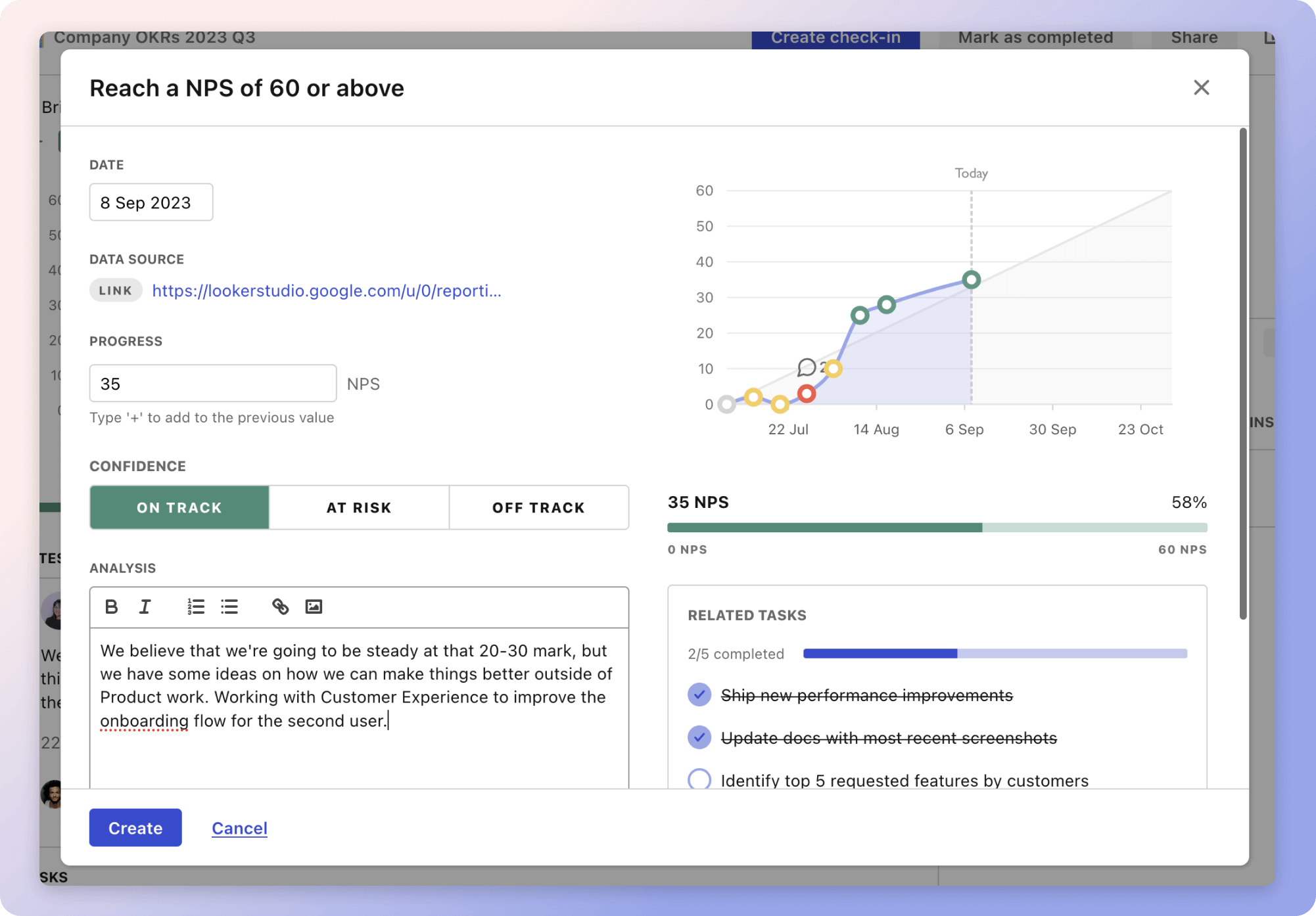 Tability's check-ins will save you hours and increase transparency
More metrics recently published
We have more examples to help you below.
 The best metrics for Increase Calls Through Google My Business
- The best metrics for GRC MSSP Compliance
- The best metrics for Reduce Courier Costs
- The best metrics for Reducing Courier Costs
- The best metrics for Operations Management Success
- The best metrics for Ensuring sticker quality
Planning resources
OKRs are a great way to translate strategies into measurable goals. Here are a list of resources to help you adopt the OKR framework:
- To learn: What are OKRs? The complete 2024 guide
- Blog posts: ODT Blog
- Success metrics: KPIs examples