What are Audits metrics? Finding the right Audits metrics can seem daunting, particularly when you're focused on your daily workload. For this reason, we've compiled a selection of examples to fuel your inspiration.
Copy these examples into your preferred tool, or adopt Tability to ensure you remain accountable.
Find Audits metrics with AI While we have some examples available, it's likely that you'll have specific scenarios that aren't covered here. You can use our free AI metrics generator below to generate your own strategies.
Examples of Audits metrics and KPIs 1. Number of Employees Trained Total number of employees who have completed safety training within a specified period
What good looks like for this metric: 100% of employees intended to be trained
Ideas to improve this metric Ensure training sessions are scheduled at convenient times Increase awareness of the importance of safety training Incorporate online training for flexibility Track attendance and follow-up for no-shows Offer incentives for completion 2. Training Completion Rate Percentage of employees who have completed the required safety training out of those assigned
What good looks like for this metric: Above 90% completion rate
Ideas to improve this metric Set clear deadlines for completion Send reminders to employees who have not started or completed Provide progress tracking dashboards for employees Offer manager support to encourage training Evaluate and adapt the training content for engagement 3. Number of Safety Audits Completed Count of safety audits performed against the planned audits in a specific timeframe
What good looks like for this metric: 100% completion of planned audits
Ideas to improve this metric Create a detailed audit plan at the start of the year Assign dedicated teams or personnel to conduct audits Utilise audit software for tracking progress Conduct mid-year reviews to adjust plans if necessary Schedule regular audit frequency to prevent backlog 4. Completion vs Plan of Audits The ratio of completed audits to the number planned within a set duration
What good looks like for this metric: Above 90% completion of planned audits
Ideas to improve this metric Prioritise high-risk areas for audits Use a checklist to ensure comprehensive coverage Identify and remove bottlenecks in the audit process Allocate resources specifically for audit completion Review past audit completion gaps and make adjustments 5. Corrective Actions Raised and Closed Number of corrective actions identified during audits and successfully closed
What good looks like for this metric: High percentage (>80%) of corrective actions closed promptly
Ideas to improve this metric Set deadlines for corrective action implementation Assign accountability for closing actions Use tracking systems to follow up on actions Provide support and resources for implementing corrective measures Regularly review and update the corrective action process
← →
1. Data Entry Accuracy Rate Percentage of data entries that are error-free within a specified period
What good looks like for this metric: 95%
Ideas to improve this metric Implement data validation rules Cross-train team members Establish clear data entry guidelines Use real-time error detection tools Conduct regular feedback sessions 2. Data Audit Frequency Number of regular data audits conducted within a time frame
What good looks like for this metric: Monthly
Ideas to improve this metric Implement regular data audits Automate audit scheduling Assign audit responsibilities Use audit tracking tools Analyse audit results for improvements 3. Data Format Standardisation Degree to which data is consistent and follows organisational standards
What good looks like for this metric: 90% adherence
Ideas to improve this metric Standardise data formats Provide format templates Offer training on standards Review and update formats regularly Use data conversion tools 4. Data Archiving Efficiency Percentage of data correctly archived according to standard operating procedures
What good looks like for this metric: 100%
Ideas to improve this metric Implement data archiving SOPs Train team on SOPs Use archiving software Regularly review archiving process Back up archived data 5. Data Clean-Up Frequency Regularity of processes to remove outdated or inaccurate data
What good looks like for this metric: Quarterly
Ideas to improve this metric Schedule regular clean-up sessions Develop a clean-up SOP Use data cleaning tools Monitor clean-up progress Analyse impacts of clean-up efforts
← →
1. Compliance Rate The percentage of actions or processes that meet the set regulations or standards.
What good looks like for this metric: 85-95%
Ideas to improve this metric Conduct regular training for employees on compliance measures Perform routine compliance audits Implement clear compliance policies Ensure open communication channels for compliance queries Utilise compliance management software 2. Incident Rate The frequency at which compliance-related incidents occur within a given timeframe.
What good looks like for this metric: 5-10 incidents per year
Ideas to improve this metric Increase awareness sessions on potential compliance breaches Strengthen incident reporting systems Implement a zero-tolerance policy for non-compliance Regularly update protocols in line with new regulations Provide incentives for compliance adherence 3. Audit Pass Rate The percentage of audits that pass without any non-conformities noted.
What good looks like for this metric: 90-95%
Ideas to improve this metric Standardise audit procedures Train internal auditors on new standards and regulations Review past audits to identify patterns in non-compliance Refine internal controls Conduct pre-audit reviews 4. Policy Update Timeframe The time taken to integrate and communicate new compliance policies across the organisation.
What good looks like for this metric: 2-4 weeks
Ideas to improve this metric Develop a rapid response team for policy updates Leverage technology for faster policy dissemination Establish clear channels of communication Regularly review and streamline policy processes Utilise feedback loops to ensure efficient implementation 5. Employee Knowledge Score A score derived from testing employees' understanding of compliance rules and regulations.
What good looks like for this metric: 80-90%
Ideas to improve this metric Conduct frequent compliance quizzes Offer workshops on compliance topics Implement a compliance newsletter Recognise and reward high scoring employees Incorporate compliance topics into performance reviews
← →
1. Non-Conformance Rate The frequency of non-conformances in Halal standards detected during audits or inspections
What good looks like for this metric: Less than 10 incidents annually
Ideas to improve this metric Implement regular internal audits Provide comprehensive staff training Use checklists for routine checks Engage external experts for consultation Establish a corrective action plan 2. Audit Pass Rate The percentage of successfully passed Halal compliance audits out of total audits conducted
What good looks like for this metric: Above 90%
Ideas to improve this metric Conduct mock audits Ensure up-to-date documentation Set clear compliance instructions Regular management reviews Invest in audit management software 3. Supplier Halal Compliance Rate The percentage of suppliers that are compliant with Halal standards out of the total suppliers
What good looks like for this metric: Above 95%
Ideas to improve this metric Establish strict supplier guidelines Require supplier certification Conduct supplier audits/reviews Communicate regularly with suppliers Establish supplier improvement programs 4. Corrective Action Implementation Time The average time taken to implement corrective actions after a non-conformance is identified
What good looks like for this metric: Within 30 days
Ideas to improve this metric Prioritise action steps Assign dedicated resources Monitor progress weekly Automate reminders and follow-ups Create specific action deadlines 5. Training Completion Rate The percentage of employees that have completed Halal compliance training out of total employees
What good looks like for this metric: 100%
Ideas to improve this metric Schedule mandatory training sessions Offer e-learning modules Incentivise training completion Track training progress Regularly update training content
← →
Tracking your Audits metrics Having a plan is one thing, sticking to it is another.
Don't fall into the set-and-forget trap. It is important to adopt a weekly check-in process to keep your strategy agile – otherwise this is nothing more than a reporting exercise.
A tool like Tability can also help you by combining AI and goal-setting to keep you on track.
More metrics recently published We have more examples to help you below.
Planning resources OKRs are a great way to translate strategies into measurable goals. Here are a list of resources to help you adopt the OKR framework:
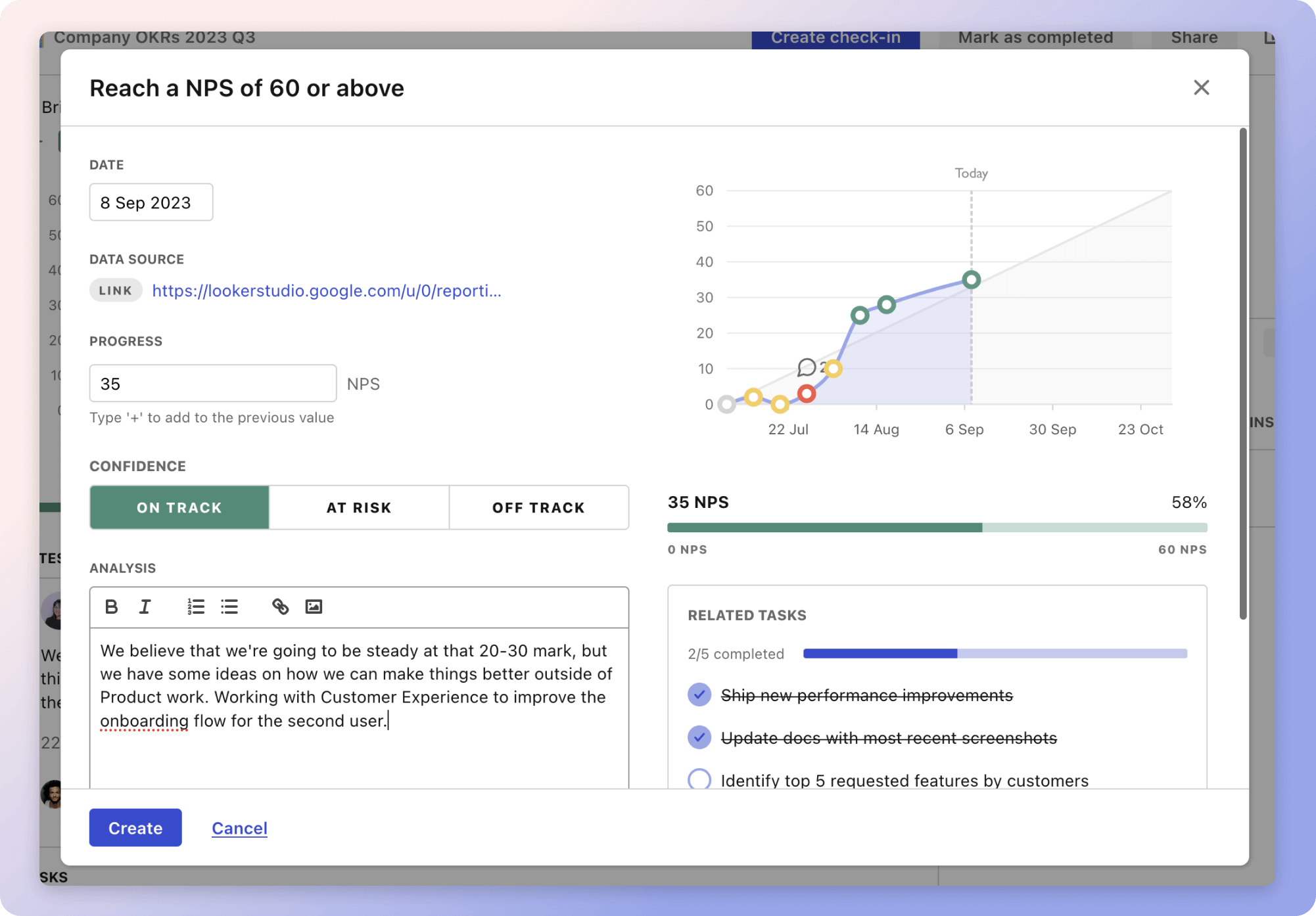 Tability's check-ins will save you hours and increase transparency
 The best metrics for Increase Calls Through Google My Business