What are Safety Training metrics? Identifying the optimal Safety Training metrics can be challenging, especially when everyday tasks consume your time. To help you, we've assembled a list of examples to ignite your creativity.
Copy these examples into your preferred app, or you can also use Tability to keep yourself accountable.
Find Safety Training metrics with AI While we have some examples available, it's likely that you'll have specific scenarios that aren't covered here. You can use our free AI metrics generator below to generate your own strategies.
Examples of Safety Training metrics and KPIs 1. Number of Employees Trained Total number of employees who have completed safety training within a specified period
What good looks like for this metric: 100% of employees intended to be trained
Ideas to improve this metric Ensure training sessions are scheduled at convenient times Increase awareness of the importance of safety training Incorporate online training for flexibility Track attendance and follow-up for no-shows Offer incentives for completion 2. Training Completion Rate Percentage of employees who have completed the required safety training out of those assigned
What good looks like for this metric: Above 90% completion rate
Ideas to improve this metric Set clear deadlines for completion Send reminders to employees who have not started or completed Provide progress tracking dashboards for employees Offer manager support to encourage training Evaluate and adapt the training content for engagement 3. Number of Safety Audits Completed Count of safety audits performed against the planned audits in a specific timeframe
What good looks like for this metric: 100% completion of planned audits
Ideas to improve this metric Create a detailed audit plan at the start of the year Assign dedicated teams or personnel to conduct audits Utilise audit software for tracking progress Conduct mid-year reviews to adjust plans if necessary Schedule regular audit frequency to prevent backlog 4. Completion vs Plan of Audits The ratio of completed audits to the number planned within a set duration
What good looks like for this metric: Above 90% completion of planned audits
Ideas to improve this metric Prioritise high-risk areas for audits Use a checklist to ensure comprehensive coverage Identify and remove bottlenecks in the audit process Allocate resources specifically for audit completion Review past audit completion gaps and make adjustments 5. Corrective Actions Raised and Closed Number of corrective actions identified during audits and successfully closed
What good looks like for this metric: High percentage (>80%) of corrective actions closed promptly
Ideas to improve this metric Set deadlines for corrective action implementation Assign accountability for closing actions Use tracking systems to follow up on actions Provide support and resources for implementing corrective measures Regularly review and update the corrective action process
← →
1. Incident Rate Measures the number of safety incidents per number of hours worked, indicating overall workplace safety.
What good looks like for this metric: 3.0 incidents per 100 employees annually
Ideas to improve this metric Conduct regular safety audits Enhance employee safety training programs Implement stricter safety protocols Improve incident reporting systems Involve employees in safety planning 2. Training Completion Rate Percentage of employees who have completed required safety training within a set time period.
What good looks like for this metric: 95% completion rate
Ideas to improve this metric Automate training reminders Provide flexible training schedules Incorporate online training modules Track progress with a learning management system Reward timely completion with incentives 3. Audit Finding Closure Rate Percentage of identified compliances or safety issues that have been addressed within a designated time frame.
What good looks like for this metric: 100% closure within 30 days
Ideas to improve this metric Assign responsibilities for issue resolution Set clear deadlines for issue closure Monitor progress with regular check-ins Establish a robust feedback mechanism Use software tools to track progress 4. Employee Safety Observation Frequency Frequency of safety observations made by employees, indicating proactive safety engagement.
What good looks like for this metric: 2 observations per employee per month
Ideas to improve this metric Encourage a culture of safety communication Provide easy tools for reporting observations Recognise employees for contributing observations Conduct regular safety awareness campaigns Offer training on identifying potential hazards 5. Cost of Compliance Management Total cost incurred in ensuring compliance with safety standards, as a percentage of overall operational cost.
What good looks like for this metric: 3-5% of total operational cost
Ideas to improve this metric Identify cost-effective compliance tools Negotiate better terms with compliance vendors Streamline compliance processes Automate repetitive compliance tasks Analyze cost-effectiveness of current strategies
← →
1. Training Completion Rate The percentage of staff who have completed the training program on infectious diseases and PPE preparations.
What good looks like for this metric: 90% completion rate
Ideas to improve this metric Create a mandatory training schedule Send regular reminders to complete training Offer incentives for early completion Provide flexible training times Ensure easy access to training materials 2. Post-Training Assessment Scores The average score of staff on assessments conducted after training to evaluate understanding and retention of information.
What good looks like for this metric: 75% average score
Ideas to improve this metric Enhance the clarity of training materials Incorporate interactive learning methods Provide additional resources for self-study Offer review sessions or refresher courses Implement individualized feedback on assessments 3. PPE Usage Compliance The percentage of staff correctly using PPE as per guidelines during drills or assessments.
What good looks like for this metric: 95% compliance
Ideas to improve this metric Conduct regular PPE drills Provide clear PPE usage guidelines Supervise and guide during PPE drills Offer corrective training for non-compliance Use checklists for PPE usage 4. Feedback from Participants The qualitative and quantitative feedback collected from staff about the effectiveness of the training program.
What good looks like for this metric: 4 out of 5 average rating
Ideas to improve this metric Conduct anonymous surveys post-training Hold feedback sessions with experienced trainers Implement a feedback loop to improve training Encourage open communication for suggestions Act on feedback promptly to show responsiveness 5. Incident Reporting Rate The number of infectious disease incidents reported and managed correctly post-training compared to pre-training.
What good looks like for this metric: Decrease by 30% post-training
Ideas to improve this metric Improve ease of incident reporting procedures Encourage a culture of transparency and safety Highlight the importance of prompt reporting Facilitate regular training refresher sessions Analyse incident data to prevent future occurrences
← →
1. Food Quality Rating Assesses the quality of food served based on customer feedback and reviews
What good looks like for this metric: 4.5 out of 5 stars
Ideas to improve this metric Conduct regular taste tests Solicit customer feedback Ensure fresh ingredients Train staff on culinary skills Regularly review and update recipes 2. Recipe Consistency Score Measures the consistency of recipes across different chefs and shifts
What good looks like for this metric: 90% consistency rate
Ideas to improve this metric Provide detailed recipe guides Use standardised measurements Conduct chef training sessions Regularly audit kitchen practices Set up a feedback loop with chefs 3. Employee Training Hours Tracks the number of training hours completed by employees to ensure high food quality and service standards
What good looks like for this metric: 20 hours per employee per year
Ideas to improve this metric Schedule regular training sessions Incorporate online learning modules Offer cross-training opportunities Practice skill assessments Incentivise training completion 4. Food Cost Percentage Indicates the percentage of revenue spent on food costs
What good looks like for this metric: 28% to 35%
Ideas to improve this metric Negotiate better supplier deals Conduct inventory audits regularly Implement portion control measures Analyse menu profitability Minimise food waste 5. Food Safety Compliance Rate Measures compliance with food safety regulations and standards
What good looks like for this metric: 100% compliance
Ideas to improve this metric Conduct regular safety training Implement a HACCP plan Use food safety checklists Conduct routine kitchen inspections Maintain equipment cleanliness
← →
1. Number of Parameters Differentiates model size options such as 1 billion (B), 3B, 7B, 14B parameters
What good looks like for this metric: 3B parameters is standard
Ideas to improve this metric Evaluate the scalability and resource constraints of the model Optimise parameter tuning Conduct comparative analysis for various model sizes Assess trade-offs between size and performance Leverage model size for specific tasks 2. Dataset Composition Percentage representation of data sources: web data, books, code, dialogue corpora, Indian regional languages, and multilingual content
What good looks like for this metric: Typical dataset: 60% web data, 15% books, 5% code, 10% dialogue, 5% Indian languages, 5% multilingual
Ideas to improve this metric Increase regional and language-specific content Ensure balanced dataset for diverse evaluation Perform periodic updates to dataset Utilise high-quality, curated sources Diversify datasets with varying domains 3. Perplexity on Validation Datasets Measures the predictability of the model on validation datasets
What good looks like for this metric: Perplexity range: 10-20
Ideas to improve this metric Enhance tokenization methods Refine sequence-to-sequence layers Adopt better pre-training techniques Implement data augmentation Leverage transfer learning from similar tasks 4. Inference Speed Tokens processed per second on CPU, GPU, and mobile devices
What good looks like for this metric: GPU: 10k tokens/sec, CPU: 1k tokens/sec, Mobile: 500 tokens/sec
Ideas to improve this metric Optimise algorithm efficiency Reduce model complexity Implement hardware-specific enhancements Utilise parallel processing Explore alternative deployment strategies 5. Edge-device Compatibility Evaluates the model's ability to function on edge devices with latency and response quality
What good looks like for this metric: Latency: <200 ms for response generation
Ideas to improve this metric Optimise for low-resource environments Develop compact model architectures Incorporate adaptive and scalable quality features Implement quantisation and compression techniques Perform real-world deployment tests
← →
Tracking your Safety Training metrics Having a plan is one thing, sticking to it is another.
Don't fall into the set-and-forget trap. It is important to adopt a weekly check-in process to keep your strategy agile – otherwise this is nothing more than a reporting exercise.
A tool like Tability can also help you by combining AI and goal-setting to keep you on track.
More metrics recently published We have more examples to help you below.
Planning resources OKRs are a great way to translate strategies into measurable goals. Here are a list of resources to help you adopt the OKR framework:
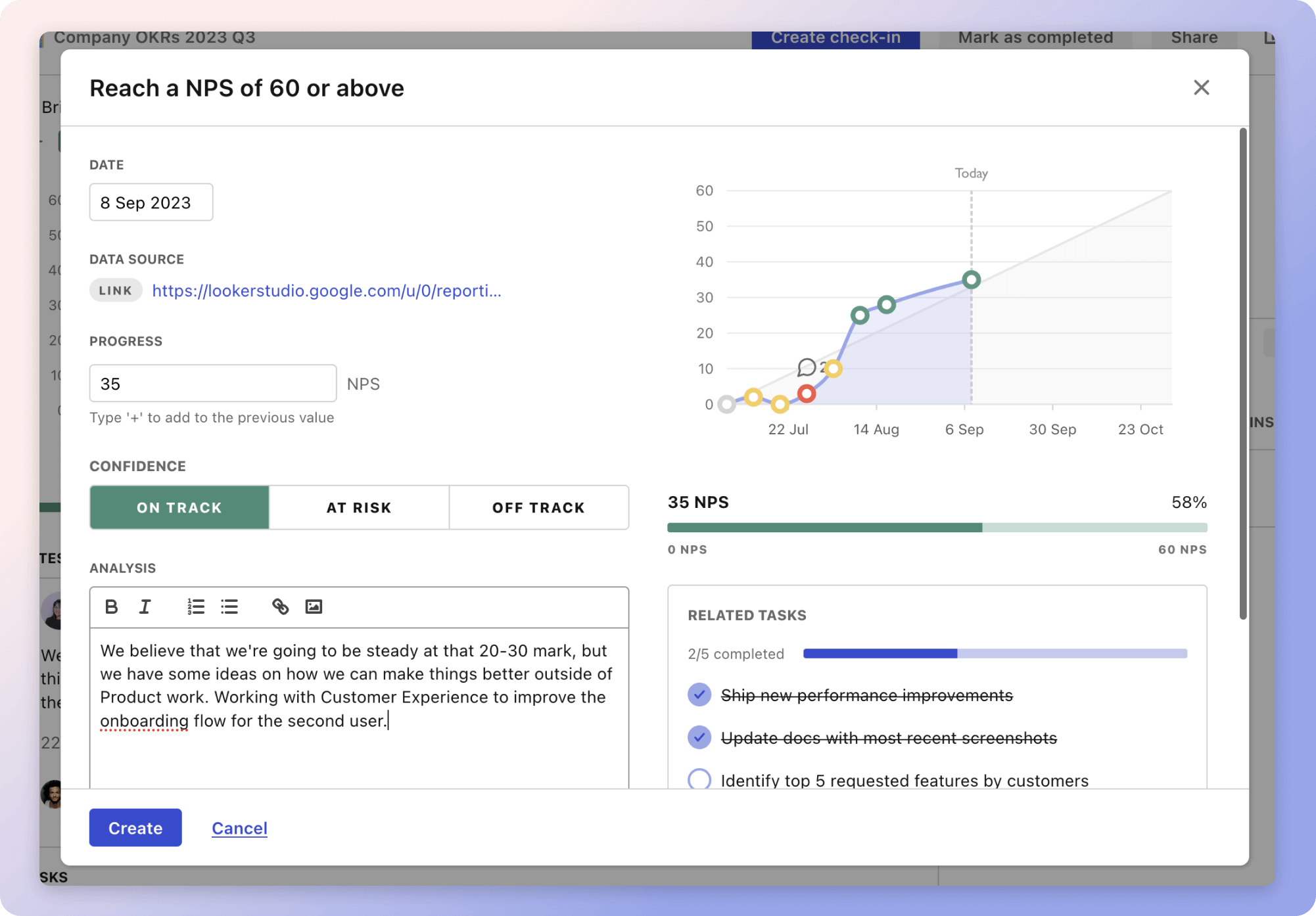 Tability's check-ins will save you hours and increase transparency
 The best metrics for Increase Calls Through Google My Business