Get Tability: OKRs that don't suck | Learn more →

5 examples of Business Growth metrics and KPIs

What are Business Growth metrics?

Finding the right Business Growth metrics can be daunting, especially when you're busy working on your day-to-day tasks. This is why we've curated a list of examples for your inspiration.

You can copy these examples into your preferred app, or alternatively, use Tability to stay accountable.

Find Business Growth metrics with AI

While we have some examples available, it's likely that you'll have specific scenarios that aren't covered here. You can use our free AI metrics generator below to generate your own strategies.

Examples of Business Growth metrics and KPIs

Metrics for Achievement Business Leader

  • 1. Revenue Growth Rate

    The percentage increase in a company’s sales from one period to the next

    What good looks like for this metric: 10-25% annually

    Ideas to improve this metric
    • Enhance sales strategies
    • Expand market reach
    • Invest in marketing
    • Improve product offerings
    • Strengthen customer relationships
  • 2. Net Profit Margin

    Net earnings as a percentage of revenue, indicating overall profitability

    What good looks like for this metric: 7-10%

    Ideas to improve this metric
    • Reduce operational costs
    • Increase pricing
    • Streamline supply chain
    • Enhance productivity
    • Focus on high-margin products
  • 3. Employee Satisfaction Score

    Average rating of employees' overall satisfaction, measured through surveys

    What good looks like for this metric: 70-80%

    Ideas to improve this metric
    • Improve work-life balance
    • Offer career development opportunities
    • Enhance workplace environment
    • Provide competitive benefits
    • Encourage open communication
  • 4. Customer Retention Rate

    The percentage of existing customers who remain loyal over a specific period

    What good looks like for this metric: 85-90%

    Ideas to improve this metric
    • Implement loyalty programs
    • Improve customer service
    • Regularly engage with customers
    • Solicit and act on feedback
    • Ensure product quality
  • 5. Return on Investment (ROI)

    Ratio of net profit to total investment, measuring the efficiency of an investment

    What good looks like for this metric: 15-20%

    Ideas to improve this metric
    • Analyse and optimize investments
    • Focus on high ROI projects
    • Cut non-profitable ventures
    • Increase efficiency in operations
    • Leverage technology

Metrics for Measure Company Growth

  • 1. Revenue Growth Rate

    The increase in a company’s sales over a specific period, typically compared annually or quarterly

    What good looks like for this metric: 10-25% annually is healthy

    Ideas to improve this metric
    • Increase marketing efforts
    • Expand product line
    • Enhance customer retention strategies
    • Optimize pricing strategy
    • Target new markets
  • 2. Market Share

    The portion of a market controlled by a particular company or product

    What good looks like for this metric: Varies by industry, generally 15% is strong

    Ideas to improve this metric
    • Benchmark against competitors
    • Enhance brand presence
    • Improve customer satisfaction
    • Innovate product offerings
    • Invest in advertising
  • 3. Customer Acquisition Cost (CAC)

    The cost of acquiring a new customer, calculated by dividing total acquisition expenses by the number of new customers

    What good looks like for this metric: Less than 1/3 of Lifetime Value (LTV)

    Ideas to improve this metric
    • Refine marketing strategies
    • Enhance sales team performance
    • Improve conversion rates
    • Utilize cost-effective channels
    • Focus on content marketing
  • 4. Lifetime Value of a Customer (LTV)

    The total revenue expected from a customer account throughout its lifetime relationship with a company

    What good looks like for this metric: Should be 3 times CAC

    Ideas to improve this metric
    • Enhance customer support
    • Offer personalised services
    • Increase customer engagement
    • Implement loyalty programs
    • Provide value-added services
  • 5. Net Promoter Score (NPS)

    A measure of customer satisfaction and loyalty based on how likely customers are to recommend a company’s products or services to others

    What good looks like for this metric: NPS of 30 or above is good

    Ideas to improve this metric
    • Solicit customer feedback
    • Improve product quality
    • Enhance customer service
    • Address customer complaints
    • Engage with detractors and promoters

Metrics for Business Development Performance

  • 1. Revenue Growth Rate

    Percentage increase in revenue over a specified period, calculated as (Current Period Revenue - Previous Period Revenue) / Previous Period Revenue * 100

    What good looks like for this metric: 5-10% annually for stable growth

    Ideas to improve this metric
    • Enhance sales team training
    • Expand product/service offerings
    • Improve market analysis for new opportunities
    • Increase customer referrals and testimonials
    • Implement targeted marketing strategies
  • 2. Customer Acquisition Cost (CAC)

    Total cost of acquiring a new customer, calculated as total sales and marketing expense / number of new customers acquired

    What good looks like for this metric: Typically $1 to $300 per customer

    Ideas to improve this metric
    • Optimize marketing channels for efficiency
    • Improve targeting of ideal customer profiles
    • Enhance website conversion rates
    • Leverage partnerships and collaborations
    • Increase use of digital marketing tools
  • 3. Customer Retention Rate

    Percentage of customers retained over a given period, calculated as ((End of Period Customers - New Customers) / Start of Period Customers) * 100

    What good looks like for this metric: 70-90% depending on the industry

    Ideas to improve this metric
    • Improve product/service quality
    • Enhance customer support experience
    • Develop customer loyalty programmes
    • Regularly gather and act on customer feedback
    • Create engaging communication and content
  • 4. Net Revenue Retention (NRR)

    Percentage of recurring revenue retained from existing customers, including upgrades/downgrades, calculated as (Starting Revenue + Expansion Revenue - Churn) / Starting Revenue * 100

    What good looks like for this metric: Over 100% indicates good growth

    Ideas to improve this metric
    • Upsell existing customers to higher-tier plans
    • Introduce new features to drive value
    • Regularly communicate new offerings to customers
    • Reduce churn by addressing common concerns
    • Conduct regular account reviews with key clients
  • 5. Profit Margin

    Percentage of revenue that exceeds total costs, calculated as (Net Income / Revenue) * 100

    What good looks like for this metric: 10-20% is common in the industry

    Ideas to improve this metric
    • Reduce operational and production costs
    • Negotiate better supplier contracts
    • Optimize pricing strategies
    • Increase operational efficiency
    • Enhance financial management and reporting

Metrics for Balanced Growth and Success

  • 1. Revenue Growth Rate

    Measures the percentage increase in revenue over a specific period, indicating business expansion and success

    What good looks like for this metric: 10-25% annually for small businesses

    Ideas to improve this metric
    • Enhance marketing strategies
    • Diversify income streams
    • Optimize pricing models
    • Improve customer retention
    • Expand product or service offerings
  • 2. Customer Acquisition Cost (CAC)

    Represents the total expense incurred in acquiring a new customer, essential for evaluating marketing efficiency

    What good looks like for this metric: $50-150 for small businesses

    Ideas to improve this metric
    • Leverage referral programs
    • Utilize social media marketing
    • Optimize sales funnel
    • Focus on targeted advertising
    • Improve lead conversion rates
  • 3. Customer Retention Rate

    Indicates the percentage of customers who stay with a business over a given period, reflecting customer satisfaction and loyalty

    What good looks like for this metric: 50-80% for service-based businesses

    Ideas to improve this metric
    • Enhance customer support
    • Implement loyalty programs
    • Request regular feedback
    • Personalize customer communication
    • Increase service quality
  • 4. Net Profit Margin

    Calculates the percentage of revenue that remains as profit after all expenses are deducted, showing the efficiency of the management

    What good looks like for this metric: 10-20% for small to medium enterprises

    Ideas to improve this metric
    • Reduce operational costs
    • Increase sales volume
    • Evaluate supplier contracts
    • Optimize inventory management
    • Automate standard processes
  • 5. Employee Satisfaction

    Assesses how content staff members are, which can influence productivity and company culture

    What good looks like for this metric: 70-80% satisfaction rate

    Ideas to improve this metric
    • Conduct regular surveys
    • Improve work-life balance
    • Provide professional development
    • Offer competitive benefits
    • Encourage a collaborative environment

Metrics for Reprocessed Plastic Recycling

  • 1. Annual Sales Volume

    The total quantity of plastic products sold within a year

    What good looks like for this metric: 10,000 MT in 2025, increasing to 50,000 MT by 2035

    Ideas to improve this metric
    • Expand market reach through marketing
    • Increase product quality to boost sales
    • Enhance sales team training and incentives
    • Identify and target key industries needing plastic
    • Collaborate with international partners
  • 2. Production Yield

    The percentage of produced items that meet quality standards

    What good looks like for this metric: 95% in 2025, aiming for 99% by 2035

    Ideas to improve this metric
    • Implement quality checks at each production phase
    • Invest in modern machinery and technology
    • Train employees on quality control processes
    • Conduct regular maintenance on equipment
    • Incorporate lean manufacturing practices
  • 3. Customer Retention Rate

    The percentage of customers who continue to buy over time

    What good looks like for this metric: 80% in 2025, increasing to 95% by 2035

    Ideas to improve this metric
    • Enhance customer service and support
    • Implement a loyalty program
    • Regularly seek customer feedback for improvements
    • Offer personalized deals and discounts
    • Ensure high product quality and consistency
  • 4. Cost per Metric Tonne (MT)

    The cost incurred to produce one metric tonne of plastic

    What good looks like for this metric: 10% reduction by 2026, aiming for 20% reduction by 2035

    Ideas to improve this metric
    • Streamline procurement processes
    • Negotiate better deals with suppliers
    • Optimize production scheduling for efficiency
    • Minimize waste during production
    • Utilize energy-efficient machinery
  • 5. Training Hours per Employee

    The average number of hours each employee spends in training annually

    What good looks like for this metric: 20 hours in 2025, increasing to 60 hours by 2035

    Ideas to improve this metric
    • Develop a comprehensive training calendar
    • Encourage online and external training sessions
    • Introduce mentorship programs
    • Link training to career development plans
    • Utilize technology for training modules

Tracking your Business Growth metrics

Having a plan is one thing, sticking to it is another.

Don't fall into the set-and-forget trap. It is important to adopt a weekly check-in process to keep your strategy agile – otherwise this is nothing more than a reporting exercise.

A tool like Tability can also help you by combining AI and goal-setting to keep you on track.
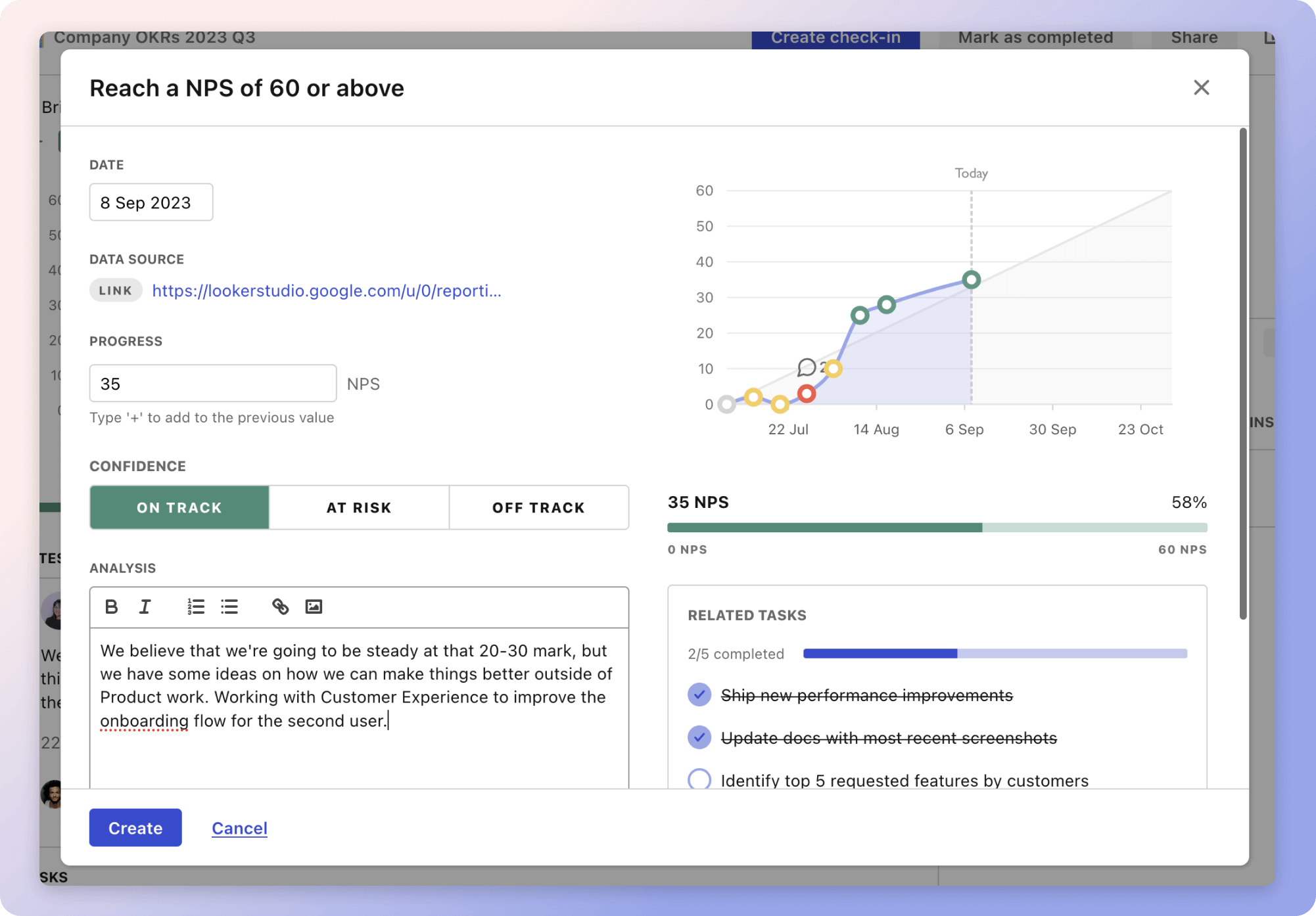
Tability Insights DashboardTability's check-ins will save you hours and increase transparency

More metrics recently published

We have more examples to help you below.

Planning resources

OKRs are a great way to translate strategies into measurable goals. Here are a list of resources to help you adopt the OKR framework:

Table of contents