What are Absenteeism metrics? Finding the right Absenteeism metrics can be daunting, especially when you're busy working on your day-to-day tasks. This is why we've curated a list of examples for your inspiration.
You can copy these examples into your preferred app, or alternatively, use Tability to stay accountable.
Find Absenteeism metrics with AI While we have some examples available, it's likely that you'll have specific scenarios that aren't covered here. You can use our free AI metrics generator below to generate your own strategies.
Examples of Absenteeism metrics and KPIs 1. Absenteeism Rate The percentage of workdays lost due to employee absences
What good looks like for this metric: 1.5% to 2.5%
Ideas to improve this metric Use attendance tracking software Establish a clear attendance policy Provide flexible working hours Implement employee wellness programs Offer incentives for good attendance 2. Productivity Loss The decrease in productivity due to absenteeism, calculated by comparing output with expected production
What good looks like for this metric: Typically 1% to 3% of total output
Ideas to improve this metric Implement cross-training programs Hire temporary staff to cover absences Enhance workplace engagement initiatives Conduct regular productivity assessments Utilise productivity tracking tools 3. Employee Satisfaction Score A measure of how satisfied employees are with their jobs, often linked to absenteeism rates
What good looks like for this metric: 70% to 80% satisfaction
Ideas to improve this metric Conduct regular employee feedback surveys Address workplace grievances promptly Increase job recognition and rewards Develop career advancement opportunities Improve internal communication 4. Turnover Rate The rate at which employees leave the organisation, which can be influenced by absenteeism
What good looks like for this metric: 10% to 15% annually
Ideas to improve this metric Conduct exit interviews to understand reasons for leaving Enhance onboarding processes Provide competitive salaries and benefits Improve workplace culture Conduct regular performance appraisals 5. Return-to-Work Rate The percentage of employees who return to work after being absent, indicating recovery and workplace integration
What good looks like for this metric: Above 90%
Ideas to improve this metric Provide adequate medical leave support Ensure a supportive return-to-work process Maintain open communication during absences Offer flexible return schedules Create a welcoming work environment
← →
1. Employee Participation Rate The percentage of employees participating in wellness programs
What good looks like for this metric: 60-70%
Ideas to improve this metric Increase programme awareness Offer a variety of programme options Survey employees for feedback Provide incentives for participation Schedule programmes during convenient times 2. Employee Satisfaction Rate The percentage of positive feedback regarding wellness programmes
What good looks like for this metric: 75-85%
Ideas to improve this metric Collect regular feedback Respond to participant suggestions Enhance programme quality Implement changes based on feedback Regularly assess satisfaction levels 3. Reduction in Absenteeism The decrease in the rate of employee absenteeism after programme implementation
What good looks like for this metric: 10-20% reduction
Ideas to improve this metric Track absenteeism trends Identify programme impact areas Tailor programs to high-absenteeism groups Communicate the benefits of reduced absenteeism Integrate stress management workshops 4. Employee Health Risk Assessment The percentage of employees experiencing a reduction in health risks
What good looks like for this metric: 20-30% reduction
Ideas to improve this metric Use personalized health assessments Set clear health improvement goals Offer targeted health interventions Track progress on health indicators Provide educational resources 5. Return on Investment (ROI) The financial return generated from the investment in wellness programmes
What good looks like for this metric: 1.5-3 USD ROI per 1 USD spent
Ideas to improve this metric Calculate detailed programme costs Analyse financial benefits & savings Refine cost-effective strategies Increase high-impact programme offerings Implement cost-control measures
← →
Tracking your Absenteeism metrics Having a plan is one thing, sticking to it is another.
Don't fall into the set-and-forget trap. It is important to adopt a weekly check-in process to keep your strategy agile – otherwise this is nothing more than a reporting exercise.
A tool like Tability can also help you by combining AI and goal-setting to keep you on track.
More metrics recently published We have more examples to help you below.
Planning resources OKRs are a great way to translate strategies into measurable goals. Here are a list of resources to help you adopt the OKR framework:
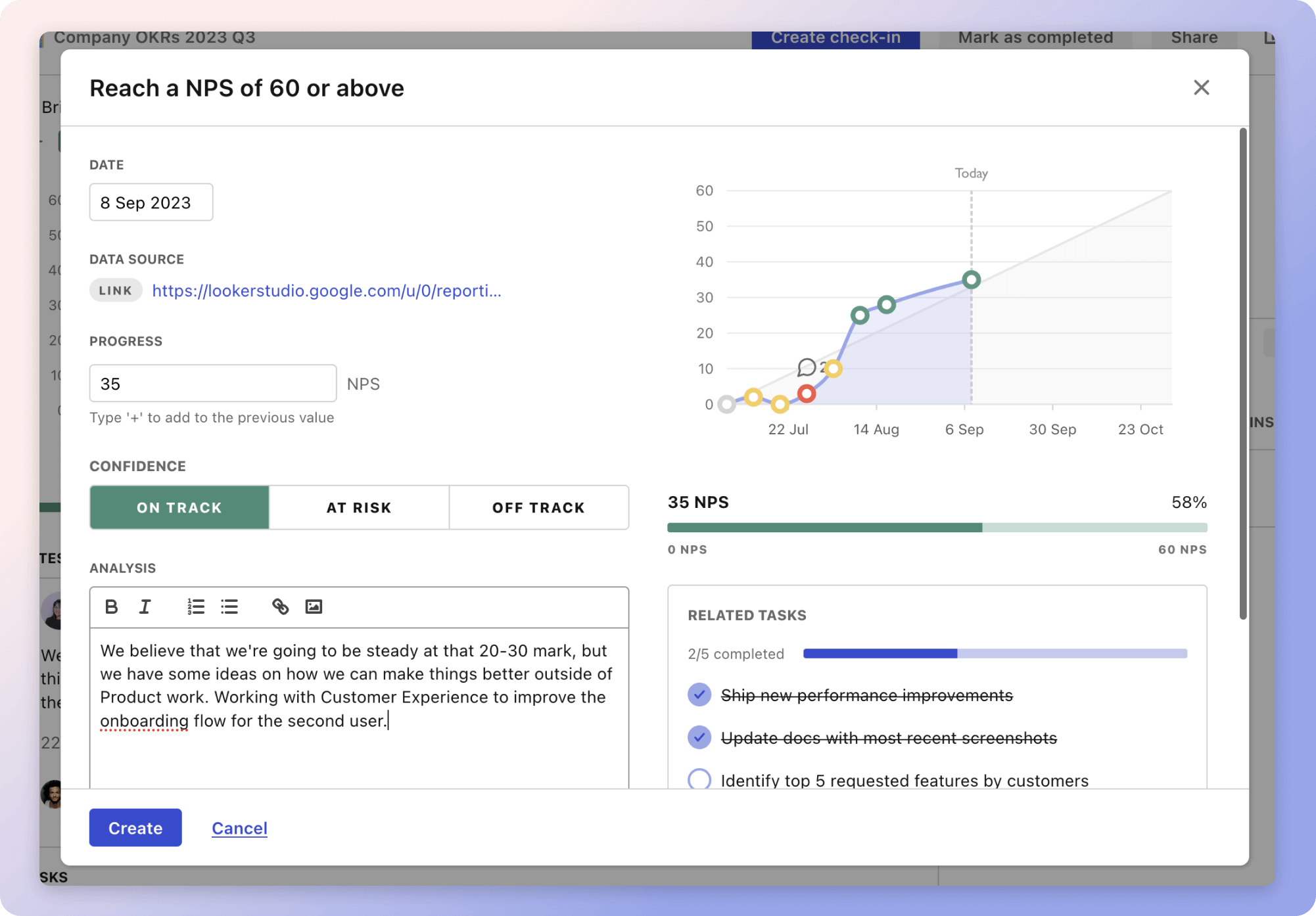 Tability's check-ins will save you hours and increase transparency
 The best metrics for Increase Calls Through Google My Business