Capturing metrics for absenteeism analysis provides valuable insights into how absences impact a company. By tracking the absenteeism rate, you can identify trends and implement strategies like attendance tracking software to maintain rates within the desired 1.5% to 2.5% benchmark. For example, offering flexible working hours could reduce unplanned absences.
Understanding productivity loss is crucial for optimizing company output. Implementing cross-training programs can ensure work continuity even with absenteeism, keeping productivity loss within the 1% to 3% benchmark. Additionally, focusing on employee satisfaction by addressing grievances can improve job satisfaction scores, thus reducing absenteeism and turnover rate. By maintaining an employee satisfaction score between 70% to 80% and a turnover rate of 10% to 15% annually, companies can foster a positive work environment.
Top 5 metrics for Absenteeism Data Analysis
1. Absenteeism Rate
The percentage of workdays lost due to employee absences
What good looks like for this metric: 1.5% to 2.5%
How to improve this metric:- Use attendance tracking software
- Establish a clear attendance policy
- Provide flexible working hours
- Implement employee wellness programs
- Offer incentives for good attendance
2. Productivity Loss
The decrease in productivity due to absenteeism, calculated by comparing output with expected production
What good looks like for this metric: Typically 1% to 3% of total output
How to improve this metric:- Implement cross-training programs
- Hire temporary staff to cover absences
- Enhance workplace engagement initiatives
- Conduct regular productivity assessments
- Utilise productivity tracking tools
3. Employee Satisfaction Score
A measure of how satisfied employees are with their jobs, often linked to absenteeism rates
What good looks like for this metric: 70% to 80% satisfaction
How to improve this metric:- Conduct regular employee feedback surveys
- Address workplace grievances promptly
- Increase job recognition and rewards
- Develop career advancement opportunities
- Improve internal communication
4. Turnover Rate
The rate at which employees leave the organisation, which can be influenced by absenteeism
What good looks like for this metric: 10% to 15% annually
How to improve this metric:- Conduct exit interviews to understand reasons for leaving
- Enhance onboarding processes
- Provide competitive salaries and benefits
- Improve workplace culture
- Conduct regular performance appraisals
5. Return-to-Work Rate
The percentage of employees who return to work after being absent, indicating recovery and workplace integration
What good looks like for this metric: Above 90%
How to improve this metric:- Provide adequate medical leave support
- Ensure a supportive return-to-work process
- Maintain open communication during absences
- Offer flexible return schedules
- Create a welcoming work environment
How to track Absenteeism Data Analysis metrics
It's one thing to have a plan, it's another to stick to it. We hope that the examples above will help you get started with your own strategy, but we also know that it's easy to get lost in the day-to-day effort.
That's why we built Tability: to help you track your progress, keep your team aligned, and make sure you're always moving in the right direction.
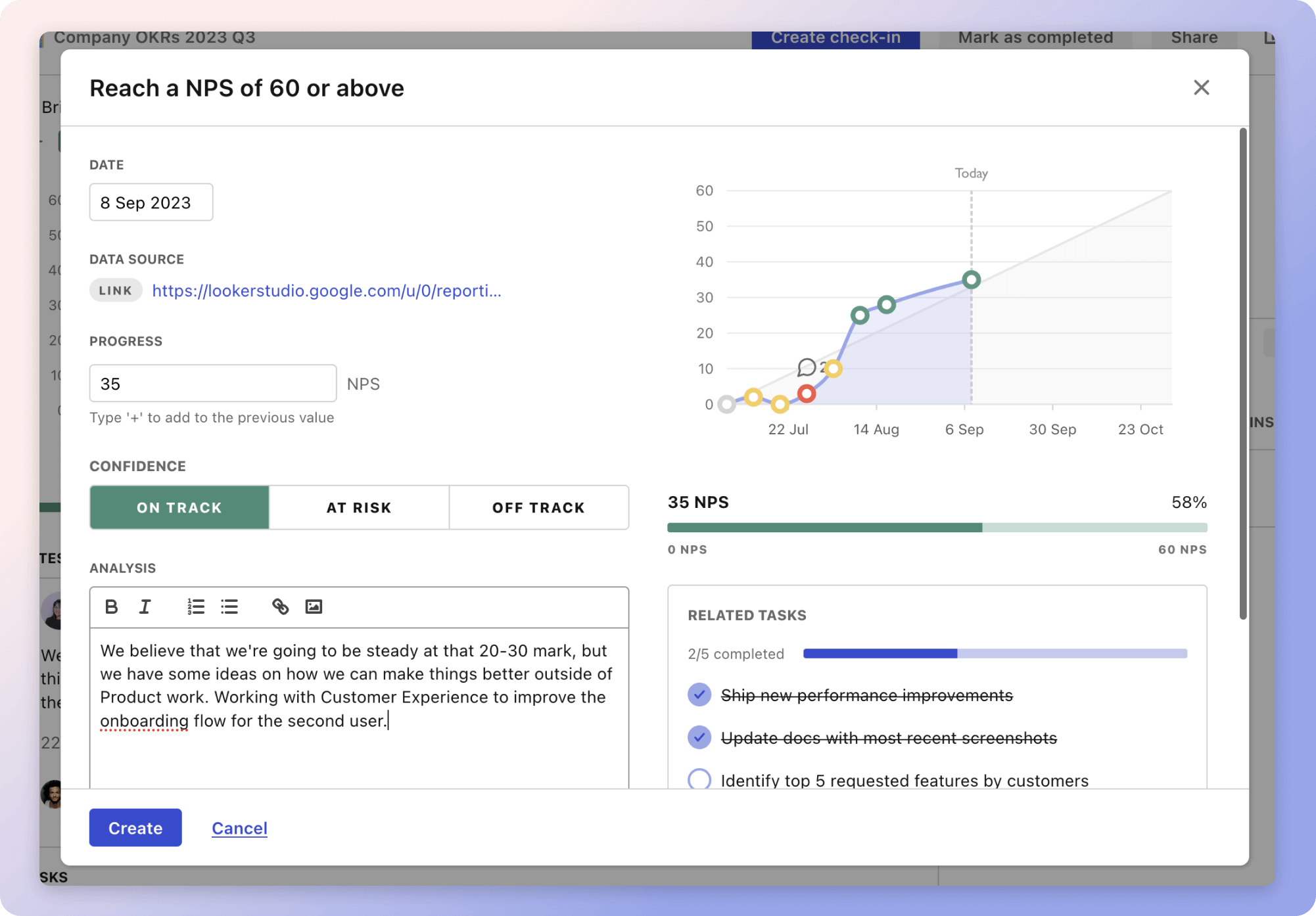
Give it a try and see how it can help you bring accountability to your metrics.
