What are Space Utilization metrics? Identifying the optimal Space Utilization metrics can be challenging, especially when everyday tasks consume your time. To help you, we've assembled a list of examples to ignite your creativity.
Copy these examples into your preferred app, or you can also use Tability to keep yourself accountable.
Find Space Utilization metrics with AI While we have some examples available, it's likely that you'll have specific scenarios that aren't covered here. You can use our free AI metrics generator below to generate your own strategies.
Examples of Space Utilization metrics and KPIs 1. Revenue Per Square Foot Total revenue generated divided by the total square footage occupied. This indicates the revenue productivity of each unit space.
What good looks like for this metric: Typically ranges from $300 to $800 annually for retail spaces
Ideas to improve this metric Increase marketing efforts to drive traffic Optimise pricing strategy to boost sales Enhance customer experience to increase spend Expand product offerings to attract diverse customers Utilise space efficiently by strategic merchandising 2. Occupancy Rate The percentage of unit space that is occupied by tenants or products. It measures the utilisation of the space.
What good looks like for this metric: Aim for 85% to 95% occupancy
Ideas to improve this metric Improve tenant retention with better lease terms Use data-driven marketing to target potential occupants Offer flexible lease arrangements to attract diverse tenants Enhance amenities or services to increase appeal Conduct market analysis to adjust pricing 3. Revenue Growth Rate Percentage increase or decrease in revenue over a specific period, showing the speed of growth or decline.
What good looks like for this metric: 5% to 10% growth annually is often aimed for
Ideas to improve this metric Launch targeted marketing campaigns Introduce loyalty programs to drive repeat purchases Expand to online sales channels to reach a wider audience Identify and target untapped market segments Streamline operations to reduce costs and increase profit margins 4. Net Profit Margin Net profit divided by total revenue, indicating profitability after costs have been deducted.
What good looks like for this metric: Typically ranges from 5% to 15% depending on industry
Ideas to improve this metric Reduce operational costs through efficiency improvements Negotiate better terms with suppliers Adjust pricing models to improve profitability Increase sales volume to benefit from economies of scale Implement cost-control measures across operations 5. Average Transaction Value Average monetary value of each customer transaction, which helps assess customer spend per visit.
What good looks like for this metric: This varies by industry, typically $30–$100 in retail
Ideas to improve this metric Upsell or cross-sell complementary products Offer bundle deals to encourage larger purchases Train staff to increase customer spend Evaluate pricing strategy for adjustments Enhance product mix to encourage higher spending
← →
Tracking your Space Utilization metrics Having a plan is one thing, sticking to it is another.
Setting good strategies is only the first challenge. The hard part is to avoid distractions and make sure that you commit to the plan. A simple weekly ritual will greatly increase the chances of success.
A tool like Tability can also help you by combining AI and goal-setting to keep you on track.
More metrics recently published We have more examples to help you below.
Planning resources OKRs are a great way to translate strategies into measurable goals. Here are a list of resources to help you adopt the OKR framework:
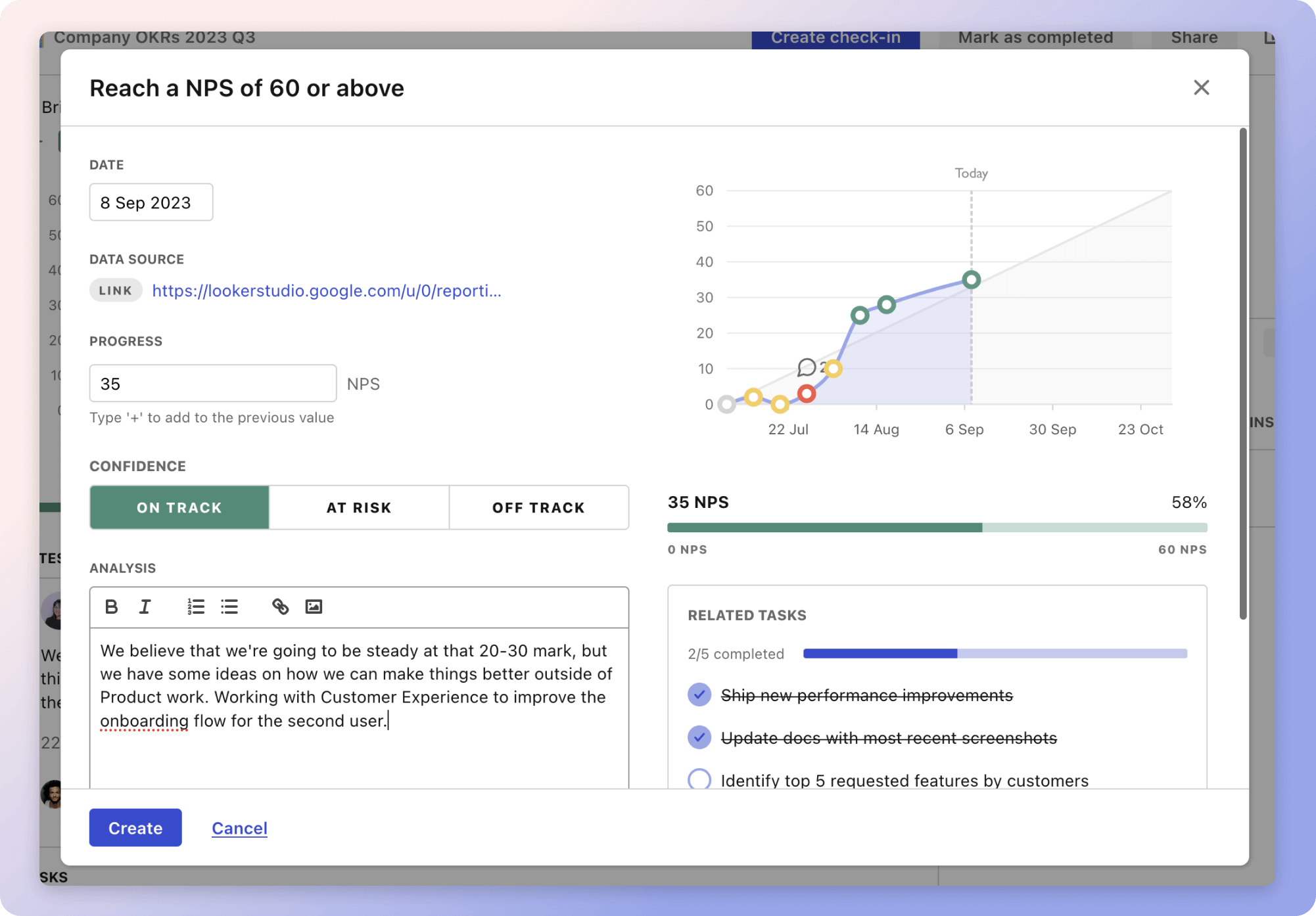 Tability's check-ins will save you hours and increase transparency
 The best metrics for Increase Calls Through Google My Business