Get Tability: OKRs that don't suck | Learn more →

4 examples of Revenue Optimization metrics and KPIs

What are Revenue Optimization metrics?

Finding the right Revenue Optimization metrics can be daunting, especially when you're busy working on your day-to-day tasks. This is why we've curated a list of examples for your inspiration.

Copy these examples into your preferred tool, or adopt Tability to ensure you remain accountable.

Find Revenue Optimization metrics with AI

While we have some examples available, it's likely that you'll have specific scenarios that aren't covered here. You can use our free AI metrics generator below to generate your own strategies.

Examples of Revenue Optimization metrics and KPIs

Metrics for Evaluating Unit Revenue Performance

  • 1. Revenue Per Square Foot

    Total revenue generated divided by the total square footage occupied. This indicates the revenue productivity of each unit space.

    What good looks like for this metric: Typically ranges from $300 to $800 annually for retail spaces

    Ideas to improve this metric
    • Increase marketing efforts to drive traffic
    • Optimise pricing strategy to boost sales
    • Enhance customer experience to increase spend
    • Expand product offerings to attract diverse customers
    • Utilise space efficiently by strategic merchandising
  • 2. Occupancy Rate

    The percentage of unit space that is occupied by tenants or products. It measures the utilisation of the space.

    What good looks like for this metric: Aim for 85% to 95% occupancy

    Ideas to improve this metric
    • Improve tenant retention with better lease terms
    • Use data-driven marketing to target potential occupants
    • Offer flexible lease arrangements to attract diverse tenants
    • Enhance amenities or services to increase appeal
    • Conduct market analysis to adjust pricing
  • 3. Revenue Growth Rate

    Percentage increase or decrease in revenue over a specific period, showing the speed of growth or decline.

    What good looks like for this metric: 5% to 10% growth annually is often aimed for

    Ideas to improve this metric
    • Launch targeted marketing campaigns
    • Introduce loyalty programs to drive repeat purchases
    • Expand to online sales channels to reach a wider audience
    • Identify and target untapped market segments
    • Streamline operations to reduce costs and increase profit margins
  • 4. Net Profit Margin

    Net profit divided by total revenue, indicating profitability after costs have been deducted.

    What good looks like for this metric: Typically ranges from 5% to 15% depending on industry

    Ideas to improve this metric
    • Reduce operational costs through efficiency improvements
    • Negotiate better terms with suppliers
    • Adjust pricing models to improve profitability
    • Increase sales volume to benefit from economies of scale
    • Implement cost-control measures across operations
  • 5. Average Transaction Value

    Average monetary value of each customer transaction, which helps assess customer spend per visit.

    What good looks like for this metric: This varies by industry, typically $30–$100 in retail

    Ideas to improve this metric
    • Upsell or cross-sell complementary products
    • Offer bundle deals to encourage larger purchases
    • Train staff to increase customer spend
    • Evaluate pricing strategy for adjustments
    • Enhance product mix to encourage higher spending

Metrics for Achieve $1M Monthly Revenue

  • 1. Sales Conversion Rate

    The percentage of visitors who purchase a course. Calculated as (Number of Purchases / Total Number of Visitors) * 100

    What good looks like for this metric: 2-3%

    Ideas to improve this metric
    • Optimise landing pages
    • Enhance your sales funnel
    • Offer limited-time discounts
    • Improve customer trust signals
    • A/B test pricing strategies
  • 2. Monthly Traffic

    The total number of visitors to your site each month. Calculated using web analytics tools like Google Analytics

    What good looks like for this metric: 50,000-100,000 visits

    Ideas to improve this metric
    • Invest in SEO
    • Run targeted ad campaigns
    • Collaborate with influencers
    • Use content marketing
    • Leverage social media platforms
  • 3. Average Order Value (AOV)

    The average amount spent each time a customer places an order. Calculated as Total Revenue / Number of Orders

    What good looks like for this metric: $150-$300 USD

    Ideas to improve this metric
    • Upsell and cross-sell products
    • Bundle related products
    • Implement tiered pricing
    • Provide incentives for larger purchases
    • Offer add-on services
  • 4. Customer Acquisition Cost (CAC)

    The cost to acquire a new customer. Calculated as Total Marketing Spend / Number of New Customers Acquired

    What good looks like for this metric: $50-$150 USD

    Ideas to improve this metric
    • Optimise marketing channels
    • Increase organic traffic
    • Refine target audience
    • Improve ad targeting
    • Enhance referral programs
  • 5. Customer Lifetime Value (CLV)

    The total revenue a business can reasonably expect from a single customer account. Calculated using metrics like average purchase value, purchase frequency, and customer lifespan

    What good looks like for this metric: $500-$1000 USD

    Ideas to improve this metric
    • Enhance customer loyalty programs
    • Improve customer satisfaction
    • Offer subscription models
    • Foster strong customer relationships
    • Personalise customer experience

Metrics for Reprocessed Plastic Recycling

  • 1. Annual Sales Volume

    The total quantity of plastic products sold within a year

    What good looks like for this metric: 10,000 MT in 2025, increasing to 50,000 MT by 2035

    Ideas to improve this metric
    • Expand market reach through marketing
    • Increase product quality to boost sales
    • Enhance sales team training and incentives
    • Identify and target key industries needing plastic
    • Collaborate with international partners
  • 2. Production Yield

    The percentage of produced items that meet quality standards

    What good looks like for this metric: 95% in 2025, aiming for 99% by 2035

    Ideas to improve this metric
    • Implement quality checks at each production phase
    • Invest in modern machinery and technology
    • Train employees on quality control processes
    • Conduct regular maintenance on equipment
    • Incorporate lean manufacturing practices
  • 3. Customer Retention Rate

    The percentage of customers who continue to buy over time

    What good looks like for this metric: 80% in 2025, increasing to 95% by 2035

    Ideas to improve this metric
    • Enhance customer service and support
    • Implement a loyalty program
    • Regularly seek customer feedback for improvements
    • Offer personalized deals and discounts
    • Ensure high product quality and consistency
  • 4. Cost per Metric Tonne (MT)

    The cost incurred to produce one metric tonne of plastic

    What good looks like for this metric: 10% reduction by 2026, aiming for 20% reduction by 2035

    Ideas to improve this metric
    • Streamline procurement processes
    • Negotiate better deals with suppliers
    • Optimize production scheduling for efficiency
    • Minimize waste during production
    • Utilize energy-efficient machinery
  • 5. Training Hours per Employee

    The average number of hours each employee spends in training annually

    What good looks like for this metric: 20 hours in 2025, increasing to 60 hours by 2035

    Ideas to improve this metric
    • Develop a comprehensive training calendar
    • Encourage online and external training sessions
    • Introduce mentorship programs
    • Link training to career development plans
    • Utilize technology for training modules

Metrics for ABA Therapy Clinic KPIs

  • 1. Operating Profit Margin (EBIT)

    Operating profit margin is calculated as the percentage of earnings before interest and taxes (EBIT) over total revenue. It measures the efficiency of the clinic in managing its operations and costs relative to its revenue.

    What good looks like for this metric: Typical benchmark values range from 10% to 15%

    Ideas to improve this metric
    • Increase service efficiency to reduce costs
    • Negotiate better terms with suppliers
    • Optimise staff scheduling to avoid overtime
    • Enhance service pricing based on value provided
    • Minimise administrative expenses
  • 2. Revenue Growth Rate

    The rate at which the clinic's revenue is increasing over a specific period. This shows how well the clinic is performing in expanding its client base and/or increasing service fees.

    What good looks like for this metric: Healthy growth rates are typically between 5% to 10% annually

    Ideas to improve this metric
    • Enhance marketing strategies to attract more clients
    • Extend service offerings to meet client demand
    • Improve client retention through excellent service
    • Pursue partnerships with schools or local health services
    • Offer promotions or discounts for referrals
  • 3. Financial Close Accuracy

    Measures the precision of financial statements in reflecting the clinic's financial status, essential for decision making and regulatory compliance.

    What good looks like for this metric: Strive for at least 99% accuracy

    Ideas to improve this metric
    • Implement robust accounting software
    • Regularly train staff on accounting standards
    • Conduct periodic audits
    • Maintain updated documentation for all transactions
    • Streamline processes for financial data collection
  • 4. Time to Close Financials

    The duration needed to finalise the clinic's financial statements each month or quarter. Efficient close time helps in timely management decisions.

    What good looks like for this metric: Best-in-class companies aim for 5 days or less

    Ideas to improve this metric
    • Standardise closing processes
    • Automate data entry and reconciliation tasks
    • Allocate clear responsibilities to the finance team
    • Prepare preliminary reports before closing period
    • Conduct regular process review meetings
  • 5. Resource Utilisation

    Assesses the degree to which the clinic's resources, including staff and materials, are effectively used to reach financial goals.

    What good looks like for this metric: Target above 85% resource utilisation

    Ideas to improve this metric
    • Regularly assess and adjust resource allocations
    • Cross-train staff to manage workload fluctuations
    • Monitor resource usage through management software
    • Set clear KPIs for each department
    • Implement a lean management approach to minimise waste

Tracking your Revenue Optimization metrics

Having a plan is one thing, sticking to it is another.

Setting good strategies is only the first challenge. The hard part is to avoid distractions and make sure that you commit to the plan. A simple weekly ritual will greatly increase the chances of success.

A tool like Tability can also help you by combining AI and goal-setting to keep you on track.
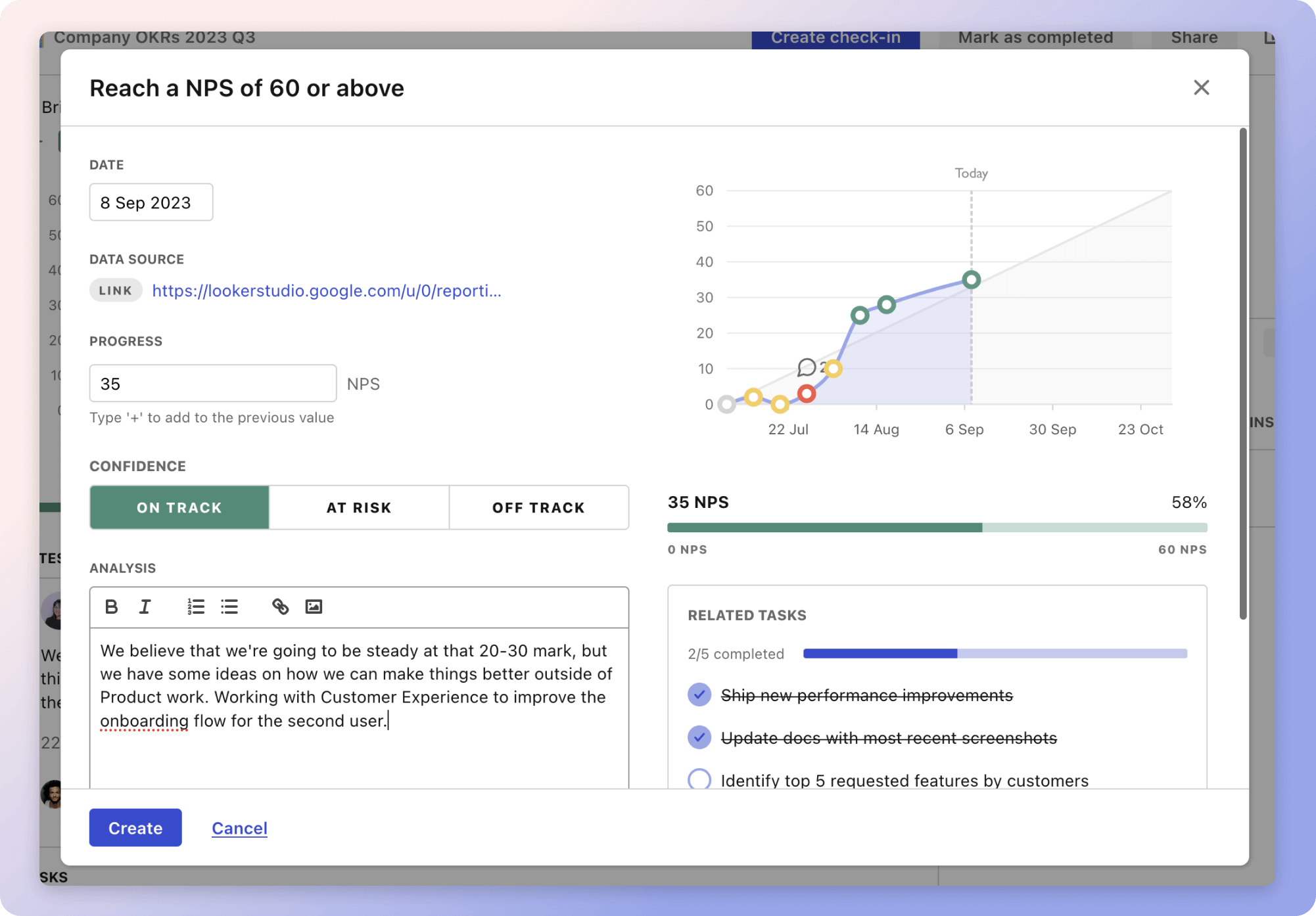
Tability Insights DashboardTability's check-ins will save you hours and increase transparency

More metrics recently published

We have more examples to help you below.

Planning resources

OKRs are a great way to translate strategies into measurable goals. Here are a list of resources to help you adopt the OKR framework:

Table of contents