The focus of this initiative is on evaluating unit revenue performance, a critical aspect for any business looking to maximize its profitability. This involves analyzing several key metrics that collectively provide insights into how well space is utilized and how it contributes to revenue generation.
For instance, "Revenue Per Square Foot" is an essential metric that shows the financial productivity of occupied spaces. Its improvement relies on strategies like optimizing pricing and enhancing customer experiences. Similarly, "Occupancy Rate" highlights space utilization and can be improved by offering better lease terms and enhancing tenant retention.
"Revenue Growth Rate," "Net Profit Margin," and "Average Transaction Value" together illustrate broader business performance. Improving these areas might involve launching targeted marketing campaigns or introducing loyalty programs.
These metrics matter because they drive strategic decisions that enhance business efficiency and growth.
Top 5 metrics for Evaluating Unit Revenue Performance
1. Revenue Per Square Foot
Total revenue generated divided by the total square footage occupied. This indicates the revenue productivity of each unit space.
What good looks like for this metric: Typically ranges from $300 to $800 annually for retail spaces
How to improve this metric:- Increase marketing efforts to drive traffic
- Optimise pricing strategy to boost sales
- Enhance customer experience to increase spend
- Expand product offerings to attract diverse customers
- Utilise space efficiently by strategic merchandising
2. Occupancy Rate
The percentage of unit space that is occupied by tenants or products. It measures the utilisation of the space.
What good looks like for this metric: Aim for 85% to 95% occupancy
How to improve this metric:- Improve tenant retention with better lease terms
- Use data-driven marketing to target potential occupants
- Offer flexible lease arrangements to attract diverse tenants
- Enhance amenities or services to increase appeal
- Conduct market analysis to adjust pricing
3. Revenue Growth Rate
Percentage increase or decrease in revenue over a specific period, showing the speed of growth or decline.
What good looks like for this metric: 5% to 10% growth annually is often aimed for
How to improve this metric:- Launch targeted marketing campaigns
- Introduce loyalty programs to drive repeat purchases
- Expand to online sales channels to reach a wider audience
- Identify and target untapped market segments
- Streamline operations to reduce costs and increase profit margins
4. Net Profit Margin
Net profit divided by total revenue, indicating profitability after costs have been deducted.
What good looks like for this metric: Typically ranges from 5% to 15% depending on industry
How to improve this metric:- Reduce operational costs through efficiency improvements
- Negotiate better terms with suppliers
- Adjust pricing models to improve profitability
- Increase sales volume to benefit from economies of scale
- Implement cost-control measures across operations
5. Average Transaction Value
Average monetary value of each customer transaction, which helps assess customer spend per visit.
What good looks like for this metric: This varies by industry, typically $30–$100 in retail
How to improve this metric:- Upsell or cross-sell complementary products
- Offer bundle deals to encourage larger purchases
- Train staff to increase customer spend
- Evaluate pricing strategy for adjustments
- Enhance product mix to encourage higher spending
How to track Evaluating Unit Revenue Performance metrics
It's one thing to have a plan, it's another to stick to it. We hope that the examples above will help you get started with your own strategy, but we also know that it's easy to get lost in the day-to-day effort.
That's why we built Tability: to help you track your progress, keep your team aligned, and make sure you're always moving in the right direction.
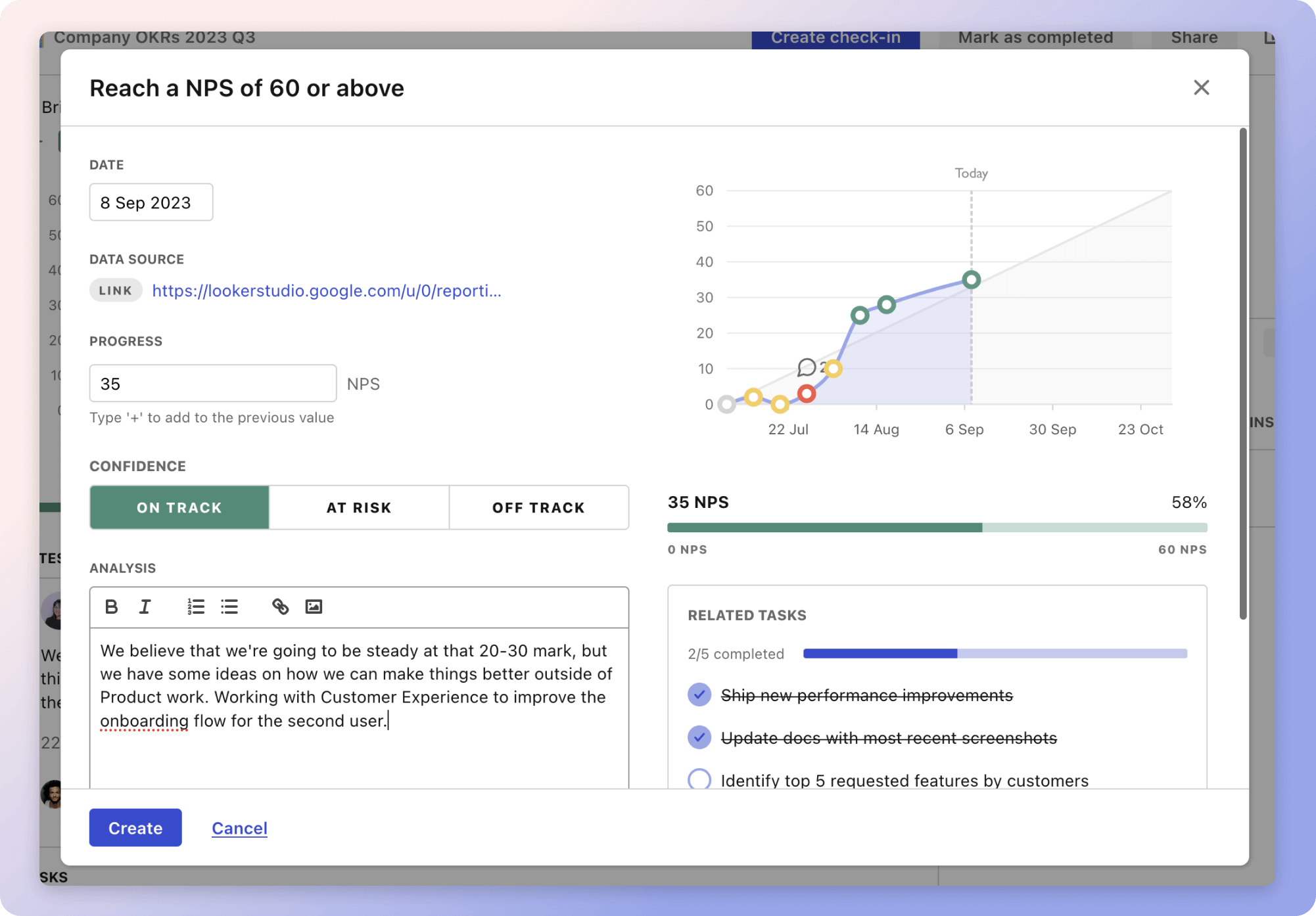
Give it a try and see how it can help you bring accountability to your metrics.
