This plan focuses on evaluating the maturity of data quality processes within an organization. Metrics are vital as they guide improvements in data management practices. For instance, the "Percentage of Basic Data Quality Checks Implemented" ensures that foundational data checks are in place, which helps in maintaining data integrity. Similarly, "Month-Over-Month Improvement in Data Quality Maturity" shows progress over time, fostering a culture of continuous improvement.
Accurate data is crucial for decision-making, and measuring "Data Quality Issue Resolution Time" helps streamline processes for resolving issues swiftly. Additionally, "User Feedback on Data Quality" directly involves users, ensuring their needs and concerns are addressed. By implementing these metrics, organizations can improve their data systems, resulting in increased efficiency and user satisfaction.
Top 5 metrics for Assessing Data Quality Maturity
1. Percentage of Basic Data Quality Checks Implemented
Measures the proportion of datasets with basic data quality checks applied
What good looks like for this metric: 80% or higher
How to improve this metric:- Prioritise the implementation of basic checks on all datasets
- Provide training for team members on basics of data quality
- Allocate resources for implementing basic checks
- Automate basic data quality checks to ensure consistency
- Regularly review and update checklists for basic checks
2. Percentage of Advanced Data Quality Checks Implemented
Measures the proportion of datasets with advanced data quality checks applied
What good looks like for this metric: 60% or higher
How to improve this metric:- Identify datasets requiring advanced checks
- Develop a strategic plan for advanced data quality implementations
- Seek external expertise for complex checks
- Increase budget for advanced data quality tools
- Regularly review advanced check requirements
3. Month-Over-Month Improvement in Data Quality Maturity
Tracks the percentage change or improvement in the implementation of data quality checks month-over-month
What good looks like for this metric: 5% increase
How to improve this metric:- Set monthly targets to improve data quality metrics
- Analyse bottlenecks from previous months and address them
- Ensure consistent reporting and monitoring of progress
- Incorporate regular feedback loops from data teams
- Recognise and reward teams exceeding targets
4. Data Quality Issue Resolution Time
Measures the average time taken to resolve data quality issues
What good looks like for this metric: Less than 48 hours
How to improve this metric:- Streamline issue reporting processes
- Establish clear guidelines for issue prioritisation
- Provide tools and training for faster issue resolution
- Monitor and analyse common issue types
- Implement a rapid response team for data quality issues
5. User Feedback on Data Quality
Collects user feedback regarding the perceived quality and reliability of data
What good looks like for this metric: 80% user satisfaction
How to improve this metric:- Conduct regular surveys to gather user feedback
- Engage with users for detailed feedback sessions
- Communicate improvements to users regularly
- Set up feedback loop in data systems
- Address user concerns and demonstrate improvements
How to track Assessing Data Quality Maturity metrics
It's one thing to have a plan, it's another to stick to it. We hope that the examples above will help you get started with your own strategy, but we also know that it's easy to get lost in the day-to-day effort.
That's why we built Tability: to help you track your progress, keep your team aligned, and make sure you're always moving in the right direction.
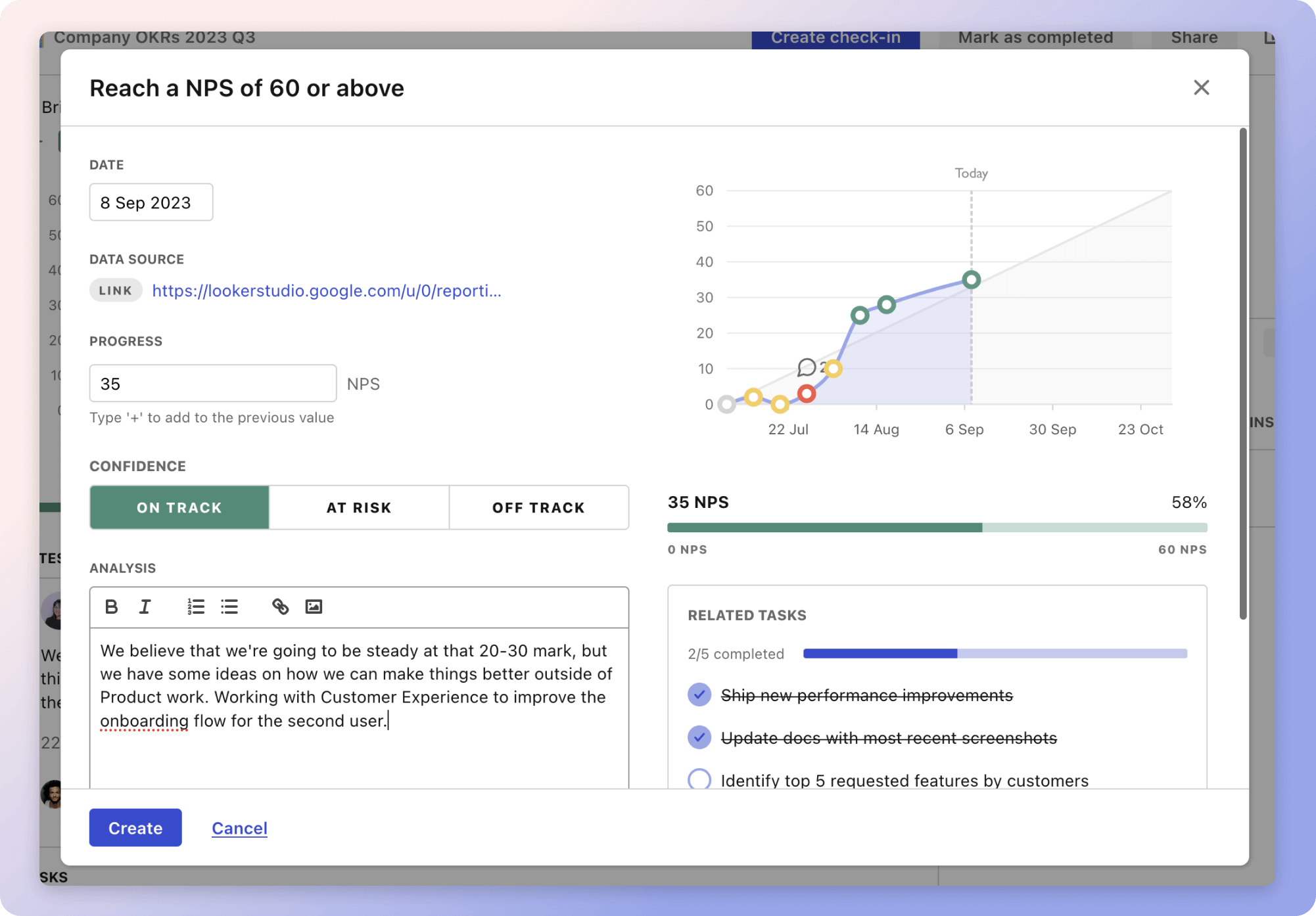
Give it a try and see how it can help you bring accountability to your metrics.
