What are Operations Analyst metrics?
Developing an effective Operations Analyst metrics can be intimidating, especially when your daily duties demand your attention. To assist you, we've curated a list of examples to inspire your planning process.
Feel free to copy these examples into your favorite application, or leverage Tability to maintain accountability.
Find Operations Analyst metrics with AI
While we have some examples available, it's likely that you'll have specific scenarios that aren't covered here. You can use our free AI metrics generator below to generate your own strategies.
Examples of Operations Analyst metrics and KPIs
Metrics for Operations Efficiency
1. Operational Cost Ratio
The ratio of operational costs to total revenue, used to determine the cost-effectiveness of operations
What good looks like for this metric: 25-35%
Ideas to improve this metric- Automate manual processes
- Negotiate better supplier contracts
- Implement lean management techniques
- Regularly review and adjust budgets
- Reduce waste and inefficiencies
2. Average Order Fulfilment Time
The average time taken from receiving an order to its delivery, indicating the efficiency of the fulfilment process
What good looks like for this metric: 24-48 hours
Ideas to improve this metric- Streamline warehouse processes
- Enhance inventory management
- Use reliable shipping partners
- Adopt real-time tracking systems
- Train staff for faster processing
3. First Pass Yield
The percentage of products manufactured correctly without any need for rework, showing the efficiency of the production process
What good looks like for this metric: 95-99%
Ideas to improve this metric- Implement quality control measures
- Use advanced manufacturing techniques
- Provide ongoing employee training
- Conduct regular equipment maintenance
- Analyse and address defect trends
4. Inventory Turnover Ratio
The ratio of cost of goods sold to average inventory, indicating how efficiently inventory is managed
What good looks like for this metric: 6-12 times per year
Ideas to improve this metric- Optimise inventory levels
- Improve demand forecasting
- Enhance supplier relationships
- Implement just-in-time inventory systems
- Increase marketing and sales efforts
5. Customer Satisfaction Score (CSAT)
A measure of customer satisfaction with the operational aspects of the company, usually gathered through surveys
What good looks like for this metric: 80-90%
Ideas to improve this metric- Improve customer service training
- Collect and act on customer feedback
- Enhance product quality
- Ensure timely delivery
- Streamline return processes
Metrics for Optimising Crane Operations
1. Operational Efficiency Rate
Measures the efficiency of operational processes by comparing actual output with a standard or expected output.
What good looks like for this metric: 85% - 90%
Ideas to improve this metric- Streamline workflow processes
- Implement regular staff training sessions
- Use data analytics to identify bottlenecks
- Introduce automation where applicable
- Conduct regular equipment maintenance
2. Budget Variance
Tracks the difference between budgeted and actual expenditures to manage financial performance.
What good looks like for this metric: Within 5% of the budget
Ideas to improve this metric- Regularly review financial statements
- Implement cost control measures
- Improve supplier negotiation strategies
- Establish a budget tracking system
- Engage in long-term financial planning
3. Return on Investment (ROI)
Calculates the profitability of investment activities by comparing net returns to costs.
What good looks like for this metric: 10% - 15%
Ideas to improve this metric- Evaluate new investment opportunities
- Enhance sales and marketing strategies
- Reduce operational costs
- Invest in higher-quality equipment
- Explore partnerships and collaborations
4. Employee Productivity
Assesses the output of employees relative to input, aiming to maximize workforce effectiveness.
What good looks like for this metric: 100 units per employee per hour
Ideas to improve this metric- Provide ongoing skills development
- Implement performance incentives
- Foster a positive workplace culture
- Optimize task assignments
- Use technology to facilitate tasks
5. Customer Satisfaction Score
Evaluates customer satisfaction through feedback and rating systems after service or product delivery.
What good looks like for this metric: 85% - 90%
Ideas to improve this metric- Enhance customer service training
- Regularly survey customer feedback
- Promptly address customer complaints
- Improve product quality and service delivery
- Build personalised customer relationships
Metrics for Profit increase strategies
1. Net Profit Margin
Calculated by dividing net profit by total revenue, expressed as a percentage. It shows how much profit a company makes for each dollar of revenue.
What good looks like for this metric: 10-20%
Ideas to improve this metric- Reduce operational costs
- Increase product prices
- Enhance sales volume
- Improve customer retention
- Optimise supply chain
2. Return on Investment (ROI)
Determines profitability by comparing the gain from an investment to its cost, calculated as (Net Profit / Cost of Investment) x 100.
What good looks like for this metric: 15-25%
Ideas to improve this metric- Choose higher-yield investments
- Reduce investment costs
- Increase revenue from investments
- Enhance marketing strategies
- Improve financial forecasting
3. Gross Profit Margin
Calculated by subtracting cost of goods sold (COGS) from revenue and dividing by revenue, expressed as a percentage, indicating the efficiency of production and pricing.
What good looks like for this metric: 20-40%
Ideas to improve this metric- Negotiate better supplier terms
- Increase production efficiency
- Enhance sales and pricing strategy
- Reduce waste in production
- Control direct labour costs
4. Operating Profit Margin
Measures what proportion of revenue is left as profit after accounting for operating expenses, calculated by dividing operating profit by total revenue.
What good looks like for this metric: 10-15%
Ideas to improve this metric- Streamline operational processes
- Reduce administrative expenses
- Enhance revenue streams
- Focus on core business activities
- Minimise utility and overhead costs
5. Expense Ratio
Expresses the percentage of total expenses to total revenue, highlighting cost management efficiency.
What good looks like for this metric: 60-80%
Ideas to improve this metric- Implement cost-cutting measures
- Monitor expenses regularly
- Automate routine tasks
- Negotiate better vendor contracts
- Outsource non-core processes
Metrics for ABA Therapy Clinic KPIs
1. Operating Profit Margin (EBIT)
Operating profit margin is calculated as the percentage of earnings before interest and taxes (EBIT) over total revenue. It measures the efficiency of the clinic in managing its operations and costs relative to its revenue.
What good looks like for this metric: Typical benchmark values range from 10% to 15%
Ideas to improve this metric- Increase service efficiency to reduce costs
- Negotiate better terms with suppliers
- Optimise staff scheduling to avoid overtime
- Enhance service pricing based on value provided
- Minimise administrative expenses
2. Revenue Growth Rate
The rate at which the clinic's revenue is increasing over a specific period. This shows how well the clinic is performing in expanding its client base and/or increasing service fees.
What good looks like for this metric: Healthy growth rates are typically between 5% to 10% annually
Ideas to improve this metric- Enhance marketing strategies to attract more clients
- Extend service offerings to meet client demand
- Improve client retention through excellent service
- Pursue partnerships with schools or local health services
- Offer promotions or discounts for referrals
3. Financial Close Accuracy
Measures the precision of financial statements in reflecting the clinic's financial status, essential for decision making and regulatory compliance.
What good looks like for this metric: Strive for at least 99% accuracy
Ideas to improve this metric- Implement robust accounting software
- Regularly train staff on accounting standards
- Conduct periodic audits
- Maintain updated documentation for all transactions
- Streamline processes for financial data collection
4. Time to Close Financials
The duration needed to finalise the clinic's financial statements each month or quarter. Efficient close time helps in timely management decisions.
What good looks like for this metric: Best-in-class companies aim for 5 days or less
Ideas to improve this metric- Standardise closing processes
- Automate data entry and reconciliation tasks
- Allocate clear responsibilities to the finance team
- Prepare preliminary reports before closing period
- Conduct regular process review meetings
5. Resource Utilisation
Assesses the degree to which the clinic's resources, including staff and materials, are effectively used to reach financial goals.
What good looks like for this metric: Target above 85% resource utilisation
Ideas to improve this metric- Regularly assess and adjust resource allocations
- Cross-train staff to manage workload fluctuations
- Monitor resource usage through management software
- Set clear KPIs for each department
- Implement a lean management approach to minimise waste
Metrics for Financial Performance Assessment
1. Revenue Growth Rate
Measures the increase in revenue over a specific period, typically compared to the previous period or year
What good looks like for this metric: 5-10% annual increase
Ideas to improve this metric- Increase marketing efforts
- Expand product or service offerings
- Enhance sales team's performance
- Explore new markets
- Improve customer retention rates
2. Expense Ratio
Represents the proportion of expenses relative to total revenue, calculated as (Total Expenses / Total Revenue) x 100
What good looks like for this metric: 50-75%
Ideas to improve this metric- Evaluate and reduce unnecessary expenses
- Negotiate better deals with suppliers
- Optimise operational efficiency
- Implement cost-saving technologies
- Regularly review financial statements for insights
3. Net Profit Margin
Calculates the percentage of net profit generated from total revenue, found by (Net Profit / Total Revenue) x 100
What good looks like for this metric: 10-20%
Ideas to improve this metric- Increase pricing without losing customers
- Cut down on variable costs
- Improve product upselling strategies
- Enhance productivity and workforce efficiency
- Review and optimise tax strategies
4. Cash Flow from Operations
Evaluates the cash generated from business operations, analysing the effectiveness of the core business activities
What good looks like for this metric: Consistently positive values
Ideas to improve this metric- Streamline accounts receivable processes
- Negotiate better payment terms with vendors
- Ensure accurate and timely invoicing
- Reduce inventory levels
- Evaluate and improve capital expenditure decisions
5. Return on Investment (ROI)
Measures the profitability of investments, calculated by (Net Profit from Investment / Cost of Investment) x 100
What good looks like for this metric: 15-30%
Ideas to improve this metric- Assess marketing campaign effectiveness
- Invest in high-return projects
- Regularly review portfolio performance
- Optimise resource allocation
- Diversify investment options
Metrics for Reduce Courier Costs
1. Average Cost per Delivery
The total cost of deliveries divided by the number of deliveries made in a given period
What good looks like for this metric: $5 - $10 per delivery
Ideas to improve this metric- Negotiate better rates with courier companies
- Batch orders to reduce the number of deliveries
- Use regional couriers for local deliveries
- Incorporate automated route planning
- Track and analyse delivery data to identify cost-saving opportunities
2. Courier Utilisation Rate
The percentage of time couriers are actively delivering or picking up items
What good looks like for this metric: 70% - 80%
Ideas to improve this metric- Ensure efficient route planning
- Schedule deliveries during peak times of demand
- Increase delivery volume by offering promotions
- Monitor real-time utilisation and adjust routes accordingly
- Consolidate deliveries going to similar areas
3. Fuel Costs per Mile
The cost incurred on fuel divided by the total miles travelled for deliveries
What good looks like for this metric: $0.15 - $0.20 per mile
Ideas to improve this metric- Use fuel-efficient vehicles
- Plan delivery routes to minimise travel distance
- Monitor and optimise driver behaviours for fuel efficiency
- Consider transitioning to electric or hybrid vehicles
- Regularly maintain vehicles to ensure fuel efficiency
4. On-Time Delivery Rate
The percentage of deliveries made on or before the scheduled delivery time
What good looks like for this metric: 95% - 98%
Ideas to improve this metric- Provide accurate delivery time estimates
- Communicate proactively with customers about delays
- Utilise technology for real-time tracking and updates
- Train couriers on time management and efficient delivery techniques
- Implement contingency plans for common delay scenarios
5. Return Rate
The percentage of delivered items that are returned by customers
What good looks like for this metric: 1% - 5%
Ideas to improve this metric- Ensure accurate order processing and fulfilment
- Improve packaging to minimise product damage
- Enhance customer service to address issues pre-delivery
- Provide clear product descriptions and photos to reduce returns
- Streamline the return process to improve customer satisfaction
Metrics for Updated Inventory of Spare Parts
1. Inventory Accuracy Rate
The percentage of inventory records that are accurate when compared to physical counts
What good looks like for this metric: 95% or higher
Ideas to improve this metric- Implement regular cycle counts
- Utilise barcode/RFID systems
- Conduct thorough training for staff
- Review and update inventory records regularly
- Analyse discrepancies and correct processes
2. Stock Turnover Rate
The number of times inventory is sold or used in a time period compared to the average inventory
What good looks like for this metric: 4 to 6 times per year
Ideas to improve this metric- Adjust reorder levels and frequency
- Monitor sales and usage trends
- Identify slow-moving items and clear them
- Negotiate with suppliers for optimal order quantities
- Integrate demand forecasting tools
3. Backorder Rate
The percentage of customer orders that cannot be filled at the scheduled time due to lack of inventory
What good looks like for this metric: Less than 10%
Ideas to improve this metric- Improve demand forecasting accuracy
- Increase safety stock for critical items
- Collaborate with suppliers on lead times
- Enhance order fulfilment processes
- Utilise data analytics for better insights
4. Days of Inventory on Hand (DOH)
The average number of days that inventory is held before it is sold or used
What good looks like for this metric: 45 to 60 days
Ideas to improve this metric- Optimise inventory mix based on demand
- Implement just-in-time ordering
- Improve marketing strategies to boost sales
- Utilise warehouse space efficiently
- Develop partnerships with reliable suppliers
5. Carrying Cost of Inventory
The total cost of holding onto inventory, typically a percentage of total inventory costs
What good looks like for this metric: 20% to 30% of inventory value
Ideas to improve this metric- Reduce excess inventory levels
- Improve inventory turnover
- Negotiate better terms with suppliers
- Utilise technology to monitor costs closely
- Enhance inventory flow and minimise holding time
Metrics for Data Uptime Measurement
1. Job Success Rate
Percentage of SQL Server jobs that complete successfully without errors during the specified window
What good looks like for this metric: Typically above 95%
Ideas to improve this metric- Optimise SQL queries to reduce execution time
- Implement real-time monitoring and alerting
- Increase server capacity during the job window
- Regularly maintain and update indexes
- Perform routine job error analysis and debugging
2. Average Job Duration
Average time taken by SQL jobs to complete within the window
What good looks like for this metric: Should align with historical average time
Ideas to improve this metric- Refactor and optimise slow-performing queries
- Avoid unnecessary data processing
- Use SQL Server execution plans for analysis
- Schedule jobs in sequence to avoid performance bottlenecks
- Utilise parallel processing when possible
3. Data Availability
Percentage of time that data is available and ready for use by end-users after job completion
What good looks like for this metric: Typically above 99%
Ideas to improve this metric- Set up redundancy for critical tables
- Automate data validation checks post-job completion
- Implement failover strategies
- Ensure network reliability and minimise downtime
- Regularly back up and securely store data
4. Error Frequency
Count of errors encountered during SQL job processing
What good looks like for this metric: Typically less than 5 errors per month
Ideas to improve this metric- Conduct thorough testing before deployment
- Use transaction logs to identify error sources
- Ensure up-to-date error handling mechanisms
- Regularly review job logs for anomalies
- Provide regular training for administrators
5. Resource Utilisation
Percentage of server resources used during job processing
What good looks like for this metric: Should not consistently exceed 70%
Ideas to improve this metric- Balance load across multiple servers
- Monitor and adjust resource allocation
- Upgrade hardware capacity if needed
- Eliminate unused processes during job execution
- Use performance counters to track and adjust load
Metrics for Success of Strategic Programs
1. Return on Investment (ROI)
Measures the profitability of a strategic program by comparing the returns to the costs. It is calculated as (Net Profit / Cost of Investment) * 100.
What good looks like for this metric: Typically, a good ROI is 15% or more
Ideas to improve this metric- Enhance profitability through cost control
- Increase revenue from the program
- Extend program's lifecycle
- Improve marketing efforts
- Optimize resource allocation
2. Net Promoter Score (NPS)
Evaluates customer or stakeholder satisfaction and loyalty by asking how likely they are to recommend the program to others. Scored from -100 to 100.
What good looks like for this metric: Scores above 50 are considered excellent
Ideas to improve this metric- Improve customer service and support
- Enhance program quality
- Solicit and act on feedback
- Create engagement incentives
- Improve communication clarity
3. Stakeholder Engagement
Measures the level of stakeholder participation and involvement in the strategic program.
What good looks like for this metric: Varies; should aim for more than 70% active engagement
Ideas to improve this metric- Increase communication frequency
- Include stakeholders in decision-making
- Provide regular updates
- Use varied engagement channels
- Host interactive workshops
4. Cost-Benefit Analysis
Compares the costs and benefits of the program to determine value. A higher ratio indicates a more beneficial program.
What good looks like for this metric: A ratio above 1 signifies positive value
Ideas to improve this metric- Really evaluate benefits accurately
- Regularly review costs
- Negotiate supplier agreements
- Streamline operations
- Assess risk mitigation strategies
5. Goal Achievement Rate
Measures the percentage of strategic targets met within a specific timeframe. Calculated as (Achieved Goals / Total Goals) * 100.
What good looks like for this metric: 70% or higher is desirable
Ideas to improve this metric- Set realistic targets
- Continuously monitor progress
- Adjust strategies as needed
- Encourage team collaboration
- Provide necessary resources
Metrics for Monthly Sales and Demand Analysis
1. Demand Orders Growth Rate
Measures the rate at which demand orders increase or decrease compared to previous months or quarters
What good looks like for this metric: 5-10% growth month-over-month
Ideas to improve this metric- Enhance marketing campaigns
- Improve customer service
- Offer discounts or promotions
- Expand product range
- Optimize supply chain efficiency
2. Sales Cost Percentage
The proportion of sales cost relative to total revenue, indicating efficiency in converting costs to sales
What good looks like for this metric: 20-30% of total revenue
Ideas to improve this metric- Negotiate better supplier contracts
- Reduce overhead costs
- Utilise scalable sales channels
- Implement efficient inventory management
- Automate sales operations to reduce expenses
3. Quarterly Revenue Comparison
Compares total revenue earned in each quarter to identify seasonal trends and sales performance
What good looks like for this metric: Consistent growth per quarter
Ideas to improve this metric- Boost marketing during high-sales periods
- Plan product launches in high-demand seasons
- Adjust pricing strategies based on seasonality
- Increase cross-selling activities
- Evaluate and pivot based on quarterly outcomes
4. Order Fulfillment Rate
Percentage of demand orders successfully fulfilled within the expected time
What good looks like for this metric: 95-98% fulfillment rate
Ideas to improve this metric- Streamline the order processing system
- Ensure adequate stock levels
- Enhance supplier relationships
- Implement real-time tracking systems
- Train staff on efficient order handling
5. Monthly Sales Variance
Tracks variations in sales month over month to identify fluctuations and trends
What good looks like for this metric: +/- 5% variance
Ideas to improve this metric- Analyse customer feedback for insights
- Invest in demand forecasting tools
- Strengthen seasonal product offerings
- Balance promotions to smoothen sales dips
- Regularly review and adjust sales strategies
Metrics for Evaluating Unit Revenue Performance
1. Revenue Per Square Foot
Total revenue generated divided by the total square footage occupied. This indicates the revenue productivity of each unit space.
What good looks like for this metric: Typically ranges from $300 to $800 annually for retail spaces
Ideas to improve this metric- Increase marketing efforts to drive traffic
- Optimise pricing strategy to boost sales
- Enhance customer experience to increase spend
- Expand product offerings to attract diverse customers
- Utilise space efficiently by strategic merchandising
2. Occupancy Rate
The percentage of unit space that is occupied by tenants or products. It measures the utilisation of the space.
What good looks like for this metric: Aim for 85% to 95% occupancy
Ideas to improve this metric- Improve tenant retention with better lease terms
- Use data-driven marketing to target potential occupants
- Offer flexible lease arrangements to attract diverse tenants
- Enhance amenities or services to increase appeal
- Conduct market analysis to adjust pricing
3. Revenue Growth Rate
Percentage increase or decrease in revenue over a specific period, showing the speed of growth or decline.
What good looks like for this metric: 5% to 10% growth annually is often aimed for
Ideas to improve this metric- Launch targeted marketing campaigns
- Introduce loyalty programs to drive repeat purchases
- Expand to online sales channels to reach a wider audience
- Identify and target untapped market segments
- Streamline operations to reduce costs and increase profit margins
4. Net Profit Margin
Net profit divided by total revenue, indicating profitability after costs have been deducted.
What good looks like for this metric: Typically ranges from 5% to 15% depending on industry
Ideas to improve this metric- Reduce operational costs through efficiency improvements
- Negotiate better terms with suppliers
- Adjust pricing models to improve profitability
- Increase sales volume to benefit from economies of scale
- Implement cost-control measures across operations
5. Average Transaction Value
Average monetary value of each customer transaction, which helps assess customer spend per visit.
What good looks like for this metric: This varies by industry, typically $30–$100 in retail
Ideas to improve this metric- Upsell or cross-sell complementary products
- Offer bundle deals to encourage larger purchases
- Train staff to increase customer spend
- Evaluate pricing strategy for adjustments
- Enhance product mix to encourage higher spending
Metrics for Amount of Self-Produced Electricity
1. Energy Production (kWh)
This measures the total kilowatt hours (kWh) of electricity generated by your system over a specific period
What good looks like for this metric: Typically between 5,000 to 20,000 kWh annually
Ideas to improve this metric- Regularly maintain and clean solar panels or wind turbines
- Adjust the angle of solar panels to optimise sunlight capture
- Add more panels or a larger wind turbine to increase capacity
- Utilise energy storage systems like batteries for excess production
- Install energy monitoring systems for real-time data
2. Capacity Factor
This is the ratio of actual output to the maximum possible output of the plant over a period of time, expressed as a percentage
What good looks like for this metric: Usually between 15% to 30% for solar power systems
Ideas to improve this metric- Ensure optimal installation settings to maximise sunlight exposure
- Minimise system downtime through regular maintenance
- Use high-efficiency inverter systems
- Replace outdated or inefficient units
- Install in regions with higher solar or wind potential
3. Self-Consumption Rate
This measures the percentage of self-produced electricity directly consumed by the producer rather than exported to the grid
What good looks like for this metric: Aim for 40% to 60% self-consumption rate
Ideas to improve this metric- Increase the use of electricity during peak production periods
- Utilise scheduling features for household appliances
- Integrate battery storage systems to store excess energy
- Inspect and resolve any power mismatch issues
- Educate household members on energy-saving practices
4. System Efficiency
This is the overall efficiency of the electricity generation system, calculated as the ratio of the total output energy to the total input energy
What good looks like for this metric: Aim for above 80% efficiency
Ideas to improve this metric- Use high-efficiency solar panels or turbines
- Insulate connections and wiring to prevent energy loss
- Regularly check and clean system components
- Implement advanced technologies for energy optimisation
- Choose the right system size for your specific needs
5. Return on Investment (ROI)
This assesses the financial returns of investing in self-produced electricity, calculated as the ratio of net profit to the initial investment cost
What good looks like for this metric: Typically a payback period of 5 to 10 years
Ideas to improve this metric- Apply for government incentives and rebates
- Compare and select high-quality low-cost equipment
- Increase system durability to extend lifespan
- Reduce operational costs through optimised efficiency
- Regularly review and adjust financial strategies
Metrics for Security and System Performance
1. Mean Time to Detect (MTTD)
The average time taken to identify a security threat or performance issue.
What good looks like for this metric: Typically less than 24 hours
Ideas to improve this metric- Implement continuous monitoring systems
- Use automated alert systems
- Regularly update threat intelligence
- Train staff for rapid response
- Conduct regular security audits
2. Mean Time to Recovery (MTTR)
The average time needed to recover from a security breach or system performance issue.
What good looks like for this metric: Often less than 5 hours
Ideas to improve this metric- Develop a comprehensive incident response plan
- Invest in reliable backup solutions
- Conduct disaster recovery drills
- Enhance system redundancy
- Use AI-driven analytics for faster issue resolution
3. System Uptime Percentage
The percentage of time the system is operational and available.
What good looks like for this metric: Above 99.9%
Ideas to improve this metric- Regular system maintenance
- Implement failover strategies
- Use load balancing
- Monitor server health continuously
- Upgrade hardware periodically
4. Incident Rate
The number of security or performance incidents detected within a specified period.
What good looks like for this metric: Fewer than 5 per month
Ideas to improve this metric- Strengthen access control policies
- Adopt advanced security software
- Enhance employee training programs
- Regularly test for vulnerabilities
- Improve system configurations
5. Vulnerability Remediation Time
The time taken to fix identified vulnerabilities in the system.
What good looks like for this metric: Under 30 days
Ideas to improve this metric- Prioritise vulnerability patches
- Automate patch management
- Regularly update software
- Establish a dedicated security team
- Use vulnerability scanning tools continuously
Metrics for Visual Merchandising MINISO
1. Visual Display Impact
The effectiveness of store displays to attract and engage customers, often measured through customer feedback and sales data.
What good looks like for this metric: High-impact displays see a 20% increase in foot traffic
Ideas to improve this metric- Enhance lighting around displays
- Incorporate interactive elements
- Regularly update display themes
- Use vibrant colours and contrasts
- Place best-selling products at eye level
2. Customer Dwell Time
The average time a customer spends in the store, indicating engagement with the visual merchandising.
What good looks like for this metric: Average dwell time of 15-20 minutes
Ideas to improve this metric- Create engaging product zones
- Ensure clear and inviting store layout
- Provide seating areas
- Use ambient music to enhance atmosphere
- Offer in-store promotions
3. Conversion Rate
The percentage of store visitors who make a purchase, demonstrating the effectiveness of displays.
What good looks like for this metric: A conversion rate of 20-30%
Ideas to improve this metric- Highlight key promotions
- Simplify the checkout process
- Train staff for upselling techniques
- Use digital signage for dynamic product display
- Facilitate product trials
4. Sales Per Square Foot
Total sales divided by sales floor area, showing how effectively space is used to drive sales.
What good looks like for this metric: USD 300-400 per square foot annually
Ideas to improve this metric- Optimise product placement
- Conduct regular space audits
- Maximise use of aisle ends
- Focus on high-margin items
- Rotate products according to seasonal trends
5. Product Placement Effectiveness
Analysis of product location within the store and its influence on sales, often through A/B testing.
What good looks like for this metric: A 10-15% increase in sales after strategic repositioning
Ideas to improve this metric- Conduct A/B testing for product location
- Utilise customer flow data
- Place complementary products together
- Ensure visibility of top products
- Use end-caps for new arrivals
Metrics for Measure Company Growth
1. Revenue Growth Rate
The increase in a company’s sales over a specific period, typically compared annually or quarterly
What good looks like for this metric: 10-25% annually is healthy
Ideas to improve this metric- Increase marketing efforts
- Expand product line
- Enhance customer retention strategies
- Optimize pricing strategy
- Target new markets
2. Market Share
The portion of a market controlled by a particular company or product
What good looks like for this metric: Varies by industry, generally 15% is strong
Ideas to improve this metric- Benchmark against competitors
- Enhance brand presence
- Improve customer satisfaction
- Innovate product offerings
- Invest in advertising
3. Customer Acquisition Cost (CAC)
The cost of acquiring a new customer, calculated by dividing total acquisition expenses by the number of new customers
What good looks like for this metric: Less than 1/3 of Lifetime Value (LTV)
Ideas to improve this metric- Refine marketing strategies
- Enhance sales team performance
- Improve conversion rates
- Utilize cost-effective channels
- Focus on content marketing
4. Lifetime Value of a Customer (LTV)
The total revenue expected from a customer account throughout its lifetime relationship with a company
What good looks like for this metric: Should be 3 times CAC
Ideas to improve this metric- Enhance customer support
- Offer personalised services
- Increase customer engagement
- Implement loyalty programs
- Provide value-added services
5. Net Promoter Score (NPS)
A measure of customer satisfaction and loyalty based on how likely customers are to recommend a company’s products or services to others
What good looks like for this metric: NPS of 30 or above is good
Ideas to improve this metric- Solicit customer feedback
- Improve product quality
- Enhance customer service
- Address customer complaints
- Engage with detractors and promoters
Tracking your Operations Analyst metrics
Having a plan is one thing, sticking to it is another.
Don't fall into the set-and-forget trap. It is important to adopt a weekly check-in process to keep your strategy agile – otherwise this is nothing more than a reporting exercise.
A tool like Tability can also help you by combining AI and goal-setting to keep you on track.
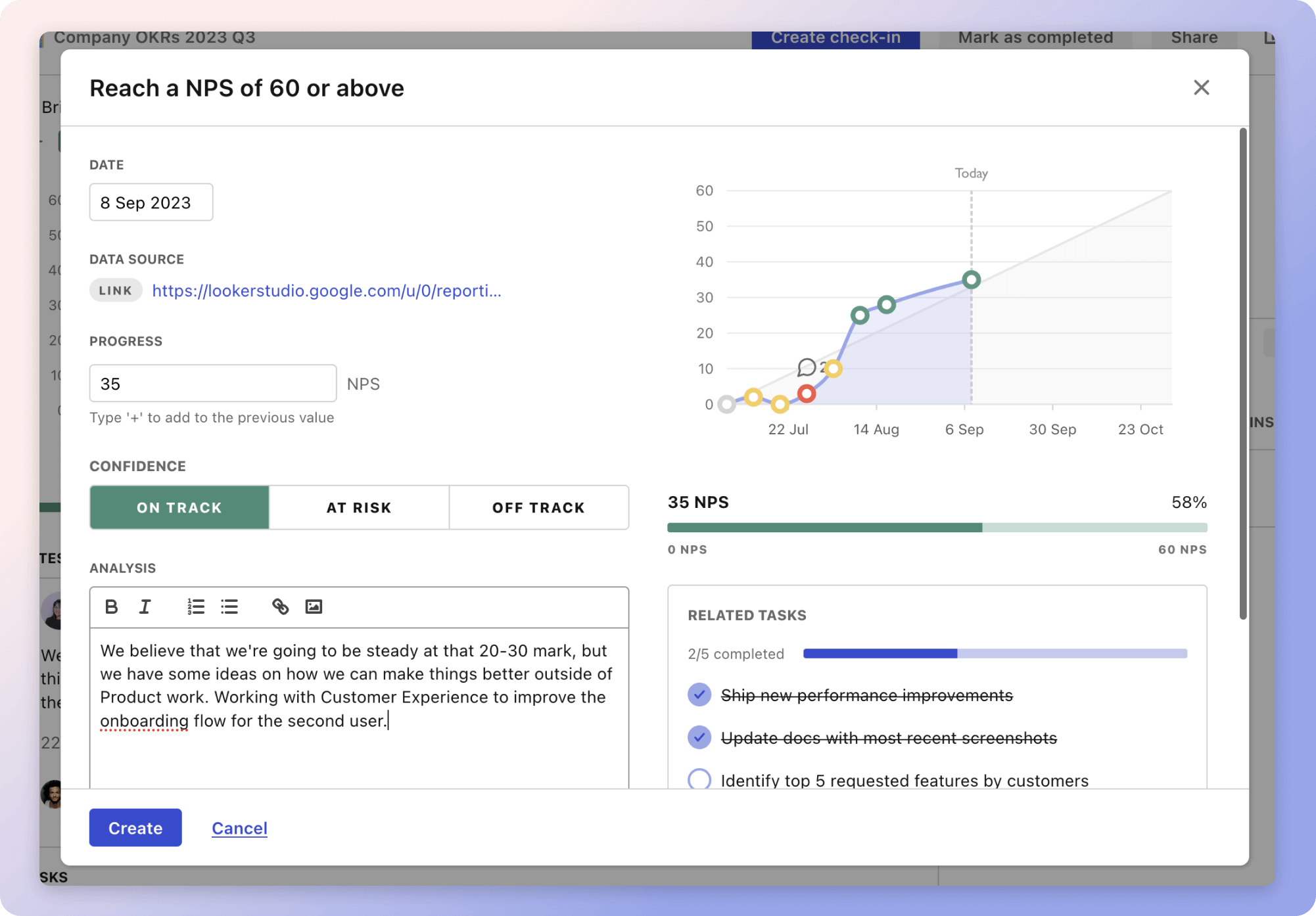 Tability's check-ins will save you hours and increase transparency
More metrics recently published
We have more examples to help you below.
 The best metrics for Reduce Courier Costs
- The best metrics for Reducing Courier Costs
- The best metrics for Operations Management Success
- The best metrics for Ensuring sticker quality
- The best metrics for Packaging Operations Metrics
- The best metrics for Job Reception Overview
Planning resources
OKRs are a great way to translate strategies into measurable goals. Here are a list of resources to help you adopt the OKR framework:
- To learn: What are OKRs? The complete 2024 guide
- Blog posts: ODT Blog
- Success metrics: KPIs examples