What are Delivery Efficiency metrics? Crafting the perfect Delivery Efficiency metrics can feel overwhelming, particularly when you're juggling daily responsibilities. That's why we've put together a collection of examples to spark your inspiration.
Copy these examples into your preferred app, or you can also use Tability to keep yourself accountable.
Find Delivery Efficiency metrics with AI While we have some examples available, it's likely that you'll have specific scenarios that aren't covered here. You can use our free AI metrics generator below to generate your own strategies.
Examples of Delivery Efficiency metrics and KPIs 1. Cost Per Shipment Average cost incurred for each shipment sent
What good looks like for this metric: Benchmark varies depending on industry, generally between $5 to $20
Ideas to improve this metric Negotiate better rates with couriers Consolidate shipments to fewer dispatches Use multiple carriers to find better rates Opt for slower, cheaper shipping methods where possible Automate label making to reduce errors 2. Delivery Time Average time it takes for packages to be delivered
What good looks like for this metric: Typically 1 to 5 days for standard service
Ideas to improve this metric Switch to more reliable couriers Enhance route planning Use regional warehouses closer to customers Implement same-day/next-day delivery options Invest in fleet tracking technology 3. Return Rate due to Delivery Issues Percentage of shipments returned due to delivery problems
What good looks like for this metric: Typically below 5%
Ideas to improve this metric Ensure proper packaging to prevent damage Improve address validation processes Track shipments actively to prevent mishandling Offer customer delivery preferences Enhance customer communication to resolve issues quickly 4. Customer Satisfaction With Delivery Rating of customer satisfaction specific to delivery experiences
What good looks like for this metric: Aim for at least 4 out of 5
Ideas to improve this metric Provide accurate delivery windows Offer package tracking for customers Enhance customer support responsiveness Seek feedback and implement improvements Ensure product availability aligns with delivery promises 5. Percentage of Late Deliveries Ratio of shipments delivered later than the promised date
What good looks like for this metric: Aim for less than 2%
Ideas to improve this metric Optimize courier selections based on service levels Monitor cross-border customs processes closely Allocate extra resources during peak seasons Evaluate and streamline internal shipping procedures Use technology to predict and mitigate delays
← →
1. Sprint Velocity Measures the amount of work a team completes during a sprint, calculated by summing up the story points of completed user stories
What good looks like for this metric: Average increase of 5-10% per sprint
Ideas to improve this metric Ensure consistent story point estimation Limit work in progress to prevent overload Prioritise tasks effectively within the sprint Encourage regular team retrospectives for continual improvement Utilise tools like burndown charts for tracking progress 2. Sprint Burndown Rate Tracks the amount of work completed versus the planned work for the sprint, helping to visualise progress
What good looks like for this metric: Daily reduction in task completion
Ideas to improve this metric Refine backlog items to ensure clarity Hold daily stand-ups to keep track of progress Identify and mitigate blockers quickly Encourage accountability within the team Use burndown charts to predict task completion 3. Lead Time Time taken from the moment a task is initiated until its completion, indicating process efficiency
What good looks like for this metric: Varies by task complexity; aim for continuous reduction
Ideas to improve this metric Streamline the development process by removing unnecessary steps Increase collaboration across teams to reduce delays Improve automation in deployment processes Ensure timely communication for feedback Monitor and adjust workflows regularly 4. Cycle Time Measures the time taken to complete one task, helping to assess team efficiency and predict project delivery
What good looks like for this metric: Shorter cycle times are better; aim for a consistent decrease
Ideas to improve this metric Optimize team workflows by identifying bottlenecks Ensure team members are not multitasking excessively Improve task clarification and preparation Encourage continuous integration and deployment Track cycle time per task type for insights 5. Team Satisfaction Assesses team morale and engagement, often surveyed periodically to understand employee experiences
What good looks like for this metric: Average satisfaction score should be 4 out of 5
Ideas to improve this metric Conduct regular team feedback sessions Ensure recognition of team achievements Facilitate a healthy work-life balance Provide opportunities for skills development Address team concerns proactively
← →
1. Average Cost per Delivery The total cost of deliveries divided by the number of deliveries made in a given period
What good looks like for this metric: $5 - $10 per delivery
Ideas to improve this metric Negotiate better rates with courier companies Batch orders to reduce the number of deliveries Use regional couriers for local deliveries Incorporate automated route planning Track and analyse delivery data to identify cost-saving opportunities 2. Courier Utilisation Rate The percentage of time couriers are actively delivering or picking up items
What good looks like for this metric: 70% - 80%
Ideas to improve this metric Ensure efficient route planning Schedule deliveries during peak times of demand Increase delivery volume by offering promotions Monitor real-time utilisation and adjust routes accordingly Consolidate deliveries going to similar areas 3. Fuel Costs per Mile The cost incurred on fuel divided by the total miles travelled for deliveries
What good looks like for this metric: $0.15 - $0.20 per mile
Ideas to improve this metric Use fuel-efficient vehicles Plan delivery routes to minimise travel distance Monitor and optimise driver behaviours for fuel efficiency Consider transitioning to electric or hybrid vehicles Regularly maintain vehicles to ensure fuel efficiency 4. On-Time Delivery Rate The percentage of deliveries made on or before the scheduled delivery time
What good looks like for this metric: 95% - 98%
Ideas to improve this metric Provide accurate delivery time estimates Communicate proactively with customers about delays Utilise technology for real-time tracking and updates Train couriers on time management and efficient delivery techniques Implement contingency plans for common delay scenarios 5. Return Rate The percentage of delivered items that are returned by customers
What good looks like for this metric: 1% - 5%
Ideas to improve this metric Ensure accurate order processing and fulfilment Improve packaging to minimise product damage Enhance customer service to address issues pre-delivery Provide clear product descriptions and photos to reduce returns Streamline the return process to improve customer satisfaction
← →
Tracking your Delivery Efficiency metrics Having a plan is one thing, sticking to it is another.
Don't fall into the set-and-forget trap. It is important to adopt a weekly check-in process to keep your strategy agile – otherwise this is nothing more than a reporting exercise.
A tool like Tability can also help you by combining AI and goal-setting to keep you on track.
More metrics recently published We have more examples to help you below.
Planning resources OKRs are a great way to translate strategies into measurable goals. Here are a list of resources to help you adopt the OKR framework:
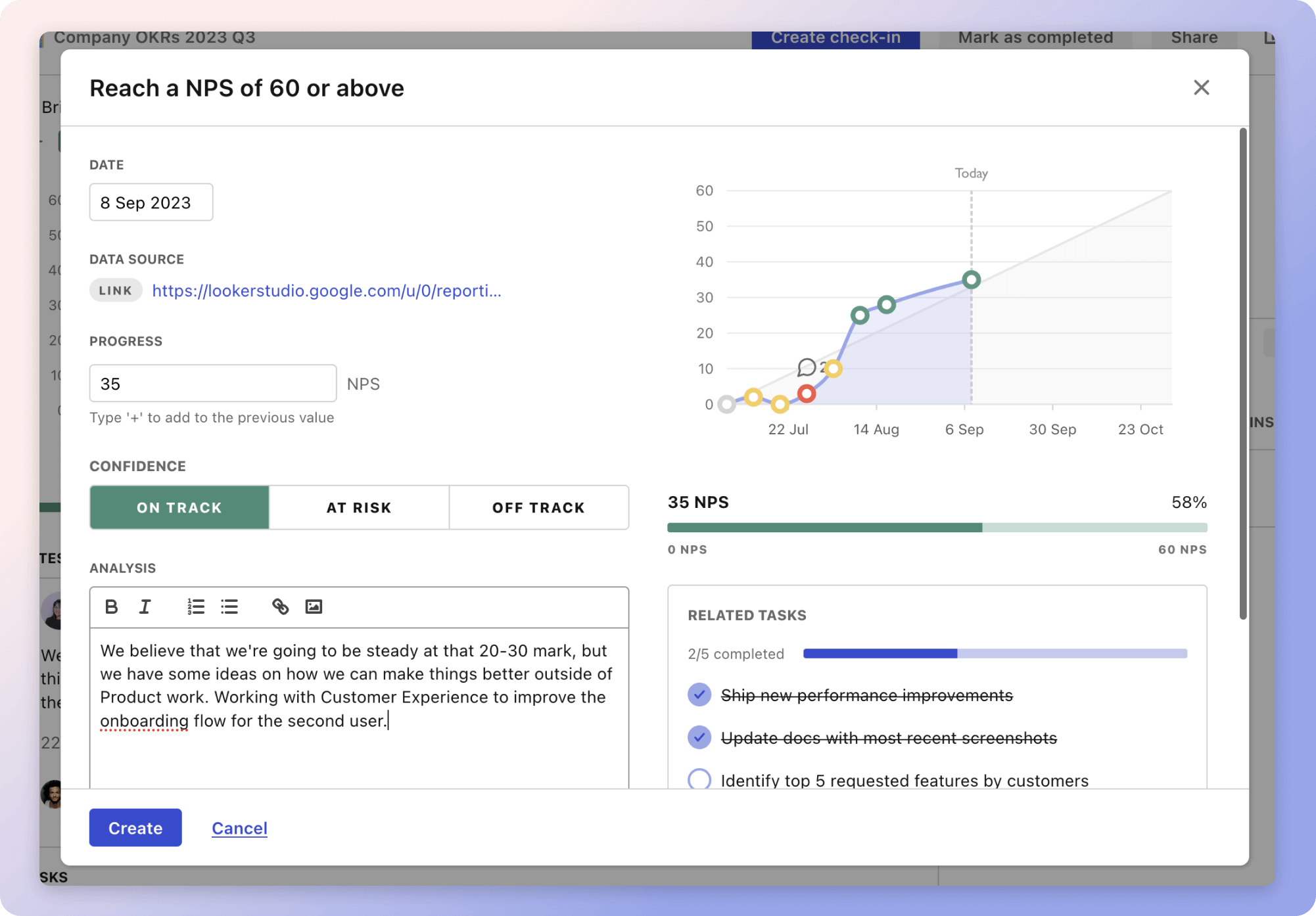 Tability's check-ins will save you hours and increase transparency
 The best metrics for Reduce Courier Costs