The plan to reduce courier costs focuses on optimizing various metrics crucial for operational efficiency. By reducing the "Average Cost per Delivery," businesses can achieve significant savings by negotiating better rates and leveraging automated route planning. For instance, utilizing local couriers can streamline deliveries and cut expenses.
"Courier Utilisation Rate" measures the efficiency of courier operations, with strategies like scheduling during peak demand and real-time route adjustments enhancing productivity. Monitoring "Fuel Costs per Mile" through fuel-efficient vehicles can further lower expenditures, demonstrating efficient logistics management.
Ensuring a high "On-Time Delivery Rate" is essential for customer satisfaction, with proactive communication and real-time tracking technology as key strategies. Lastly, minimizing the "Return Rate" through accurate order processing and detailed product information helps maintain profitability and customer trust.
Top 5 metrics for Reduce Courier Costs
1. Average Cost per Delivery
The total cost of deliveries divided by the number of deliveries made in a given period
What good looks like for this metric: $5 - $10 per delivery
How to improve this metric:- Negotiate better rates with courier companies
- Batch orders to reduce the number of deliveries
- Use regional couriers for local deliveries
- Incorporate automated route planning
- Track and analyse delivery data to identify cost-saving opportunities
2. Courier Utilisation Rate
The percentage of time couriers are actively delivering or picking up items
What good looks like for this metric: 70% - 80%
How to improve this metric:- Ensure efficient route planning
- Schedule deliveries during peak times of demand
- Increase delivery volume by offering promotions
- Monitor real-time utilisation and adjust routes accordingly
- Consolidate deliveries going to similar areas
3. Fuel Costs per Mile
The cost incurred on fuel divided by the total miles travelled for deliveries
What good looks like for this metric: $0.15 - $0.20 per mile
How to improve this metric:- Use fuel-efficient vehicles
- Plan delivery routes to minimise travel distance
- Monitor and optimise driver behaviours for fuel efficiency
- Consider transitioning to electric or hybrid vehicles
- Regularly maintain vehicles to ensure fuel efficiency
4. On-Time Delivery Rate
The percentage of deliveries made on or before the scheduled delivery time
What good looks like for this metric: 95% - 98%
How to improve this metric:- Provide accurate delivery time estimates
- Communicate proactively with customers about delays
- Utilise technology for real-time tracking and updates
- Train couriers on time management and efficient delivery techniques
- Implement contingency plans for common delay scenarios
5. Return Rate
The percentage of delivered items that are returned by customers
What good looks like for this metric: 1% - 5%
How to improve this metric:- Ensure accurate order processing and fulfilment
- Improve packaging to minimise product damage
- Enhance customer service to address issues pre-delivery
- Provide clear product descriptions and photos to reduce returns
- Streamline the return process to improve customer satisfaction
How to track Reduce Courier Costs metrics
It's one thing to have a plan, it's another to stick to it. We hope that the examples above will help you get started with your own strategy, but we also know that it's easy to get lost in the day-to-day effort.
That's why we built Tability: to help you track your progress, keep your team aligned, and make sure you're always moving in the right direction.
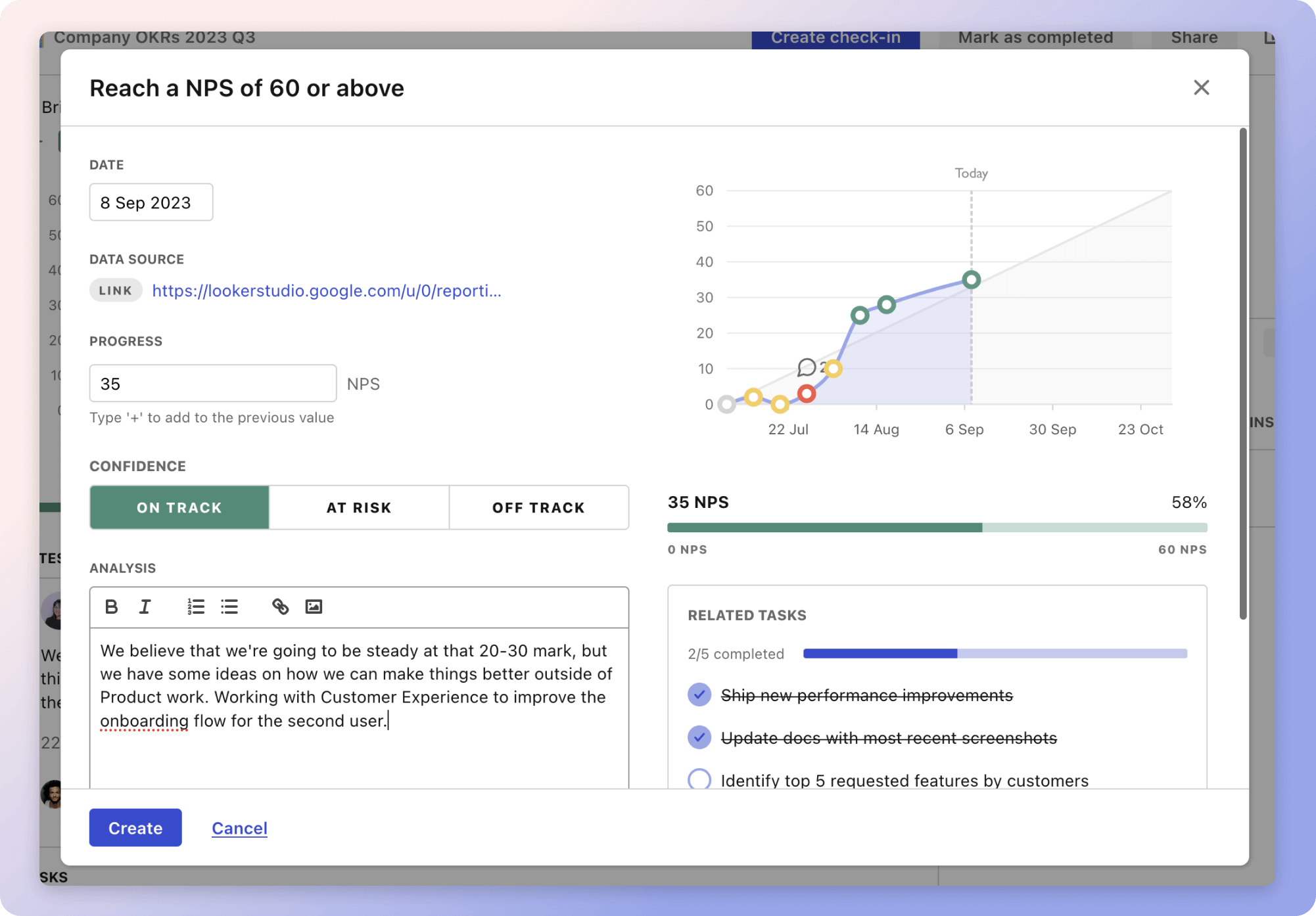
Give it a try and see how it can help you bring accountability to your metrics.
