The objective of the plan, "Reducing Courier Costs," emphasizes optimizing shipment-related expenses through measured improvements. By focusing on metrics like "Cost Per Shipment," companies can strategically negotiate better rates or consolidate shipments, adjusting practices to save money effectively. For instance, finding multiple carriers offering competitive rates can make a significant difference.
Delivery Time and Return Rate are crucial metrics affecting not only operational efficiency but also customer satisfaction. Faster, reliable delivery options can reduce return rates due to delivery issues, ensuring a seamless customer experience. Investing in technologies such as fleet tracking can lead to more accurate delivery times and fewer returns.
Customer Satisfaction With Delivery is integral to maintaining loyalty and positive brand reputation. By offering services like package tracking and proactive communication, companies ensure customer contentment and trust. Additionally, reducing the Percentage of Late Deliveries through strategic courier selections and predictive technologies is essential for meeting customer expectations and decreasing potential cost impacts associated with delays.
Top 5 metrics for Reducing Courier Costs
1. Cost Per Shipment
Average cost incurred for each shipment sent
What good looks like for this metric: Benchmark varies depending on industry, generally between $5 to $20
How to improve this metric:- Negotiate better rates with couriers
- Consolidate shipments to fewer dispatches
- Use multiple carriers to find better rates
- Opt for slower, cheaper shipping methods where possible
- Automate label making to reduce errors
2. Delivery Time
Average time it takes for packages to be delivered
What good looks like for this metric: Typically 1 to 5 days for standard service
How to improve this metric:- Switch to more reliable couriers
- Enhance route planning
- Use regional warehouses closer to customers
- Implement same-day/next-day delivery options
- Invest in fleet tracking technology
3. Return Rate due to Delivery Issues
Percentage of shipments returned due to delivery problems
What good looks like for this metric: Typically below 5%
How to improve this metric:- Ensure proper packaging to prevent damage
- Improve address validation processes
- Track shipments actively to prevent mishandling
- Offer customer delivery preferences
- Enhance customer communication to resolve issues quickly
4. Customer Satisfaction With Delivery
Rating of customer satisfaction specific to delivery experiences
What good looks like for this metric: Aim for at least 4 out of 5
How to improve this metric:- Provide accurate delivery windows
- Offer package tracking for customers
- Enhance customer support responsiveness
- Seek feedback and implement improvements
- Ensure product availability aligns with delivery promises
5. Percentage of Late Deliveries
Ratio of shipments delivered later than the promised date
What good looks like for this metric: Aim for less than 2%
How to improve this metric:- Optimize courier selections based on service levels
- Monitor cross-border customs processes closely
- Allocate extra resources during peak seasons
- Evaluate and streamline internal shipping procedures
- Use technology to predict and mitigate delays
How to track Reducing Courier Costs metrics
It's one thing to have a plan, it's another to stick to it. We hope that the examples above will help you get started with your own strategy, but we also know that it's easy to get lost in the day-to-day effort.
That's why we built Tability: to help you track your progress, keep your team aligned, and make sure you're always moving in the right direction.
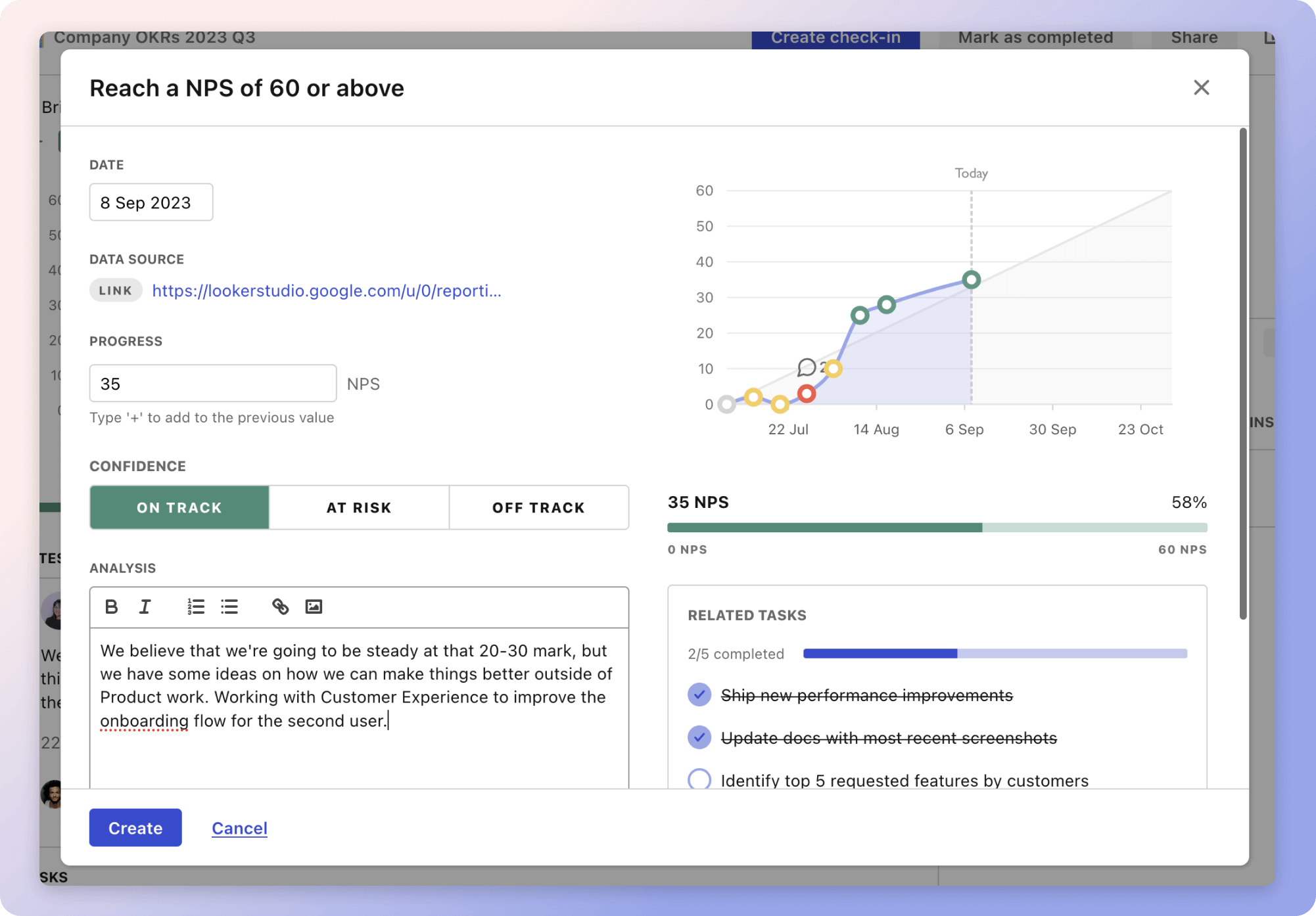
Give it a try and see how it can help you bring accountability to your metrics.
