This plan focuses on key metrics crucial for optimizing operations management in the oil and gas logistics sector. By aiming for a high On-Time Delivery Rate, companies can ensure customer satisfaction, as demonstrated when deliveries consistently meet or exceed a 95% on-time benchmark. Safety is equally important with metrics like the Safety Incident Rate, which highlights the significance of maintaining a safe work environment through robust training and safety audits.
Transport Cost Per Ton and Fleet Utilisation Rate metrics help the company streamline operations by keeping costs manageable and maximizing resource use. Regular adjustments and strategic planning, such as negotiating better transport rates or enhancing load planning, are vital for maintaining the target range of $20 - $30 per ton and a fleet utilization rate between 70% - 85%.
Top 5 metrics for Operations Management Success
1. On-Time Delivery Rate
Percentage of deliveries completed on or before the scheduled time. Calculated by dividing the number of on-time deliveries by the total number of deliveries and multiplying by 100.
What good looks like for this metric: 95% or higher
How to improve this metric:- Improve route planning and scheduling
- Enhance communication with drivers
- Utilise real-time tracking technology
- Conduct regular maintenance of delivery vehicles
- Train logistics staff on time management
2. Transport Cost Per Ton
The average cost to transport one ton of goods, calculated by dividing total transportation costs by total tonnage transported.
What good looks like for this metric: $20 - $30 per ton
How to improve this metric:- Negotiate better rates with carriers
- Optimise load planning to maximise vehicle capacity
- Implement fuel-efficient driving practices
- Use data analytics for cost tracking
- Regularly review and adjust transport routes
3. Fleet Utilisation Rate
Ratio of the time vehicles are used for deliveries versus their total availability. Calculated by dividing the used hours by available hours and multiplying by 100.
What good looks like for this metric: 70% - 85%
How to improve this metric:- Increase load sizes for each trip
- Schedule regular deliveries to avoid idle time
- Monitor vehicle location and usage patterns
- Invest in fleet management software
- Conduct regular training for fleet operators
4. Safety Incident Rate
Number of safety incidents per 100,000 hours worked, calculated by dividing the total number of incidents by the total hours worked and multiplying by 200,000.
What good looks like for this metric: 1 or fewer
How to improve this metric:- Enhance safety training programs
- Regularly inspect and maintain equipment
- Promote a strong safety culture
- Utilise safety monitoring and reporting tools
- Conduct safety audits and risk assessments
5. Customer Satisfaction Score
The average rating of customer satisfaction levels measured through surveys or feedback, often on a scale of 1 to 10.
What good looks like for this metric: 8 or higher
How to improve this metric:- Provide excellent customer service
- Address customer complaints promptly
- Improve communication throughout the delivery process
- Consistently meet delivery expectations
- Seek regular feedback for improvement
How to track Operations Management Success metrics
It's one thing to have a plan, it's another to stick to it. We hope that the examples above will help you get started with your own strategy, but we also know that it's easy to get lost in the day-to-day effort.
That's why we built Tability: to help you track your progress, keep your team aligned, and make sure you're always moving in the right direction.
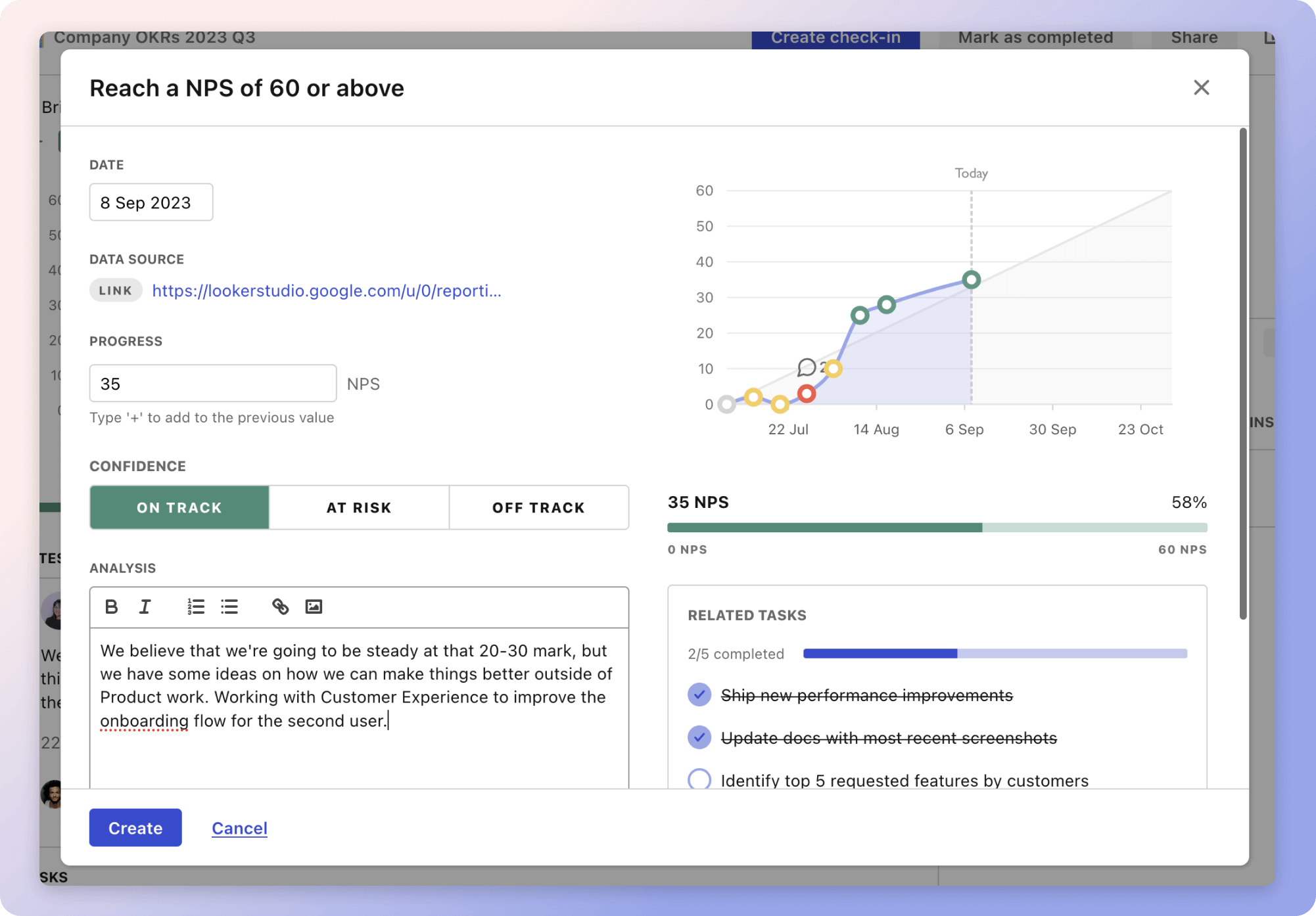
Give it a try and see how it can help you bring accountability to your metrics.
