Finding the right Fleet Management metrics can be daunting, especially when you're busy working on your day-to-day tasks. This is why we've curated a list of examples for your inspiration.
You can copy these examples into your preferred app, or alternatively, use Tability to stay accountable.
Find Fleet Management metrics with AI
While we have some examples available, it's likely that you'll have specific scenarios that aren't covered here. You can use our free AI metrics generator below to generate your own strategies.
Percentage of deliveries completed on or before the scheduled time. Calculated by dividing the number of on-time deliveries by the total number of deliveries and multiplying by 100.
What good looks like for this metric: 95% or higher
Ideas to improve this metric
Improve route planning and scheduling
Enhance communication with drivers
Utilise real-time tracking technology
Conduct regular maintenance of delivery vehicles
Train logistics staff on time management
2. Transport Cost Per Ton
The average cost to transport one ton of goods, calculated by dividing total transportation costs by total tonnage transported.
What good looks like for this metric: $20 - $30 per ton
Ideas to improve this metric
Negotiate better rates with carriers
Optimise load planning to maximise vehicle capacity
Implement fuel-efficient driving practices
Use data analytics for cost tracking
Regularly review and adjust transport routes
3. Fleet Utilisation Rate
Ratio of the time vehicles are used for deliveries versus their total availability. Calculated by dividing the used hours by available hours and multiplying by 100.
What good looks like for this metric: 70% - 85%
Ideas to improve this metric
Increase load sizes for each trip
Schedule regular deliveries to avoid idle time
Monitor vehicle location and usage patterns
Invest in fleet management software
Conduct regular training for fleet operators
4. Safety Incident Rate
Number of safety incidents per 100,000 hours worked, calculated by dividing the total number of incidents by the total hours worked and multiplying by 200,000.
What good looks like for this metric: 1 or fewer
Ideas to improve this metric
Enhance safety training programs
Regularly inspect and maintain equipment
Promote a strong safety culture
Utilise safety monitoring and reporting tools
Conduct safety audits and risk assessments
5. Customer Satisfaction Score
The average rating of customer satisfaction levels measured through surveys or feedback, often on a scale of 1 to 10.
What good looks like for this metric: 8 or higher
Ideas to improve this metric
Provide excellent customer service
Address customer complaints promptly
Improve communication throughout the delivery process
Having a plan is one thing, sticking to it is another.
Don't fall into the set-and-forget trap. It is important to adopt a weekly check-in process to keep your strategy agile – otherwise this is nothing more than a reporting exercise.
A tool like Tability can also help you by combining AI and goal-setting to keep you on track.
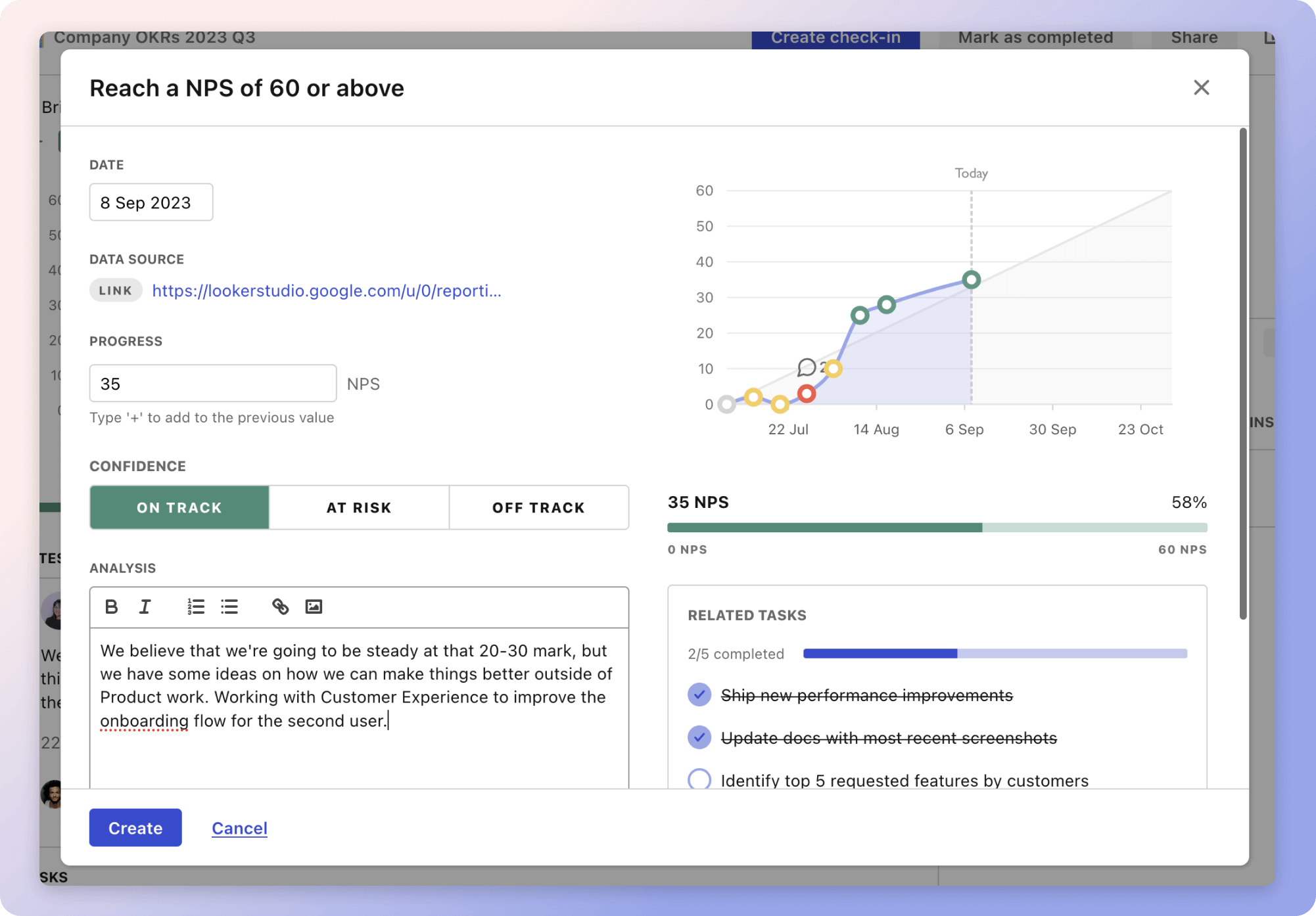 Tability's check-ins will save you hours and increase transparency
 The best metrics for Reduce Courier Costs