What are Cybersecurity Team metrics? Finding the right Cybersecurity Team metrics can be daunting, especially when you're busy working on your day-to-day tasks. This is why we've curated a list of examples for your inspiration.
Copy these examples into your preferred tool, or adopt Tability to ensure you remain accountable.
Find Cybersecurity Team metrics with AI While we have some examples available, it's likely that you'll have specific scenarios that aren't covered here. You can use our free AI metrics generator below to generate your own strategies.
Examples of Cybersecurity Team metrics and KPIs 1. Time to Triage The average time taken to assess and categorize a security alert once it is received.
What good looks like for this metric: 1-2 hours
Ideas to improve this metric Automate initial alert categorization Train staff on efficient triage process Implement clear triage protocols Regularly review triage processes Utilize prioritization tools 2. False Positive Rate The percentage of security alerts that were incorrectly flagged as threats.
What good looks like for this metric: Under 10%
Ideas to improve this metric Refine detection rules and algorithms Regularly update threat intelligence Enhance user training on alert interpretation Increase context provided with alerts Engage in regular false positive audits 3. Alert Volume by Severity The number of security alerts received categorized by severity level (informational, low, medium, high).
What good looks like for this metric: Varies by organization size
Ideas to improve this metric Optimise threat detection thresholds Enhance network traffic analysis Implement targeted monitoring Use data aggregation tools Evaluate alert relevance regularly 4. Incident Resolution Time The time taken from triaging an alert to resolving the underlying security threat.
What good looks like for this metric: 4-8 hours
Ideas to improve this metric Set clear response protocols Utilize automated resolution tools Conduct regular training sessions Ensure scalable resources Engage in post-incident analyses 5. Alert Re-assignment Rate The percentage of alerts that must be reassigned due to incorrect initial triage.
What good looks like for this metric: Under 5%
Ideas to improve this metric Provide comprehensive training for triagers Establish clear escalation pathways Use specialised triage teams Regularly assess alert primacy guidelines Conduct bi-annual skill assessments
← →
1. Mean Time to Detect (MTTD) The average time taken to identify a security threat or performance issue.
What good looks like for this metric: Typically less than 24 hours
Ideas to improve this metric Implement continuous monitoring systems Use automated alert systems Regularly update threat intelligence Train staff for rapid response Conduct regular security audits 2. Mean Time to Recovery (MTTR) The average time needed to recover from a security breach or system performance issue.
What good looks like for this metric: Often less than 5 hours
Ideas to improve this metric Develop a comprehensive incident response plan Invest in reliable backup solutions Conduct disaster recovery drills Enhance system redundancy Use AI-driven analytics for faster issue resolution 3. System Uptime Percentage The percentage of time the system is operational and available.
What good looks like for this metric: Above 99.9%
Ideas to improve this metric Regular system maintenance Implement failover strategies Use load balancing Monitor server health continuously Upgrade hardware periodically 4. Incident Rate The number of security or performance incidents detected within a specified period.
What good looks like for this metric: Fewer than 5 per month
Ideas to improve this metric Strengthen access control policies Adopt advanced security software Enhance employee training programs Regularly test for vulnerabilities Improve system configurations 5. Vulnerability Remediation Time The time taken to fix identified vulnerabilities in the system.
What good looks like for this metric: Under 30 days
Ideas to improve this metric Prioritise vulnerability patches Automate patch management Regularly update software Establish a dedicated security team Use vulnerability scanning tools continuously
← →
Tracking your Cybersecurity Team metrics Having a plan is one thing, sticking to it is another.
Don't fall into the set-and-forget trap. It is important to adopt a weekly check-in process to keep your strategy agile – otherwise this is nothing more than a reporting exercise.
A tool like Tability can also help you by combining AI and goal-setting to keep you on track.
More metrics recently published We have more examples to help you below.
Planning resources OKRs are a great way to translate strategies into measurable goals. Here are a list of resources to help you adopt the OKR framework:
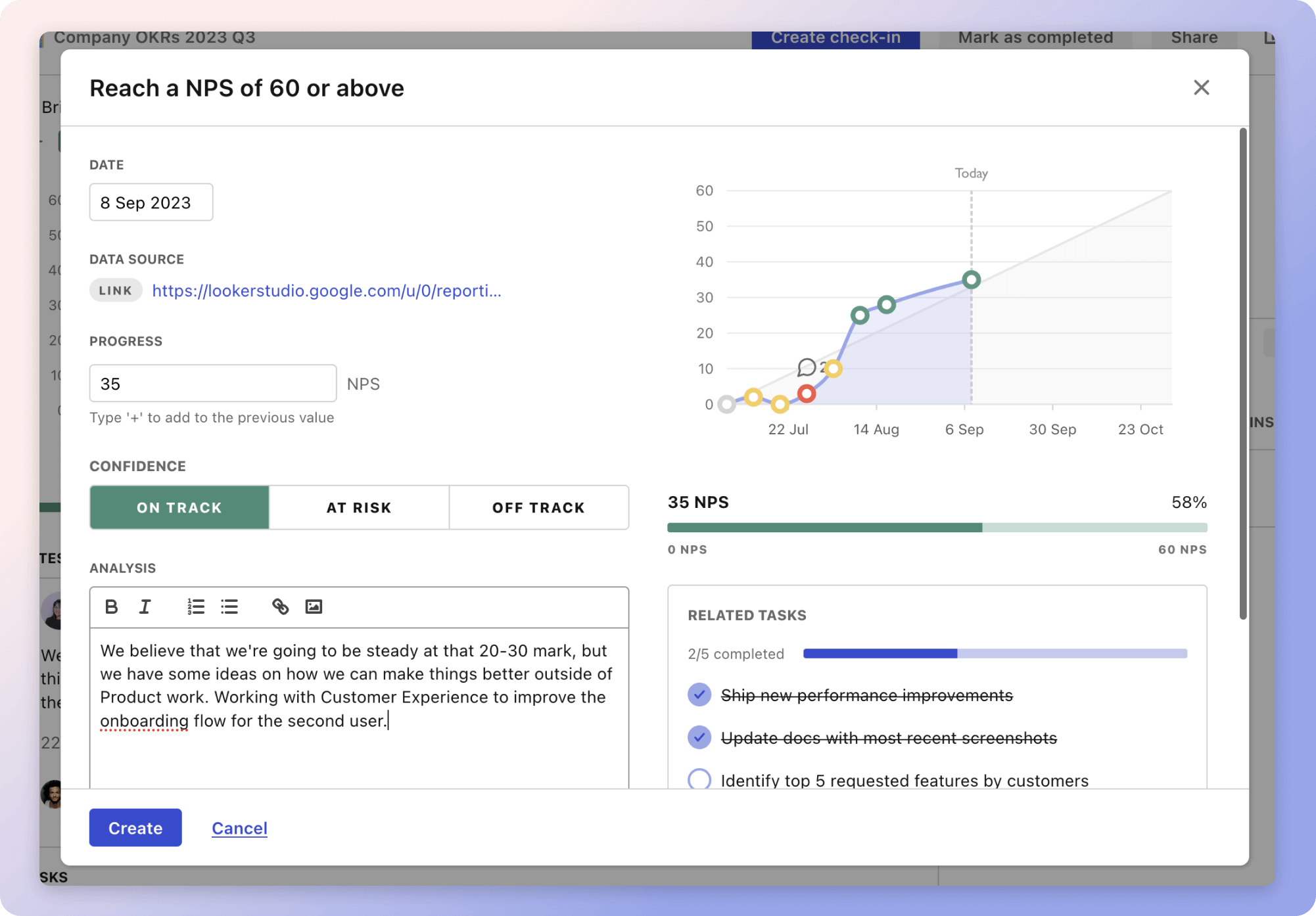 Tability's check-ins will save you hours and increase transparency
 The best metrics for Increase Calls Through Google My Business