Get Tability: OKRs that don't suck | Learn more →

4 examples of Employment metrics and KPIs

What are Employment metrics?

Finding the right Employment metrics can be daunting, especially when you're busy working on your day-to-day tasks. This is why we've curated a list of examples for your inspiration.

Copy these examples into your preferred tool, or adopt Tability to ensure you remain accountable.

Find Employment metrics with AI

While we have some examples available, it's likely that you'll have specific scenarios that aren't covered here. You can use our free AI metrics generator below to generate your own strategies.

Examples of Employment metrics and KPIs

Metrics for Youth Employment Support

  • 1. Employment Rate

    The percentage of trained youths who secure formal employment within a defined period.

    What good looks like for this metric: 60-70%

    Ideas to improve this metric
    • Enhance job matching with employer networks
    • Develop personalised career coaching programs
    • Provide job readiness workshops
    • Offer internship or apprenticeship opportunities
    • Strengthen partnerships with local businesses
  • 2. Average Time To Employment

    The average duration between program completion and securing a formal job.

    What good looks like for this metric: 3-6 months

    Ideas to improve this metric
    • Streamline the job application process
    • Increase interviewing preparation support
    • Foster relationships with quick-hiring companies
    • Regularly update job market trends
    • Provide continuous job search support
  • 3. Retention Rate

    The percentage of youths who remain employed for at least six months in their first job.

    What good looks like for this metric: 70-80%

    Ideas to improve this metric
    • Implement follow-up support for new employees
    • Offer skill enhancement workshops
    • Encourage mentor-mentee relationships
    • Promote workplace adaptability training
    • Facilitate employee feedback sessions
  • 4. Salary Growth Rate

    The percentage increase in earnings for employed youths over a specified period.

    What good looks like for this metric: 5-10% annually

    Ideas to improve this metric
    • Encourage negotiations for better starting salaries
    • Provide skill improvement sessions
    • Highlight high-growth career paths
    • Support networking events
    • Track industry salary trends
  • 5. Job Satisfaction Rate

    The percentage of youths reporting satisfaction with their employment within the first year.

    What good looks like for this metric: 70-85%

    Ideas to improve this metric
    • Conduct regular job satisfaction surveys
    • Provide career development opportunities
    • Encourage work-life balance
    • Facilitate peer support groups
    • Address workplace grievances promptly

Metrics for Community Engagement in Mining

  • 1. Stakeholder Satisfaction Score

    Measures the level of satisfaction among community stakeholders with the company's initiatives and interactions.

    What good looks like for this metric: 70-80%

    Ideas to improve this metric
    • Conduct regular feedback sessions
    • Provide transparent communication
    • Address community concerns promptly
    • Enhance community participation in projects
    • Develop community-benefit programs
  • 2. Community Complaint Resolution Time

    Average time taken to address and resolve complaints from community members.

    What good looks like for this metric: 5-10 days

    Ideas to improve this metric
    • Implement a dedicated inquiry line
    • Train staff in conflict resolution
    • Use technology for tracking complaints
    • Conduct root-cause analysis on frequent issues
    • Streamline the complaint-handling process
  • 3. Local Employment Rate

    Percentage of jobs provided to the local community by the mining company.

    What good looks like for this metric: 30-50%

    Ideas to improve this metric
    • Promote local hiring policies
    • Provide training and upskilling for locals
    • Establish partnerships with local schools
    • Offer internships and apprenticeships
    • Create targeted recruitment campaigns
  • 4. Community Development Investment

    Amount of financial resources invested in community development projects.

    What good looks like for this metric: 2-5% of annual revenue

    Ideas to improve this metric
    • Allocate more funds for community projects
    • Engage with community leaders for project ideas
    • Track ROI of previous investments
    • Develop long-term development plans
    • Publicly report investment outcomes
  • 5. Public Sentiment Score

    Measures the overall sentiment of the community towards the mining operations using surveys and social media analysis.

    What good looks like for this metric: Above 60%

    Ideas to improve this metric
    • Foster open dialogue with the community
    • Address negative feedback constructively
    • Enhance public awareness campaigns
    • Highlight positive impacts of mining activities
    • Respond to social media queries promptly

Metrics for Support Youth Entrepreneurship

  • 1. Number of Youths Trained

    The total number of youth participants who have completed the training programme

    What good looks like for this metric: 500 youths annually

    Ideas to improve this metric
    • Increase outreach efforts in low-income areas
    • Partner with local community centres
    • Utilise social media for recruitment
    • Provide online training options
    • Collaborate with schools and universities
  • 2. Business Registration Rate

    Percentage of trained youths who successfully register a business

    What good looks like for this metric: 50% of trained youths

    Ideas to improve this metric
    • Simplify the registration process
    • Guide participants through registration steps
    • Provide incentives for registration
    • Host workshops on business planning
    • Establish partnerships with registration bodies
  • 3. Employment Opportunities Created

    Number of new jobs generated as a result of the startups

    What good looks like for this metric: 2 new jobs per startup

    Ideas to improve this metric
    • Encourage scalable business models
    • Provide mentorship for business growth
    • Facilitate networking events
    • Support access to funding opportunities
    • Promote collaboration among startups
  • 4. Business Sustainability Rate

    Percentage of businesses still operational after their first year

    What good looks like for this metric: 70% sustainability rate

    Ideas to improve this metric
    • Offer follow-up coaching sessions
    • Provide financial management workshops
    • Connect with local business networks
    • Regularly assess and adapt business strategies
    • Encourage continuous learning and innovation
  • 5. Funding Secured by Startups

    Amount of financial support secured by startups through grants, loans, or investments

    What good looks like for this metric: $10,000 per startup

    Ideas to improve this metric
    • Assist in grant application processes
    • Create pitch training sessions
    • Connect startups with potential investors
    • Host startup demo days
    • Guide on developing detailed business plans

Metrics for Employment engagement

  • 1. Employee turnover rate

    The percentage of employees who leave the company within a certain period. It's calculated by dividing the number of employees who left by the average number of employees, multiplied by 100.

    What good looks like for this metric: 10-15% annually

    Ideas to improve this metric
    • Improve onboarding processes
    • Foster a positive company culture
    • Offer competitive salaries and benefits
    • Provide career development opportunities
    • Conduct exit interviews to understand reasons for leaving
  • 2. Employee net promoter score (eNPS)

    Measures the likelihood of employees to recommend the company as a good place to work. It's calculated by asking employees to rate their likelihood on a scale from 0-10 and categorizing them as promoters, passives, or detractors.

    What good looks like for this metric: 20-50

    Ideas to improve this metric
    • Regularly collect and act on employee feedback
    • Enhance internal communication
    • Recognize and reward achievements
    • Ensure workload balance
    • Promote work-life balance
  • 3. Employee satisfaction survey scores

    Quantifies employees' overall satisfaction with the company. It's calculated through surveys asking employees to rate their satisfaction on various aspects, averaged into an overall score.

    What good looks like for this metric: 70-80%

    Ideas to improve this metric
    • Enhance job role clarity
    • Provide consistent feedback
    • Create a trustful environment
    • Increase engagement in decision-making processes
    • Offer flexible working hours
  • 4. Absenteeism rate

    The percentage of workdays lost to unplanned absences. It's calculated by dividing the total number of unplanned absence days by the total number of available working days, multiplied by 100.

    What good looks like for this metric: 1.5-3%

    Ideas to improve this metric
    • Promote a healthy work environment
    • Implement wellness programmes
    • Offer flexible leave policies
    • Address work-related stress
    • Provide mental health support
  • 5. Training participation rate

    The percentage of employees participating in professional development programmes. It's calculated by dividing the number of employees who participate in training by the total number of employees, multiplied by 100.

    What good looks like for this metric: 60-80%

    Ideas to improve this metric
    • Encourage continuous learning
    • Provide online training options
    • Make training relevant and beneficial
    • Reward participation and completion
    • Communicate the value of training programmes

Tracking your Employment metrics

Having a plan is one thing, sticking to it is another.

Don't fall into the set-and-forget trap. It is important to adopt a weekly check-in process to keep your strategy agile – otherwise this is nothing more than a reporting exercise.

A tool like Tability can also help you by combining AI and goal-setting to keep you on track.
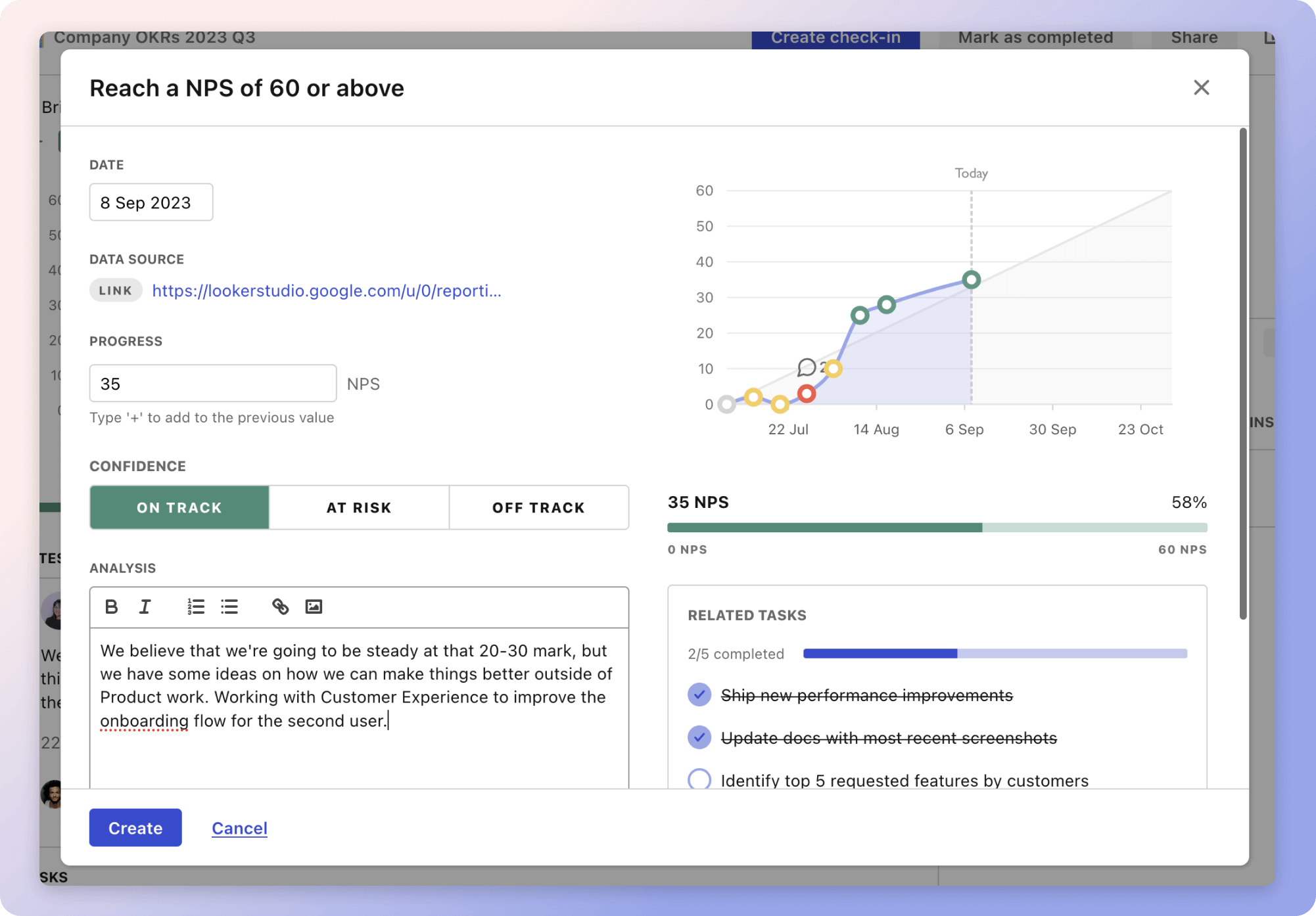
Tability Insights DashboardTability's check-ins will save you hours and increase transparency

More metrics recently published

We have more examples to help you below.

Planning resources

OKRs are a great way to translate strategies into measurable goals. Here are a list of resources to help you adopt the OKR framework:

Table of contents