What are Delivery metrics? Crafting the perfect Delivery metrics can feel overwhelming, particularly when you're juggling daily responsibilities. That's why we've put together a collection of examples to spark your inspiration.
Copy these examples into your preferred app, or you can also use Tability to keep yourself accountable.
Find Delivery metrics with AI While we have some examples available, it's likely that you'll have specific scenarios that aren't covered here. You can use our free AI metrics generator below to generate your own strategies.
Examples of Delivery metrics and KPIs 1. Planned vs Actual Delivery Dates This metric compares the initially planned delivery dates to the actual delivery dates to assess the team's ability to meet deadlines
What good looks like for this metric: 80% of projects delivered on time
Ideas to improve this metric Conduct detailed planning sessions Implement regular progress reviews Improve risk management practices Enhance communication within the team Optimise resource allocation 2. Scope Creep Measures the changes and additions in the project scope after the project has commenced, indicating how often the team deviates from the original plan
What good looks like for this metric: Less than 5% increase in scope
Ideas to improve this metric Establish clear project requirements Implement strict change control processes Engage stakeholders early and often Document all changes meticulously Maintain a project scope baseline 3. Budget Variance This metric tracks the difference between the budgeted costs and the actual costs incurred, indicating financial planning accuracy
What good looks like for this metric: Less than 10% budget overrun
Ideas to improve this metric Conduct thorough budget forecasting Monitor expenditures closely Implement cost control measures Review financial reports regularly Optimise purchasing processes 4. Defect Density Measures the number of defects identified within a certain timeframe or phase of the project, reflecting product quality
What good looks like for this metric: Fewer than 1 defect per 1000 lines of code
Ideas to improve this metric Enhance testing processes Implement automated testing tools Provide training on quality standards Review code regularly Incorporate quality assurance in each phase 5. Customer Satisfaction Assesses the stakeholders' and customers' satisfaction with the delivered project through surveys and feedback mechanisms
What good looks like for this metric: Customer satisfaction score above 8 out of 10
Ideas to improve this metric Gather customer feedback regularly Act on the feedback received Improve stakeholder communication Deliver regular project updates Ensure project deliverables meet expectations
← →
1. On-Time Delivery Rate The percentage of projects delivered on or before their scheduled deadlines
What good looks like for this metric: 85-90%
Ideas to improve this metric Set realistic deadlines based on project complexity Utilise Gantt charts for better timeline management Track progress regularly against the schedule Engage in proactive risk management Ensure resource availability and skill alignment 2. Budget Adherence The percentage of projects completed within the allocated budget
What good looks like for this metric: 85-95%
Ideas to improve this metric Conduct thorough cost estimation Monitor expenses in real-time Implement change control procedures Secure contingency funds for unforeseen costs Regularly review budget utilisation 3. Scope Creep The amount of unplanned work and changes in scope that occur during the project lifecycle
What good looks like for this metric: Less than 10%
Ideas to improve this metric Define clear project scope documentation Establish a formal change request process Engage stakeholders early and often Track scope changes meticulously Utilise scope management tools 4. Client Satisfaction The level of client satisfaction measured through surveys and feedback, typically scored on a scale of 1-5
What good looks like for this metric: 4.0 or higher
Ideas to improve this metric Conduct regular client check-ins Act on feedback promptly Set realistic client expectations from the start Maintain transparent communication Deliver all promised features and functionalities 5. Defect Density The number of defects found per unit of product, often measured per 1,000 lines of code
What good looks like for this metric: Less than 5 defects per 1,000 lines of code
Ideas to improve this metric Implement thorough testing phases Conduct code reviews regularly Utilise automated testing tools Provide adequate training for developers Establish clear coding standards
← →
1. % Compliance with SLA The percentage of time that IT services are delivered within the predefined terms of the service level agreement
What good looks like for this metric: 90-99%
Ideas to improve this metric Increase training for service delivery teams Enhance monitoring and reporting tools Conduct regular SLA reviews and updates Ensure clear communication of SLA terms to all stakeholders Implement more efficient service processes 2. Response Time to Incidents The amount of time taken to respond to IT incidents from the time they are reported
What good looks like for this metric: 30 minutes
Ideas to improve this metric Automate incident alert systems Improve resource allocation during peak times Provide advanced training for incident management Utilise real-time monitoring and dashboards Regularly measure and adjust response strategies 3. Resolution Time to Incidents The amount of time taken to resolve IT incidents from the time they are reported
What good looks like for this metric: 4 hours
Ideas to improve this metric Implement root cause analysis for recurring issues Enhance collaboration across IT teams Use advanced diagnostic and repair tools Schedule regular knowledge sharing sessions Review and optimise workflows for resolution 4. User Satisfaction Rate Percentage of users satisfied with the IT services provided in accordance with the SLA
What good looks like for this metric: 85-90%
Ideas to improve this metric Conduct regular satisfaction surveys Implement feedback loops for continuous improvement Analyse survey data for actionable insights Ensure rapid follow-up to any user complaints Continuously train staff in customer service skills 5. Change Success Rate The percentage of changes to the IT system that are successful and do not result in incidents
What good looks like for this metric: 95%
Ideas to improve this metric Perform rigorous change testing before implementation Develop clear guidelines for change management Ensure thorough documentation of all changes Utilise change advisory boards to approve changes Conduct post-change reviews to identify improvement areas
← →
1. Strategic Initiatives Timeliness Measures the percentage of strategic initiatives that are completed on or before the scheduled deadline
What good looks like for this metric: 80% of initiatives completed on time
Ideas to improve this metric Enhance project management tools to track deadlines Implement more frequent progress check-ins Allocate resources effectively based on priority Align team objectives with strategic timelines Provide training on time management 2. Operational Discipline Index Evaluates the adherence to established processes and procedures to maintain operational discipline
What good looks like for this metric: 90% adherence to protocols
Ideas to improve this metric Conduct regular training on SOPs Introduce reminders for key operational tasks Perform audits to ensure adherence to procedures Set clear expectations for process compliance Reward teams for maintaining operational discipline 3. Cross-Functional Collaboration Score Assesses the effectiveness and efficiency of collaboration across different units within the organisation
What good looks like for this metric: 75% positive feedback from cross-functional teams
Ideas to improve this metric Host regular cross-departmental meetings Assign liaisons to improve communication Utilise collaboration tools effectively Facilitate team-building activities Set common goals between departments 4. Quarterly Execution Roadmap Completion Rate Measures the percentage of planned actions within the quarterly roadmap that have been completed successfully
What good looks like for this metric: 85% of roadmap actions completed
Ideas to improve this metric Ensure clear definition of roadmap tasks Update roadmaps in response to feedback Allocate adequate resources for execution Prioritise roadmap items based on impact Automate reporting of task completion progress 5. Performance Commitment Fulfillment Tracks the percentage of performance commitments achieved over a specific period
What good looks like for this metric: 90% of commitments fulfilled
Ideas to improve this metric Set realistic and attainable performance goals Regularly review and adjust commitments Provide support and resources for achieving commitments Communicate performance expectations clearly Monitor commitment progress frequently
← →
1. System Uptime The percentage of time the infrastructure is operational and accessible to users.
What good looks like for this metric: 99.9%
Ideas to improve this metric Implement redundancy systems Perform regular maintenance checks Upgrade hardware components Monitor using advanced tools Develop a disaster recovery plan 2. Service Response Time The average time taken to respond to service requests or queries from users.
What good looks like for this metric: Less than 3 seconds
Ideas to improve this metric Optimise server configurations Use load balancing techniques Increase bandwidth availability Implement caching strategies Enhance database management 3. User Satisfaction Score A measure of user satisfaction collected through surveys and feedback forms.
What good looks like for this metric: Above 85%
Ideas to improve this metric Conduct regular user feedback sessions Implement a user-friendly interface Deliver consistent customer support Analyse feedback for improvements Introduce regular updates based on suggestions 4. Innovation Adoption Rate The percentage of new features or innovations adopted by users over time.
What good looks like for this metric: Above 60%
Ideas to improve this metric Promote new features actively Provide training sessions for users Offer incentives for early adoption Simplify the onboarding process Use user testimonials to encourage uptake 5. Incident Resolution Time The average time taken to resolve incidents or issues reported within the infrastructure.
What good looks like for this metric: Under 4 hours
Ideas to improve this metric Maintain a knowledgeable support team Use automated incident detection Streamline the issue escalation process Maintain a robust incident management tool Review and refine resolution procedures
← →
1. Cost Per Shipment Average cost incurred for each shipment sent
What good looks like for this metric: Benchmark varies depending on industry, generally between $5 to $20
Ideas to improve this metric Negotiate better rates with couriers Consolidate shipments to fewer dispatches Use multiple carriers to find better rates Opt for slower, cheaper shipping methods where possible Automate label making to reduce errors 2. Delivery Time Average time it takes for packages to be delivered
What good looks like for this metric: Typically 1 to 5 days for standard service
Ideas to improve this metric Switch to more reliable couriers Enhance route planning Use regional warehouses closer to customers Implement same-day/next-day delivery options Invest in fleet tracking technology 3. Return Rate due to Delivery Issues Percentage of shipments returned due to delivery problems
What good looks like for this metric: Typically below 5%
Ideas to improve this metric Ensure proper packaging to prevent damage Improve address validation processes Track shipments actively to prevent mishandling Offer customer delivery preferences Enhance customer communication to resolve issues quickly 4. Customer Satisfaction With Delivery Rating of customer satisfaction specific to delivery experiences
What good looks like for this metric: Aim for at least 4 out of 5
Ideas to improve this metric Provide accurate delivery windows Offer package tracking for customers Enhance customer support responsiveness Seek feedback and implement improvements Ensure product availability aligns with delivery promises 5. Percentage of Late Deliveries Ratio of shipments delivered later than the promised date
What good looks like for this metric: Aim for less than 2%
Ideas to improve this metric Optimize courier selections based on service levels Monitor cross-border customs processes closely Allocate extra resources during peak seasons Evaluate and streamline internal shipping procedures Use technology to predict and mitigate delays
← →
1. On-time delivery Percentage of project milestones completed on schedule
What good looks like for this metric: 85-95%
Ideas to improve this metric Create realistic timelines Use project management tools Monitor progress regularly Identify and mitigate risks Communicate effectively with the team 2. Budget adherence Percentage of project milestones completed within the allocated budget
What good looks like for this metric: 90-100%
Ideas to improve this metric Develop a detailed budget plan Monitor expenses regularly Utilise cost management software Negotiate better rates with vendors Implement a cost control strategy 3. Scope compliance Percentage of project deliverables that meet the defined scope
What good looks like for this metric: 90-100%
Ideas to improve this metric Clearly define project scope Use change control processes Regularly review project requirements Engage stakeholders throughout the project Maintain detailed documentation 4. Stakeholder satisfaction Average satisfaction rating from project stakeholders
What good looks like for this metric: 4-5 out of 5
Ideas to improve this metric Conduct regular feedback sessions Address stakeholder concerns promptly Maintain transparent communication Set realistic expectations Deliver high-quality work 5. Quality of deliverables Percentage of project deliverables that meet quality standards
What good looks like for this metric: 95-100%
Ideas to improve this metric Implement quality assurance processes Use regular testing and reviews Set clear quality criteria Provide adequate training Encourage continuous improvement
← →
1. Order Fulfilment Cycle Time Measures the time taken from receiving a customer order to the delivery of the finished product
What good looks like for this metric: Less than 3 days
Ideas to improve this metric Implement better inventory management Streamline order processing systems Enhance communication between departments Automate repetitive tasks Train staff on efficient logistics handling 2. Perfect Order Rate Percentage of orders fulfilled without any errors (no damage, delivered on time, correct quantity)
What good looks like for this metric: 95% or higher
Ideas to improve this metric Conduct regular quality checks Improve packaging processes Enhance staff training on order handling Use tracking technologies for error detection Increase frequency of customer feedback 3. On-Time Delivery Rate The percentage of orders that are delivered by their committed date
What good looks like for this metric: Above 95%
Ideas to improve this metric Optimise route planning Increase flexibility in delivery methods Use real-time tracking systems Improve supplier partnerships Regularly update delivery schedules 4. Fill Rate The percentage of customer orders that can be filled from stock at the time of order
What good looks like for this metric: Greater than 85%
Ideas to improve this metric Maintain accurate inventory data Improve demand forecasting Enhance supplier relationship management Promote cross-functional collaboration Regularly review stock levels 5. Inventory Turnover How often inventory is sold and replaced in a specific period, indicating how efficiently inventory is managed
What good looks like for this metric: 6 to 12 times per year
Ideas to improve this metric Reduce excess inventory Improve demand planning accuracy Negotiate better supplier terms Implement just-in-time inventory systems Conduct ABC analysis for inventory
← →
1. Sprint Velocity Measures the amount of work a team completes during a sprint, calculated by summing up the story points of completed user stories
What good looks like for this metric: Average increase of 5-10% per sprint
Ideas to improve this metric Ensure consistent story point estimation Limit work in progress to prevent overload Prioritise tasks effectively within the sprint Encourage regular team retrospectives for continual improvement Utilise tools like burndown charts for tracking progress 2. Sprint Burndown Rate Tracks the amount of work completed versus the planned work for the sprint, helping to visualise progress
What good looks like for this metric: Daily reduction in task completion
Ideas to improve this metric Refine backlog items to ensure clarity Hold daily stand-ups to keep track of progress Identify and mitigate blockers quickly Encourage accountability within the team Use burndown charts to predict task completion 3. Lead Time Time taken from the moment a task is initiated until its completion, indicating process efficiency
What good looks like for this metric: Varies by task complexity; aim for continuous reduction
Ideas to improve this metric Streamline the development process by removing unnecessary steps Increase collaboration across teams to reduce delays Improve automation in deployment processes Ensure timely communication for feedback Monitor and adjust workflows regularly 4. Cycle Time Measures the time taken to complete one task, helping to assess team efficiency and predict project delivery
What good looks like for this metric: Shorter cycle times are better; aim for a consistent decrease
Ideas to improve this metric Optimize team workflows by identifying bottlenecks Ensure team members are not multitasking excessively Improve task clarification and preparation Encourage continuous integration and deployment Track cycle time per task type for insights 5. Team Satisfaction Assesses team morale and engagement, often surveyed periodically to understand employee experiences
What good looks like for this metric: Average satisfaction score should be 4 out of 5
Ideas to improve this metric Conduct regular team feedback sessions Ensure recognition of team achievements Facilitate a healthy work-life balance Provide opportunities for skills development Address team concerns proactively
← →
1. Average Cost per Delivery The total cost of deliveries divided by the number of deliveries made in a given period
What good looks like for this metric: $5 - $10 per delivery
Ideas to improve this metric Negotiate better rates with courier companies Batch orders to reduce the number of deliveries Use regional couriers for local deliveries Incorporate automated route planning Track and analyse delivery data to identify cost-saving opportunities 2. Courier Utilisation Rate The percentage of time couriers are actively delivering or picking up items
What good looks like for this metric: 70% - 80%
Ideas to improve this metric Ensure efficient route planning Schedule deliveries during peak times of demand Increase delivery volume by offering promotions Monitor real-time utilisation and adjust routes accordingly Consolidate deliveries going to similar areas 3. Fuel Costs per Mile The cost incurred on fuel divided by the total miles travelled for deliveries
What good looks like for this metric: $0.15 - $0.20 per mile
Ideas to improve this metric Use fuel-efficient vehicles Plan delivery routes to minimise travel distance Monitor and optimise driver behaviours for fuel efficiency Consider transitioning to electric or hybrid vehicles Regularly maintain vehicles to ensure fuel efficiency 4. On-Time Delivery Rate The percentage of deliveries made on or before the scheduled delivery time
What good looks like for this metric: 95% - 98%
Ideas to improve this metric Provide accurate delivery time estimates Communicate proactively with customers about delays Utilise technology for real-time tracking and updates Train couriers on time management and efficient delivery techniques Implement contingency plans for common delay scenarios 5. Return Rate The percentage of delivered items that are returned by customers
What good looks like for this metric: 1% - 5%
Ideas to improve this metric Ensure accurate order processing and fulfilment Improve packaging to minimise product damage Enhance customer service to address issues pre-delivery Provide clear product descriptions and photos to reduce returns Streamline the return process to improve customer satisfaction
← →
1. Infection Rate The percentage of patients who develop infections at the surgical site after caesarean delivery.
What good looks like for this metric: Less than 2% infection rate
Ideas to improve this metric Implement strict sterilisation protocols Apply appropriate wound dressing techniques Ensure proper hand hygiene among staff Use prophylactic antibiotics when appropriate Conduct regular infection surveillance 2. Average Length of Stay The average number of days patients remain hospitalised post-caesarean, which can indicate complications such as infections.
What good looks like for this metric: 3-4 days
Ideas to improve this metric Streamline discharge planning processes Enhance post-operative care and monitoring Provide patient education on self-care post-discharge Utilise early patient mobilisation techniques Increase follow-up care frequency 3. Readmission Rate The percentage of patients readmitted due to surgical site infections following initial discharge after caesarean.
What good looks like for this metric: Less than 5% readmission rate
Ideas to improve this metric Conduct thorough post-discharge evaluations Educate patients on infection warning signs Implement a robust follow-up appointment system Enhance patient communication channels Ensure high-quality home care instructions 4. Wound Healing Time The average time it takes for surgical wounds from caesarean sections to heal completely.
What good looks like for this metric: 4-6 weeks
Ideas to improve this metric Enhance patient nutrition and hydration Provide effective pain management options Regularly assess the wound for signs of infection Implement advanced wound care therapies Promote patient compliance with care instructions 5. Patient Satisfaction Score The level of patient satisfaction regarding their post-operative care and outcomes.
What good looks like for this metric: Above 85%
Ideas to improve this metric Improve patient communication and engagement Provide thorough pre-operative education Ensure empathetic and supportive nursing care Empower patients with self-care knowledge Incorporate patient feedback into care plans
← →
Tracking your Delivery metrics Having a plan is one thing, sticking to it is another.
Don't fall into the set-and-forget trap. It is important to adopt a weekly check-in process to keep your strategy agile – otherwise this is nothing more than a reporting exercise.
A tool like Tability can also help you by combining AI and goal-setting to keep you on track.
More metrics recently published We have more examples to help you below.
Planning resources OKRs are a great way to translate strategies into measurable goals. Here are a list of resources to help you adopt the OKR framework:
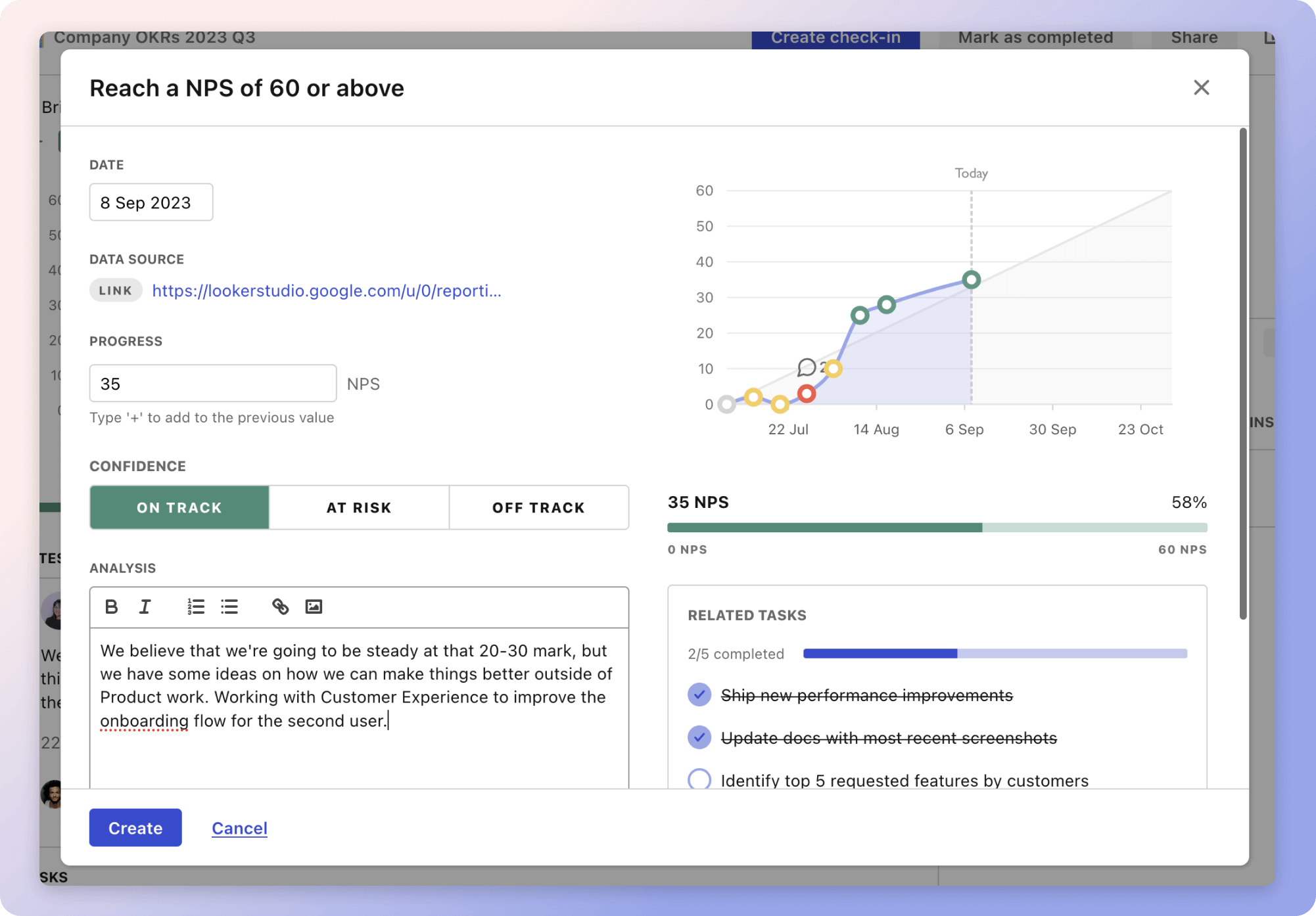 Tability's check-ins will save you hours and increase transparency
 The best metrics for Increase Calls Through Google My Business