This plan focuses on optimizing the management of outbound finished goods, using a targeted set of metrics. For example, "Order Fulfilment Cycle Time" measures the efficiency from order reception to delivery, aiming for a brisk turnaround of less than 3 days. Such criteria spotlight areas like inventory management and order processing. Similarly, ensuring a "Perfect Order Rate" highlights the importance of quality and timely deliveries, with a target of a 95% error-free fulfilment.
Metrics like "On-Time Delivery Rate" emphasize the necessity for punctuality, with benchmarks of over 95%, showcasing the importance of route planning and supplier coordination. The "Fill Rate" is critical for ensuring stock availability, while "Inventory Turnover" indicates efficiency in inventory management, supporting sustained business operations through accurate demand forecasting and inventory checks.
Top 5 metrics for Outbound Product Management
1. Order Fulfilment Cycle Time
Measures the time taken from receiving a customer order to the delivery of the finished product
What good looks like for this metric: Less than 3 days
How to improve this metric:- Implement better inventory management
- Streamline order processing systems
- Enhance communication between departments
- Automate repetitive tasks
- Train staff on efficient logistics handling
2. Perfect Order Rate
Percentage of orders fulfilled without any errors (no damage, delivered on time, correct quantity)
What good looks like for this metric: 95% or higher
How to improve this metric:- Conduct regular quality checks
- Improve packaging processes
- Enhance staff training on order handling
- Use tracking technologies for error detection
- Increase frequency of customer feedback
3. On-Time Delivery Rate
The percentage of orders that are delivered by their committed date
What good looks like for this metric: Above 95%
How to improve this metric:- Optimise route planning
- Increase flexibility in delivery methods
- Use real-time tracking systems
- Improve supplier partnerships
- Regularly update delivery schedules
4. Fill Rate
The percentage of customer orders that can be filled from stock at the time of order
What good looks like for this metric: Greater than 85%
How to improve this metric:- Maintain accurate inventory data
- Improve demand forecasting
- Enhance supplier relationship management
- Promote cross-functional collaboration
- Regularly review stock levels
5. Inventory Turnover
How often inventory is sold and replaced in a specific period, indicating how efficiently inventory is managed
What good looks like for this metric: 6 to 12 times per year
How to improve this metric:- Reduce excess inventory
- Improve demand planning accuracy
- Negotiate better supplier terms
- Implement just-in-time inventory systems
- Conduct ABC analysis for inventory
How to track Outbound Product Management metrics
It's one thing to have a plan, it's another to stick to it. We hope that the examples above will help you get started with your own strategy, but we also know that it's easy to get lost in the day-to-day effort.
That's why we built Tability: to help you track your progress, keep your team aligned, and make sure you're always moving in the right direction.
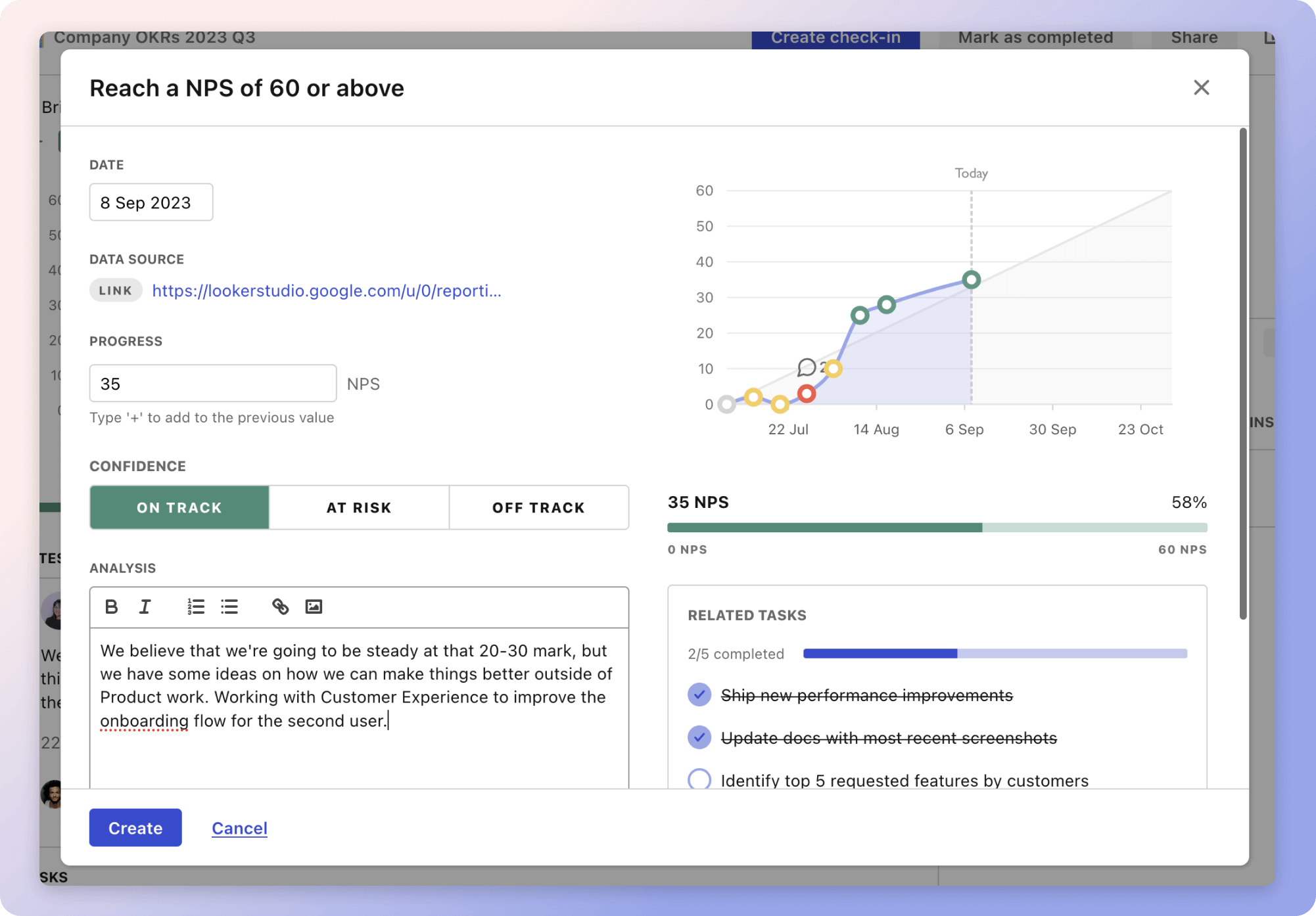
Give it a try and see how it can help you bring accountability to your metrics.
