What are Inventory Analyst metrics? Finding the right Inventory Analyst metrics can be daunting, especially when you're busy working on your day-to-day tasks. This is why we've curated a list of examples for your inspiration.
Copy these examples into your preferred app, or you can also use Tability to keep yourself accountable.
Find Inventory Analyst metrics with AI While we have some examples available, it's likely that you'll have specific scenarios that aren't covered here. You can use our free AI metrics generator below to generate your own strategies.
Examples of Inventory Analyst metrics and KPIs 1. Stock Turnover Ratio The number of times inventory is sold and replaced over a period, calculated as Cost of Goods Sold divided by Average Inventory
What good looks like for this metric: 5 to 10 times annually
Ideas to improve this metric Improve inventory management practices Reduce lead time for supply orders Increase sales through promotions Implement Just-In-Time inventory system Analyse and remove slow-moving products 2. Days Sales of Inventory (DSI) The average number of days it takes to sell inventory, calculated as 365 divided by Stock Turnover Ratio
What good looks like for this metric: 30 to 50 days
Ideas to improve this metric Conduct periodic inventory reviews Enhance demand forecasting accuracy Optimise pricing strategies Streamline supply chain processes Implement vendor-managed inventory 3. Gross Margin Return on Inventory Investment (GMROII) A measure of inventory profitability, calculated as Gross Margin divided by Average Inventory Cost
What good looks like for this metric: Above 2.0
Ideas to improve this metric Negotiate better terms with suppliers Identify and promote high-margin products Reduce inventory carrying costs Sell off obsolete inventory Utilise sales data for inventory optimization 4. Inventory to Sales Ratio The ratio of inventory held against sales made, reflecting inventory management efficiency
What good looks like for this metric: 0.12 to 0.20
Ideas to improve this metric Push sales for slow-moving items Improve demand planning Regularly adjust stock levels to sales patterns Implement an advanced inventory tracking system Diversify the product line to match consumer demand 5. Backorder Rate The percentage of orders that cannot be filled at the time of purchase, indicating potential stock deficiencies
What good looks like for this metric: 2% to 4%
Ideas to improve this metric Enhance communication with suppliers Better demand forecasting and planning Increase safety stock levels for high-demand products Monitor and adjust reorder points Invest in an integrated supply chain management system
← →
1. Inventory Accuracy Rate The percentage of inventory records that are accurate when compared to physical counts
What good looks like for this metric: 95% or higher
Ideas to improve this metric Implement regular cycle counts Utilise barcode/RFID systems Conduct thorough training for staff Review and update inventory records regularly Analyse discrepancies and correct processes 2. Stock Turnover Rate The number of times inventory is sold or used in a time period compared to the average inventory
What good looks like for this metric: 4 to 6 times per year
Ideas to improve this metric Adjust reorder levels and frequency Monitor sales and usage trends Identify slow-moving items and clear them Negotiate with suppliers for optimal order quantities Integrate demand forecasting tools 3. Backorder Rate The percentage of customer orders that cannot be filled at the scheduled time due to lack of inventory
What good looks like for this metric: Less than 10%
Ideas to improve this metric Improve demand forecasting accuracy Increase safety stock for critical items Collaborate with suppliers on lead times Enhance order fulfilment processes Utilise data analytics for better insights 4. Days of Inventory on Hand (DOH) The average number of days that inventory is held before it is sold or used
What good looks like for this metric: 45 to 60 days
Ideas to improve this metric Optimise inventory mix based on demand Implement just-in-time ordering Improve marketing strategies to boost sales Utilise warehouse space efficiently Develop partnerships with reliable suppliers 5. Carrying Cost of Inventory The total cost of holding onto inventory, typically a percentage of total inventory costs
What good looks like for this metric: 20% to 30% of inventory value
Ideas to improve this metric Reduce excess inventory levels Improve inventory turnover Negotiate better terms with suppliers Utilise technology to monitor costs closely Enhance inventory flow and minimise holding time
← →
1. Inventory Turnover Ratio Measures how often inventory is sold and replaced over a period. Calculated by dividing cost of goods sold by average inventory
What good looks like for this metric: 2 to 4 times per year
Ideas to improve this metric Analyse inventory levels regularly Offer discounts on slow-moving products Optimize supply chain processes Increase product visibility through promotions Bundle products to increase sales 2. Sell-Through Rate The percentage of inventory sold compared to the amount of inventory received. Calculated by dividing units sold by the initial inventory received
What good looks like for this metric: 80% or higher
Ideas to improve this metric Enhance marketing efforts Rotate inventory displays regularly Improve sales staff training Utilize customer feedback for improvements Focus promotions on best-selling products 3. Gross Margin Return On Investment (GMROI) Measures the profit a company makes on its inventory investment. Calculated by dividing gross margin by average inventory cost
What good looks like for this metric: $2 or higher
Ideas to improve this metric Negotiate better terms with suppliers Improve pricing strategies Reduce inventory holding costs Focus on high-margin products Limit discounting on high-margin products 4. Days Sales Of Inventory (DSI) Indicates the average time in days that a company takes to turn its inventory into sales. Lower values are better
What good looks like for this metric: 30 to 60 days
Ideas to improve this metric Improve demand forecasting Implement automated inventory management systems Enhance supplier relationships Streamline supply chain processes Conduct regular inventory audits 5. Customer Feedback And Satisfaction Score Measure of customer satisfaction with the existing product line, usually through surveys or reviews
What good looks like for this metric: 4 out of 5 or higher
Ideas to improve this metric Actively solicit customer feedback Enhance product quality based on feedback Implement a customer loyalty program Improve customer service experiences Address any negative feedback promptly
← →
1. Order Fulfilment Cycle Time Measures the time taken from receiving a customer order to the delivery of the finished product
What good looks like for this metric: Less than 3 days
Ideas to improve this metric Implement better inventory management Streamline order processing systems Enhance communication between departments Automate repetitive tasks Train staff on efficient logistics handling 2. Perfect Order Rate Percentage of orders fulfilled without any errors (no damage, delivered on time, correct quantity)
What good looks like for this metric: 95% or higher
Ideas to improve this metric Conduct regular quality checks Improve packaging processes Enhance staff training on order handling Use tracking technologies for error detection Increase frequency of customer feedback 3. On-Time Delivery Rate The percentage of orders that are delivered by their committed date
What good looks like for this metric: Above 95%
Ideas to improve this metric Optimise route planning Increase flexibility in delivery methods Use real-time tracking systems Improve supplier partnerships Regularly update delivery schedules 4. Fill Rate The percentage of customer orders that can be filled from stock at the time of order
What good looks like for this metric: Greater than 85%
Ideas to improve this metric Maintain accurate inventory data Improve demand forecasting Enhance supplier relationship management Promote cross-functional collaboration Regularly review stock levels 5. Inventory Turnover How often inventory is sold and replaced in a specific period, indicating how efficiently inventory is managed
What good looks like for this metric: 6 to 12 times per year
Ideas to improve this metric Reduce excess inventory Improve demand planning accuracy Negotiate better supplier terms Implement just-in-time inventory systems Conduct ABC analysis for inventory
← →
1. Conversion Rate The percentage of visitors who purchase a product after visiting the best sellers section
What good looks like for this metric: 2-5%
Ideas to improve this metric Enhance product descriptions Provide clear calls to action Use high-quality images Offer competitive pricing Simplify checkout process 2. Average Order Value The average amount spent each time a customer places an order from best sellers
What good looks like for this metric: $50-$100
Ideas to improve this metric Include product bundling discounts Highlight complimentary products Provide free shipping thresholds Promote limited-time offers Suggest upsells and cross-sells 3. Customer Engagement Rate The level of customer interaction with best seller listings, measured by clicks, shares, or comments
What good looks like for this metric: 20-30%
Ideas to improve this metric Utilise engaging social proof Incorporate interactive elements Use compelling ad copy Personalise content recommendations Ensure mobile-friendly design 4. Stock Turnover Ratio The rate at which inventory of best sellers is sold and replaced over a period of time
What good looks like for this metric: 5-7
Ideas to improve this metric Optimise inventory management Predict demand trends accurately Accelerate restocking processes Enhance supplier relationships Increase sales through on-site promotions 5. Customer Satisfaction Score A measure of how satisfied customers are with their shopping experience of best sellers
What good looks like for this metric: 70-85%
Ideas to improve this metric Gather regular feedback Enhance customer support Offer product quality guarantees Create user-friendly navigation Resolve complaints promptly
← →
Tracking your Inventory Analyst metrics Having a plan is one thing, sticking to it is another.
Setting good strategies is only the first challenge. The hard part is to avoid distractions and make sure that you commit to the plan. A simple weekly ritual will greatly increase the chances of success.
A tool like Tability can also help you by combining AI and goal-setting to keep you on track.
More metrics recently published We have more examples to help you below.
Planning resources OKRs are a great way to translate strategies into measurable goals. Here are a list of resources to help you adopt the OKR framework:
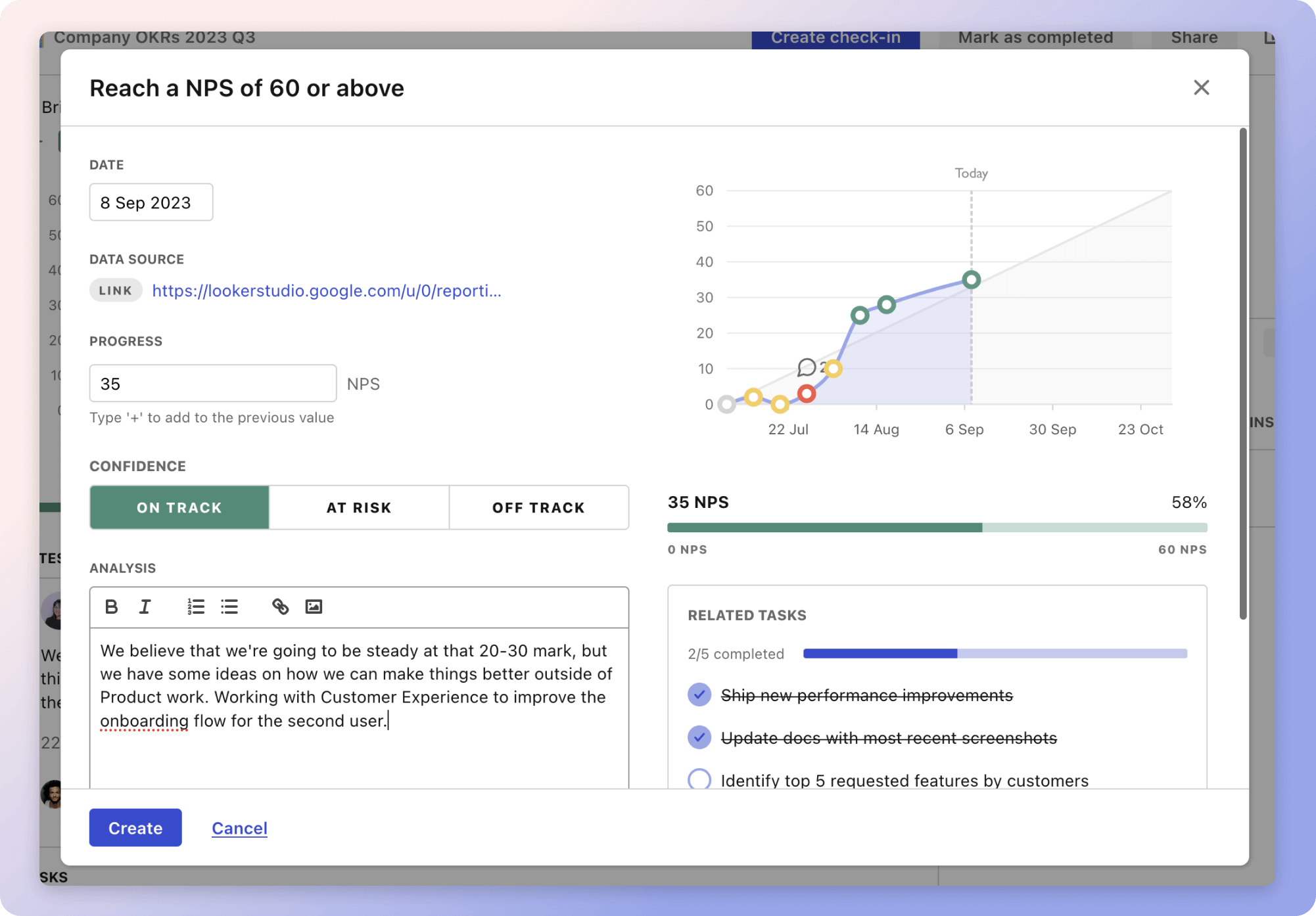 Tability's check-ins will save you hours and increase transparency
 The best metrics for Increase Calls Through Google My Business