The plan focuses on ensuring IT services are aligned with service level agreements (SLAs) to enhance operational efficiency and user satisfaction. Key metrics like Compliance with SLA, Response Time to Incidents, and User Satisfaction Rate are critical as they gauge the reliability and effectiveness of IT services. For example, maintaining a high Compliance with SLA ensures services meet predefined standards, while enhancing response times can significantly reduce downtime during incidents.
Metrics such as Resolution Time to Incidents and Change Success Rate are also important. Fast resolution times minimize disruption and ensure quick service restoration, while a high change success rate indicates stability and effective change management. Together, these metrics help organizations streamline IT operations and foster a culture of continuous improvement.
Top 5 metrics for IT Service Agreement Compliance
1. % Compliance with SLA
The percentage of time that IT services are delivered within the predefined terms of the service level agreement
What good looks like for this metric: 90-99%
How to improve this metric:- Increase training for service delivery teams
- Enhance monitoring and reporting tools
- Conduct regular SLA reviews and updates
- Ensure clear communication of SLA terms to all stakeholders
- Implement more efficient service processes
2. Response Time to Incidents
The amount of time taken to respond to IT incidents from the time they are reported
What good looks like for this metric: 30 minutes
How to improve this metric:- Automate incident alert systems
- Improve resource allocation during peak times
- Provide advanced training for incident management
- Utilise real-time monitoring and dashboards
- Regularly measure and adjust response strategies
3. Resolution Time to Incidents
The amount of time taken to resolve IT incidents from the time they are reported
What good looks like for this metric: 4 hours
How to improve this metric:- Implement root cause analysis for recurring issues
- Enhance collaboration across IT teams
- Use advanced diagnostic and repair tools
- Schedule regular knowledge sharing sessions
- Review and optimise workflows for resolution
4. User Satisfaction Rate
Percentage of users satisfied with the IT services provided in accordance with the SLA
What good looks like for this metric: 85-90%
How to improve this metric:- Conduct regular satisfaction surveys
- Implement feedback loops for continuous improvement
- Analyse survey data for actionable insights
- Ensure rapid follow-up to any user complaints
- Continuously train staff in customer service skills
5. Change Success Rate
The percentage of changes to the IT system that are successful and do not result in incidents
What good looks like for this metric: 95%
How to improve this metric:- Perform rigorous change testing before implementation
- Develop clear guidelines for change management
- Ensure thorough documentation of all changes
- Utilise change advisory boards to approve changes
- Conduct post-change reviews to identify improvement areas
How to track IT Service Agreement Compliance metrics
It's one thing to have a plan, it's another to stick to it. We hope that the examples above will help you get started with your own strategy, but we also know that it's easy to get lost in the day-to-day effort.
That's why we built Tability: to help you track your progress, keep your team aligned, and make sure you're always moving in the right direction.
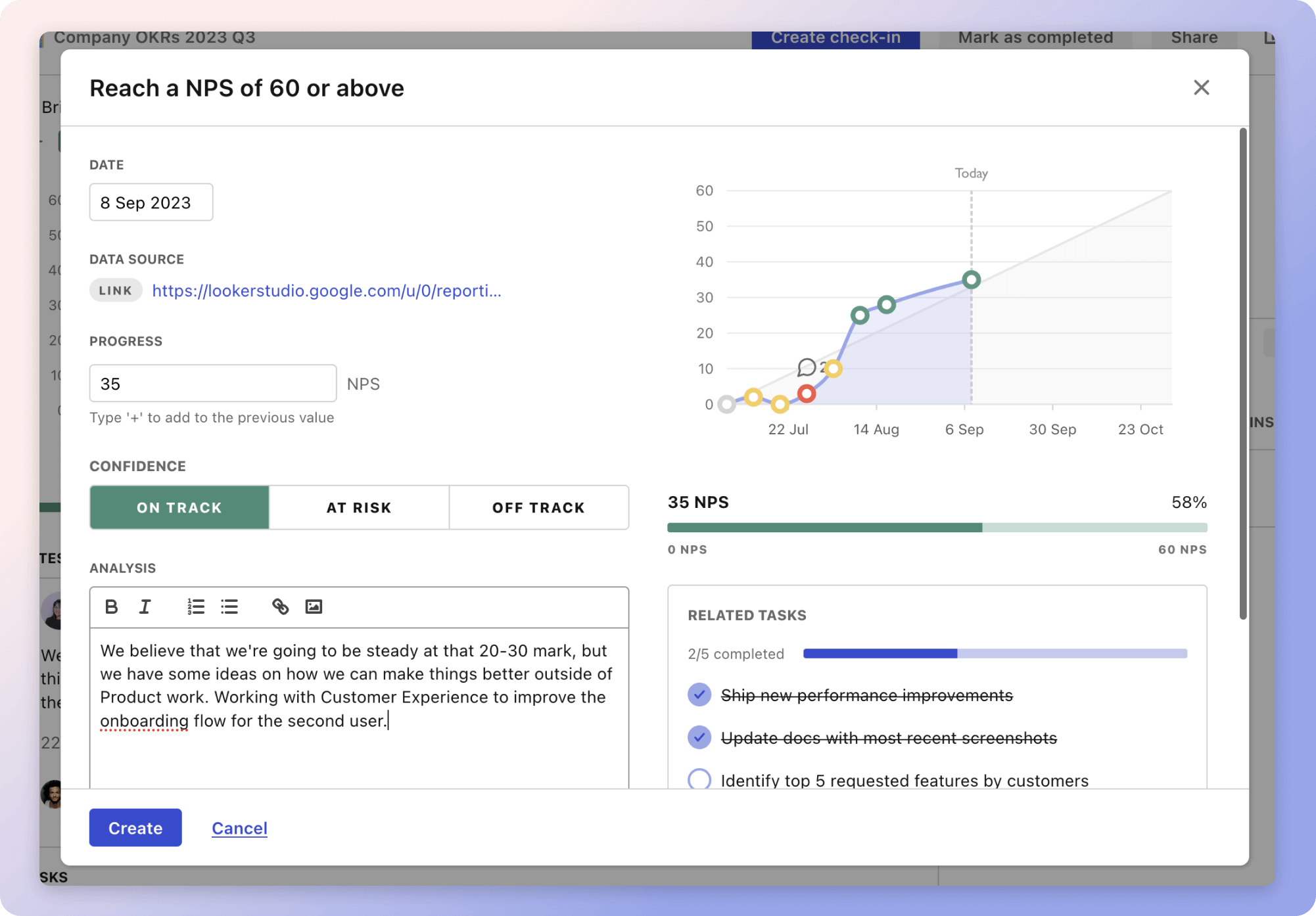
Give it a try and see how it can help you bring accountability to your metrics.
