Get Tability: OKRs that don't suck | Learn more →

7 examples of Digital Marketing Manager metrics and KPIs

What are Digital Marketing Manager metrics?

Finding the right Digital Marketing Manager metrics can be daunting, especially when you're busy working on your day-to-day tasks. This is why we've curated a list of examples for your inspiration.

Copy these examples into your preferred app, or you can also use Tability to keep yourself accountable.

Find Digital Marketing Manager metrics with AI

While we have some examples available, it's likely that you'll have specific scenarios that aren't covered here. You can use our free AI metrics generator below to generate your own strategies.

Examples of Digital Marketing Manager metrics and KPIs

Metrics for Increase customer base

  • 1. Customer Acquisition Rate

    Percentage increase in the number of new customers compared to the total number of potential customers over a specific time period.

    What good looks like for this metric: 10-20% monthly growth

    Ideas to improve this metric
    • Enhance digital marketing strategies
    • Offer referral incentives
    • Optimise SEO on your website
    • Host webinars or free demos
    • Expand network partnerships
  • 2. Cost Per Acquisition (CPA)

    Total cost of acquiring a new customer, obtained by dividing total marketing costs by the number of new customers acquired.

    What good looks like for this metric: $50-$150 per customer

    Ideas to improve this metric
    • Utilise targeted advertising
    • Leverage social media platforms
    • Refine email marketing campaigns
    • Negotiate better rates with advertisers
    • Utilise cost-effective content marketing
  • 3. Conversion Rate

    Percentage of potential customers who become actual customers, calculated by dividing the number of conversions by the total number of visitors.

    What good looks like for this metric: 2-5% for software services

    Ideas to improve this metric
    • Improve website user experience
    • A/B test landing pages
    • Address customer pain points clearly
    • Use strong call-to-action buttons
    • Provide personalised follow-ups
  • 4. Customer Lifetime Value (CLV)

    Predictive metric indicating the total revenue expected from a customer over their entire relationship with the business.

    What good looks like for this metric: 3 times customer acquisition cost

    Ideas to improve this metric
    • Enhance customer service
    • Offer loyalty programmes
    • Upsell and cross-sell products
    • Engage through email marketing
    • Regularly update and improve the solution
  • 5. Churn Rate

    Percentage of customers who stop using the service during a given time frame, calculated by dividing the number of lost customers by the total number of customers at the start.

    What good looks like for this metric: 5-7% annually for SaaS products

    Ideas to improve this metric
    • Conduct exit surveys for feedback
    • Implement retention strategies
    • Address customer complaints promptly
    • Regularly update and personalise service offerings
    • Build a community around the product

Metrics for Social Media Adverb Marketing

  • 1. Engagement Rate

    Percentage of interactions (likes, comments, shares) a post receives relative to the total audience reached

    What good looks like for this metric: 1% - 5%

    Ideas to improve this metric
    • Post during peak audience times
    • Utilise engaging call-to-actions
    • Encourage user-generated content
    • Access analytics to determine audience preferences
    • Enhance visual appeal with quality images or videos
  • 2. Reach

    Total number of unique users who have seen your content

    What good looks like for this metric: 10% - 20% of followers

    Ideas to improve this metric
    • Collaborate with influencers
    • Use targeted hashtags
    • Deploy social media ads
    • Engage with similar profiles
    • Share content regularly and consistently
  • 3. Click-Through Rate (CTR)

    Percentage of users who click on a link in your post compared to the total users who saw the post

    What good looks like for this metric: 0.5% - 3%

    Ideas to improve this metric
    • Craft compelling headlines
    • Ensure ad verb positioning is clear
    • Use crisp and engaging thumbnails
    • Incorporate strong call-to-actions
    • Simplify the post to focus on the link
  • 4. Conversion Rate

    Percentage of users who take a desired action, such as signing up or purchasing, after clicking through

    What good looks like for this metric: 2% - 5%

    Ideas to improve this metric
    • Streamline landing page design
    • Add testimonials for credibility
    • Offer introductory discounts
    • Conduct A/B testing on adverbs used
    • Facilitate ease of navigation
  • 5. Social Share of Voice

    Percentage of total social media mentions about your brand relative to your competitors

    What good looks like for this metric: 30% - 50% depending on competition

    Ideas to improve this metric
    • Actively monitor social conversations
    • Engage with audience comments
    • Foster community around your brand
    • Address negative feedback promptly
    • Publicize success stories and case studies

Metrics for Enhancing Product Display Options

  • 1. Conversion Rate

    The percentage of visitors who make a purchase, calculated as the number of purchases divided by the total number of visitors.

    What good looks like for this metric: 2% to 3%

    Ideas to improve this metric
    • Optimise product descriptions and images
    • Simplify the checkout process
    • Highlight customer reviews and testimonials
    • Offer personalised recommendations
    • Implement A/B testing for page elements
  • 2. Average Order Value

    The average amount spent each time a customer places an order, calculated by dividing total revenue by the number of orders.

    What good looks like for this metric: $50 to $100

    Ideas to improve this metric
    • Upsell with related products and bundles
    • Offer discounts for bulk purchases
    • Implement a loyalty programme
    • Provide limited-time offers or promotions
    • Enhance product pages with quality content
  • 3. Bounce Rate

    The percentage of visitors who leave the site after viewing only one page, calculated by dividing single-page visits by total visits.

    What good looks like for this metric: 26% to 40%

    Ideas to improve this metric
    • Improve site loading speed
    • Create strong calls-to-action
    • Ensure mobile responsiveness
    • Enhance overall website design
    • Offer engaging and relevant content
  • 4. Time on Page

    The average amount of time users spend on a product page, indicating engagement levels.

    What good looks like for this metric: 2 to 3 minutes

    Ideas to improve this metric
    • Enhance product descriptions and features
    • Use high-quality images and videos
    • Utilise interactive elements
    • Provide detailed FAQs and tutorials
    • Optimise layout for readability
  • 5. Customer Retention Rate

    The percentage of repeat customers over a specific time period, indicating loyalty and satisfaction.

    What good looks like for this metric: 20% to 30%

    Ideas to improve this metric
    • Deliver exceptional customer service
    • Introduce membership or rewards programmes
    • Implement feedback mechanisms and surveys
    • Communicate through targeted email marketing
    • Continuously update and improve product offerings

Metrics for Sales Of Existing Inventory

  • 1. Inventory Turnover Ratio

    Measures how often inventory is sold and replaced over a period. Calculated by dividing cost of goods sold by average inventory

    What good looks like for this metric: 2 to 4 times per year

    Ideas to improve this metric
    • Analyse inventory levels regularly
    • Offer discounts on slow-moving products
    • Optimize supply chain processes
    • Increase product visibility through promotions
    • Bundle products to increase sales
  • 2. Sell-Through Rate

    The percentage of inventory sold compared to the amount of inventory received. Calculated by dividing units sold by the initial inventory received

    What good looks like for this metric: 80% or higher

    Ideas to improve this metric
    • Enhance marketing efforts
    • Rotate inventory displays regularly
    • Improve sales staff training
    • Utilize customer feedback for improvements
    • Focus promotions on best-selling products
  • 3. Gross Margin Return On Investment (GMROI)

    Measures the profit a company makes on its inventory investment. Calculated by dividing gross margin by average inventory cost

    What good looks like for this metric: $2 or higher

    Ideas to improve this metric
    • Negotiate better terms with suppliers
    • Improve pricing strategies
    • Reduce inventory holding costs
    • Focus on high-margin products
    • Limit discounting on high-margin products
  • 4. Days Sales Of Inventory (DSI)

    Indicates the average time in days that a company takes to turn its inventory into sales. Lower values are better

    What good looks like for this metric: 30 to 60 days

    Ideas to improve this metric
    • Improve demand forecasting
    • Implement automated inventory management systems
    • Enhance supplier relationships
    • Streamline supply chain processes
    • Conduct regular inventory audits
  • 5. Customer Feedback And Satisfaction Score

    Measure of customer satisfaction with the existing product line, usually through surveys or reviews

    What good looks like for this metric: 4 out of 5 or higher

    Ideas to improve this metric
    • Actively solicit customer feedback
    • Enhance product quality based on feedback
    • Implement a customer loyalty program
    • Improve customer service experiences
    • Address any negative feedback promptly

Metrics for Restaurant Performance Analysis

  • 1. Sales by Food Category

    Tracks sales trends for each food category such as starter, main course, and dessert to understand which category generates the most revenue

    What good looks like for this metric: Starters: 20%, Mains: 50%, Desserts: 30%

    Ideas to improve this metric
    • Introduce seasonal menus or specials
    • Enhance the visual appeal of dishes
    • Offer meal deals or combos
    • Provide customer incentives for trying new categories
    • Conduct customer feedback surveys
  • 2. Top-Selling Items

    Identifies the most popular items ordered by customers to enhance menu offerings and focus on bestsellers

    What good looks like for this metric: Top 10 items account for 60% of sales

    Ideas to improve this metric
    • Promote top items with special offers
    • Ensure consistent quality for bestsellers
    • Collect feedback on popular items
    • Try variations of top-selling items
    • Regularly update and innovate menu
  • 3. Peak Order Times

    Analyses order data to determine peak hours and days for preparing staff and resources in advance

    What good looks like for this metric: Busy hours typically between 6 PM - 8 PM

    Ideas to improve this metric
    • Adjust staff schedules to peak times
    • Prepare ingredients in advance
    • Promote off-peak offers
    • Implement online reservation systems
    • Utilise real-time monitoring to manage load
  • 4. Payment Method Preference

    Tracks the most commonly used payment methods to streamline checkout processes

    What good looks like for this metric: 70% card payments, 20% cash, 10% online

    Ideas to improve this metric
    • Encourage card payments with rewards
    • Offer contactless payment options
    • Train staff on payment systems
    • Simplify online payment process
    • Monitor payment system performance
  • 5. Revenue by Food Item

    Observes the revenue distribution among different food items to adjust pricing strategies and inventory control

    What good looks like for this metric: Mains contribute to 50% of revenue

    Ideas to improve this metric
    • Revise pricing strategies
    • Enhance customer education on item value
    • Upsell with complementary items
    • Create limited-time high-revenue offers
    • Monitor cost of goods sold regularly

Metrics for Reprocessed Plastic Recycling

  • 1. Annual Sales Volume

    The total quantity of plastic products sold within a year

    What good looks like for this metric: 10,000 MT in 2025, increasing to 50,000 MT by 2035

    Ideas to improve this metric
    • Expand market reach through marketing
    • Increase product quality to boost sales
    • Enhance sales team training and incentives
    • Identify and target key industries needing plastic
    • Collaborate with international partners
  • 2. Production Yield

    The percentage of produced items that meet quality standards

    What good looks like for this metric: 95% in 2025, aiming for 99% by 2035

    Ideas to improve this metric
    • Implement quality checks at each production phase
    • Invest in modern machinery and technology
    • Train employees on quality control processes
    • Conduct regular maintenance on equipment
    • Incorporate lean manufacturing practices
  • 3. Customer Retention Rate

    The percentage of customers who continue to buy over time

    What good looks like for this metric: 80% in 2025, increasing to 95% by 2035

    Ideas to improve this metric
    • Enhance customer service and support
    • Implement a loyalty program
    • Regularly seek customer feedback for improvements
    • Offer personalized deals and discounts
    • Ensure high product quality and consistency
  • 4. Cost per Metric Tonne (MT)

    The cost incurred to produce one metric tonne of plastic

    What good looks like for this metric: 10% reduction by 2026, aiming for 20% reduction by 2035

    Ideas to improve this metric
    • Streamline procurement processes
    • Negotiate better deals with suppliers
    • Optimize production scheduling for efficiency
    • Minimize waste during production
    • Utilize energy-efficient machinery
  • 5. Training Hours per Employee

    The average number of hours each employee spends in training annually

    What good looks like for this metric: 20 hours in 2025, increasing to 60 hours by 2035

    Ideas to improve this metric
    • Develop a comprehensive training calendar
    • Encourage online and external training sessions
    • Introduce mentorship programs
    • Link training to career development plans
    • Utilize technology for training modules

Metrics for End-to-End Property Ecosystem

  • 1. User Adoption Rate

    The percentage of users who register and actively use the platform regularly after signing up

    What good looks like for this metric: 60-70% within the first year

    Ideas to improve this metric
    • Enhance user onboarding experience
    • Offer introductory tutorials and resources
    • Provide incentives for active usage
    • Monitor and respond to user feedback
    • Keep the interface user-friendly and intuitive
  • 2. Time Saved on Administrative Tasks

    The reduction in time spent on manual property management tasks by using the platform

    What good looks like for this metric: 20-30% reduction in the first year

    Ideas to improve this metric
    • Automate frequent tasks like rent collection
    • Implement efficient scheduling tools
    • Streamline communication channels
    • Ensure seamless integration with existing tools
    • Provide analytics for process optimization
  • 3. Customer Satisfaction Score

    A score derived from customer feedback surveys reflecting their satisfaction with the platform

    What good looks like for this metric: Above 80% satisfaction

    Ideas to improve this metric
    • Regularly collect user feedback
    • Act on common complaints and suggestions
    • Offer 24/7 customer support
    • Conduct regular usability testing
    • Continuously update features based on user needs
  • 4. Platform Downtime

    The amount of time the platform is unavailable due to crashes or maintenance

    What good looks like for this metric: Less than 1% downtime

    Ideas to improve this metric
    • Implement robust server monitoring
    • Ensure quick response to incidents
    • Schedule regular maintenance checks
    • Provide redundancy systems
    • Keep the software updated and patched
  • 5. Revenue Generation

    The total income generated from subscription fees and other platform services

    What good looks like for this metric: Increase by 15% annually

    Ideas to improve this metric
    • Expand service offerings
    • Implement tiered subscription plans
    • Develop strategic partnerships
    • Offer promotional discounts
    • Enhance value propositions

Tracking your Digital Marketing Manager metrics

Having a plan is one thing, sticking to it is another.

Setting good strategies is only the first challenge. The hard part is to avoid distractions and make sure that you commit to the plan. A simple weekly ritual will greatly increase the chances of success.

A tool like Tability can also help you by combining AI and goal-setting to keep you on track.
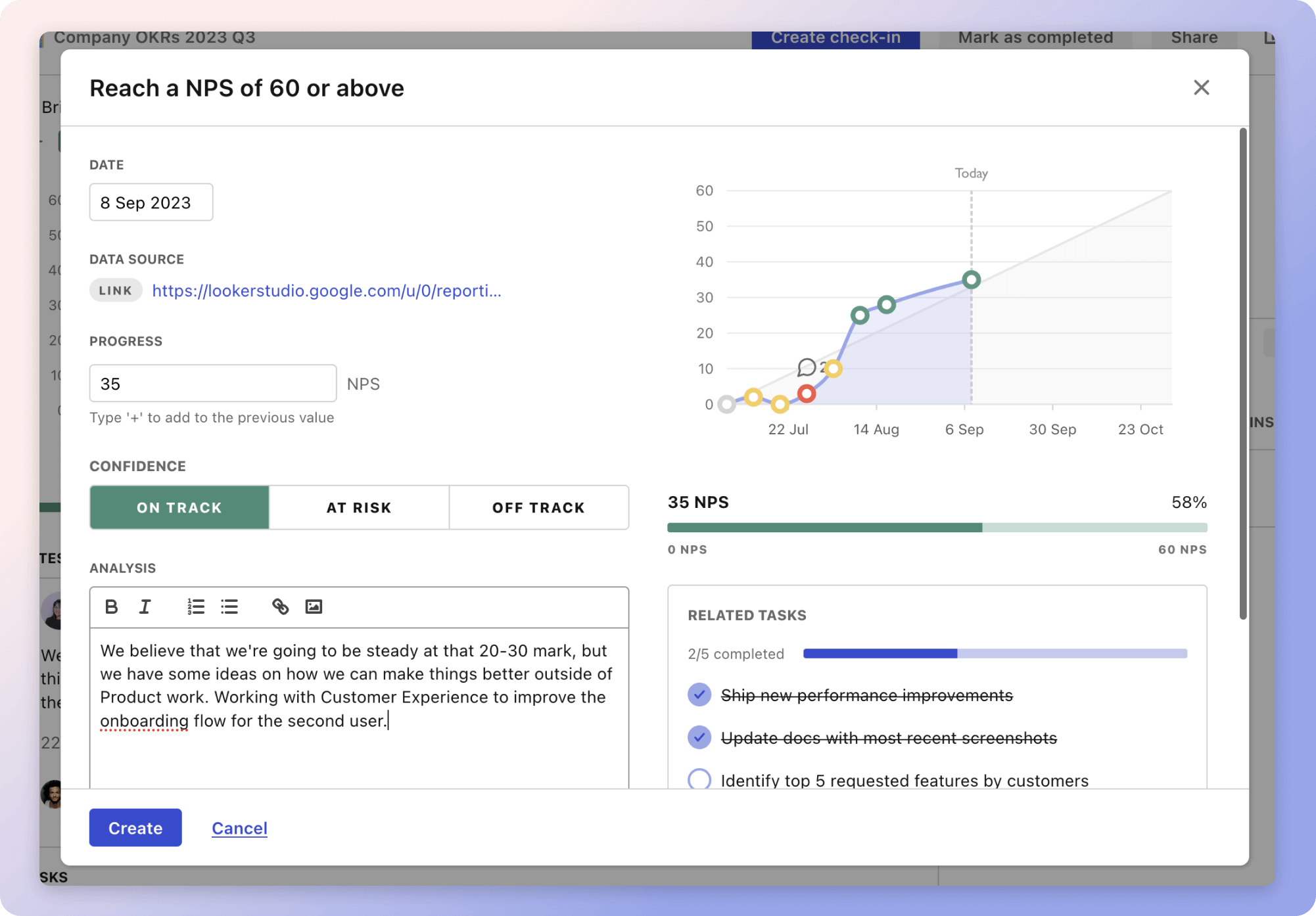
Tability Insights DashboardTability's check-ins will save you hours and increase transparency

More metrics recently published

We have more examples to help you below.

Planning resources

OKRs are a great way to translate strategies into measurable goals. Here are a list of resources to help you adopt the OKR framework:

Table of contents