What are It Security Team metrics? Crafting the perfect It Security Team metrics can feel overwhelming, particularly when you're juggling daily responsibilities. That's why we've put together a collection of examples to spark your inspiration.
Copy these examples into your preferred app, or you can also use Tability to keep yourself accountable.
Find It Security Team metrics with AI While we have some examples available, it's likely that you'll have specific scenarios that aren't covered here. You can use our free AI metrics generator below to generate your own strategies.
Examples of It Security Team metrics and KPIs 1. Device Compliance Rate Measures the percentage of devices that meet compliance requirements for security standards.
What good looks like for this metric: 95% compliance rate
Ideas to improve this metric Conduct regular compliance audits Update security policies frequently Train employees on compliance requirements Automate compliance checks Use endpoint protection software 2. Threat Detection Time The average time taken to detect a security threat on an end-user device.
What good looks like for this metric: Under 24 hours
Ideas to improve this metric Implement real-time monitoring Utilise AI-powered threat detection tools Regularly update threat databases Conduct regular security tests Enable fast response procedures 3. Patch Management Timeliness The average time taken to apply security patches to end-user devices.
What good looks like for this metric: Within 72 hours
Ideas to improve this metric Automate patch deployment Schedule regular update checks Prioritise critical patches Maintain a patch inventory Verify patch installations regularly 4. Data Encryption Rate The percentage of end-user devices that have encryption enabled for data storage.
What good looks like for this metric: 100% encryption rate
Ideas to improve this metric Enforce encryption policies Provide encryption tools Train users on encryption benefits Audit encryption compliance Utilise full-disk encryption solutions 5. Incident Response Rate Measures the effectiveness and speed of response when a security incident occurs.
What good looks like for this metric: 90% incidents resolved within 48 hours
Ideas to improve this metric Establish a dedicated response team Develop a detailed incident response plan Run regular incident response drills Utilise automated incident detection systems Review response procedures post-incident
← →
1. Incident Detection Time The time taken from the moment a threat is detected to the initiation of an incident response
What good looks like for this metric: Typically less than 15 minutes
Ideas to improve this metric Implement automated alerting systems Conduct regular threat hunting exercises Enhance staff training on threat identification Integrate with advanced threat intelligence platforms Utilise machine learning for anomaly detection 2. Containment Time The duration between detection and containment of a threat to minimise its spread and impact
What good looks like for this metric: Ideally under 30 minutes
Ideas to improve this metric Automate endpoint isolation procedures Improve network segmentation Establish predefined incident response playbooks Regularly test response strategies Foster collaboration between IT and security teams 3. False Positive Rate The percentage of alerts that are incorrectly identified as threats
What good looks like for this metric: Should be below 5%
Ideas to improve this metric Refine rule sets and detection algorithms Incorporate feedback loops to learn from past alerts Leverage threat intelligence feeds Enhance contextual information in alerts Invest in more precise detection technologies 4. Number of Lateral Movement Attempts Counts of attempts by threats to move laterally within a network after initial access
What good looks like for this metric: Ideally zero attempts
Ideas to improve this metric Deploy micro-segmentation techniques Monitor for unusual access patterns Strengthen user privilege controls Use lateral movement detection tools Conduct regular security audits and penetration testing 5. Incident Recovery Time The time required to fully restore systems and operations post-incident
What good looks like for this metric: Within 24 hours for minor incidents
Ideas to improve this metric Maintain regular backups and restore procedures Invest in resilient infrastructure Document and streamline recovery processes Facilitate cross-department cooperation Regularly update and test recovery plans
← →
1. Time to Triage The average time taken to assess and categorize a security alert once it is received.
What good looks like for this metric: 1-2 hours
Ideas to improve this metric Automate initial alert categorization Train staff on efficient triage process Implement clear triage protocols Regularly review triage processes Utilize prioritization tools 2. False Positive Rate The percentage of security alerts that were incorrectly flagged as threats.
What good looks like for this metric: Under 10%
Ideas to improve this metric Refine detection rules and algorithms Regularly update threat intelligence Enhance user training on alert interpretation Increase context provided with alerts Engage in regular false positive audits 3. Alert Volume by Severity The number of security alerts received categorized by severity level (informational, low, medium, high).
What good looks like for this metric: Varies by organization size
Ideas to improve this metric Optimise threat detection thresholds Enhance network traffic analysis Implement targeted monitoring Use data aggregation tools Evaluate alert relevance regularly 4. Incident Resolution Time The time taken from triaging an alert to resolving the underlying security threat.
What good looks like for this metric: 4-8 hours
Ideas to improve this metric Set clear response protocols Utilize automated resolution tools Conduct regular training sessions Ensure scalable resources Engage in post-incident analyses 5. Alert Re-assignment Rate The percentage of alerts that must be reassigned due to incorrect initial triage.
What good looks like for this metric: Under 5%
Ideas to improve this metric Provide comprehensive training for triagers Establish clear escalation pathways Use specialised triage teams Regularly assess alert primacy guidelines Conduct bi-annual skill assessments
← →
1. Mean Time to Detect (MTTD) The average time taken to identify a security threat or performance issue.
What good looks like for this metric: Typically less than 24 hours
Ideas to improve this metric Implement continuous monitoring systems Use automated alert systems Regularly update threat intelligence Train staff for rapid response Conduct regular security audits 2. Mean Time to Recovery (MTTR) The average time needed to recover from a security breach or system performance issue.
What good looks like for this metric: Often less than 5 hours
Ideas to improve this metric Develop a comprehensive incident response plan Invest in reliable backup solutions Conduct disaster recovery drills Enhance system redundancy Use AI-driven analytics for faster issue resolution 3. System Uptime Percentage The percentage of time the system is operational and available.
What good looks like for this metric: Above 99.9%
Ideas to improve this metric Regular system maintenance Implement failover strategies Use load balancing Monitor server health continuously Upgrade hardware periodically 4. Incident Rate The number of security or performance incidents detected within a specified period.
What good looks like for this metric: Fewer than 5 per month
Ideas to improve this metric Strengthen access control policies Adopt advanced security software Enhance employee training programs Regularly test for vulnerabilities Improve system configurations 5. Vulnerability Remediation Time The time taken to fix identified vulnerabilities in the system.
What good looks like for this metric: Under 30 days
Ideas to improve this metric Prioritise vulnerability patches Automate patch management Regularly update software Establish a dedicated security team Use vulnerability scanning tools continuously
← →
1. Latency Time taken for a transaction or processing a fall event from the input to the final output
What good looks like for this metric: 200-500 milliseconds
Ideas to improve this metric Optimize network bandwidth Utilise more efficient consensus algorithms Reduce data complexity in transactions Incorporate edge computing techniques Enhance processing speeds of nodes 2. Throughput Number of transactions processed within a given period
What good looks like for this metric: 10-100 transactions per second
Ideas to improve this metric Increase the number of nodes Upgrade node hardware Implement parallel processing techniques Optimize transaction validation methods Utilise sharding techniques 3. Security Breach Rate Number of successful breaches attempts per month
What good looks like for this metric: 0-1 breach per year
Ideas to improve this metric Regularly update encryption protocols Conduct routine security audits Implement multi-factor authentication Train staff on security awareness Utilise a robust incident response strategy 4. Scalability Ability to maintain performance as network size or data volume increases
What good looks like for this metric: Linear performance degradation with scale
Ideas to improve this metric Adopt more scalable consensus algorithms Reduce data redundancy Utilise cloud resources for storage Implement load balancing techniques Employ distributed ledger technology 5. Data Integrity Accuracy and consistency of data over its lifecycle
What good looks like for this metric: 99.9% integrity rate
Ideas to improve this metric Regularly verify data with hash functions Set permissions and roles for data access Utilise smart contracts for automatic validation Implement data replication strategies Conduct integrity checks at regular intervals
← →
1. Annual Sales Volume The total quantity of plastic products sold within a year
What good looks like for this metric: 10,000 MT in 2025, increasing to 50,000 MT by 2035
Ideas to improve this metric Expand market reach through marketing Increase product quality to boost sales Enhance sales team training and incentives Identify and target key industries needing plastic Collaborate with international partners 2. Production Yield The percentage of produced items that meet quality standards
What good looks like for this metric: 95% in 2025, aiming for 99% by 2035
Ideas to improve this metric Implement quality checks at each production phase Invest in modern machinery and technology Train employees on quality control processes Conduct regular maintenance on equipment Incorporate lean manufacturing practices 3. Customer Retention Rate The percentage of customers who continue to buy over time
What good looks like for this metric: 80% in 2025, increasing to 95% by 2035
Ideas to improve this metric Enhance customer service and support Implement a loyalty program Regularly seek customer feedback for improvements Offer personalized deals and discounts Ensure high product quality and consistency 4. Cost per Metric Tonne (MT) The cost incurred to produce one metric tonne of plastic
What good looks like for this metric: 10% reduction by 2026, aiming for 20% reduction by 2035
Ideas to improve this metric Streamline procurement processes Negotiate better deals with suppliers Optimize production scheduling for efficiency Minimize waste during production Utilize energy-efficient machinery 5. Training Hours per Employee The average number of hours each employee spends in training annually
What good looks like for this metric: 20 hours in 2025, increasing to 60 hours by 2035
Ideas to improve this metric Develop a comprehensive training calendar Encourage online and external training sessions Introduce mentorship programs Link training to career development plans Utilize technology for training modules
← →
Tracking your It Security Team metrics Having a plan is one thing, sticking to it is another.
Having a good strategy is only half the effort. You'll increase significantly your chances of success if you commit to a weekly check-in process .
A tool like Tability can also help you by combining AI and goal-setting to keep you on track.
More metrics recently published We have more examples to help you below.
Planning resources OKRs are a great way to translate strategies into measurable goals. Here are a list of resources to help you adopt the OKR framework:
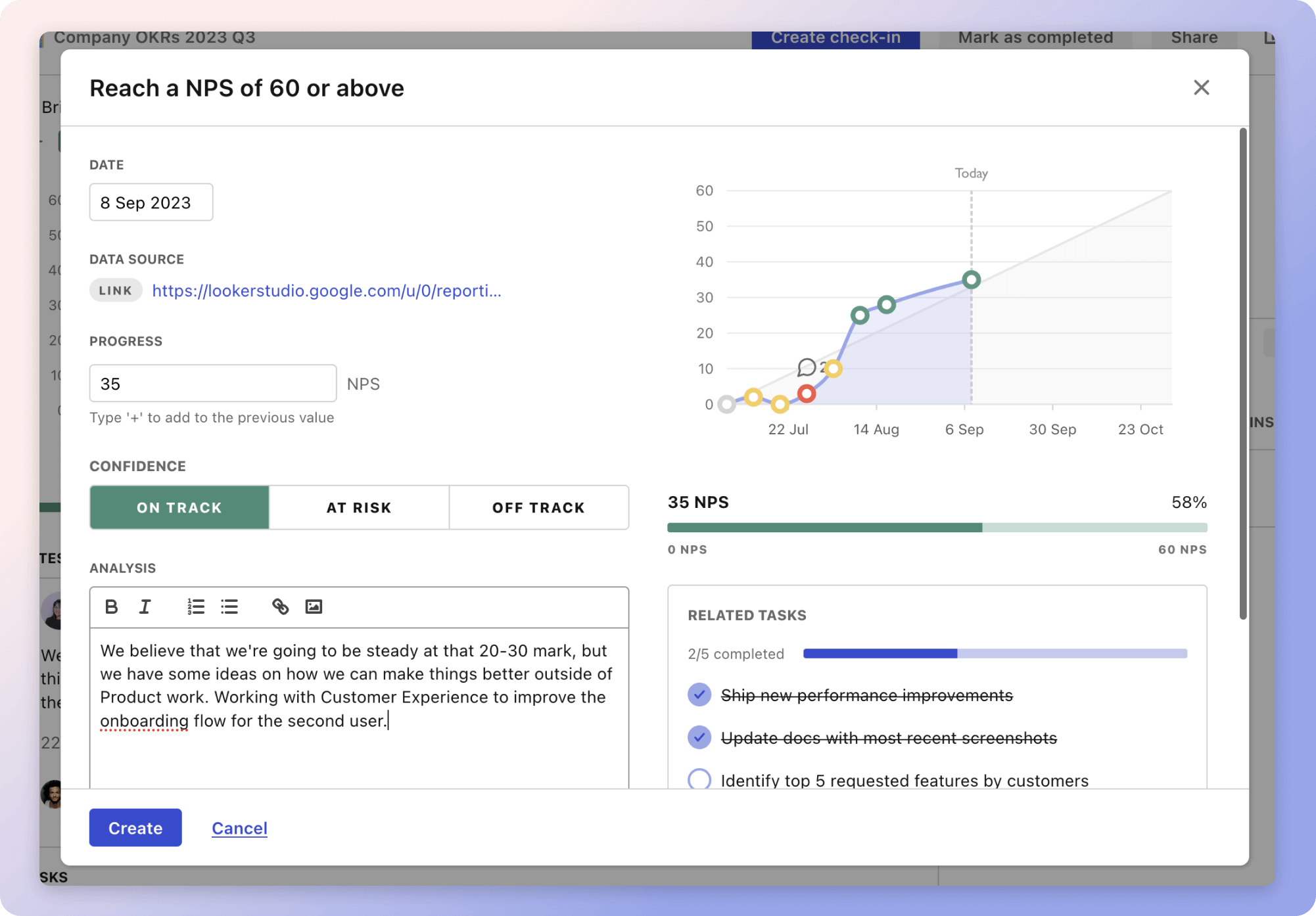 Tability's check-ins will save you hours and increase transparency
 The best metrics for Increase Calls Through Google My Business