This plan focuses on enhancing Security Alert Management by identifying key metrics that ensure an efficient and accurate response to security incidents. These metrics, such as "Time to Triage" and "False Positive Rate," are critical for minimizing potential threats and optimizing resource allocation. For example, reducing the "Time to Triage" through automation can lead to quicker resolutions, while maintaining a low "False Positive Rate" ensures focus on genuine threats.
These metrics matter because they provide tangible benchmarks for assessing the effectiveness of security alert systems. By actively working to improve metrics such as "Incident Resolution Time" and "Alert Re-assignment Rate," organizations can streamline processes and reduce operational inefficiencies. This structured approach ensures that security teams respond promptly and accurately to potential threats, safeguarding the organization's assets and data.
Top 5 metrics for Security Alert Management
1. Time to Triage
The average time taken to assess and categorize a security alert once it is received.
What good looks like for this metric: 1-2 hours
How to improve this metric:- Automate initial alert categorization
- Train staff on efficient triage process
- Implement clear triage protocols
- Regularly review triage processes
- Utilize prioritization tools
2. False Positive Rate
The percentage of security alerts that were incorrectly flagged as threats.
What good looks like for this metric: Under 10%
How to improve this metric:- Refine detection rules and algorithms
- Regularly update threat intelligence
- Enhance user training on alert interpretation
- Increase context provided with alerts
- Engage in regular false positive audits
3. Alert Volume by Severity
The number of security alerts received categorized by severity level (informational, low, medium, high).
What good looks like for this metric: Varies by organization size
How to improve this metric:- Optimise threat detection thresholds
- Enhance network traffic analysis
- Implement targeted monitoring
- Use data aggregation tools
- Evaluate alert relevance regularly
4. Incident Resolution Time
The time taken from triaging an alert to resolving the underlying security threat.
What good looks like for this metric: 4-8 hours
How to improve this metric:- Set clear response protocols
- Utilize automated resolution tools
- Conduct regular training sessions
- Ensure scalable resources
- Engage in post-incident analyses
5. Alert Re-assignment Rate
The percentage of alerts that must be reassigned due to incorrect initial triage.
What good looks like for this metric: Under 5%
How to improve this metric:- Provide comprehensive training for triagers
- Establish clear escalation pathways
- Use specialised triage teams
- Regularly assess alert primacy guidelines
- Conduct bi-annual skill assessments
How to track Security Alert Management metrics
It's one thing to have a plan, it's another to stick to it. We hope that the examples above will help you get started with your own strategy, but we also know that it's easy to get lost in the day-to-day effort.
That's why we built Tability: to help you track your progress, keep your team aligned, and make sure you're always moving in the right direction.
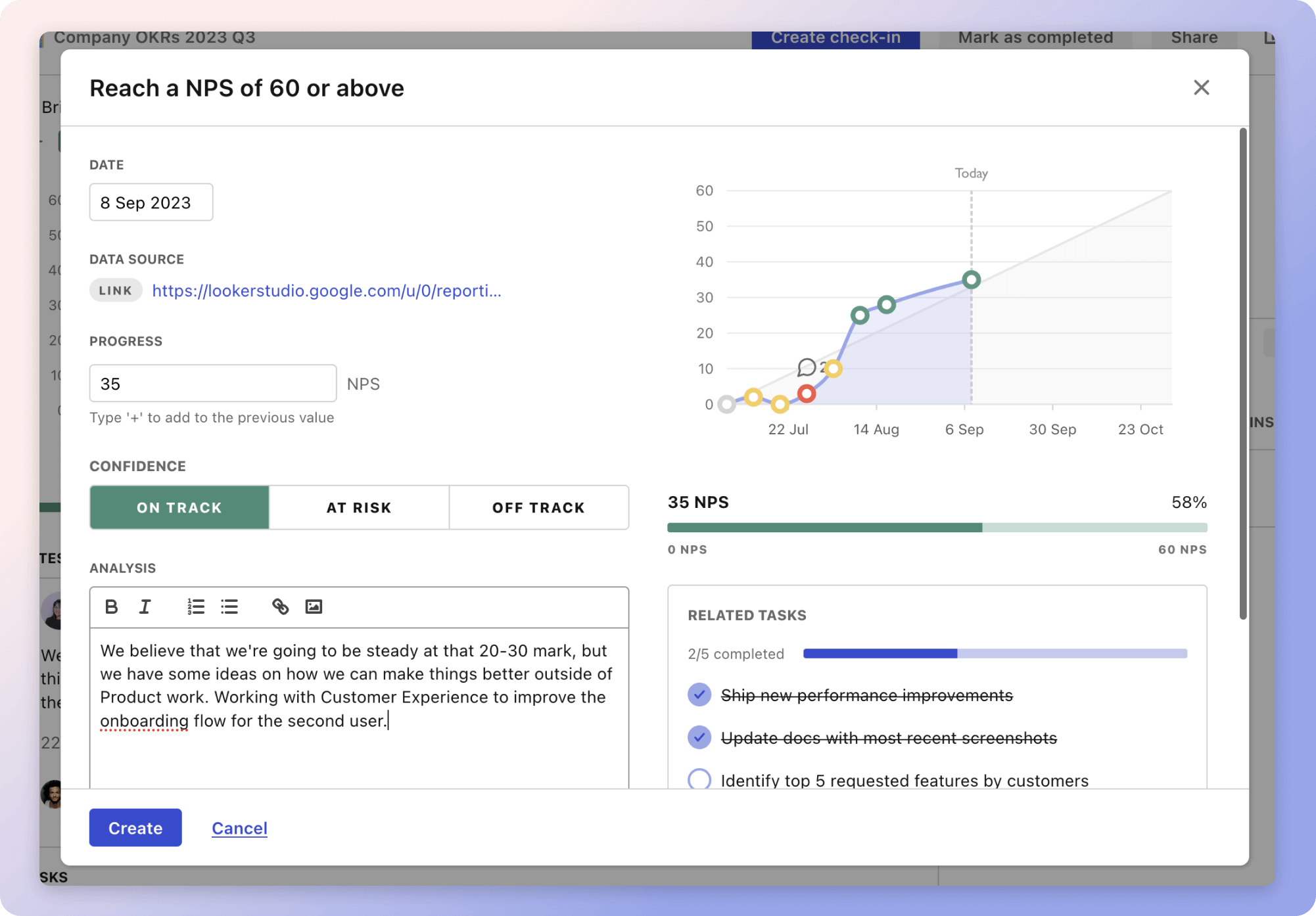
Give it a try and see how it can help you bring accountability to your metrics.
