Get Tability: OKRs that don't suck | Learn more →

Cyber Threats metrics and KPIs

What are Cyber Threats metrics?

Finding the right Cyber Threats metrics can be daunting, especially when you're busy working on your day-to-day tasks. This is why we've curated a list of examples for your inspiration.

Copy these examples into your preferred tool, or adopt Tability to ensure you remain accountable.

Find Cyber Threats metrics with AI

While we have some examples available, it's likely that you'll have specific scenarios that aren't covered here. You can use our free AI metrics generator below to generate your own strategies.

Examples of Cyber Threats metrics and KPIs

Metrics for Threat and Incident Analysis

  • 1. Incident Detection Time

    The time taken from the moment a threat is detected to the initiation of an incident response

    What good looks like for this metric: Typically less than 15 minutes

    Ideas to improve this metric
    • Implement automated alerting systems
    • Conduct regular threat hunting exercises
    • Enhance staff training on threat identification
    • Integrate with advanced threat intelligence platforms
    • Utilise machine learning for anomaly detection
  • 2. Containment Time

    The duration between detection and containment of a threat to minimise its spread and impact

    What good looks like for this metric: Ideally under 30 minutes

    Ideas to improve this metric
    • Automate endpoint isolation procedures
    • Improve network segmentation
    • Establish predefined incident response playbooks
    • Regularly test response strategies
    • Foster collaboration between IT and security teams
  • 3. False Positive Rate

    The percentage of alerts that are incorrectly identified as threats

    What good looks like for this metric: Should be below 5%

    Ideas to improve this metric
    • Refine rule sets and detection algorithms
    • Incorporate feedback loops to learn from past alerts
    • Leverage threat intelligence feeds
    • Enhance contextual information in alerts
    • Invest in more precise detection technologies
  • 4. Number of Lateral Movement Attempts

    Counts of attempts by threats to move laterally within a network after initial access

    What good looks like for this metric: Ideally zero attempts

    Ideas to improve this metric
    • Deploy micro-segmentation techniques
    • Monitor for unusual access patterns
    • Strengthen user privilege controls
    • Use lateral movement detection tools
    • Conduct regular security audits and penetration testing
  • 5. Incident Recovery Time

    The time required to fully restore systems and operations post-incident

    What good looks like for this metric: Within 24 hours for minor incidents

    Ideas to improve this metric
    • Maintain regular backups and restore procedures
    • Invest in resilient infrastructure
    • Document and streamline recovery processes
    • Facilitate cross-department cooperation
    • Regularly update and test recovery plans

Tracking your Cyber Threats metrics

Having a plan is one thing, sticking to it is another.

Setting good strategies is only the first challenge. The hard part is to avoid distractions and make sure that you commit to the plan. A simple weekly ritual will greatly increase the chances of success.

A tool like Tability can also help you by combining AI and goal-setting to keep you on track.
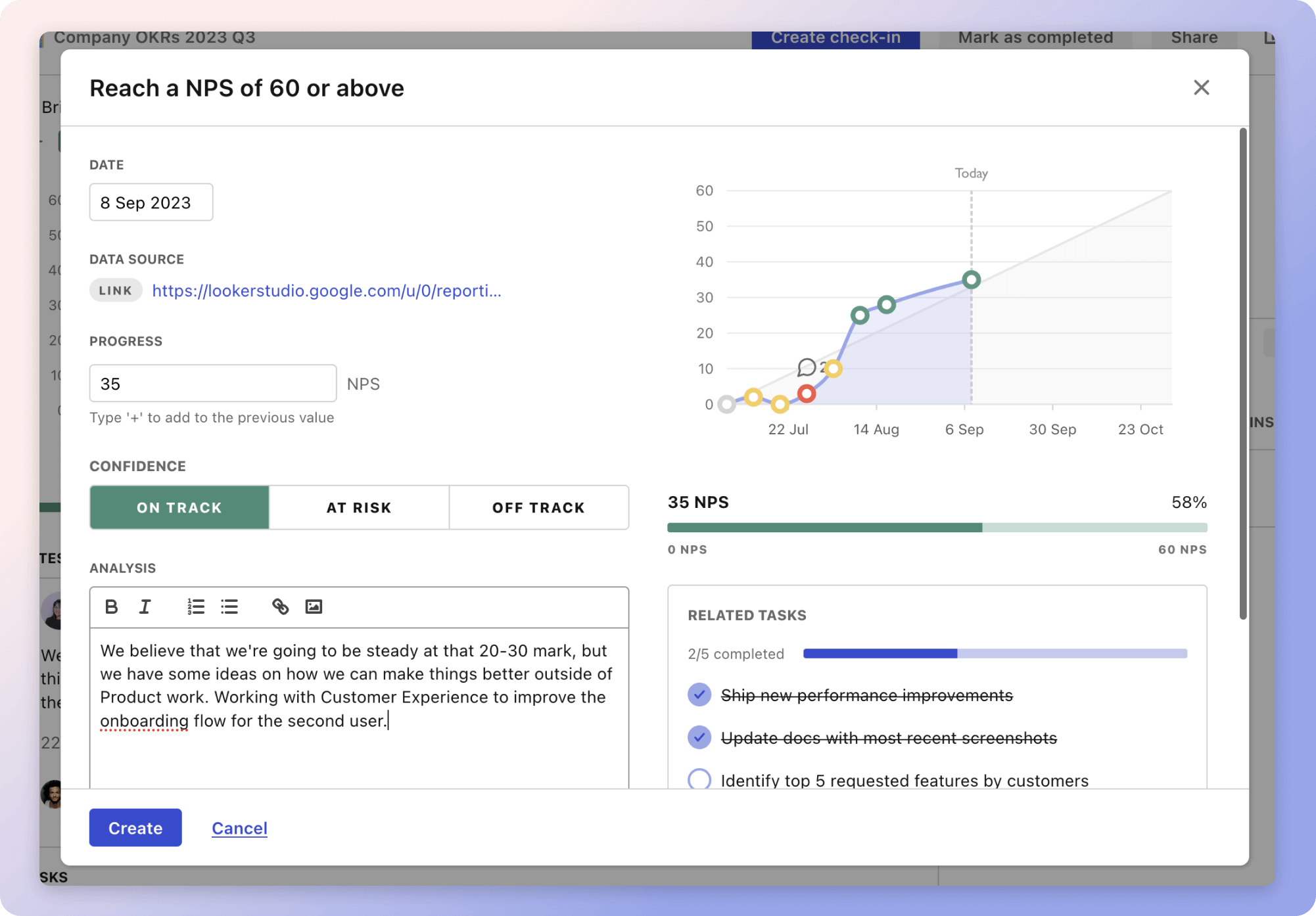
Tability Insights DashboardTability's check-ins will save you hours and increase transparency

More metrics recently published

We have more examples to help you below.

Planning resources

OKRs are a great way to translate strategies into measurable goals. Here are a list of resources to help you adopt the OKR framework:

Table of contents