What are Event Coordinator metrics? Finding the right Event Coordinator metrics can seem daunting, particularly when you're focused on your daily workload. For this reason, we've compiled a selection of examples to fuel your inspiration.
Transfer these examples to your app of choice, or opt for Tability to help keep you on track.
Find Event Coordinator metrics with AI While we have some examples available, it's likely that you'll have specific scenarios that aren't covered here. You can use our free AI metrics generator below to generate your own strategies.
Examples of Event Coordinator metrics and KPIs 1. Visitor Count of Children Measures the number of child visitors to the nature reserve over a specified period.
What good looks like for this metric: 500 - 1,500 children per month
Ideas to improve this metric Launch educational school tours Organise nature-themed workshops Partner with local schools for trips Introduce family-friendly events Offer discounts for child groups 2. Event Participation Rate Percentage of children participating in events out of all children visitors.
What good looks like for this metric: 20% - 40%
Ideas to improve this metric Enhance event advertising Create engaging event themes Survey participants for feedback Offer personalised event experiences Implement a loyalty programme 3. Time Spent Per Visit Tracks the average time children spend during each visit to the nature reserve.
What good looks like for this metric: 2 - 4 hours
Ideas to improve this metric Install interactive exhibits Design child-friendly trails Provide variety of activities Ensure accessible facilities Introduce scavenger hunts 4. Social Media Engagement Monitors likes, shares, comments, and mentions related to the nature reserve on social media platforms.
What good looks like for this metric: 5% - 10% engagement rate
Ideas to improve this metric Share engaging photographs and videos Encourage visitor-generated content Host social media contests Collaborate with child influencers Utilise trending hashtags 5. Feedback Score on Children's Activities The average score or satisfaction rating collected from children and guardians about activities designed for children.
What good looks like for this metric: 4 - 4.5 out of 5
Ideas to improve this metric Act on feedback received Regularly update activities Engage feedback from children Ensure activity safety standards Provide detailed activity schedules
← →
1. Number of Participants The total count of individuals attending the awareness activities at the nature reserve
What good looks like for this metric: 50 participants per event
Ideas to improve this metric Promote events through social media Collaborate with local schools Offer group discounts Utilise email newsletters Host activities on weekends 2. Participant Satisfaction Score Average satisfaction rating from participant feedback surveys collected post-event
What good looks like for this metric: 4 out of 5 rating
Ideas to improve this metric Gather and act on feedback Ensure activities are engaging Offer diverse content Train facilitators thoroughly Provide incentives for feedback 3. Social Media Engagement The amount of interaction (likes, shares, comments) on social media posts related to awareness activities
What good looks like for this metric: Engagement rate of 1.5%
Ideas to improve this metric Post regularly with rich media Engage with comments promptly Create shareable content Use hashtags effectively Collaborate with influencers 4. Awareness Campaign Reach The total number of individuals exposed to the awareness campaign across all platforms
What good looks like for this metric: 5000 reaches per campaign
Ideas to improve this metric Expand advertising budget Utilise cross-promotion strategies Engage local community leaders Optimise content for SEO Partner with local businesses 5. Behaviour Change Rate Percentage of participants who demonstrate a change in behaviour aligned with environmental awareness goals
What good looks like for this metric: 10% behaviour change
Ideas to improve this metric Offer actionable steps post-event Follow-up with participants Provide progress tracking tools Share success stories Create accountability groups
← →
1. Participation Rate The percentage of parents attending planned meetings, workshops, or events compared to the total number of parents invited
What good looks like for this metric: 35-50%
Ideas to improve this metric Schedule events at convenient times Offer virtual attendance options Send personalised invitations Provide child care during events Incentivise attendance with rewards 2. Volunteer Hours The total number of hours contributed by parents in various volunteering activities within the program
What good looks like for this metric: 5-10 hours per parent per month
Ideas to improve this metric Create diverse volunteering opportunities Communicate the impact of volunteering Make signing up easy and accessible Recognise and appreciate contributions Provide training and support for volunteers 3. Communication Interaction Rate The rate of responses and interactions from parents on communication platforms such as emails, newsletters, or messaging apps
What good looks like for this metric: 30-45%
Ideas to improve this metric Use multiple communication platforms Ensure content is engaging and informative Survey parents for preferred contact methods Set regular communication schedules Personalise messages for targeted engagement 4. Feedback Submission Rate The percentage of parents providing feedback on the program, either through surveys or direct comments
What good looks like for this metric: 40-60%
Ideas to improve this metric Simplify the feedback process Make feedback anonymous if preferred Act on received feedback visibly Highlight feedback-led program changes Offer multiple feedback channels 5. Programme Satisfaction Score Average rating given by parents regarding their satisfaction with the educational program on a scale from 1 to 5
What good looks like for this metric: 4 out of 5
Ideas to improve this metric Regularly assess program relevance and quality Engage parents in curriculum decisions Facilitate parental discussion groups Offer resources for home education support Conduct regular satisfaction surveys
← →
1. Participant Satisfaction Score Measures the satisfaction level of participants in cultural learning experiences through post-event surveys
What good looks like for this metric: Average score of 80 out of 100
Ideas to improve this metric Gather participant feedback to identify areas of improvement Increase the interactivity of sessions Enhance the diversity of cultural topics covered Ensure culturally sensitive facilitation Offer follow-up activities or discussions 2. Diversity of Participants Assesses the variety of cultural backgrounds represented among participants
What good looks like for this metric: Representation from at least 5 different cultures
Ideas to improve this metric Conduct targeted outreach to underrepresented groups Collaborate with cultural organisations Offer culturally relevant incentives Promote events in multiple languages Feature diverse speakers and facilitators 3. Increase in Cultural Competency Evaluates the enhancement of participants' cultural awareness and competency before and after the experience using assessment tools
What good looks like for this metric: 10-20% increase in competency scores
Ideas to improve this metric Provide pre- and post-experience assessments Incorporate real-life scenarios and role-playing Include reflection sessions in the programme Share case studies of successful cultural integration Emphasise practical applications in daily life 4. Number of Collaborative Projects Initiated Tracks the number of new collaborative projects or partnerships formed as a result of cultural learning experiences
What good looks like for this metric: At least 3 new projects per year
Ideas to improve this metric Facilitate networking opportunities Offer workshops on collaborative project planning Track and celebrate successful collaborations Encourage cross-cultural mentorship programmes Provide resources and support for project initiation 5. Repeat Participation Rate Measures the percentage of participants who attend multiple cultural learning events within a specific timeframe
What good looks like for this metric: At least 50% repeat participation rate
Ideas to improve this metric Offer a loyalty or membership programme Provide discounts for return attendees Create a series of interconnected events Highlight personal growth stories of return participants Ensure each event provides unique value
← →
1. Participation Rate The percentage of the community that engaged in activities or events organized by the nature department
What good looks like for this metric: 30-50%
Ideas to improve this metric Organise more inclusive events Increase advertising efforts Offer incentives for participation Create partnerships with local organizations Collect feedback to improve future events 2. Volunteer Hours The total number of hours contributed by volunteers
What good looks like for this metric: 50-100 hours per event
Ideas to improve this metric Recruit more volunteers Offer training and support Recognise and reward volunteers Develop a volunteer management plan Encourage returning volunteers 3. Social Media Engagement The level of interaction with the community on social media platforms, including likes, shares, and comments
What good looks like for this metric: 2-5% engagement rate
Ideas to improve this metric Post regularly and consistently Engage with comments and messages Use visuals and stories Conduct live sessions Run paid social media campaigns 4. Event Attendance The number of people who attend events hosted by the nature department
What good looks like for this metric: 100-200 attendees per event
Ideas to improve this metric Promote events in community centers Utilise email newsletters Leverage local influencers Offer family-friendly activities Conduct pre-event surveys to align with interests 5. Survey Feedback Scores The scores given by the community in feedback surveys after events and activities
What good looks like for this metric: 4 out of 5
Ideas to improve this metric Ask specific and relevant questions Provide easy access to surveys Use feedback to make improvements Communicate changes made from feedback Incentivize completing surveys
← →
Tracking your Event Coordinator metrics Having a plan is one thing, sticking to it is another.
Don't fall into the set-and-forget trap. It is important to adopt a weekly check-in process to keep your strategy agile – otherwise this is nothing more than a reporting exercise.
A tool like Tability can also help you by combining AI and goal-setting to keep you on track.
More metrics recently published We have more examples to help you below.
Planning resources OKRs are a great way to translate strategies into measurable goals. Here are a list of resources to help you adopt the OKR framework:
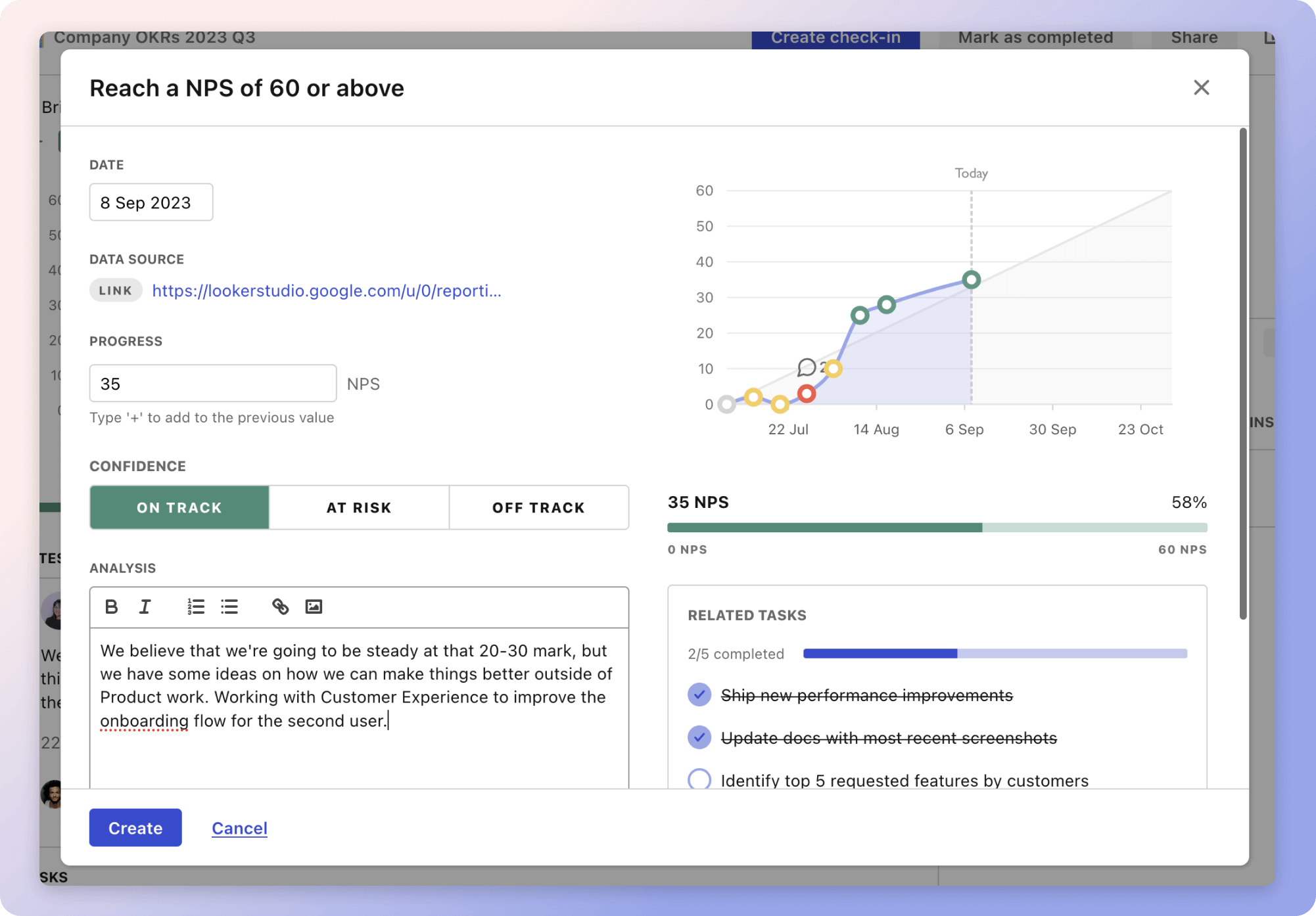 Tability's check-ins will save you hours and increase transparency
 The best metrics for Social Media Strategy Development