What are Facilitator metrics? Finding the right Facilitator metrics can seem daunting, particularly when you're focused on your daily workload. For this reason, we've compiled a selection of examples to fuel your inspiration.
Copy these examples into your preferred tool, or adopt Tability to ensure you remain accountable.
Find Facilitator metrics with AI While we have some examples available, it's likely that you'll have specific scenarios that aren't covered here. You can use our free AI metrics generator below to generate your own strategies.
Examples of Facilitator metrics and KPIs 1. Participant Satisfaction Score Measures the satisfaction level of participants in cultural learning experiences through post-event surveys
What good looks like for this metric: Average score of 80 out of 100
Ideas to improve this metric Gather participant feedback to identify areas of improvement Increase the interactivity of sessions Enhance the diversity of cultural topics covered Ensure culturally sensitive facilitation Offer follow-up activities or discussions 2. Diversity of Participants Assesses the variety of cultural backgrounds represented among participants
What good looks like for this metric: Representation from at least 5 different cultures
Ideas to improve this metric Conduct targeted outreach to underrepresented groups Collaborate with cultural organisations Offer culturally relevant incentives Promote events in multiple languages Feature diverse speakers and facilitators 3. Increase in Cultural Competency Evaluates the enhancement of participants' cultural awareness and competency before and after the experience using assessment tools
What good looks like for this metric: 10-20% increase in competency scores
Ideas to improve this metric Provide pre- and post-experience assessments Incorporate real-life scenarios and role-playing Include reflection sessions in the programme Share case studies of successful cultural integration Emphasise practical applications in daily life 4. Number of Collaborative Projects Initiated Tracks the number of new collaborative projects or partnerships formed as a result of cultural learning experiences
What good looks like for this metric: At least 3 new projects per year
Ideas to improve this metric Facilitate networking opportunities Offer workshops on collaborative project planning Track and celebrate successful collaborations Encourage cross-cultural mentorship programmes Provide resources and support for project initiation 5. Repeat Participation Rate Measures the percentage of participants who attend multiple cultural learning events within a specific timeframe
What good looks like for this metric: At least 50% repeat participation rate
Ideas to improve this metric Offer a loyalty or membership programme Provide discounts for return attendees Create a series of interconnected events Highlight personal growth stories of return participants Ensure each event provides unique value
← →
Tracking your Facilitator metrics Having a plan is one thing, sticking to it is another.
Having a good strategy is only half the effort. You'll increase significantly your chances of success if you commit to a weekly check-in process .
A tool like Tability can also help you by combining AI and goal-setting to keep you on track.
More metrics recently published We have more examples to help you below.
Planning resources OKRs are a great way to translate strategies into measurable goals. Here are a list of resources to help you adopt the OKR framework:
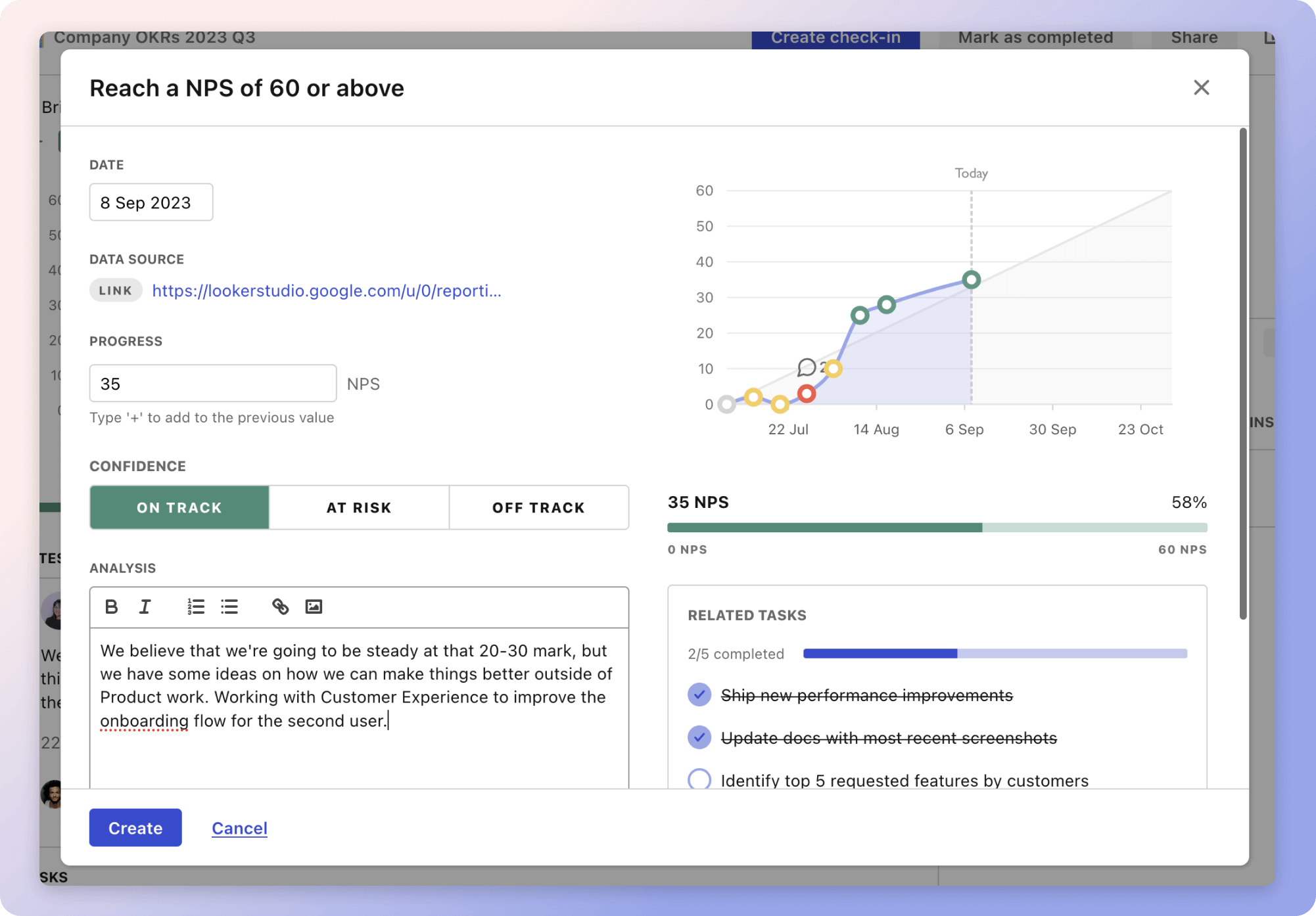 Tability's check-ins will save you hours and increase transparency
 The best metrics for Increase Calls Through Google My Business