What are Cleaning Team metrics? Identifying the optimal Cleaning Team metrics can be challenging, especially when everyday tasks consume your time. To help you, we've assembled a list of examples to ignite your creativity.
Feel free to copy these examples into your favorite application, or leverage Tability to maintain accountability.
Find Cleaning Team metrics with AI While we have some examples available, it's likely that you'll have specific scenarios that aren't covered here. You can use our free AI metrics generator below to generate your own strategies.
Examples of Cleaning Team metrics and KPIs 1. Cleaning Schedule Adherence Rate The percentage of scheduled cleaning tasks that are completed on time
What good looks like for this metric: 95% adherence
Ideas to improve this metric Regularly monitor cleaning schedules Provide regular training for staff Implement a reminder system Conduct regular inspections Establish accountability measures 2. Waste Collection Timeliness The percentage of scheduled waste collections that occur on time
What good looks like for this metric: 98% on-time collection
Ideas to improve this metric Develop efficient waste collection routes Increase waste collection frequency Communicate collection schedules clearly Use technology to track collection Engage with vendors about their needs 3. Customer Cleanliness Satisfaction Score The average score from customer surveys regarding the cleanliness of the area
What good looks like for this metric: Score of 8 out of 10
Ideas to improve this metric Request regular feedback from customers Promote a culture of cleanliness Address complaints promptly Highlight areas needing improvement Reward staff for consistent cleanliness 4. Monthly Waste Volume Reduction The percentage decrease in total waste volume over a month
What good looks like for this metric: 5% reduction per month
Ideas to improve this metric Implement recycling programmes Educate vendors on waste management Limit the use of single-use items Set waste reduction targets Promote reusables among vendors 5. Frequency of Cleanliness-Related Noncompliance Incidents The number of reported incidents per month related to noncompliance with cleanliness standards
What good looks like for this metric: Less than 2 incidents per month
Ideas to improve this metric Identify common noncompliance causes Provide targeted training Increase awareness of consequences Incentivise compliance Develop a swift resolution procedure
← →
1. Adherence To Compliance Manual Percentage of vendors following the guidelines set in the compliance manual
What good looks like for this metric: 90% compliance rate
Ideas to improve this metric Provide clear and accessible manual Conduct regular training sessions Implement a feedback system for vendors Carry out frequent compliance audits Offer incentives for compliance 2. Cleanliness Score Assessment score based on cleanliness standards maintained by vendors
What good looks like for this metric: Minimum cleanliness score of 85 out of 100
Ideas to improve this metric Create a standard cleaning checklist Set up regular cleaning schedules Train staff on effective cleaning techniques Use feedback from assessments to improve Implement penalties for non-compliance 3. Average Response Time Mean time taken to address and resolve compliance issues
What good looks like for this metric: Response time under 30 minutes
Ideas to improve this metric Assign dedicated compliance officers Utilise digital tools for real-time reporting Set clear priorities for issue resolution Conduct regular training on quick resolution strategies Review and refine response processes regularly 4. Training Completion Rate Percentage of vendors completing pre-event compliance training
What good looks like for this metric: 95% completion rate
Ideas to improve this metric Schedule convenient training times Provide online training options Emphasise the importance of compliance Create engaging training content Monitor participation and follow up on absences 5. Vendor Satisfaction Score Measure of vendor satisfaction with compliance process
What good looks like for this metric: Satisfaction score above 80 out of 100
Ideas to improve this metric Conduct regular surveys for feedback Facilitate open communication channels Act on common concerns raised by vendors Provide clear benefits of compliance Regularly review and update the compliance manual
← →
1. Cleaning Frequency Compliance Rate The percentage of vendors following the scheduled cleaning times as planned
What good looks like for this metric: 90% compliance
Ideas to improve this metric Communicate schedules clearly to vendors Increase supervision during scheduled cleaning times Offer training sessions on cleaning importance Provide incentives for high compliance Implement penalties for non-compliance 2. Waste Segregation Accuracy The ratio of correctly segregated waste bags (biodegradable vs. non-biodegradable)
What good looks like for this metric: 95% accuracy
Ideas to improve this metric Label bins and bags clearly Train vendors on waste segregation Conduct regular checks on waste segregation Provide feedback and corrective actions Incorporate segregation into vendor evaluations 3. Sanitation Inspection Score The average score given by local inspectors during their weekly sanitation audits
What good looks like for this metric: 85 out of 100
Ideas to improve this metric Review inspection criteria with vendors Host a pre-inspection preparation session Encourage peer evaluations among vendors Address recurring issues identified in inspections Celebrate vendors with high inspection scores 4. Incidence of Penalty Enforcement Number of penalties enforced due to sanitation lapses per month
What good looks like for this metric: 5 or fewer penalties
Ideas to improve this metric Increase awareness of penalties Ensure fair and transparent penalty processes Monitor common lapses to address them Engage vendors in discussions about improvement Review and refine penalty criteria if necessary 5. Checklist Completion Rate Percentage of checklists completed and submitted by supervisors after each cleaning session
What good looks like for this metric: 100% completion
Ideas to improve this metric Simplify and clarify checklist tasks Automate checklist submission process Set reminders for supervisors Encourage accountability and responsibility Review checklist content periodically
← →
1. Number of Parameters Differentiates model size options such as 1 billion (B), 3B, 7B, 14B parameters
What good looks like for this metric: 3B parameters is standard
Ideas to improve this metric Evaluate the scalability and resource constraints of the model Optimise parameter tuning Conduct comparative analysis for various model sizes Assess trade-offs between size and performance Leverage model size for specific tasks 2. Dataset Composition Percentage representation of data sources: web data, books, code, dialogue corpora, Indian regional languages, and multilingual content
What good looks like for this metric: Typical dataset: 60% web data, 15% books, 5% code, 10% dialogue, 5% Indian languages, 5% multilingual
Ideas to improve this metric Increase regional and language-specific content Ensure balanced dataset for diverse evaluation Perform periodic updates to dataset Utilise high-quality, curated sources Diversify datasets with varying domains 3. Perplexity on Validation Datasets Measures the predictability of the model on validation datasets
What good looks like for this metric: Perplexity range: 10-20
Ideas to improve this metric Enhance tokenization methods Refine sequence-to-sequence layers Adopt better pre-training techniques Implement data augmentation Leverage transfer learning from similar tasks 4. Inference Speed Tokens processed per second on CPU, GPU, and mobile devices
What good looks like for this metric: GPU: 10k tokens/sec, CPU: 1k tokens/sec, Mobile: 500 tokens/sec
Ideas to improve this metric Optimise algorithm efficiency Reduce model complexity Implement hardware-specific enhancements Utilise parallel processing Explore alternative deployment strategies 5. Edge-device Compatibility Evaluates the model's ability to function on edge devices with latency and response quality
What good looks like for this metric: Latency: <200 ms for response generation
Ideas to improve this metric Optimise for low-resource environments Develop compact model architectures Incorporate adaptive and scalable quality features Implement quantisation and compression techniques Perform real-world deployment tests
← →
Tracking your Cleaning Team metrics Having a plan is one thing, sticking to it is another.
Don't fall into the set-and-forget trap. It is important to adopt a weekly check-in process to keep your strategy agile – otherwise this is nothing more than a reporting exercise.
A tool like Tability can also help you by combining AI and goal-setting to keep you on track.
More metrics recently published We have more examples to help you below.
Planning resources OKRs are a great way to translate strategies into measurable goals. Here are a list of resources to help you adopt the OKR framework:
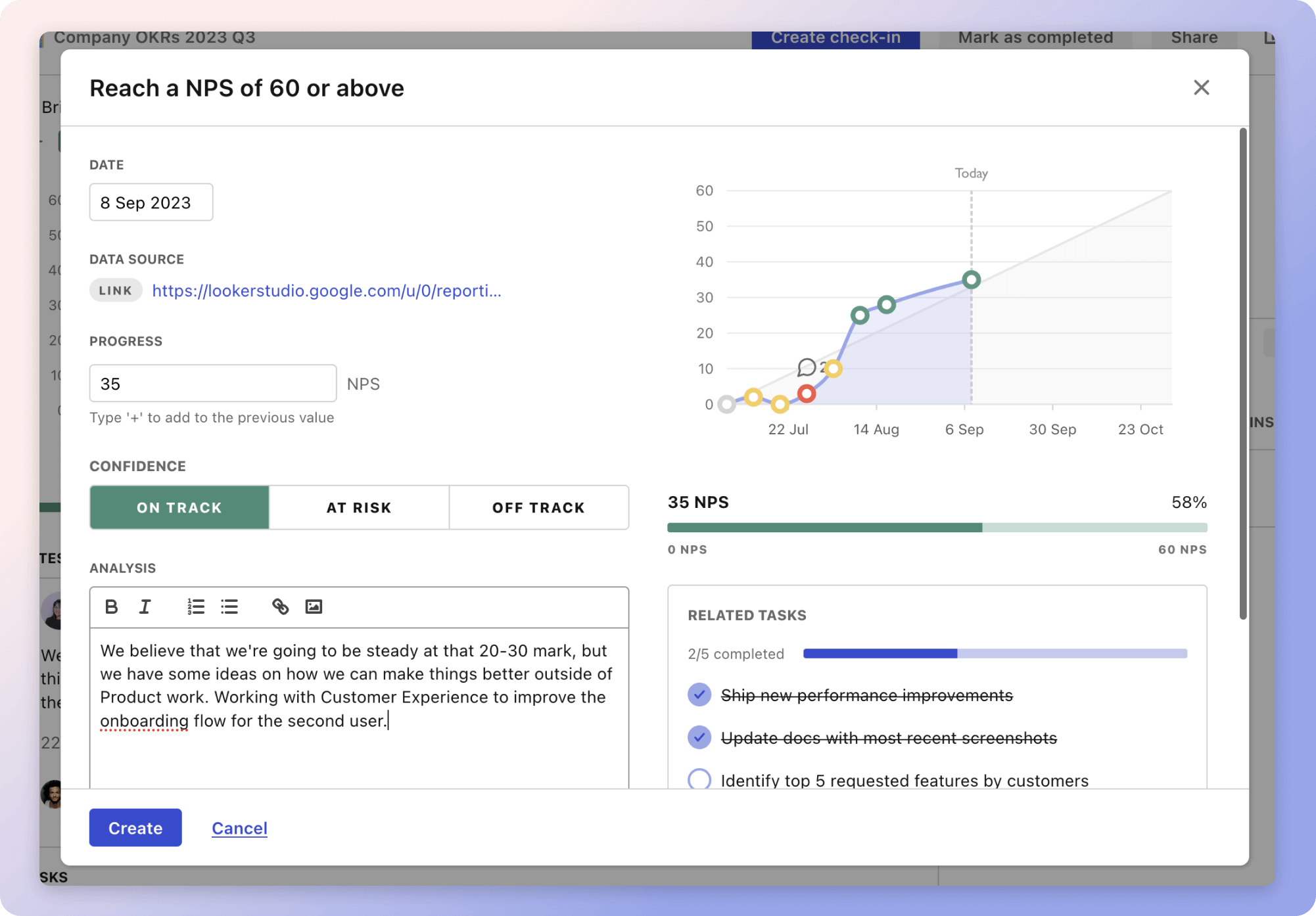 Tability's check-ins will save you hours and increase transparency
 The best metrics for Increase Calls Through Google My Business