What are Training Specialist metrics? Finding the right Training Specialist metrics can be daunting, especially when you're busy working on your day-to-day tasks. This is why we've curated a list of examples for your inspiration.
Copy these examples into your preferred tool, or adopt Tability to ensure you remain accountable.
Find Training Specialist metrics with AI While we have some examples available, it's likely that you'll have specific scenarios that aren't covered here. You can use our free AI metrics generator below to generate your own strategies.
Examples of Training Specialist metrics and KPIs 1. Compliance Rate Percentage of compliance achieved against the regulatory requirements
What good looks like for this metric: 95% compliance rate
Ideas to improve this metric Conduct regular compliance audits Ensure up-to-date compliance training Implement automated compliance monitoring Utilise compliance management tools Regularly update compliance policies 2. Policy Violation Frequency Number of times compliance policies are violated
What good looks like for this metric: Less than 2 per month
Ideas to improve this metric Increase employee policy awareness Conduct frequent policy reviews Promote a culture of compliance Improve policy accessibility Establish clear consequences for violations 3. Audit Finding Closure Rate Percentage of audit findings that are closed within the specified time frame
What good looks like for this metric: 90% of findings closed on time
Ideas to improve this metric Increase accountability for closing findings Streamline the closure process Provide resources for corrective actions Set realistic timelines for closure Regular progress check-ins 4. Employee Awareness Level Percentage of employees who are aware of compliance requirements
What good looks like for this metric: 85% of employees aware
Ideas to improve this metric Implement regular training sessions Use quizzes to test awareness Provide onboarding compliance training Display compliance information visibly Encourage open discussions on compliance 5. Customer Satisfaction with Compliance Customer feedback rating regarding the organisation's compliance standards
What good looks like for this metric: 4 out of 5 satisfaction score
Ideas to improve this metric Conduct customer feedback surveys Address compliance-related complaints promptly Publicise compliance achievements Provide transparency on compliance processes Engage customers in compliance improvement initiatives
← →
1. Average Resolution Time The average time taken to resolve a customer's issue once it has been escalated to the L2 support team
What good looks like for this metric: 24-48 hours depending on complexity
Ideas to improve this metric Implement clear escalation protocols Provide advanced training for common issues Utilise automated tools to assist in diagnostics Conduct regular team meetings to discuss complex cases Evaluate individual performance regularly 2. First Contact Resolution Rate The percentage of escalated tickets that are resolved without needing further escalation
What good looks like for this metric: 70-85%
Ideas to improve this metric Ensure comprehensive knowledge base is available Regularly update FAQs and common issue solutions Implement effective troubleshooting frameworks Provide ongoing training focused on first contact resolution Encourage collaboration and knowledge sharing among team members 3. Customer Satisfaction Score (CSAT) A measure of customer satisfaction with their support experience, often gathered through post-resolution surveys
What good looks like for this metric: 80-90%
Ideas to improve this metric Enhance communication skills training Follow-up with customers post-resolution for feedback Design clear and concise feedback surveys Offer customer service workshops Address any negative feedback promptly with corrective action 4. Case Backlog The number of unresolved cases that get carried over from previous time periods
What good looks like for this metric: Less than 10% of active cases
Ideas to improve this metric Optimise workflow management tools Set realistic daily targets for case resolutions Identify peak times and allocate resources accordingly Review complicated cases in team discussions Utilise prioritisation strategies to address high-impact cases first 5. Employee Satisfaction Score A measure of the L2 support team's job satisfaction and engagement, often gathered through internal surveys
What good looks like for this metric: 70-85%
Ideas to improve this metric Implement recognition and reward programmes Create career development opportunities Hold regular feedback sessions Encourage work-life balance initiatives Foster a supportive and inclusive work environment
← →
1. Annual Sales Volume The total quantity of plastic products sold within a year
What good looks like for this metric: 10,000 MT in 2025, increasing to 50,000 MT by 2035
Ideas to improve this metric Expand market reach through marketing Increase product quality to boost sales Enhance sales team training and incentives Identify and target key industries needing plastic Collaborate with international partners 2. Production Yield The percentage of produced items that meet quality standards
What good looks like for this metric: 95% in 2025, aiming for 99% by 2035
Ideas to improve this metric Implement quality checks at each production phase Invest in modern machinery and technology Train employees on quality control processes Conduct regular maintenance on equipment Incorporate lean manufacturing practices 3. Customer Retention Rate The percentage of customers who continue to buy over time
What good looks like for this metric: 80% in 2025, increasing to 95% by 2035
Ideas to improve this metric Enhance customer service and support Implement a loyalty program Regularly seek customer feedback for improvements Offer personalized deals and discounts Ensure high product quality and consistency 4. Cost per Metric Tonne (MT) The cost incurred to produce one metric tonne of plastic
What good looks like for this metric: 10% reduction by 2026, aiming for 20% reduction by 2035
Ideas to improve this metric Streamline procurement processes Negotiate better deals with suppliers Optimize production scheduling for efficiency Minimize waste during production Utilize energy-efficient machinery 5. Training Hours per Employee The average number of hours each employee spends in training annually
What good looks like for this metric: 20 hours in 2025, increasing to 60 hours by 2035
Ideas to improve this metric Develop a comprehensive training calendar Encourage online and external training sessions Introduce mentorship programs Link training to career development plans Utilize technology for training modules
← →
1. Referral Submission Rate Percentage of referred students for special education services compared to total student population
What good looks like for this metric: Typically 5-10% of student population
Ideas to improve this metric Educate staff on referral process Streamline referral documentation Enhance communication with parents Regularly analyse referral data Offer professional development 2. Evaluation Timeliness Percentage of evaluations completed within the 60-day timeframe
What good looks like for this metric: 90% completion within 60 days
Ideas to improve this metric Implement a strict timeline for evaluations Coordinate efficiently with multidisciplinary team Conduct regular evaluations of compliance rates Communicate deadlines with all stakeholders Automate reminder systems for deadlines 3. Eligibility Determination Rate Percentage of evaluated students who are determined eligible for special education services
What good looks like for this metric: Approximately 80-85% eligibility post-evaluation
Ideas to improve this metric Ensure comprehensive evaluations Provide clear eligibility criteria Regular training for assessment team Review non-eligible cases for gaps Strengthen collaboration with parents and educators 4. IEP Implementation Rate Percentage of IEP plans that are fully implemented as planned
What good looks like for this metric: 95% full implementation
Ideas to improve this metric Ensure clear communication among IEP team members Regularly monitor IEP implementation progress Provide adequate resources and training Conduct frequent IEP team meetings Implement a feedback system for identification of barriers 5. Adequate Progress Rate Percentage of students demonstrating adequate progress towards IEP goals
What good looks like for this metric: 70% of students meeting or exceeding IEP goals
Ideas to improve this metric Use data-driven decision making Enhance instructional strategies Regularly update IEP goals Provide targeted interventions Perform frequent progress reviews
← →
Tracking your Training Specialist metrics Having a plan is one thing, sticking to it is another.
Having a good strategy is only half the effort. You'll increase significantly your chances of success if you commit to a weekly check-in process .
A tool like Tability can also help you by combining AI and goal-setting to keep you on track.
More metrics recently published We have more examples to help you below.
Planning resources OKRs are a great way to translate strategies into measurable goals. Here are a list of resources to help you adopt the OKR framework:
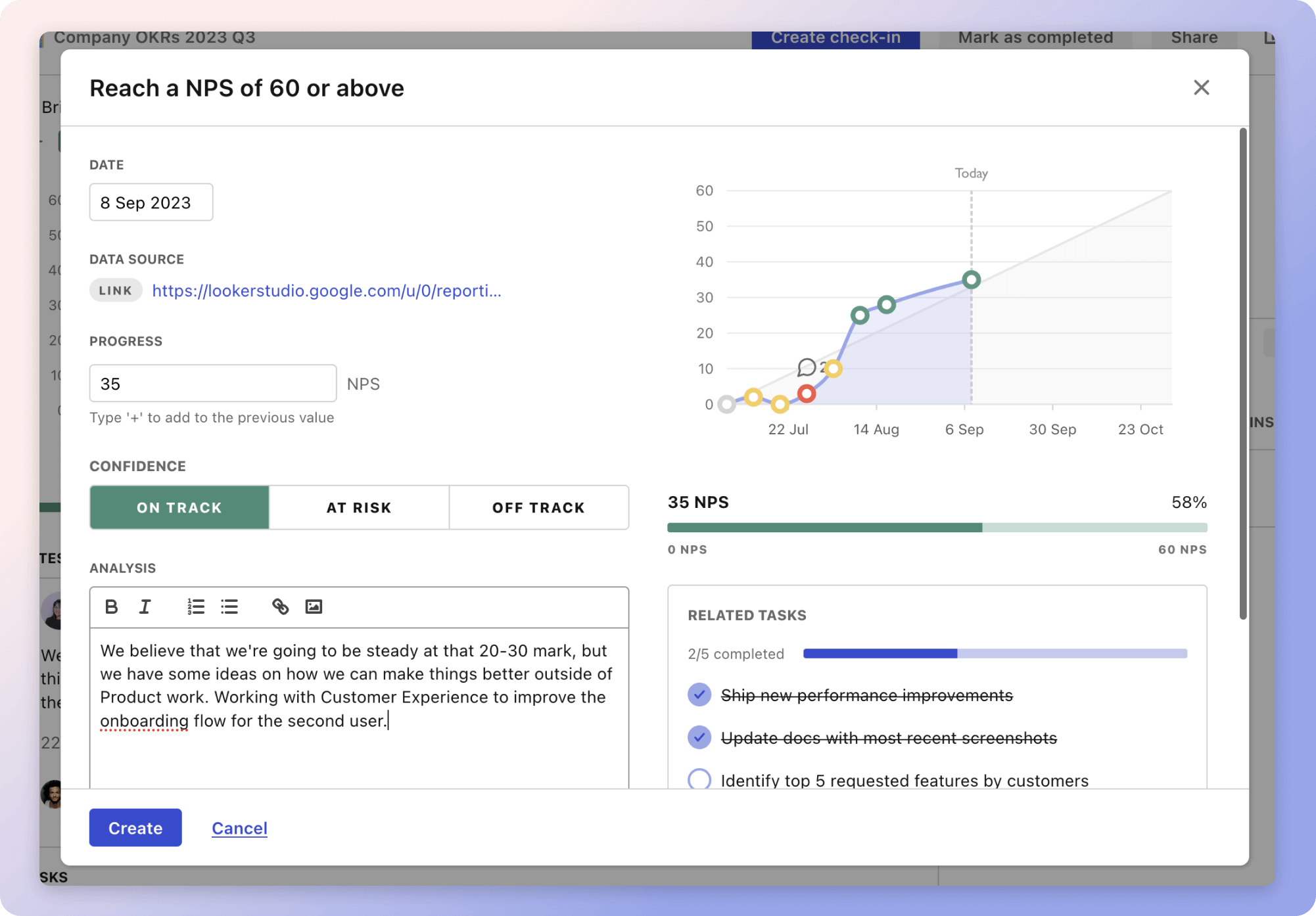 Tability's check-ins will save you hours and increase transparency
 The best metrics for GRC MSSP Compliance