Finding the right Quality Standards metrics can be daunting, especially when you're busy working on your day-to-day tasks. This is why we've curated a list of examples for your inspiration.
You can copy these examples into your preferred app, or alternatively, use Tability to stay accountable.
Find Quality Standards metrics with AI
While we have some examples available, it's likely that you'll have specific scenarios that aren't covered here. You can use our free AI metrics generator below to generate your own strategies.
This metric is calculated by dividing the number of defective containers by the total quantity of containers shipped, then multiplying by 100 to get a percentage.
What good looks like for this metric: Less than 1%
Ideas to improve this metric
Implement stricter quality control procedures
Conduct regular training for staff on quality standards
Invest in better equipment for production
Regularly review and update product designs
Engage in more thorough testing before shipping
2. First Pass Yield
Measures the percentage of containers that meet quality standards without any rework or modifications.
What good looks like for this metric: Over 95%
Ideas to improve this metric
Streamline production processes
Conduct root cause analysis on defects
Improve supplier quality
Enhance employee skillset through training
Use high-quality raw materials
3. Cost of Quality
Sums up all costs associated with preventing, detecting, and rectifying defective units.
What good looks like for this metric: Less than 10% of total sales
Ideas to improve this metric
Automate inspection processes
Reduce error rates with better technology
Calculate the cost-benefit ratio of quality improvements
Monitor quality-related financial data closely
Focus on prevention over inspection
4. Customer Satisfaction Score
Rate based on customer feedback on the shipped containers' quality.
What good looks like for this metric: Above 85%
Ideas to improve this metric
Improve communication with customers
Implement feedback systems
Swiftly address customer complaints
Regularly update customers on quality improvements
Personalise customer service interactions
5. Return Rate
Percentage of shipped containers that are returned due to defects.
Having a plan is one thing, sticking to it is another.
Setting good strategies is only the first challenge. The hard part is to avoid distractions and make sure that you commit to the plan. A simple weekly ritual will greatly increase the chances of success.
A tool like Tability can also help you by combining AI and goal-setting to keep you on track.
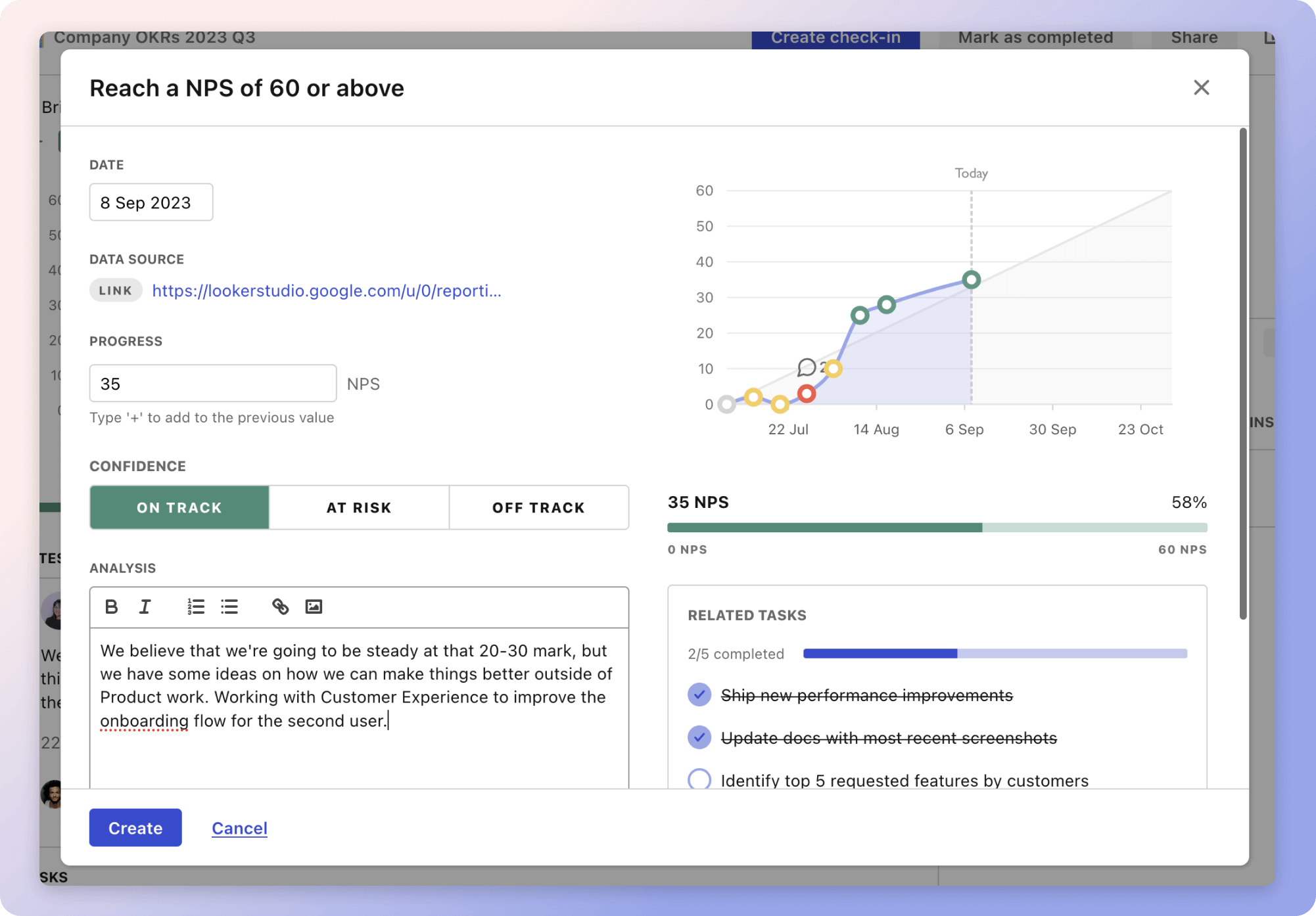 Tability's check-ins will save you hours and increase transparency
 The best metrics for Increase Calls Through Google My Business