This plan focuses on improving Product Quality Assurance by using five key metrics: Defect Rate, First Pass Yield, Cost of Quality, Customer Satisfaction Score, and Return Rate. Each metric has specified benchmarks and improvement suggestions. For example, reducing the Defect Rate through stricter quality control can lead to higher product reliability. Ensuring a high First Pass Yield minimizes rework, thereby streamlining processes and reducing costs.
Tracking the Cost of Quality helps in better financial planning and resource allocation. A higher Customer Satisfaction Score indicates effective communication and customer-centric approaches, crucial for brand loyalty. Lastly, a low Return Rate shows effective defect management and robust product quality, preventing revenue loss.
Top 5 metrics for Product Quality Assurance
1. Defect Rate
This metric is calculated by dividing the number of defective containers by the total quantity of containers shipped, then multiplying by 100 to get a percentage.
What good looks like for this metric: Less than 1%
How to improve this metric:- Implement stricter quality control procedures
- Conduct regular training for staff on quality standards
- Invest in better equipment for production
- Regularly review and update product designs
- Engage in more thorough testing before shipping
2. First Pass Yield
Measures the percentage of containers that meet quality standards without any rework or modifications.
What good looks like for this metric: Over 95%
How to improve this metric:- Streamline production processes
- Conduct root cause analysis on defects
- Improve supplier quality
- Enhance employee skillset through training
- Use high-quality raw materials
3. Cost of Quality
Sums up all costs associated with preventing, detecting, and rectifying defective units.
What good looks like for this metric: Less than 10% of total sales
How to improve this metric:- Automate inspection processes
- Reduce error rates with better technology
- Calculate the cost-benefit ratio of quality improvements
- Monitor quality-related financial data closely
- Focus on prevention over inspection
4. Customer Satisfaction Score
Rate based on customer feedback on the shipped containers' quality.
What good looks like for this metric: Above 85%
How to improve this metric:- Improve communication with customers
- Implement feedback systems
- Swiftly address customer complaints
- Regularly update customers on quality improvements
- Personalise customer service interactions
5. Return Rate
Percentage of shipped containers that are returned due to defects.
What good looks like for this metric: Below 2%
How to improve this metric:- Improve return policy and management
- Analyse return data for patterns
- Strengthen packaging and shipment processes
- Enhance customer support to handle defects
- Offer incentives for customers to keep products
How to track Product Quality Assurance metrics
It's one thing to have a plan, it's another to stick to it. We hope that the examples above will help you get started with your own strategy, but we also know that it's easy to get lost in the day-to-day effort.
That's why we built Tability: to help you track your progress, keep your team aligned, and make sure you're always moving in the right direction.
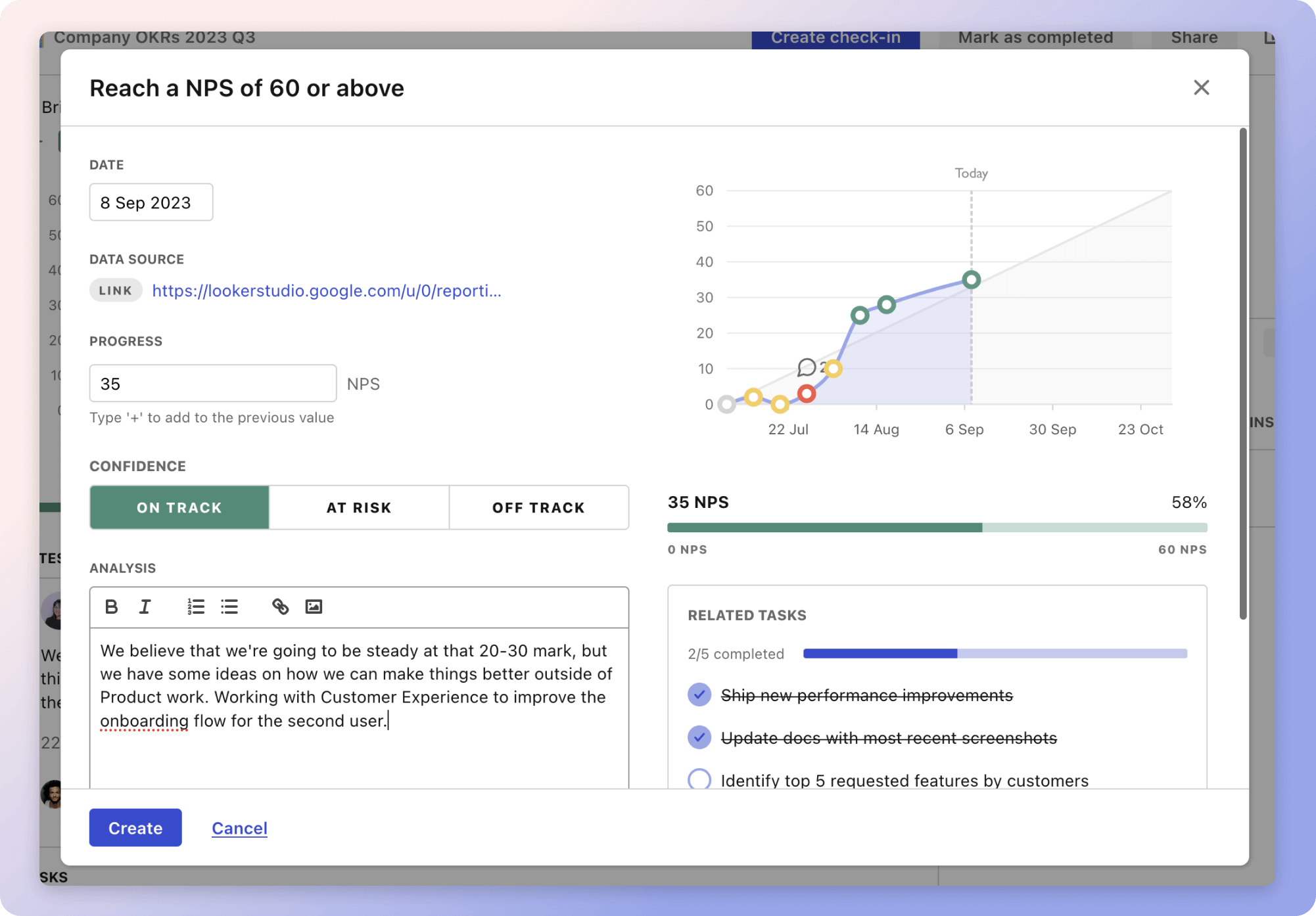
Give it a try and see how it can help you bring accountability to your metrics.
