What are Network Uptime metrics? Crafting the perfect Network Uptime metrics can feel overwhelming, particularly when you're juggling daily responsibilities. That's why we've put together a collection of examples to spark your inspiration.
Copy these examples into your preferred app, or you can also use Tability to keep yourself accountable.
Find Network Uptime metrics with AI While we have some examples available, it's likely that you'll have specific scenarios that aren't covered here. You can use our free AI metrics generator below to generate your own strategies.
Examples of Network Uptime metrics and KPIs 1. Network Uptime Percentage of time the network is operational during a specific period
What good looks like for this metric: 99.99%
Ideas to improve this metric Implement redundancy systems Regularly monitor network performance Conduct routine maintenance Use reliable hardware components Train staff for quick issue resolution 2. Server Response Time Average time taken for a server to respond to a request
What good looks like for this metric: <200ms
Ideas to improve this metric Optimise server configuration Use content delivery networks Implement load balancing Upgrade server hardware Reduce server load through caching 3. Energy Efficiency Amount of energy used by the infrastructure relative to its output
What good looks like for this metric: PUE of 1.2
Ideas to improve this metric Upgrade to energy-efficient hardware Implement effective cooling systems Regularly audit energy usage Utilise renewable energy sources Implement power-saving protocols 4. Incident Rate Number of incidents occurring in infrastructure per given time period
What good looks like for this metric: <5 incidents per month
Ideas to improve this metric Conduct regular infrastructure audits Train staff on incident management Improve monitoring systems Implement preventive maintenance Investigate and resolve root causes promptly 5. Cost Efficiency Total cost of infrastructure operations in relation to its performance
What good looks like for this metric: $0.10 per user per hour
Ideas to improve this metric Optimise resource allocation Negotiate better vendor contracts Implement cost-tracking systems Automate routine tasks Regularly review operational budgets
← →
1. Uptime The percentage of time that the infrastructure is operational and available
What good looks like for this metric: 99.9% or above
Ideas to improve this metric Implement proactive monitoring tools Establish robust disaster recovery protocols Regularly update software and firmware Schedule regular maintenance windows Utilize redundant systems for critical components 2. Mean Time to Resolution (MTTR) The average time taken to resolve a failure or issue
What good looks like for this metric: 1 to 4 hours
Ideas to improve this metric Streamline incident response processes Provide ongoing training for IT staff Utilize automated diagnostics tools Maintain comprehensive documentation Conduct regular post-incident reviews 3. Cost Efficiency The measure of operational costs in relation to infrastructure output
What good looks like for this metric: Cost reduction of 10-20% annually
Ideas to improve this metric Optimize resource allocation Negotiate better vendor contracts Implement energy-efficient technologies Regularly review spending against budget Leverage cloud services where applicable 4. Capacity Utilisation The percentage of total infrastructure capacity being used efficiently
What good looks like for this metric: 75-85%
Ideas to improve this metric Monitor usage trends closely Adjust resources based on demand Implement virtualization strategies Plan for future capacity needs Eliminate underutilized resources 5. Security Incident Frequency The number of security incidents reported over a specific period
What good looks like for this metric: Less than 2 incidents per month
Ideas to improve this metric Enhance security training for employees Regularly update security protocols Utilize advanced threat detection systems Conduct frequent security audits Implement robust access control measures
← →
Tracking your Network Uptime metrics Having a plan is one thing, sticking to it is another.
Having a good strategy is only half the effort. You'll increase significantly your chances of success if you commit to a weekly check-in process .
A tool like Tability can also help you by combining AI and goal-setting to keep you on track.
More metrics recently published We have more examples to help you below.
Planning resources OKRs are a great way to translate strategies into measurable goals. Here are a list of resources to help you adopt the OKR framework:
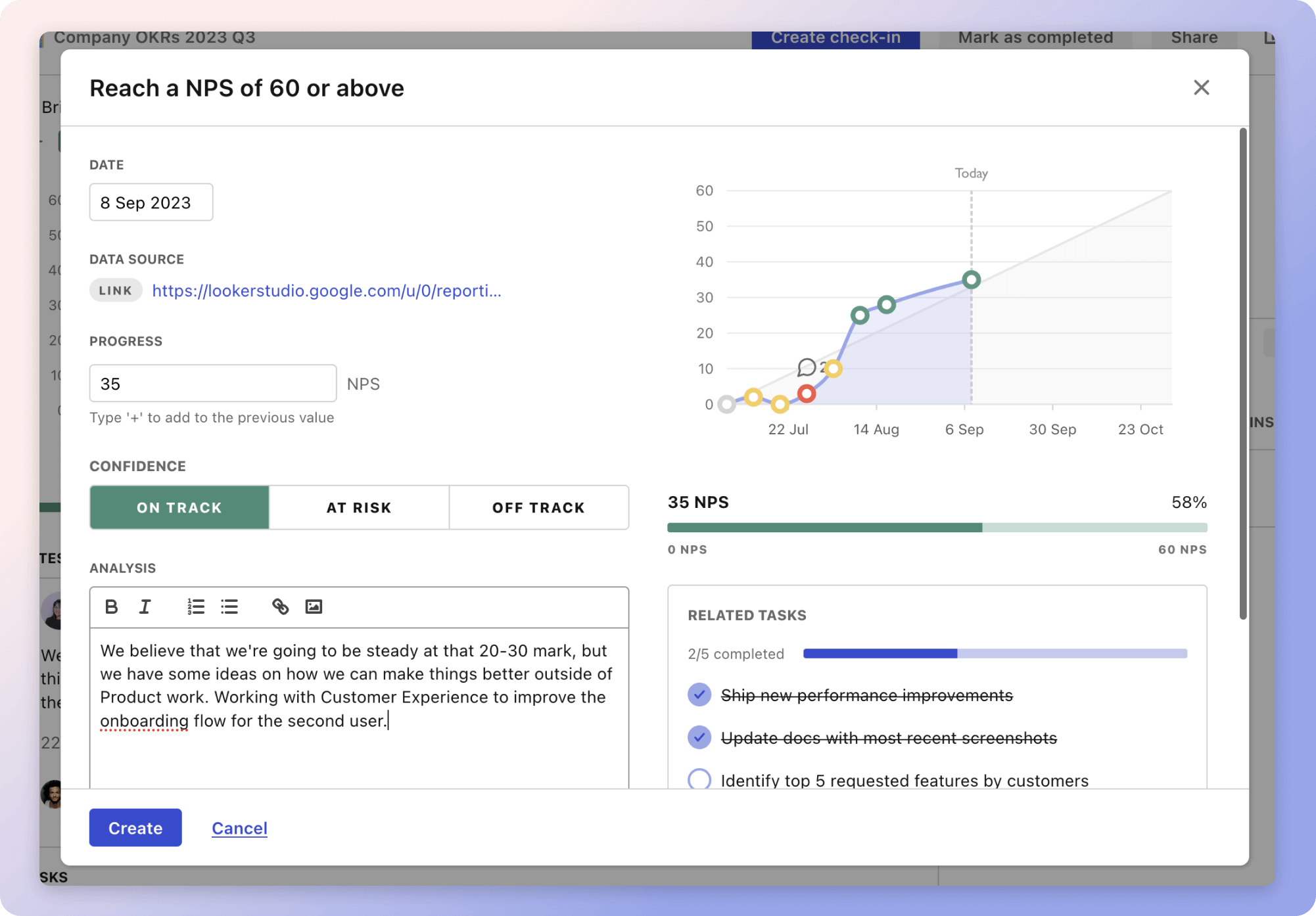 Tability's check-ins will save you hours and increase transparency
 The best metrics for Increase Calls Through Google My Business