What are Backend Team metrics? Finding the right Backend Team metrics can be daunting, especially when you're busy working on your day-to-day tasks. This is why we've curated a list of examples for your inspiration.
You can copy these examples into your preferred app, or alternatively, use Tability to stay accountable.
Find Backend Team metrics with AI While we have some examples available, it's likely that you'll have specific scenarios that aren't covered here. You can use our free AI metrics generator below to generate your own strategies.
Examples of Backend Team metrics and KPIs 1. Response Time The time taken for a system to respond to a request, typically measured in milliseconds.
What good looks like for this metric: 100-200 ms
Ideas to improve this metric Optimise database queries Use efficient algorithms Implement caching strategies Scale infrastructure Minimise network latency 2. Error Rate The percentage of requests that result in errors, such as 4xx or 5xx HTTP status codes.
What good looks like for this metric: Less than 1%
Ideas to improve this metric Improve input validation Conduct thorough testing Use error monitoring tools Implement robust exception handling Optimize API endpoints 3. Request Per Second (RPS) The number of requests the server can handle per second.
What good looks like for this metric: 1000-5000 RPS
Ideas to improve this metric Use load balancing Optimise server performance Increase concurrency Implement rate limiting Scale vertically and horizontally 4. CPU Utilisation The percentage of CPU resources used by the backend server.
What good looks like for this metric: 50-70%
Ideas to improve this metric Profile and optimise code Distribute workloads evenly Scale infrastructure Use efficient data structures Reduce computational complexity 5. Memory Usage The amount of memory consumed by the backend server.
What good looks like for this metric: Less than 85% of total memory
Ideas to improve this metric Identify and fix memory leaks Optimise data storage Use garbage collection Implement memory caching Scale infrastructure
← →
1. Code Review Rounds Number of review rounds required before code approval
What good looks like for this metric: 1-2 rounds
Ideas to improve this metric Organise code review workshops Implement a coding standards guide Assign senior developers as mentors Use static code analysis tools Establish a consistent review checklist 2. Code Coverage Percentage of code covered by automated tests
What good looks like for this metric: Above 80%
Ideas to improve this metric Increase unit and integration tests Regularly update test cases Utilise code coverage tools Prioritise critical code paths Automate test execution 3. Defect Density Number of defects per thousand lines of code
What good looks like for this metric: Less than 1 defect per KLOC
Ideas to improve this metric Conduct regular code audits Adopt pair programming Implement a bug triage system Encourage post-deployment analysis Provide regular feedback to developers 4. Number of Code Commits Frequency of commits made by developers
What good looks like for this metric: Multiple small commits per day
Ideas to improve this metric Encourage daily code submissions Streamline the commit process Divide tasks into smaller units Utilise version control best practices Promote a collaborative environment 5. Code Complexity Measurement of code's structural complexity
What good looks like for this metric: Cyclomatic complexity less than 10
Ideas to improve this metric Refactor overly complex methods Adopt design patterns Review complexity scores regularly Simplify code logic Use tools to measure complexity
← →
1. Code Quality Measures the frequency and severity of bugs detected in the codebase.
What good looks like for this metric: Less than 10 bugs per 1000 lines of code
Ideas to improve this metric Implement regular code reviews Use static code analysis tools Provide training on best coding practices Encourage test-driven development Adopt a peer programming strategy 2. Deployment Frequency Tracks how often code changes are successfully deployed to production.
What good looks like for this metric: Deploy at least once a day
Ideas to improve this metric Automate the deployment pipeline Reduce bottlenecks in the process Regularly publish small, manageable changes Incentivise swift yet comprehensive testing Improve team communication and collaboration 3. Mean Time to Recovery (MTTR) Measures the average time taken to recover from a service failure.
What good looks like for this metric: Less than 1 hour
Ideas to improve this metric Develop a robust incident response plan Streamline rollback and recovery processes Use monitoring tools to detect issues early Conduct post-mortems and learn from failures Enhance system redundancy and fault tolerance 4. Test Coverage Represents the percentage of code which is tested by automated tests.
What good looks like for this metric: 70% to 90%
Ideas to improve this metric Implement continuous integration with testing Educate developers on writing effective tests Regularly update and refactor out-of-date tests Encourage a culture of writing tests Utilise behaviour-driven development techniques 5. API Response Time Measures the time taken for an API to respond to a request.
What good looks like for this metric: Less than 200ms
Ideas to improve this metric Optimize database queries Utilise caching effectively Reduce payload size Use load balancing techniques Profile and identify performance bottlenecks
← →
Tracking your Backend Team metrics Having a plan is one thing, sticking to it is another.
Don't fall into the set-and-forget trap. It is important to adopt a weekly check-in process to keep your strategy agile – otherwise this is nothing more than a reporting exercise.
A tool like Tability can also help you by combining AI and goal-setting to keep you on track.
More metrics recently published We have more examples to help you below.
Planning resources OKRs are a great way to translate strategies into measurable goals. Here are a list of resources to help you adopt the OKR framework:
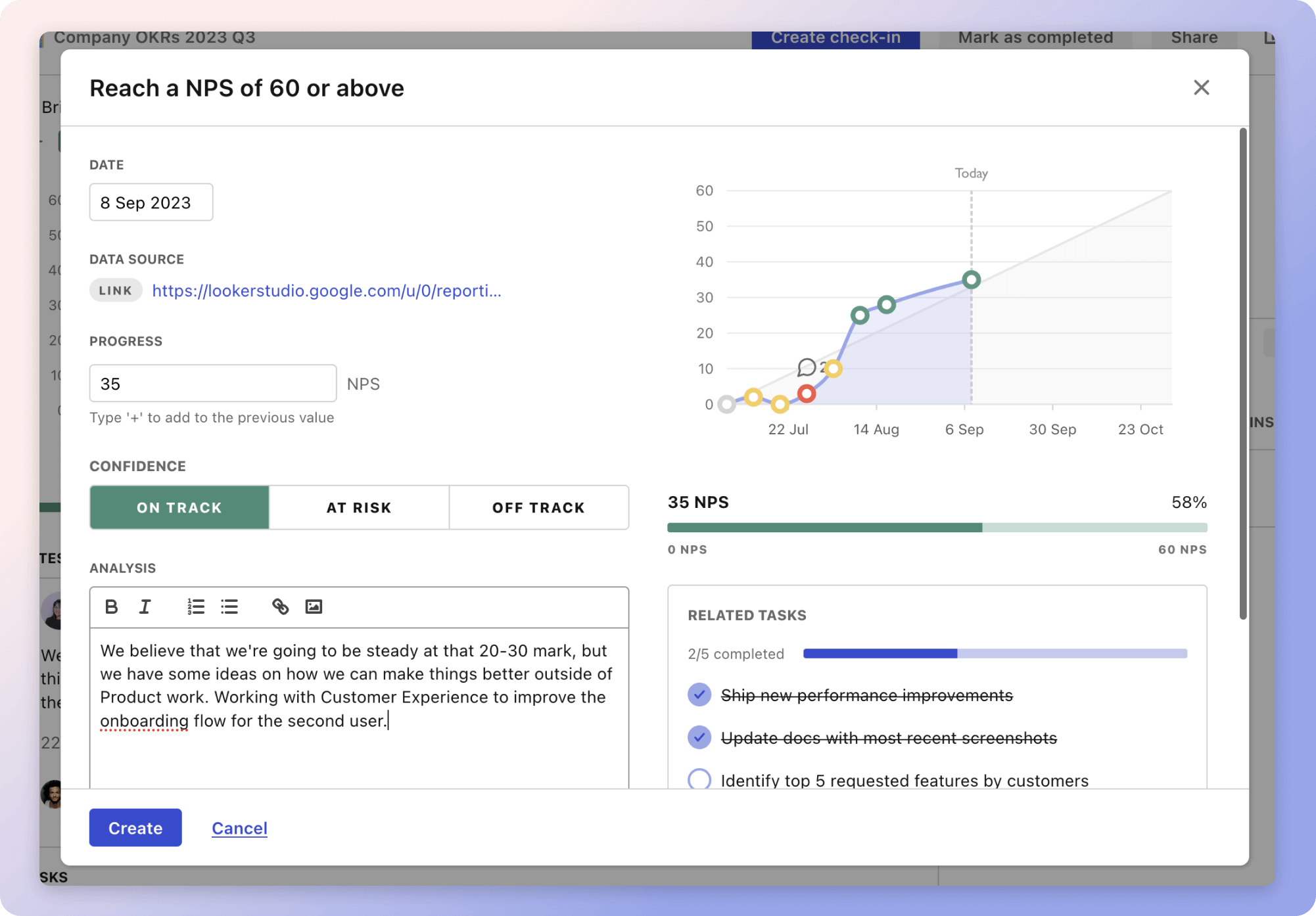 Tability's check-ins will save you hours and increase transparency
 The best metrics for Increase Calls Through Google My Business