What are Project Completion metrics? Crafting the perfect Project Completion metrics can feel overwhelming, particularly when you're juggling daily responsibilities. That's why we've put together a collection of examples to spark your inspiration.
Transfer these examples to your app of choice, or opt for Tability to help keep you on track.
Find Project Completion metrics with AI While we have some examples available, it's likely that you'll have specific scenarios that aren't covered here. You can use our free AI metrics generator below to generate your own strategies.
Examples of Project Completion metrics and KPIs 1. Project Completion Rate Percentage of ICT sub-projects completed within the annual plan timeline
What good looks like for this metric: Approximately 90% completion rate
Ideas to improve this metric Prioritise projects based on business impact Set realistic project timelines Allocate proper resources for each project Conduct regular progress reviews Address bottlenecks promptly 2. Budget Utilisation Amount of budget used versus allocated for ICT projects
What good looks like for this metric: 90-95% of budget utilisation
Ideas to improve this metric Monitor financial expenditure regularly Optimize resource allocation Negotiate better vendor contracts Implement cost-saving technologies Adjust plans based on financial forecasts 3. Stakeholder Satisfaction Feedback and satisfaction levels from internal and external stakeholders
What good looks like for this metric: Satisfaction score of over 75%
Ideas to improve this metric Collect regular feedback from stakeholders Improve communication channels Align ICT initiatives with stakeholder needs Provide transparent progress reports Address feedback promptly 4. System Uptime Percentage of ICT systems available and operational during the year
What good looks like for this metric: 99% uptime
Ideas to improve this metric Implement robust monitoring tools Schedule regular maintenance Invest in reliable backup systems Train staff in problem resolution Plan for peak usage scenarios 5. Innovation Adoption Rate Proportion of new technologies or processes successfully implemented and used
What good looks like for this metric: 50-70% adoption rate
Ideas to improve this metric Encourage a culture of innovation Provide training on new technologies Evaluate technologies for business fit Involve users in the adoption process Review and refine adoption strategies
← →
1. Task Completion Rate The percentage of tasks completed on time versus tasks assigned
What good looks like for this metric: 85% completed on time
Ideas to improve this metric Prioritise tasks based on urgency and importance Break down tasks into smaller, manageable parts Use tools for task management Set realistic deadlines for each task Review daily tasks at the start and end of the day 2. Time Spent on Tasks The total time spent on tasks versus estimated time, aiming for efficiency
What good looks like for this metric: Estimate within 10% margin
Ideas to improve this metric Plan your day with a time block system Identify and reduce time wasters Set aside specific times for email and communication Use timers to limit time spent on tasks Review weekly to adjust time estimates 3. Meeting Efficiency The effectiveness of meetings based on objectives met and time used
What good looks like for this metric: 80% satisfaction rate
Ideas to improve this metric Prepare an agenda and circulate it beforehand Set a clear purpose and objectives for each meeting Limit meeting time to 30 minutes when possible Encourage concise communication Evaluate meeting outcomes post-session 4. Schedule Adherence The consistency of following daily and weekly schedules
What good looks like for this metric: Adherence 90% of the time
Ideas to improve this metric Create and maintain a daily schedule Limit discretionary activities that disrupt the schedule Set buffer time between appointments Review planner weekly to make adjustments Delegate tasks to maintain focus 5. Communication Responsiveness The average response time to emails and other communications
What good looks like for this metric: Within 24 hours
Ideas to improve this metric Schedule specific times for communication Use email templates for common responses Set up email filters for prioritisation Benchmark and improve response time quarterly Utilise instant messages for urgent communications
← →
Tracking your Project Completion metrics Having a plan is one thing, sticking to it is another.
Don't fall into the set-and-forget trap. It is important to adopt a weekly check-in process to keep your strategy agile – otherwise this is nothing more than a reporting exercise.
A tool like Tability can also help you by combining AI and goal-setting to keep you on track.
More metrics recently published We have more examples to help you below.
Planning resources OKRs are a great way to translate strategies into measurable goals. Here are a list of resources to help you adopt the OKR framework:
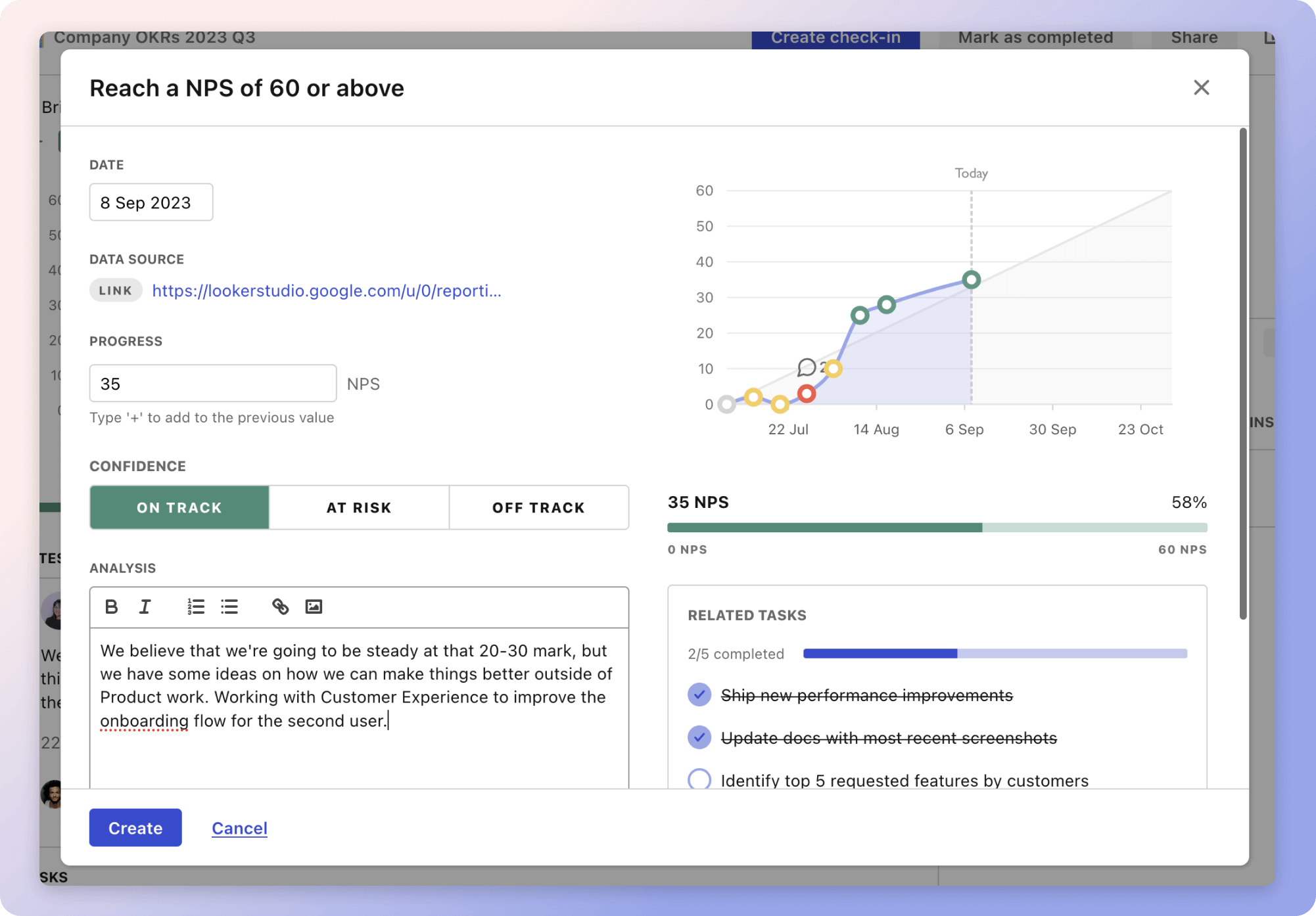 Tability's check-ins will save you hours and increase transparency
 The best metrics for Increase Calls Through Google My Business