Improving time management involves focusing on specific metrics that help track and enhance productivity. One critical measure is the Task Completion Rate, which assesses the percentage of tasks completed on time. Enhancing this rate may involve breaking down tasks into smaller parts or using management tools to prioritize effectively.
Another essential metric is Time Spent on Tasks, where efficiency is judged by comparing actual time to estimates. Techniques such as time blocking and using timers can optimize task time, ensuring estimates are within a 10% margin.
Meeting Efficiency, focusing on objective achievement and time use, can be improved by preparing agendas and setting clear meeting goals. Schedule Adherence ensures consistency, with an emphasis on creating daily schedules and delegating tasks when needed. Lastly, Communication Responsiveness measures how promptly communications are handled, aiming for responses within 24 hours.
Top 5 metrics for Improving Time Management
1. Task Completion Rate
The percentage of tasks completed on time versus tasks assigned
What good looks like for this metric: 85% completed on time
How to improve this metric:- Prioritise tasks based on urgency and importance
- Break down tasks into smaller, manageable parts
- Use tools for task management
- Set realistic deadlines for each task
- Review daily tasks at the start and end of the day
2. Time Spent on Tasks
The total time spent on tasks versus estimated time, aiming for efficiency
What good looks like for this metric: Estimate within 10% margin
How to improve this metric:- Plan your day with a time block system
- Identify and reduce time wasters
- Set aside specific times for email and communication
- Use timers to limit time spent on tasks
- Review weekly to adjust time estimates
3. Meeting Efficiency
The effectiveness of meetings based on objectives met and time used
What good looks like for this metric: 80% satisfaction rate
How to improve this metric:- Prepare an agenda and circulate it beforehand
- Set a clear purpose and objectives for each meeting
- Limit meeting time to 30 minutes when possible
- Encourage concise communication
- Evaluate meeting outcomes post-session
4. Schedule Adherence
The consistency of following daily and weekly schedules
What good looks like for this metric: Adherence 90% of the time
How to improve this metric:- Create and maintain a daily schedule
- Limit discretionary activities that disrupt the schedule
- Set buffer time between appointments
- Review planner weekly to make adjustments
- Delegate tasks to maintain focus
5. Communication Responsiveness
The average response time to emails and other communications
What good looks like for this metric: Within 24 hours
How to improve this metric:- Schedule specific times for communication
- Use email templates for common responses
- Set up email filters for prioritisation
- Benchmark and improve response time quarterly
- Utilise instant messages for urgent communications
How to track Improving Time Management metrics
It's one thing to have a plan, it's another to stick to it. We hope that the examples above will help you get started with your own strategy, but we also know that it's easy to get lost in the day-to-day effort.
That's why we built Tability: to help you track your progress, keep your team aligned, and make sure you're always moving in the right direction.
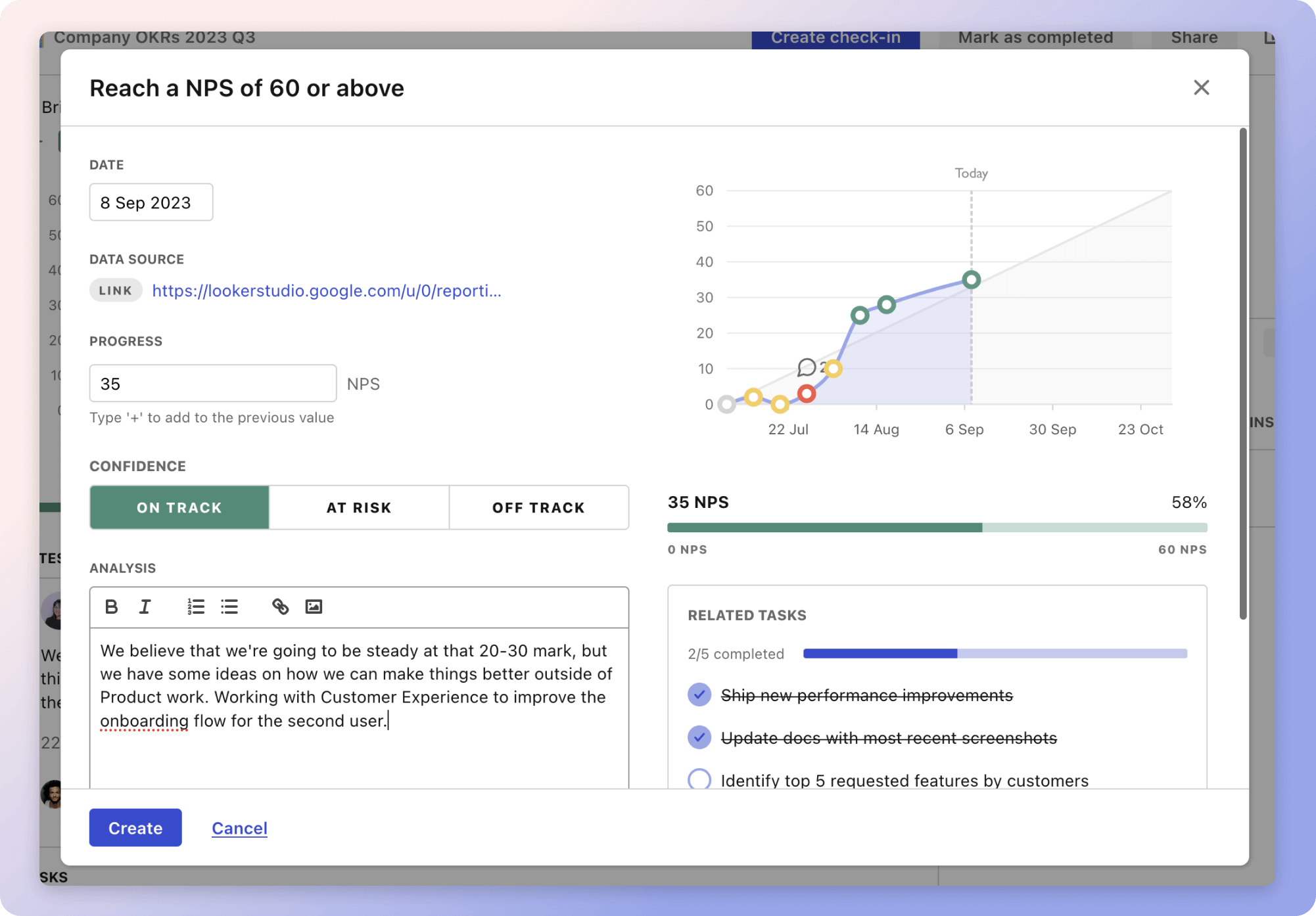
Give it a try and see how it can help you bring accountability to your metrics.
