What are Employee Development Team metrics? Finding the right Employee Development Team metrics can be daunting, especially when you're busy working on your day-to-day tasks. This is why we've curated a list of examples for your inspiration.
Copy these examples into your preferred tool, or adopt Tability to ensure you remain accountable.
Find Employee Development Team metrics with AI While we have some examples available, it's likely that you'll have specific scenarios that aren't covered here. You can use our free AI metrics generator below to generate your own strategies.
Examples of Employee Development Team metrics and KPIs 1. Job Performance Rating An evaluation of the employee's job performance based on specific role-related goals and objectives
What good looks like for this metric: Typically ranges from 1 to 5, with 3 being average
Ideas to improve this metric Provide clear and concise performance goals Offer regular feedback and coaching Implement peer review systems Conduct regular performance appraisals Utilise performance management software 2. Skill Development Measures progress in acquiring job-related skills through training and development efforts
What good looks like for this metric: 75% of employees show improvement annually
Ideas to improve this metric Encourage enrolment in training programmes Promote cross-departmental projects Offer mentorship opportunities Align skill development with career goals Regularly update learning materials 3. Peer Feedback Scores Scores from colleagues reflecting teamwork, collaboration, and interpersonal skills
What good looks like for this metric: Average scores range from 3 to 4 out of 5
Ideas to improve this metric Foster an open feedback culture Conduct team-building activities Facilitate workshops on communication skills Implement a 360-degree feedback system Regularly seek verbal feedback in meetings 4. Achievement of Increment Criteria Assessment of whether employees meet predefined criteria for increments related to performance, learning, or company values
What good looks like for this metric: 60% of employees qualify for increment criteria annually
Ideas to improve this metric Clearly define the criteria in documentation Communicate criteria regularly during reviews Provide examples of how criteria can be met Offer support for employees lagging behind Regularly review and update criteria 5. Employee Satisfaction with Feedback Level of employee satisfaction with the feedback received about performance evaluations and increments
What good looks like for this metric: Benchmark satisfaction score of 4 out of 5
Ideas to improve this metric Implement anonymous feedback surveys Offer constructive and balanced feedback Train managers in delivering feedback Hold feedback sessions to gather input Create an action plan based on feedback
← →
1. Employee Engagement Score Measures the level of employee engagement and satisfaction within the organisation, often assessed through surveys
What good looks like for this metric: 65-85%
Ideas to improve this metric Foster open communication channels Organise team-building activities Provide opportunities for career advancement Encourage feedback and suggestions Recognise and reward employee achievements 2. Purpose Alignment Index Assesses how well employees' personal values align with the company's mission and goals
What good looks like for this metric: 70-80%
Ideas to improve this metric Conduct workshops on company values Offer personalised coaching sessions Promote internal role models Align company projects with personal values Establish mentorship programs 3. Professional Development Participation Rate Tracks the percentage of employees actively participating in professional development programs
What good looks like for this metric: 50-70%
Ideas to improve this metric Make programs more accessible Tailor programs to employee interests Incentivise participation Publicise success stories Regularly evaluate and improve offerings 4. Employee Retention Rate Measures the percentage of employees who remain with the company over a specific period
What good looks like for this metric: 85-90%
Ideas to improve this metric Improve workplace culture Enhance benefits and compensation Offer flexible working conditions Provide clear career paths Implement regular feedback mechanisms 5. Personal Development Plan Completion Rate Monitors the percentage of employees who complete their personalised development plans
What good looks like for this metric: 60-75%
Ideas to improve this metric Set clear and achievable goals Regularly review progress Offer support and resources Ensure management buy-in Celebrate plan completions
← →
1. Number of Employees Trained Total number of employees who have completed safety training within a specified period
What good looks like for this metric: 100% of employees intended to be trained
Ideas to improve this metric Ensure training sessions are scheduled at convenient times Increase awareness of the importance of safety training Incorporate online training for flexibility Track attendance and follow-up for no-shows Offer incentives for completion 2. Training Completion Rate Percentage of employees who have completed the required safety training out of those assigned
What good looks like for this metric: Above 90% completion rate
Ideas to improve this metric Set clear deadlines for completion Send reminders to employees who have not started or completed Provide progress tracking dashboards for employees Offer manager support to encourage training Evaluate and adapt the training content for engagement 3. Number of Safety Audits Completed Count of safety audits performed against the planned audits in a specific timeframe
What good looks like for this metric: 100% completion of planned audits
Ideas to improve this metric Create a detailed audit plan at the start of the year Assign dedicated teams or personnel to conduct audits Utilise audit software for tracking progress Conduct mid-year reviews to adjust plans if necessary Schedule regular audit frequency to prevent backlog 4. Completion vs Plan of Audits The ratio of completed audits to the number planned within a set duration
What good looks like for this metric: Above 90% completion of planned audits
Ideas to improve this metric Prioritise high-risk areas for audits Use a checklist to ensure comprehensive coverage Identify and remove bottlenecks in the audit process Allocate resources specifically for audit completion Review past audit completion gaps and make adjustments 5. Corrective Actions Raised and Closed Number of corrective actions identified during audits and successfully closed
What good looks like for this metric: High percentage (>80%) of corrective actions closed promptly
Ideas to improve this metric Set deadlines for corrective action implementation Assign accountability for closing actions Use tracking systems to follow up on actions Provide support and resources for implementing corrective measures Regularly review and update the corrective action process
← →
1. Employee Turnover Rate The percentage of employees who leave the company during a certain period of time, calculated by dividing the number of employees who leave by the average number of employees and multiplying by 100
What good looks like for this metric: 10-15%
Ideas to improve this metric Enhance employee engagement programmes Improve internal communication Offer competitive salaries and benefits Create a clear career progression path Regularly review and improve company culture 2. Time to Hire The average number of days it takes from when a job opens until an offer is accepted, indicating the efficiency of the hiring process
What good looks like for this metric: 40-50 days
Ideas to improve this metric Streamline the interview process Utilise applicant tracking systems Enhance job descriptions Build a talent pipeline Increase employer branding 3. Employee Engagement Rate The level of employee commitment and involvement towards their organisation, typically measured through surveys and engagement scores
What good looks like for this metric: 70-80%
Ideas to improve this metric Regularly conduct employee surveys Offer professional development opportunities Recognise and reward employees Foster a positive work environment Encourage regular feedback sessions 4. Absenteeism Rate The percentage of workdays employees are absent, calculated by dividing the number of days missed by the total number of workdays available
What good looks like for this metric: 1.5-3%
Ideas to improve this metric Implement wellness programmes Improve workplace conditions Address potential causes of stress Provide flexible work options Promote a healthy work-life balance 5. Training Cost Per Employee The amount of money spent on training each employee, including materials, time, and any external training sessions
What good looks like for this metric: $1,000-$1,500
Ideas to improve this metric Evaluate the effectiveness of existing training programmes Utilise more in-house training resources Leverage online learning platforms Negotiate better rates with external trainers Ensure training aligns with company goals
← →
1. Annual Sales Volume The total quantity of plastic products sold within a year
What good looks like for this metric: 10,000 MT in 2025, increasing to 50,000 MT by 2035
Ideas to improve this metric Expand market reach through marketing Increase product quality to boost sales Enhance sales team training and incentives Identify and target key industries needing plastic Collaborate with international partners 2. Production Yield The percentage of produced items that meet quality standards
What good looks like for this metric: 95% in 2025, aiming for 99% by 2035
Ideas to improve this metric Implement quality checks at each production phase Invest in modern machinery and technology Train employees on quality control processes Conduct regular maintenance on equipment Incorporate lean manufacturing practices 3. Customer Retention Rate The percentage of customers who continue to buy over time
What good looks like for this metric: 80% in 2025, increasing to 95% by 2035
Ideas to improve this metric Enhance customer service and support Implement a loyalty program Regularly seek customer feedback for improvements Offer personalized deals and discounts Ensure high product quality and consistency 4. Cost per Metric Tonne (MT) The cost incurred to produce one metric tonne of plastic
What good looks like for this metric: 10% reduction by 2026, aiming for 20% reduction by 2035
Ideas to improve this metric Streamline procurement processes Negotiate better deals with suppliers Optimize production scheduling for efficiency Minimize waste during production Utilize energy-efficient machinery 5. Training Hours per Employee The average number of hours each employee spends in training annually
What good looks like for this metric: 20 hours in 2025, increasing to 60 hours by 2035
Ideas to improve this metric Develop a comprehensive training calendar Encourage online and external training sessions Introduce mentorship programs Link training to career development plans Utilize technology for training modules
← →
1. Food Quality Rating Assesses the quality of food served based on customer feedback and reviews
What good looks like for this metric: 4.5 out of 5 stars
Ideas to improve this metric Conduct regular taste tests Solicit customer feedback Ensure fresh ingredients Train staff on culinary skills Regularly review and update recipes 2. Recipe Consistency Score Measures the consistency of recipes across different chefs and shifts
What good looks like for this metric: 90% consistency rate
Ideas to improve this metric Provide detailed recipe guides Use standardised measurements Conduct chef training sessions Regularly audit kitchen practices Set up a feedback loop with chefs 3. Employee Training Hours Tracks the number of training hours completed by employees to ensure high food quality and service standards
What good looks like for this metric: 20 hours per employee per year
Ideas to improve this metric Schedule regular training sessions Incorporate online learning modules Offer cross-training opportunities Practice skill assessments Incentivise training completion 4. Food Cost Percentage Indicates the percentage of revenue spent on food costs
What good looks like for this metric: 28% to 35%
Ideas to improve this metric Negotiate better supplier deals Conduct inventory audits regularly Implement portion control measures Analyse menu profitability Minimise food waste 5. Food Safety Compliance Rate Measures compliance with food safety regulations and standards
What good looks like for this metric: 100% compliance
Ideas to improve this metric Conduct regular safety training Implement a HACCP plan Use food safety checklists Conduct routine kitchen inspections Maintain equipment cleanliness
← →
Tracking your Employee Development Team metrics Having a plan is one thing, sticking to it is another.
Don't fall into the set-and-forget trap. It is important to adopt a weekly check-in process to keep your strategy agile – otherwise this is nothing more than a reporting exercise.
A tool like Tability can also help you by combining AI and goal-setting to keep you on track.
More metrics recently published We have more examples to help you below.
Planning resources OKRs are a great way to translate strategies into measurable goals. Here are a list of resources to help you adopt the OKR framework:
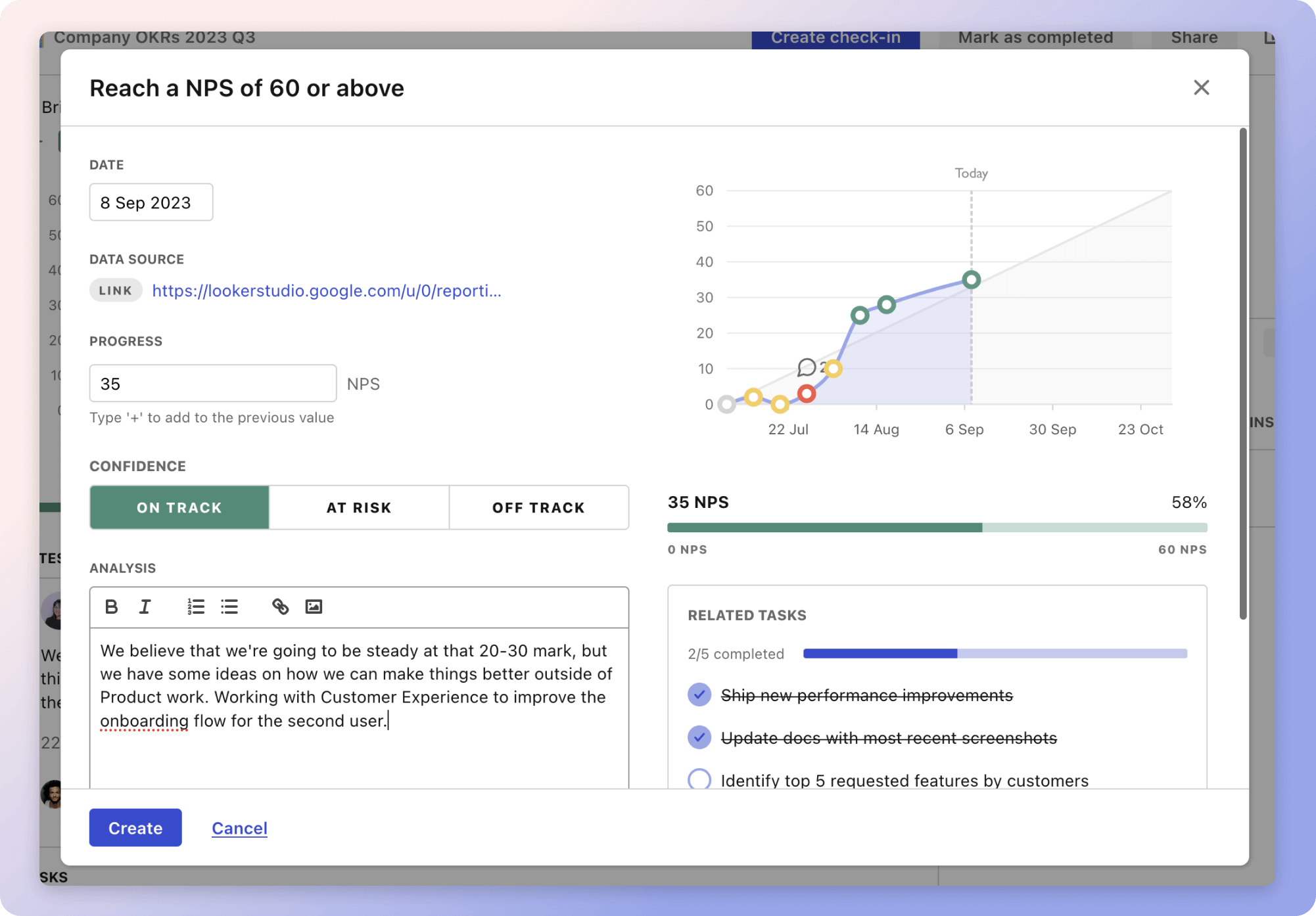 Tability's check-ins will save you hours and increase transparency
 The best metrics for L2 Support Team Development