The objective of this plan is to enhance Request Completion Efficiency by employing specific metrics such as Average Request Completion Time and On-Time Completion Rate. These metrics are crucial as they provide insights into the effectiveness and speed of handling requests. For instance, improving the Average Request Completion Time can lead to faster service delivery, which is essential for maintaining client satisfaction.
Consider the On-Time Completion Rate; hitting the benchmark of 90% or higher indicates a team's reliability in meeting deadlines. Similarly, measuring the Average Delay Time helps identify disruptions, allowing for proactive resolution. Higher Request Handling Efficiency ensures optimal resource use, fostering an environment conducive to rapid and quality service. Each metric not only hones operational efficiency but also significantly impacts the Client Satisfaction Score, highlighting your service's perceived quality and responsiveness.
Top 5 metrics for Request Completion Efficiency
1. Average Request Completion Time
The average time taken to complete a request from the time it is received to the time it is completed
What good looks like for this metric: 1-2 hours
How to improve this metric:- Streamline the request processing workflow
- Improve staff training to increase efficiency
- Utilise automation tools where possible
- Set clear priorities for request handling
- Regularly review and optimise processes
2. On-Time Completion Rate
The percentage of requests completed by the expected completion time
What good looks like for this metric: 90% or higher
How to improve this metric:- Set realistic and clear deadlines
- Enhance communication between teams
- Implement time tracking tools
- Prioritise high-impact requests
- Conduct regular performance reviews
3. Average Delay Time
The average time by which a request exceeds its expected completion time
What good looks like for this metric: 10-15 minutes
How to improve this metric:- Identify and resolve bottlenecks
- Improve early risk detection
- Allocate resources more effectively
- Use predictive analytics for planning
- Schedule regular workload assessments
4. Request Handling Efficiency
Ratio of total completed requests to the total operating time
What good looks like for this metric: Greater than 0.8
How to improve this metric:- Monitor resource utilisation
- Reduce redundant steps in processes
- Enhance teamwork and collaboration
- Invest in training for skill development
- Evaluate technology stack for improvements
5. Client Satisfaction Score
Customer's perception of the timeliness and quality of request handling
What good looks like for this metric: Above 4.5 on a 5-point scale
How to improve this metric:- Gather and act on client feedback
- Improve the speed of service delivery
- Ensure clear communication at all stages
- Offer proactive solutions to delays
- Regularly update clients about request status
How to track Request Completion Efficiency metrics
It's one thing to have a plan, it's another to stick to it. We hope that the examples above will help you get started with your own strategy, but we also know that it's easy to get lost in the day-to-day effort.
That's why we built Tability: to help you track your progress, keep your team aligned, and make sure you're always moving in the right direction.
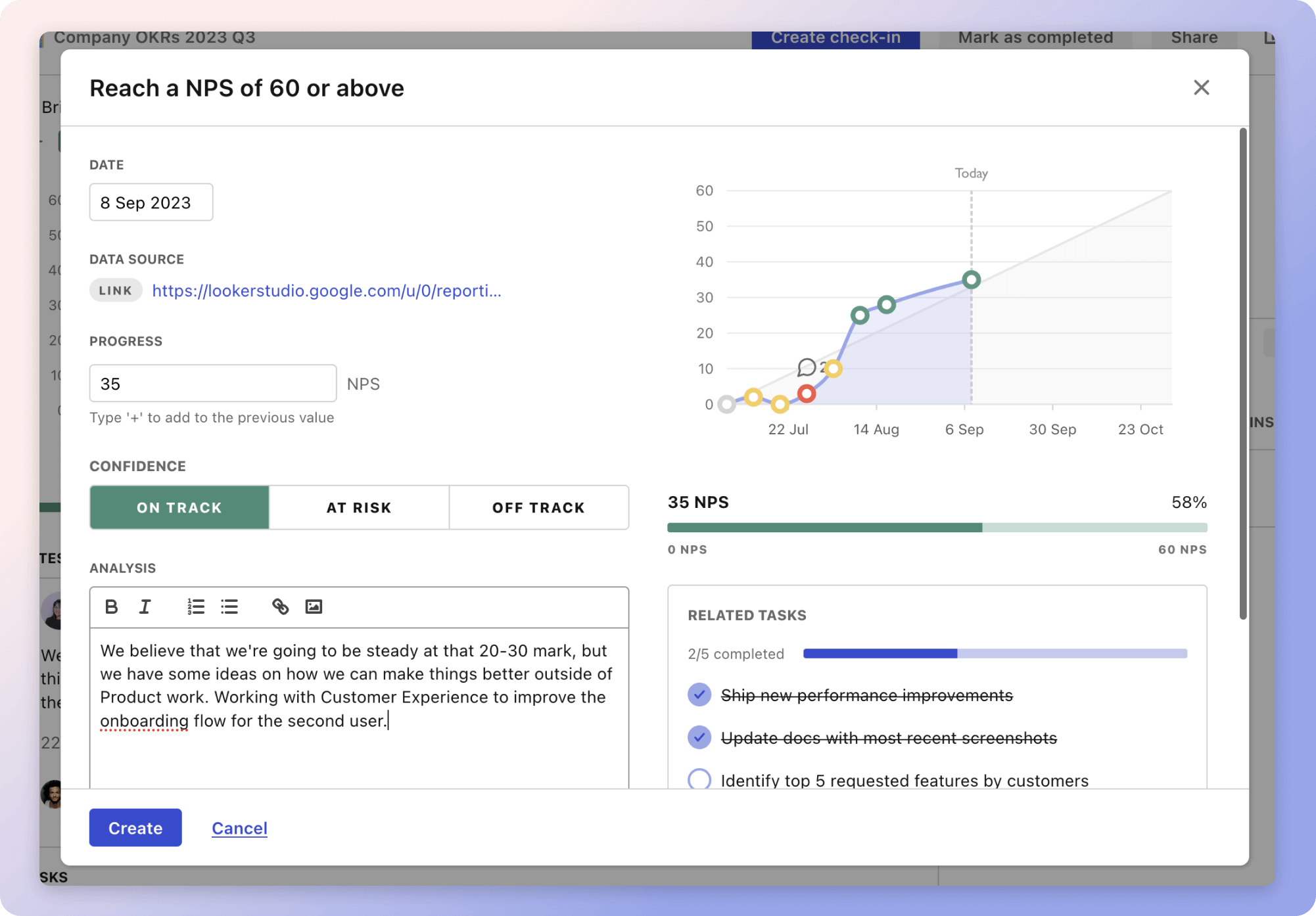
Give it a try and see how it can help you bring accountability to your metrics.
